
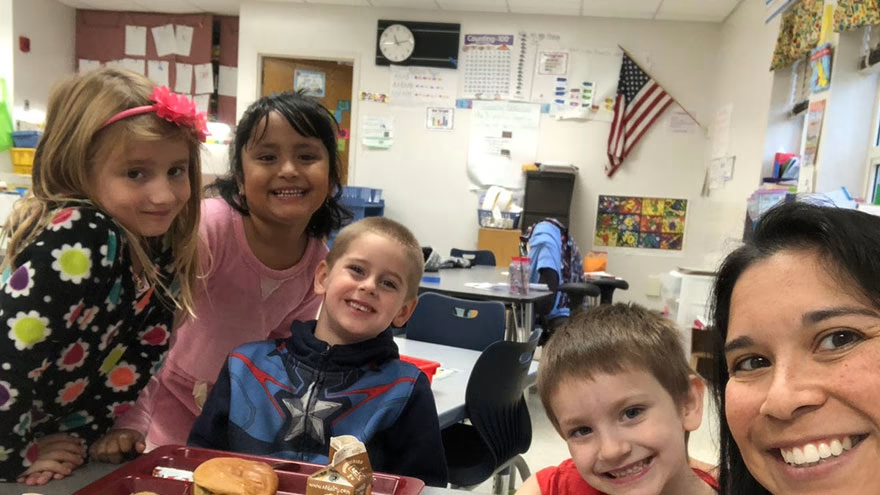
A self-esteem lunch bunch can help students if it feels like a calm group, not a public correction. The lunch setting is casual, but the design still matters. Students notice who was invited, what gets repeated, and whether adults respect privacy.
Good lunch bunch activities are short, concrete, and easy to enter. They should give students a way to practice confidence without turning lunch into therapy theater.
Set A Clear Group Agreement
Start with a simple agreement: no teasing, no repeating personal stories outside the group, pass is always allowed, and food choices are not discussed unless the student brings it up in a safe way. Keep the language plain.
A lunch bunch is not a substitute for individual counseling, but it can be a place to practice social skills, self-talk, and belonging in a low-pressure way.
Use A Two-Minute Check-In
APA reported in 2025 that many U.S. teens need more emotional and social support: APA on teen social support. A short check-in can give support without putting a student on display.
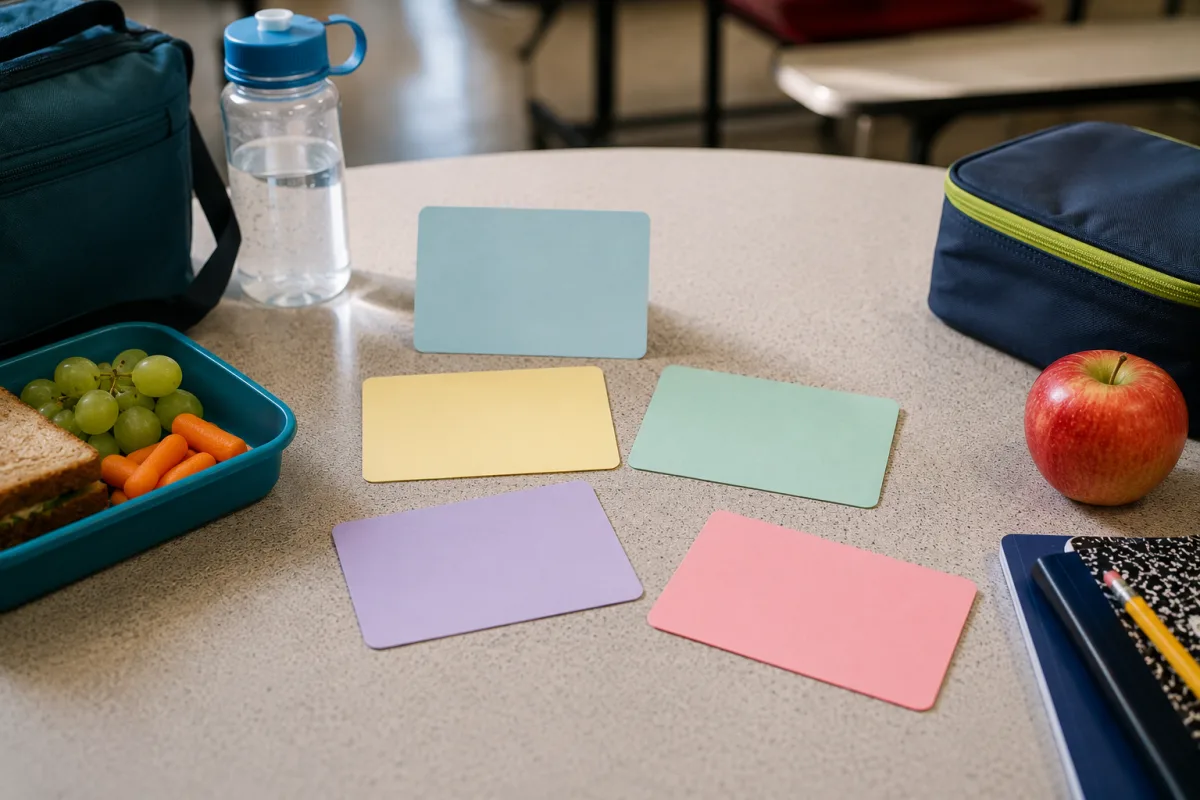
Try a card prompt: one word for today, one thing that helped this week, one small win, or one thing I wish adults understood. Let students draw, write, or answer out loud.
If anxiety shows up around performance or evaluation, Livecub's guide to sports tryout nerves is a related confidence topic.
Make Strength Cards
Give each student blank cards and a list of ordinary strengths: patient, funny, steady, curious, brave, careful, honest, creative, loyal, observant. Ask them to pick two they see in themselves and one they are practicing.
The word practicing helps. A student does not have to claim a perfect trait. They can say, I am practicing being brave when I ask for help.
Try Compliment Receipts

Child Mind Institute's confidence resources often return to skill, effort, and realistic praise: Child Mind confidence and self-esteem resources. Compliment receipts use that idea without making praise feel sticky or fake.
Students write one specific action they noticed from another group member: You waited for me, You explained the game, You shared the marker. The receiver keeps it or passes. No one has to read theirs out loud.
Build A Mistake Menu
On a whiteboard or paper, list mistakes students actually make: forgot homework, said something awkward, missed a shot, got corrected, lost temper, cried in class. Then add repair options next to each one.
This normalizes repair. Self-esteem grows when students see that a mistake has a next step. It does not have to become a new identity.
Use Quiet Pair Tasks
Not every student likes group talk. Pair tasks can work better: build a small paper tower, solve a puzzle, sort cards into values, plan a kindness challenge, or create a lunch playlist together.
If a student rarely speaks in certain settings, avoid forcing speech. Livecub's article on selective mutism helps keep that line clear.
Create A Values Plate

Give students a paper plate divided into sections: people I care about, things I am learning, places I feel calm, skills I want, and one thing I can try this week. They can write or draw.
Keep this separate from food, body size, dieting, or weight. Lunch bunch is not the place to moralize meals or compare bodies.
A food record can be useful for some health goals, but it needs a different frame. Livecub's food journal guide is a separate topic, not a lunch table activity for every student.
Handle Social Media Talk
APA's advisory on teen social media includes concern about comparison and developmentally sensitive use: APA adolescent social media advisory. A lunch bunch can ask students what kind of account leaves them tense, jealous, left out, or mean to themselves.
The activity can be private: circle green, yellow, or red next to habits. Green helps, yellow depends, red usually leaves me worse. No one has to name accounts.
Close With A Small Action
End with one action that fits the day: say hi to one person, ask one question, put the phone away for ten minutes, try the hard classwork for five minutes, or tell an adult before a problem grows.
Some students connect confidence with speaking in front of others. Livecub's guide to overcoming stage fright can support that separate skill.
Watch Group Fit
A lunch bunch can hurt if the group mix is wrong. Avoid placing a student with someone who bullies them, dates them, mocks their body, or dominates every session. Rotate roles so one student is not always the helper.
If a student shares trauma, self-harm, abuse, eating concerns, or threats, follow school policy and professional guidance. The group activity stops being the main need at that point.
Keep It Repeatable
The best lunch bunch structure is predictable: welcome, food time, two-minute prompt, activity, small action, close. Predictability lowers social stress and makes the group feel safer.
Do not chase a breakthrough every week. A student who comes back, eats calmly, answers one prompt, and leaves without feeling exposed may already be making progress.
Protect Food Privacy
Because the group meets at lunch, avoid comments about who eats what, how much, or how fast. Students may have allergies, medical needs, food insecurity, sensory issues, religious practice, or eating concerns. The group should never turn the tray into a topic.
Rotate Roles
Give simple roles: card reader, timer, material helper, clean-up lead, or question picker. Rotating roles prevents one confident student from owning the group and lets quieter students participate without a speech.
Offer An Exit Pass
Some students need a discreet way to step out. A pass card, hand signal, or quiet seat near the door can prevent shame. The goal is return, not punishment for needing a minute.
Keep Notes Respectful
A counselor or teacher may need records, but notes should be factual and minimal. Write attendance, skill theme, safety concerns, and follow-up needs. Avoid turning student comments into labels they cannot escape.
Tell Parents Enough, Not Everything
Caregivers may need to know the group purpose and schedule, but student trust depends on privacy. Share safety concerns as policy requires. Do not repeat every personal lunch conversation unless there is a clear reason.
Use Materials That Do Not Shame
Avoid worksheets with babyish graphics for older students or prompts that assume every student has a safe home, close parent, or enough food. A good lunch bunch activity gives multiple ways to answer and does not punish a student's life circumstances.
Make The Invitation Neutral
How students are invited matters. Calling it a friendship group, leadership lunch, skills group, or counselor lunch may feel safer than announcing a self-esteem group in front of peers. Protecting dignity starts before the first meeting.
Keep Activities Short Enough To Finish
A half-finished activity can leave students frustrated. Choose tasks that fit in ten to fifteen minutes after eating starts. If the bell rings before closure, students may carry a half-open topic into the hallway.
Have A Plan For Dominating Students
Some students answer every prompt and fill every silence. Use timers, written responses, partner turns, or talking objects if needed. The goal is not to silence confident students; it is to give quieter students space without forcing them.
Use Anonymous Prompts
Students may answer more honestly if the first round is anonymous. They can drop a card into a bowl, and the adult reads a few themes without names. This reduces the fear of being singled out.
Build A Safe Ending
Close with something ordinary: choose a song, pack materials, name one neutral plan for the afternoon, or take three quiet breaths. Do not send students back to class in an emotional spike.
Check Attendance Patterns
If a student starts skipping the group, ask gently and privately. The reason may be schedule conflict, peer pressure, embarrassment, or a group mismatch. Use the answer to adjust instead of assuming disinterest.
Frequently Asked Questions
How many students should be in a lunch bunch?
Four to eight students is usually easier to manage than a larger group, especially for self-esteem and social skill work.
Should students be forced to share?
No. A pass option protects safety and often leads to more honest participation later.
What age works best for these activities?
They can fit upper elementary, middle school, and high school if the language and privacy level match the students.
Can lunch bunch replace counseling?
No. It can support skill practice, but serious distress or safety concerns need professional care and school policy steps.
How long should a session last?
A lunch period is enough. Keep the activity short so students can still eat and decompress.
This article is for general information only and is not medical or mental health advice. If symptoms, distress, or safety concerns are present, contact a qualified professional or emergency services.

Linda Fehrman
Edits general wellness and relationship explainers. Health material is educational, avoids diagnosis and links to health-authority guidance.




Leave a reply
Replying to