

Self Image Activities work best when they are concrete. Thinking nicer thoughts is hard when the mind has practiced criticism for years; activities give you something to do with the pattern.
Use these exercises as practice, not as proof that you are fixed. A better self image is built through repeated, believable actions.
The Three-Column Thought Check
Draw three columns: situation, self-talk, fairer response. Write one moment that affected your self image, the automatic thought, and a response that is kinder without being fake.
Mayo Clinic Press recommends noticing thoughts and challenging inaccurate thinking as part of building self-esteem: Mayo Clinic Press self-esteem guidance.
Do not aim for cheerful. Aim for accurate.
The Evidence List

Pick one harsh belief, such as I never follow through. Then list evidence for and against it. Most harsh beliefs use selective memory.
Add small counterexamples: I answered the email, I helped my friend, I showed up to practice, I kept the appointment.
This helps the brain stop treating one failure as a whole identity.
Compliment Translation
If compliments make you uncomfortable, write one down and translate it into evidence. You are thoughtful becomes I noticed what someone needed and acted on it.
Mind's self-esteem tips include recognizing positives and building support: Mind self-esteem tips.
You do not have to fully believe a compliment to let it count as data.
Body Function Notes
If body image is part of self image, list what the body helped you do today: breathe, carry groceries, hug someone, digest food, walk to the car, rest, heal.
Nemours KidsHealth reminds teens that a perfect body is not needed for a good body image: KidsHealth body image.
This activity shifts attention from appearance alone to function and care.
Values Sorting

Write ten values: honesty, learning, faith, humor, friendship, courage, patience, service, creativity, stability, or others that fit you.
Circle three. Then choose one action this week that matches one value. Self image strengthens when life lines up with values.
The action can be tiny: send the message, study for twenty minutes, cook one meal, apologize, or rest without self-insult.
The No-Comparison Hour
Choose one hour each day with no comparison triggers: no social feeds, body checking, old photos, ranking, or performance scrolling.
Use that hour for something that returns you to your own life: walking, cleaning, reading, stretching, calling a friend, or practicing a skill.
If performance comparison is the issue, sports tryout nerves may help with one pressure setting.
Kindness Repetition
Do one small helpful act without turning it into proof that you are good enough. The goal is to practice being a person who acts with care.
Kindness can be toward yourself too: taking medicine, eating lunch, asking a question, setting a boundary, or going to bed.
Self image changes when your daily behavior gives you more balanced evidence.
Food And Mood Patterning
If food, energy, or body image are connected, track patterns with care. Write what you ate, how you felt, sleep, stress, and hunger without assigning moral labels to food.
The internal guide on how to write a food journal can help if the journal stays neutral.
Stop the activity if it increases shame, restriction, bingeing, or obsessive checking.
Stage Practice Ladder
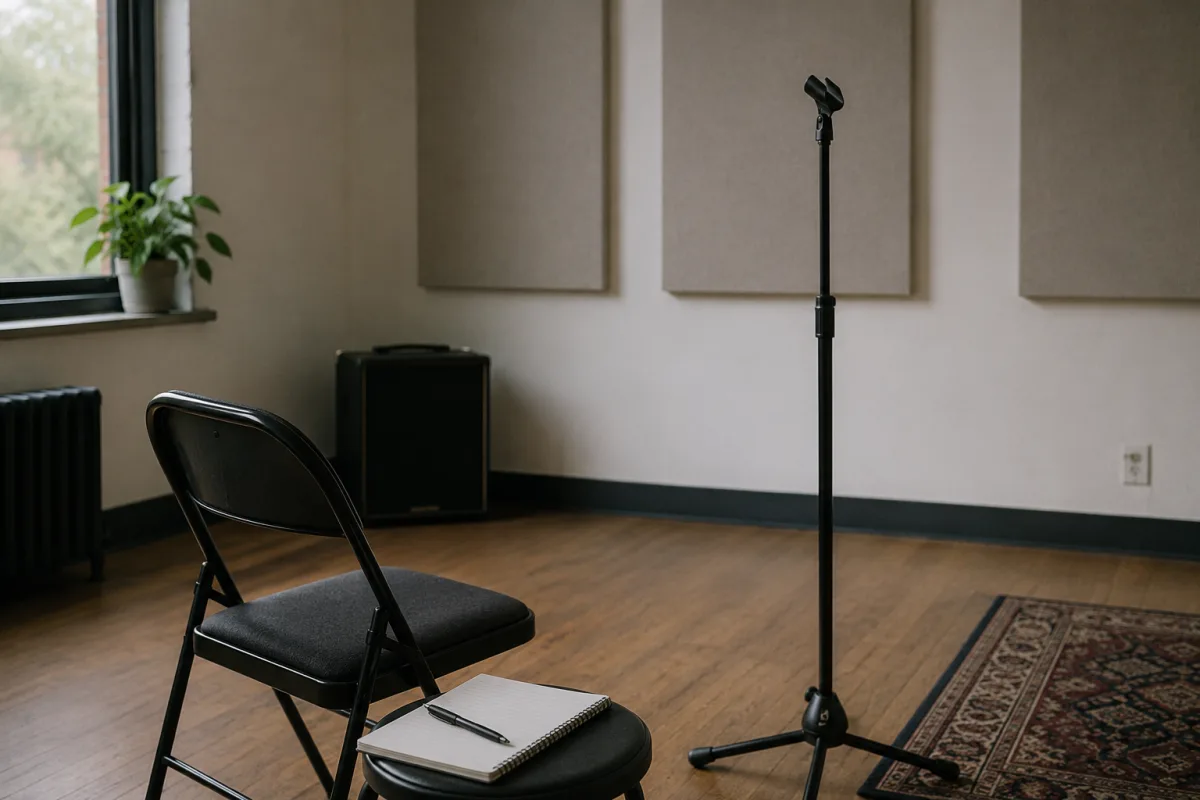
If self image drops when people watch you, make a ladder: speak alone, record yourself, speak to one friend, ask a question in a meeting, then try a larger setting.
Do not jump from private fear to a huge audience. The nervous system learns through manageable repetition.
For more performance-specific support, stage fright coping is a related guide.
The Boundary Script
Write one sentence for a comment that harms your self image: I am not discussing my body, I need feedback on the work not my character, or I am taking a break from this topic.
Practice the sentence out loud. Boundaries are easier to use when the words are already available.
You do not need to convince the other person that the boundary is reasonable before using it.
Ask For Professional Help When Needed
Activities can help mild to moderate self-image struggles, but they are not enough for every situation.
Seek support if there is panic, depression, eating disorder behavior, self-harm thoughts, trauma symptoms, or severe avoidance.
If communication shuts down in certain settings, selective mutism treatment may be relevant to explore with a professional.
Mirror Neutrality Practice
Stand in front of a mirror for thirty seconds and describe only neutral facts: color of shirt, hair length, posture, expression. Do not rate attractiveness.
This can reduce the habit of turning every reflection into a judgment. If it feels too intense, start with less time or skip mirrors for the day.
The goal is not to stare until you love what you see. The goal is to stop attacking yourself automatically.
Skill Evidence Practice
Pick one skill you want to build, then practice for ten minutes and write what improved by one percent. Tiny evidence is still evidence.
This works for music, sport, public speaking, cooking, studying, or social skills. Self image often improves when identity is tied to practice rather than talent.
Repeat weekly and compare effort, not only outcome.
Support Map
Draw three circles. In the center, list people who are safe with vulnerable topics. In the next circle, list people for practical help. In the outer circle, list people who are friendly but not emotionally safe.
This prevents asking the wrong person for the wrong kind of support.
If no one belongs in the center, that is information. A counselor, support group, or trusted mentor may help fill the gap.
Media Audit
Choose ten accounts, shows, or podcasts you consume often. Mark each as calming, useful, neutral, or harmful to self image.
Remove or mute a few harmful inputs for two weeks and notice whether your thoughts change.
This is not about hiding from the world. It is about choosing what gets repeated inside your head.
Future-Self Letter
Write a letter from six months in the future. Focus on what you practiced, what you stopped feeding, and which situations became less powerful.
Keep the tone realistic. A useful letter does not promise a perfect life; it describes a few repeatable changes.
Read it when motivation drops and choose one action from it.
One Brave Rep
Choose one small action that contradicts a harsh belief. If the belief is I am invisible, ask one question. If it is I cannot finish, complete one tiny task.
The action should be small enough that fear cannot argue for hours. One brave rep is evidence, not a personality makeover.
Repeat the same kind of rep until it becomes less dramatic.
Compliment Someone Else Precisely
Practicing precise compliments for others can teach your mind how to see people in balanced ways. Say what they did, not a vague label.
Then practice the same structure for yourself: I prepared, I listened, I asked, I repaired, I tried.
This builds a language of evidence instead of empty praise.
Rest As An Activity
Some self-image work is not more effort. It is stopping the cycle long enough for the nervous system to settle.
Rest can be a ten-minute walk, quiet music, stretching, a shower, or lying down without a phone.
If rest feels undeserved, that belief itself belongs in the thought-check exercise.
Schedule rest before you feel completely depleted. Waiting until collapse can make self-criticism louder.
After resting, write one sentence about what changed in your body or mood. This turns rest from avoidance into useful information.
Repeat The Activity That Works
Do not collect endless exercises if one activity is helping. Repeat the thought check, evidence list, or media audit long enough to notice a pattern.
Self image changes through repetition. A new worksheet every day can become another way to avoid the harder practice.
Choose one activity for two weeks, then decide whether to keep it, adjust it, or replace it.
Frequently Asked Questions
How often should I do self image activities?
A few short practices each week are more useful than one intense session you never repeat.
What if journaling makes me feel worse?
Stop or simplify it. A therapist can help if writing turns into rumination.
Are affirmations required?
No. Many people do better with believable, evidence-based statements.
Can kids do these activities?
Yes, with age-appropriate language and adult support.
When should I get help?
Get help if self-image concerns affect eating, safety, relationships, school, work, or daily functioning.
This article is for general information only and isn't a substitute for medical or mental health advice. If symptoms affect daily life, talk with a qualified professional.

Cashie Evans
Covers parenting and practical household topics with clear steps, safety notes and links to current guidance.




Leave a reply
Replying to