

Start with the outcome, not the hype
CDC activity guidance gives a useful outside check, but the plan still has to fit the body doing the work. A group class can turn exercise into an appointment instead of a vague intention.
Use related movement ideas such as equipment setup only when they support the goal instead of distracting from it.
Set up the body and the space
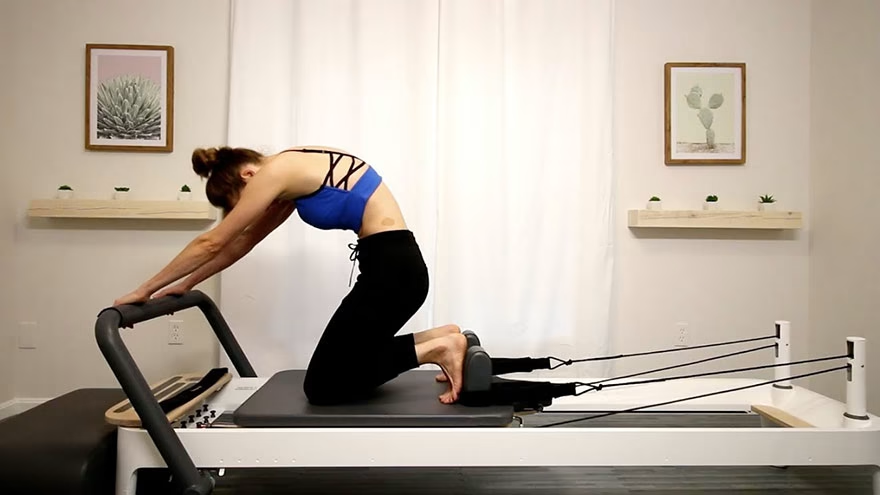
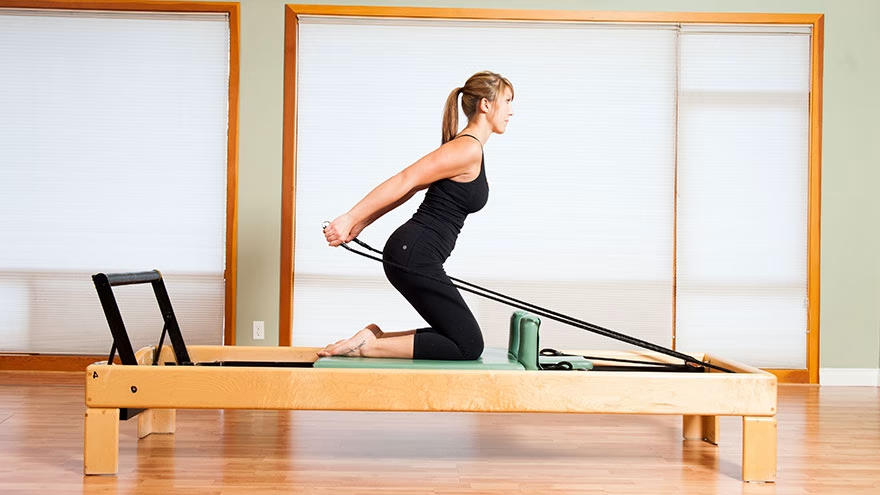
The room, instructor, level, music, and modification options decide whether the class feels welcoming. Shoes, floor, machine fit, clothing, music, and room temperature can decide whether the session feels controlled.
If the workout needs a lower entry point, chair dancing can help keep movement accessible.
Use effort you can repeat
AHA activity recommendations is useful for checking exercise effort. A class should offer options so beginners and regulars are not forced into the same intensity.
A workout that is too hard to repeat is not a routine yet. It is only a hard day.
Keep technique visible
Good instruction names form cues early and repeats them before fatigue sets in. Form should be easy to describe: where the feet go, how the knees track, what the spine does, and when to lower intensity.
Technique reminders from basic aerobic steps are useful because basic control protects harder work.
Progress in small steps
Mayo Clinic intensity guide adds another check on safe progression. Try several formats before deciding group exercise is not for you.
Increase one thing at a time: minutes, resistance, range, speed, impact, or frequency. Changing everything at once hides the cause of pain or fatigue.
Track recovery honestly
The social push should help consistency without pushing people past pain. The next day matters because soreness, sleep, appetite, mood, and joint comfort tell you whether the workload matched the person.
The best plan is the one that leaves enough energy to come back without bargaining with yourself.
Fit the advice to the person using it
A group class should fit fitness level, schedule, instructor style, music volume, injury history, and comfort with crowds. Advice that ignores the user usually fails at the first sign of stress.
Start with the fixed limit. That may be money, law, weather, equipment, policy, health, time, or a person's current ability.
Use a visible measurement
The useful measurement is attendance, effort level, modifications used, form confidence, and recovery after class. A visible measure keeps the plan from turning into a mood-based guess.
Write it down before starting. A remembered plan gets softer every time someone is tired, rushed, hungry, sore, or worried.
Plan for the ordinary interruption
Crowds, comparison, loud music, poor cueing, or schedule conflicts can weaken the benefit. Do not treat that as failure. Treat it as part of the design.
A backup that is easy to use is better than a perfect plan nobody can follow. Keep the fallback close enough to use without drama.
Keep the cost honest
The cost can be fees, travel time, intimidation, or injury if the level is wrong. Cost is not only cash. It can be time, injury risk, trust, sleep, cleanup, lost pay, or a return trip.
If the plan creates a hidden cost for someone else, slow down and name that cost before going forward.
Remove one fragile step
Most plans have one weak point. It may be an unclear rule, a missing document, bad shoes, no water, vague permission, poor lighting, or a schedule with no margin.
Fix that point first. The rest of the plan usually becomes easier once the most fragile step is gone.
Keep language plain
Plain language helps under pressure. Use the actual time, place, rule, route, resistance, budget, symptom, policy, or safety step.
Plain notes are not boring. They are what let another person repeat the choice without guessing what you meant.
Review after the first try
Notice whether you felt guided, safe, and willing to return. Do the review while details are fresh, not a week later when memory has cleaned up the hard parts.
One useful note is enough. Save the change that will make the next attempt safer, cheaper, calmer, or easier to repeat.
Know where the advice stops
Pause when the instructor ignores pain, the room feels unsafe, or modifications are not available. That is the line where general guidance should give way to a rule, professional advice, medical care, local authority, or workplace process.
Stopping at that line is part of doing the work carefully. It protects the person, the group, and the decision.
Leave the next step ready
End with one ready action: pack the bag, send the question, check the policy, book the guide, lower the resistance, save the receipt, or write the route.
A ready action keeps momentum without pretending the whole problem is solved in one sitting.
Make the plan boring enough to repeat
A plan that looks impressive can still fail if it needs too much energy every time. The repeatable version is usually quieter, shorter, and easier to explain.
Repeatability matters because most results come from the second, third, and fourth attempt. A single perfect attempt is less useful than a modest plan that keeps working.
Protect the lowest-energy moment
Think about the moment when attention is lowest: late afternoon, the end of a class, the last mile, the payroll deadline, the hotel checkout, or the drive home.
That is where the plan needs help. Put water, notes, gear, contact details, route checks, or a calmer option exactly where that moment happens.
Ask what would make this safer
Safety is often improved by a small change: one more light, a shorter route, a clearer policy, a better shoe, a worn life jacket, a private conversation, or a real spending cap.
Do that change before adding anything else. Extra detail cannot compensate for the one safety step that was skipped.
Keep other people out of preventable trouble
Many choices affect someone besides the person making the plan. A coworker may inherit a bad record, a paddling partner may wait at the wrong takeout, or a beginner may copy unsafe form.
If another person carries part of the risk, the explanation should be clearer and the fallback should be easier to find.
Use the first mistake as data
The first mistake is useful if it changes the next version. Maybe the class was too loud, the water was too cold, the policy was unclear, the shoes rubbed, or the trail took longer than expected.
Write that down without turning it into a story about personal failure. The point is to remove the repeat problem.
Choose the calmer version first
The calmer version is not weaker. It gives you a baseline, lets you notice real limits, and leaves enough attention to handle surprises.
After the calmer version works, you can add distance, intensity, difficulty, guests, gear, policy detail, or a more ambitious route with better judgment.
Close the loop with one person
Tell one person what changed, what worked, or what still needs attention. That person may be a partner, manager, instructor, guide, paddling buddy, HR contact, or future version of you.
Closing the loop prevents the same lesson from being learned twice. It also makes the next decision less lonely.
Separate confidence from proof
Feeling ready is useful, but proof is better. Proof might be a written policy, a checked weather window, a stable heart-rate range, a clean route plan, or a practice session that went well.
Use confidence to begin, then use proof to decide whether the plan should grow.
End before the plan turns sloppy
Stopping at the right time is a skill. Quit the session, meeting, route, or purchase before fatigue turns small choices careless.
A clean ending leaves people willing to try again, which is often the result that matters most.
It also protects the notes, gear, money, and relationships that make the next try easier.
That is a practical outcome, not a decorative finish.
Keep the ending simple enough that it actually happens.
Frequently Asked Questions
What is the first step?
Choose a beginner-friendly class and arrive early enough to ask about modifications.
Start there before adding detail.
What should I avoid?
Avoid choosing a class by popularity instead of matching level, cueing, schedule, and comfort.
That is where the plan usually becomes harder than it needs to be.
When should I pause?
Pause when the instructor ignores pain, the room feels unsafe, or modifications are not available.
Use a qualified source or local rule when risk is involved.
How do I know it worked?
Notice whether you felt guided, safe, and willing to return.
A good result should be easier to repeat.
Cashie Evans
Covers parenting and practical household topics with clear steps, safety notes and links to current guidance.

Leave a reply
Replying to