
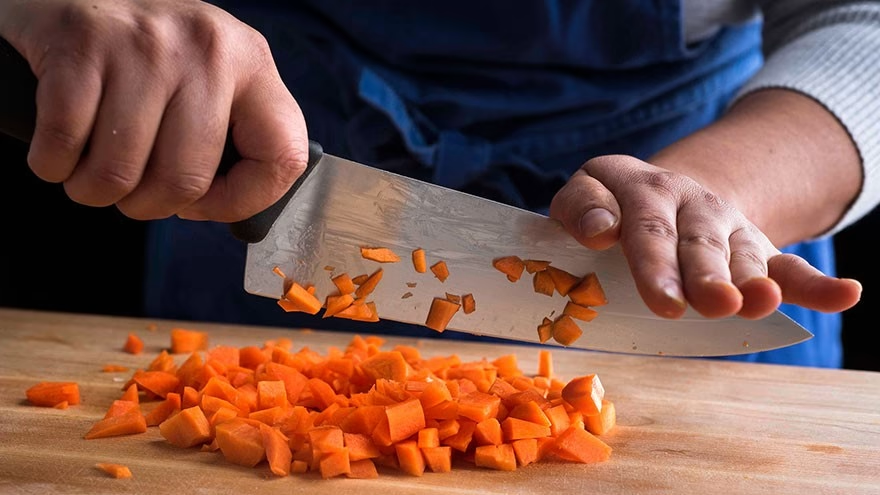
Kitchen Cutting Techniques Start With Safety
Kitchen cutting techniques are not about showing off. They make food safer to handle, easier to cook evenly, and faster to prepare. A good dice helps onions soften at the same pace. A clean slice keeps herbs from bruising. A stable cutting board keeps the knife from chasing the ingredient.
The Culinary Institute of America says in its knife skills guidance that good knife skills can save time and reduce waste, while poor skills put fingers at risk. That is the right priority order: safety first, then speed.
Before learning cuts, set the board on a damp towel so it cannot slide. Clear space for uncut food, finished food, and scraps. A steady board changes everything.
Choose the Right Knife and Grip
A chef's knife handles most vegetables, herbs, cooked meats, and general prep. A paring knife is better for small trimming jobs. A serrated knife is better for bread, tomatoes, and foods with a firm outside and soft inside.
Hold the knife so your hand feels secure and relaxed. Many cooks use a pinch grip, with thumb and index finger near the blade and the remaining fingers around the handle. Do not point your index finger along the spine if it makes the knife wobble.
The Institute of Culinary Education's knife skills overview highlights grip, body position, hand position, posture, and follow-through. Those basics matter more than memorizing French cut names.
Keep the knife sharp. A dull knife forces pressure and slips more easily. Sharp is safer than dull when the cook is paying attention.
Maintain the Knife While You Work
Wipe the blade when starch, herbs, or garlic start sticking to it. Food glued to the side of the blade can push slices off line and make your next cut less controlled.
Use a honing rod if the knife edge feels slightly bent or tired, but do not confuse honing with sharpening. Honing realigns an edge. Sharpening removes metal to create a new edge.
Set the knife down flat and away from the board edge when you pause. Never hide a knife under towels, vegetable peels, or dishes in the sink. Visible knives are safer knives.
Use the Claw Hand
Your guiding hand should hold the food with fingertips curled back. The flat side of the blade can touch the knuckles while the fingertips stay behind them. This is often called the claw.
Move the guiding hand slowly as the food gets smaller. Do not rush the last inch of an onion, carrot, or potato. Small ends are where many sloppy cuts happen.
If a vegetable rolls, make a flat side first. Cut a carrot in half lengthwise, trim a round potato, or halve an onion through the root. Food that sits flat is easier to cut and less likely to slide.
For greens, the same hand position helps keep leaves gathered. Livecub's guide to cooking greens connects that prep step to better texture in the pan.
Slicing, Chopping, and Rocking
Slicing uses smooth forward or backward strokes. It works well for onions, potatoes, cucumbers, cooked meat, and fruit. Let the blade travel instead of pressing straight down with force.
Chopping uses a more direct up-and-down motion. It can be useful for rough vegetable prep, but it should still be controlled. The pieces do not need to be perfect, but they should be similar enough to cook evenly.
Rocking keeps the tip of the knife near the board while the handle moves up and down. It is useful for herbs and aromatics. Gather the herbs, cut once, regroup, then cut again instead of grinding them into wet paste.
Even cuts matter in sauces and stir-fries. Livecub's stir-fry sauce guide is easier to use when vegetables hit the pan at similar sizes.
Cut by Cooking Time
Cut dense vegetables smaller than tender vegetables if they will cook together. Carrots, potatoes, squash, and turnips need more time than zucchini, peppers, mushrooms, or leafy greens.
If everything must go into the pan at once, adjust the cut size. If you want larger pieces, stagger the timing instead. Start dense vegetables first, then add quick-cooking pieces later.
This is where knife skill starts to affect flavor. Food that cooks evenly browns better, seasons more evenly, and lands on the plate with better texture. The cut is part of the recipe.
Dicing and Mincing
Dicing means cutting food into small cubes. A rough dice is fine for soup bases. A smaller, cleaner dice is better when the vegetable stays visible in the finished dish.
For onions, trim the stem end, halve through the root, peel, and make vertical cuts toward the root without cutting all the way through. Then cut across those slices to create dice. Skip any cut that feels unstable.
Mincing is a very fine cut used for garlic, shallots, ginger, and herbs. Start with thin slices, then chop smaller. For garlic, a pinch of salt can help grip the pieces and pull out moisture.
Size should match cooking time. Garlic minced too early can burn before larger vegetables soften. Add small aromatic cuts later if the pan will be hot.
Julienne, Baton, and Uniform Sticks
Julienne means thin matchsticks. Baton cuts are thicker sticks. These cuts are useful for carrots, cucumbers, potatoes, peppers, and vegetables that need to cook or present evenly.
Start by trimming the vegetable into a stable block. Slice it into even planks, stack a few planks if safe, then cut those into sticks. Work slowly until the movement feels natural.
For fries, roasted vegetables, and slaws, uniform sticks give better texture. Thin pieces cook fast and brown quickly. Thick pieces stay firm longer. Mixing both sizes in one pan can lead to half-burned, half-hard food.
If you are prepping goose, poultry, or rich sides, Livecub's how to cook goose article is a reminder that even cuts and timing affect the whole meal.
Cutting Boards and Cross-Contamination
Keep raw meat, poultry, seafood, and their juices away from ready-to-eat foods. USDA FSIS cutting board guidance says consumers may use wood or nonporous boards for raw meat and poultry, but cross-contamination must be avoided.
Use separate boards if possible: one for raw animal foods and one for produce, bread, and cooked foods. Wash boards, knives, and counters after raw meat touches them.
Replace boards that are deeply grooved, cracked, or hard to clean. A board that traps food in cuts is not worth keeping. Clean tools are part of knife skill.
If you prep vegetables for storage, Livecub's fresh vegetable freezing guide fits naturally after washing, trimming, blanching, and cutting.
Keep the Work Area Clear
A crowded board makes cutting harder. Move finished food to a bowl, sweep scraps into a separate pile, and keep towels away from the blade. If the board is small, work in batches instead of stacking food on top of itself.
Dry wet ingredients before cutting when possible. Slippery scallions, rinsed herbs, and wet peppers can slide under the knife. A clean towel or salad spinner can make prep safer before the first cut.
Good prep has a rhythm: wash, dry, trim, cut, move, wipe, then continue. That rhythm keeps the knife path visible.
Practice Without Wasting Food
Practice on onions, carrots, potatoes, celery, cucumbers, and cabbage because they are common and useful. Turn practice cuts into soup, roasted vegetables, slaw, omelets, or stock scraps.
Slow practice beats fast careless motion. Set a comfortable pace, keep the board clear, and stop when your hand gets tired. Tired hands slip.
Save perfect cuts for dishes where they matter. A clean dice helps salads and garnishes. A rough chop is enough for stock, stew, and many sauces. Good cooking uses the right level of precision for the task.
For dessert prep, Livecub's tiramisu guide shows a different kind of precision: slicing, layering, and portioning without crushing soft ingredients.
Frequently Asked Questions
What knife cut should beginners learn first?
Learn safe slicing and a rough dice first. Those two skills cover onions, potatoes, carrots, celery, and many everyday recipes.
What is the claw hand?
It is the guiding hand position where fingertips curl back and knuckles guide the side of the blade.
Why do even cuts matter?
Even cuts cook at a similar pace, so one piece is not raw while another burns or turns mushy.
Do I need separate cutting boards?
Separate boards for raw meat and ready-to-eat foods reduce cross-contamination risk and make cleanup easier.

Tory Stearns
Edits practical household, travel and lifestyle explainers. Claims that can change are linked to current primary or subject-authority sources.




Leave a reply
Replying to