

A Weimaraner is easy to admire and hard to under-schedule. The silver coat, pale eyes, and athletic outline create the famous "Gray Ghost" look, but daily life is less mysterious: this breed needs work, company, training, and owners who can handle speed. Good Weimaraner questions usually come from people who like the dog in photos and want to know whether the real animal fits their house.
What is a Weimaraner?
The AKC Weimaraner profile describes the breed as Germany's sleek and swift Gray Ghost, loved by hunters and pet owners for friendliness, obedience, and beauty. It also says Weimaraners enjoy plenty of exercise and quality time with their humans.
That last part is the ownership key. A Weimaraner is not a decorative silver dog. It is a sporting breed built to move, search, think, and stay near its people. A bored Weimaraner often creates work: counter surfing, barking, digging, pacing, or escaping.
If you are comparing other high-energy breeds, Livecub's German Shorthaired Pointer questions are useful because both breeds need structured outlets, not just a big yard.
Are Weimaraners good family dogs?
They can be excellent family dogs in active, consistent homes. They are often affectionate and people-focused, but that attachment can become demanding if the dog never learns to settle. Small children need supervision because a young Weimaraner can knock people over without meaning harm.
The Weimaraner Club of America says the ideal temperament is fearless, friendly, alert, and obedient, while also warning that obedience must be trained early because the breed can be creative about pursuing its own desires. That is a fair description of the family challenge.
A family should plan for walks, training, mental games, safe chewing, and quiet rest. Activity without manners only produces a fitter nuisance.
How much exercise does a Weimaraner need?

Most adult Weimaraners need serious daily movement plus training. Long walks, hiking, field work, scent games, running with a conditioned adult, retrieving, obedience, and agility-style exercises can all fit. Puppies need shorter, controlled sessions while growing.
Do not use exhaustion as the only strategy. A tired dog that has learned no impulse control will wake up tomorrow with the same habits. Mix movement with sit, stay, recall, heel, and settle. Sniffing and searching can tire the mind more safely than constant hard running.
Exercise should be adjusted for heat, joints, age, and health. Ask your veterinarian before adding forced mileage or intense jumping. The goal is a sound athlete, not a weekend performance followed by soreness.
A yard helps, but it is not exercise by itself. Many Weimaraners patrol, bark, or dig if left alone outside with no task. Use the yard for recall games, scent searches, retrieving rules, and calm observation. Supervised work gives better results than turning the dog loose and hoping it gets tired.
Bad weather needs a plan too. Food puzzles, hide-and-seek games, short obedience drills, trick training, and indoor scent work can keep the dog from practicing nuisance behavior when long outdoor sessions are not realistic.
Are Weimaraners hard to train?
They are smart and responsive, but they can be pushy if training is inconsistent. Short, frequent sessions work best. Pay attention to recall, leash manners, leave it, drop, crate comfort, and calm greetings. These skills make the difference between a lively dog and an unmanageable one.
Use rewards the dog values: food, toys, sniffing, movement, and access to people. Harsh correction can create avoidance or a bigger argument. A clear routine does not have to be soft. It simply tells the dog which behavior earns the next good thing.
For a related breeder and training planning angle, Livecub's Brittany breeder recommendations show why sporting-breed buyers should ask about drive before bringing a puppy home.
Can Weimaraners be left alone?

Many struggle if left alone for long stretches without training. This does not mean every Weimaraner has separation anxiety, but the breed's attachment makes alone-time practice essential. Start with short absences, safe confinement, food puzzles, and calm departures.
If the dog screams, destroys doors, drools heavily, panics, or injures itself when alone, get professional help. True separation-related distress is not stubbornness. It needs a careful plan.
Independence training should begin early. Teach the puppy to rest behind a gate while you are home, chew calmly in a crate, and settle without constant touch. That skill protects both dog and owner.
Do Weimaraners need another dog?
Another dog can help some Weimaraners, but it is not a cure for poor training or separation distress. A second dog may become a play partner, or it may double the barking, digging, and chaos. Choose a second dog only if you want that dog for its own sake.
If loneliness is the problem, start by teaching calm separation from people. If exercise is the problem, add structured work. If anxiety is the problem, talk to a veterinarian or qualified behavior professional. A second dog should not be used as a shortcut around the real issue.
What homes are a poor fit for a Weimaraner?
A poor fit is a home that wants beauty without workload. Long workdays, no training plan, no safe exercise space, and low tolerance for clingy behavior make life hard. The breed often wants to be where the people are, which can feel affectionate or suffocating depending on the household.
Weimaraners also need careful management around small animals and wildlife. Many have hunting drive. Cats, poultry, rabbits, and yard wildlife may trigger chase. Early exposure helps some dogs, but management is still needed.
What mistakes do new owners make?
The first mistake is waiting until adolescence to train. By then the dog is faster, stronger, and more rehearsed in bad habits. The second is using exercise without teaching settle. The third is treating clinginess as cute until the dog cannot rest alone.
Another mistake is choosing by color and eye appeal alone. Ask breeders about parent temperament, health records, drive, and how puppies recover after surprise. Fit beats appearance every time.
What grooming and health checks do Weimaraners need?
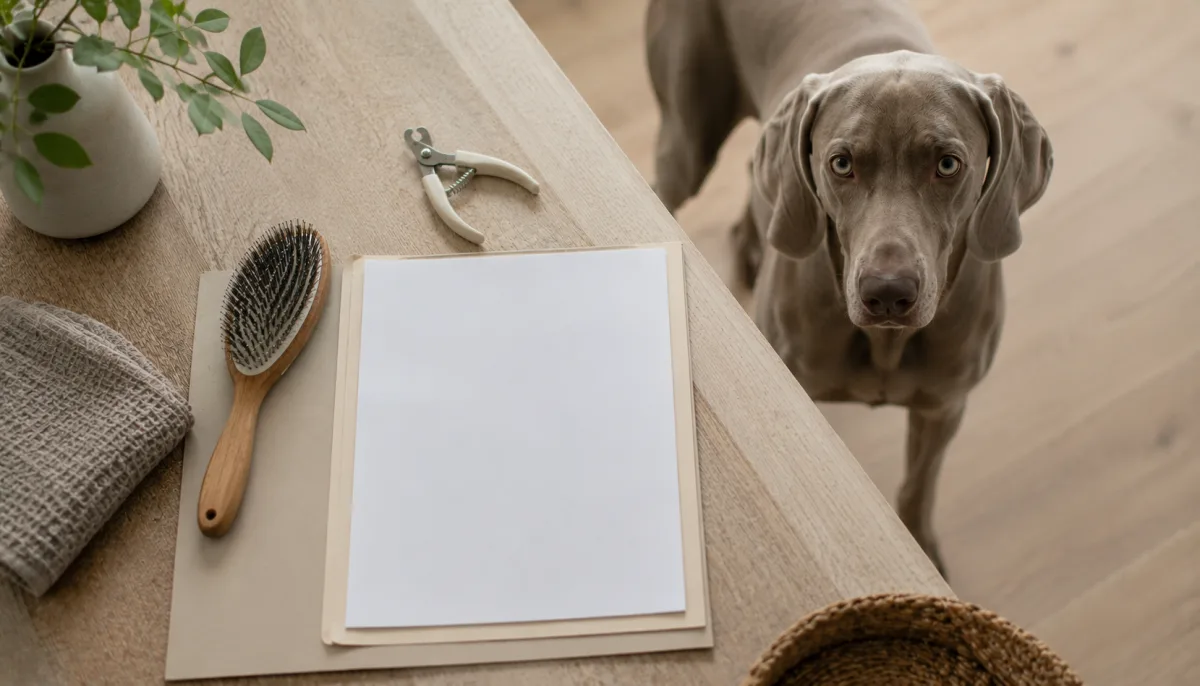
Grooming is simple compared with many breeds. Brush the short coat, trim nails, clean ears as advised by a veterinarian, brush teeth, and check skin after outdoor activity. The ears deserve attention because floppy ears can trap moisture.
The Weimaraner Club of America CHIC page lists its breed health testing profile and explains CHIC as a tool for monitoring disease prevalence and progress. Ask breeders about hips, eyes, thyroid, and DNA testing relevant to the breed, then verify records where possible.
Keep the dog lean. A Weimaraner that carries extra weight loses stamina and puts more stress on joints. Owners used to large companion breeds can compare size planning with biggest dog breed expectations, but the Weimaraner is more endurance athlete than giant couch dog.
What should a Weimaraner buyer ask a breeder?
Ask how the parents behave at home, not just in the field or show ring. Ask whether they can settle indoors, recover after excitement, ride in the car, tolerate handling, and stay alone calmly. Those answers matter more to a family than a perfect stacked photo.
Ask about health records, return policy, socialization, crate practice, and which puppy fits your schedule. A responsible breeder should be honest if a puppy is too intense for your home. That honesty may save both you and the dog a hard year.
Put those answers in writing before sending a deposit, especially if pickup is months away and plans may change.
Frequently Asked Questions
Are Weimaraners good for first-time owners?
Some prepared first-time owners succeed, but the breed is demanding. Daily exercise, training, confinement practice, and patience are required. Casual homes should choose an easier dog.
Do Weimaraners bark a lot?
They can bark from boredom, alertness, frustration, or separation distress. Training, exercise, and calm alone-time practice usually matter more than trying to silence the dog after the pattern forms.
Are Weimaraners good with other dogs?
Many can be, especially when socialized and managed well. High energy and rough play can annoy other dogs, so introductions should be controlled and supervised.
Do Weimaraners shed?
Yes, but the short coat is easy to manage. Regular brushing, bathing when needed, nail care, teeth, and ears are the main routine.
Choose a Weimaraner if you want an athletic partner and can give that partner a job. The silver coat is the easiest part; the daily structure is the real breed test.

Chiara Bradshaw
Covers education, culture and creative topics with an emphasis on readable explanations and verifiable references.




Leave a reply
Replying to