
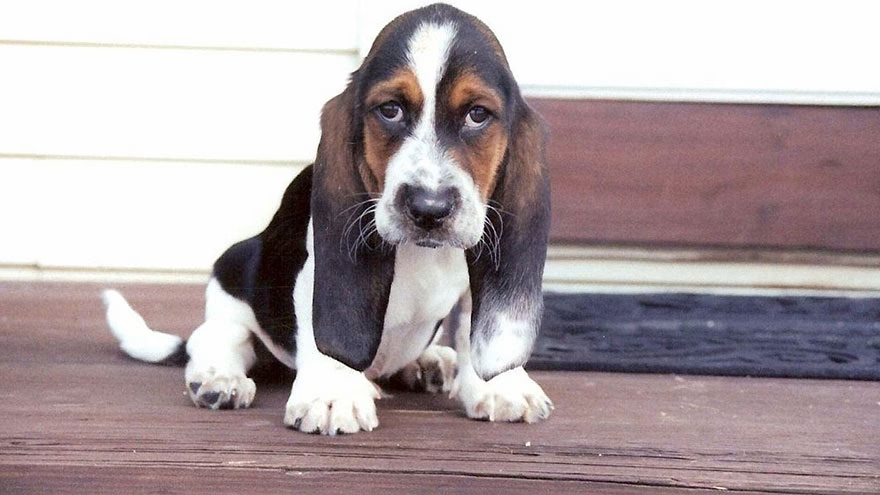
Basset Hound Health Guide should focus on the breed's shape as much as its charm. Bassets are low, heavy-boned scent hounds with long ears, loose skin, big paws, and a talent for looking hungry. Those features are part of the appeal, but they also shape health care.
A healthy Basset is not a thin Greyhound and not a round ottoman. The goal is a sturdy, comfortable dog with clean ears, good weight, protected joints, healthy skin, and enough movement to support the body without overloading it.
What Health Issues Are Common In Basset Hounds?
The American Kennel Club describes the Basset Hound as a recognizable scent hound with long ears and a low body. That structure can contribute to ear care needs, weight concerns, joint strain, and back stress.
Common areas to watch include ears, skin folds, eyes, weight, joints, back, stomach, and nails. No guide can predict an individual dog, but breed-aware care helps owners catch problems earlier.
Why Is Weight So Serious?
Extra weight stresses a Basset's back, elbows, hips, knees, feet, and breathing. Because the breed is low to the ground and heavily built, a few extra pounds can matter. Keep meals measured and treats counted.
Do not judge by begging. Bassets can look starving five minutes after dinner. Use body condition, waist, rib feel, and veterinary advice. If you want a size comparison, Livecub's Basset Hound common questions can help with ownership expectations.
How Do You Care For Basset Ears?
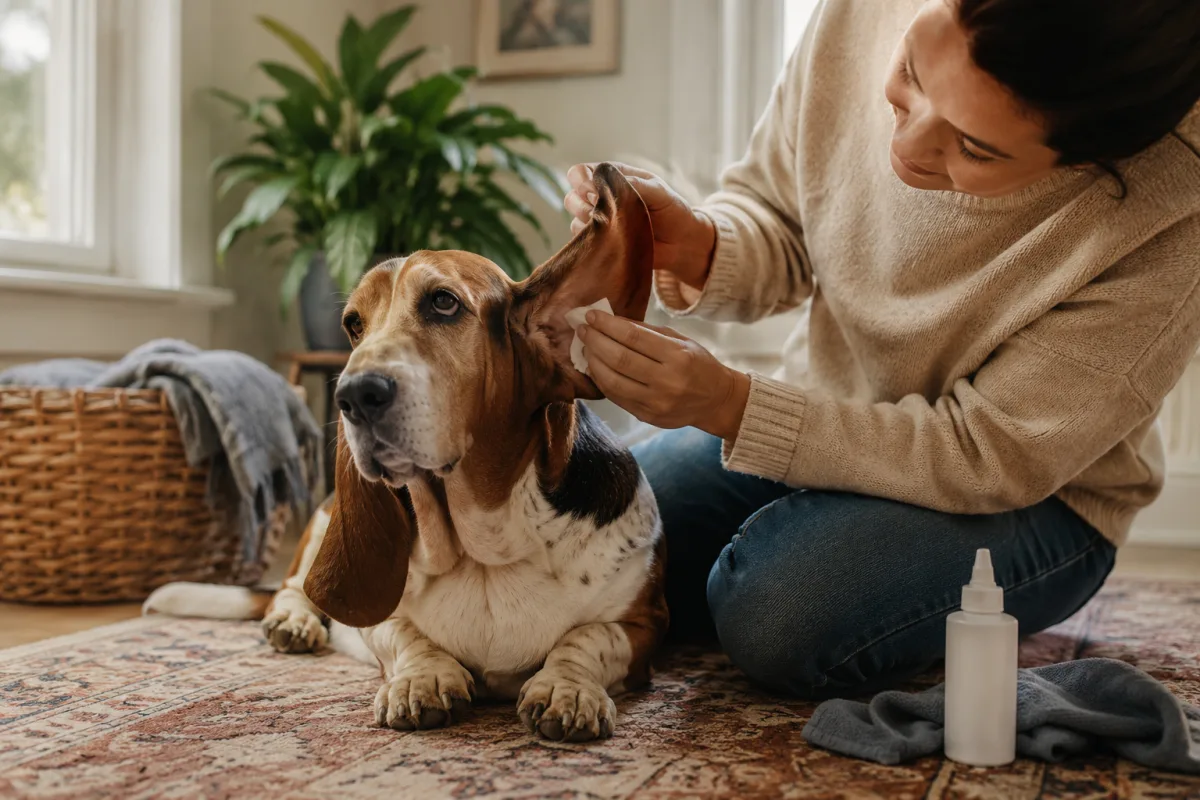
Long, heavy ears reduce airflow and can trap moisture and debris. Check ears weekly, and ask your veterinarian what cleaner and schedule fit your dog. Redness, odor, head shaking, scratching, discharge, or pain deserve a vet call.
PetMD's Basset Hound health overview notes that allergies and seborrhea can contribute to ear and skin infections. Ear problems are not just cosmetic. They can hurt.
What Skin Problems Should Owners Watch?
Loose skin and folds can hold moisture. Check armpits, neck folds, belly, feet, and areas where skin rubs. Watch for redness, odor, greasy coat, flakes, licking, hot spots, or repeated infections.
Bathing too often or using harsh products can make some skin worse. Ask your veterinarian about shampoos if allergies, yeast, or bacterial infections are suspected. Do not keep treating recurring skin problems as simple dirt.
How Do Nails And Feet Affect Health?
Bassets carry a lot of body on short legs and big feet. Long nails can change the way the dog stands, which may add strain to toes, wrists, elbows, shoulders, and back. Trim nails before they click heavily on the floor.
Check between toes for redness, grass awns, cysts, licking, swelling, or yeast smell. A Basset that suddenly refuses a walk may have a foot problem rather than an attitude problem. Feet are easy to ignore until they hurt.
How Do You Protect The Back And Joints?

Use ramps or steps for furniture and cars if your dog uses them. Avoid repeated jumping from high surfaces. Keep floors non-slip where possible. Trim nails so the dog stands naturally.
Livecub's longhair Dachshund grooming guide covers another long-backed breed, but the handling idea fits: regular care gives you a chance to notice soreness, nail problems, or changes in movement.
What Is Bloat And Why Does It Matter?
Bloat and gastric dilatation-volvulus are emergency concerns in many deep-chested breeds. Signs can include a swollen abdomen, unproductive retching, restlessness, drooling, weakness, or collapse. Treat suspected bloat as an emergency.
Ask your veterinarian about risk, feeding routines, exercise around meals, and whether preventive surgery is ever discussed for your dog. Internet waiting is dangerous if bloat is suspected.
What Feeding Habits Help?
Use measured meals rather than an always-full bowl. Split food into two meals if your veterinarian agrees, keep rich scraps limited, and make treat calories part of the daily total. A slow feeder can help dogs that inhale food.
Diet changes should be gradual unless a veterinarian says otherwise. Sudden changes can upset digestion and make it harder to tell whether a new food is helping. Keep the food bag, ingredient list, and feeding amount handy for vet visits.
What Eye Issues Can Bassets Have?
Droopy eyelids and breed structure can make eyes more exposed or irritated in some dogs. Watch for redness, squinting, discharge, cloudiness, rubbing, or sudden vision changes. Eye pain should be checked quickly.
The Basset Hound Club of America's health policy references breed health work and responsible attention to health, grooming, veterinary care, feeding, housing, and exercise. Eye and ear checks are part of that practical care.
How Much Exercise Does A Basset Need?
Bassets need regular movement, even if they prefer the couch. Walks, sniffing, gentle hills, scent games, and play help weight, joints, mood, and digestion. Avoid hard heat, long forced runs, and repeated jumping.
Let the nose work. A sniffing walk may be slower than you want, but it is mentally satisfying for a scent hound. If you compare active breeds, Livecub's German Shorthaired Pointer questions show a very different exercise profile.
What Should Breeders Discuss?
Ask about family history, eye care, elbows, hips, bleeding disorders if relevant, temperament, weight, and longevity. Ask what health records are available and what the breeder does when health issues appear in a line.
Livecub's breeder recommendations can help shape questions. A responsible breeder should welcome health discussion, not hide behind cute ears.
What Daily Care Helps Most?

Measure food, clean ears as advised, trim nails, brush the coat, check skin folds, use ramps when needed, keep walks regular, and schedule vet checkups. Small habits prevent many large problems from becoming surprises.
Keep a simple health log: weight, ear flare-ups, skin issues, limping, medications, and vet advice. Patterns are easier to see when they are written down.
What About Teeth And Breath?
Bad breath is not always just a breed quirk. Dental disease can cause pain, loose teeth, drooling, chewing changes, and infection. Ask your veterinarian how often your Basset needs dental exams and whether home brushing is realistic for your dog.
Start mouth handling gently. Lift the lip, reward calm behavior, and build from there. A dog that accepts handling is easier to examine, groom, medicate, and help during a health scare.
Dental chews, toys, and diets may help some dogs, but they do not replace veterinary exams. If your Basset has bleeding gums, broken teeth, swelling, pawing at the mouth, or a sudden change in chewing, schedule care rather than masking the smell.
When Should You Call The Vet?
Call promptly for suspected bloat, collapse, severe pain, breathing trouble, sudden weakness, eye pain, repeated vomiting, bloody diarrhea, inability to walk, or a swollen painful belly. Do not wait to see if those signs pass.
For slower problems, call when ear odor returns, skin infections repeat, limping lasts, weight rises, appetite changes, thirst changes, or behavior shifts. Bassets can be stoic. A small change may be the first clue.
A weekly hands-on check helps owners notice those changes sooner. Run your hands over the ribs, belly, ears, feet, tail area, and skin folds. You are not diagnosing the dog; you are learning what normal feels like.
Use the same calm routine each week so the dog accepts handling. That habit pays off when medication, cleaning, or a vet exam becomes necessary.
Frequently Asked Questions
Are Basset Hounds unhealthy?
Not automatically, but their structure means owners need to manage weight, ears, skin, joints, and back care.
How often should I clean Basset ears?
Ask your veterinarian. Some need regular cleaning; others need less. Symptoms matter more than a rigid schedule.
Can Bassets use stairs?
Some can, but repeated jumping and slippery stairs can strain the body. Use ramps when useful.
Why does my Basset smell?
Ear infection, skin infection, folds, dental disease, or anal gland problems can cause odor. A vet check may be needed.
How do I prevent obesity?
Measure food, limit treats, keep walks regular, and use body condition with veterinary guidance.
Are senior Basset Hounds hard to care for?
Senior Bassets may need ramps, softer bedding, dental care, joint support, weight control, and more frequent vet checks.
What Is The Best Health Plan?
Keep the Basset lean, clean the ears carefully, protect the back and joints, check skin and eyes, and work with a veterinarian who understands the breed. A Basset Hound's health plan is not dramatic. It is steady, watchful care repeated every week.

Timothy Davidson
Edits step-by-step general-interest guides for clarity, realistic limits and source verification.

Leave a reply
Replying to