
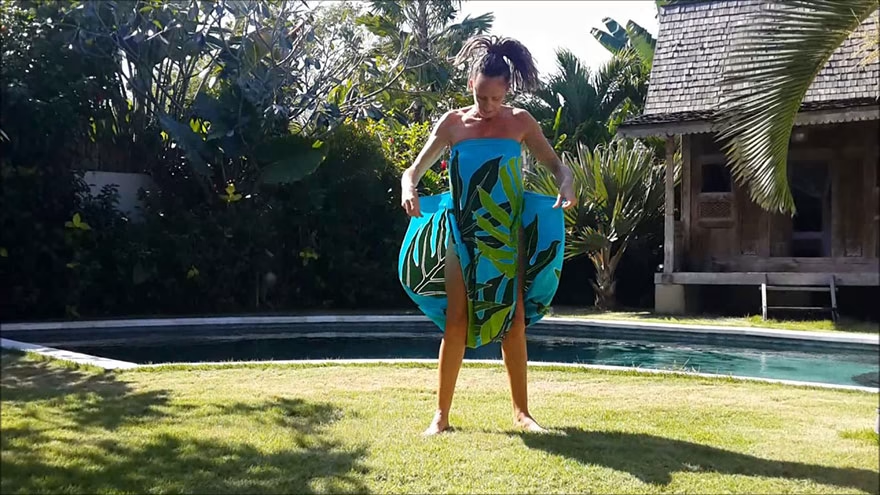
A sarong is just a rectangle until the knot, fabric weight, and body placement start doing the real work. The difference between a clean beach skirt and a sagging towel look is usually two inches of knot placement, not a fancier print. This guide focuses on how to tie a sarong so it holds through walking, sitting, and the awkward moment when you need both hands free. The same piece can become a hip-tied skirt, a cleaner wrap skirt, a halter dress, or a shoulder cover-up if you control three things: edge tension, fabric overlap, and where the knot lands against your body.
The sarong also has a longer story than resort dressing suggests. The Metropolitan Museum of Art notes that Island Southeast Asian textiles carry identity, ancestry, and craft traditions, and many modern beach wraps borrow from that practical wrapped-cloth logic rather than inventing it from scratch. Treat the garment with that in mind: simple tying can look polished when the cloth is handled deliberately.
What size sarong works best for each tie?
Most tying problems start before the knot. A short or narrow sarong can work as a mini skirt, but it will fight you as a dress because there is not enough width to cover the torso and still leave tails for tying. A fuller rectangle, roughly towel-sized or larger, gives you enough overlap for a wrap skirt and enough vertical length for a halter dress. If the fabric is sheer, use it over swimwear rather than asking it to behave like a real dress.
Fabric matters as much as size. Cotton and linen blends grip themselves and make beginner knots easier. Rayon drapes better but can loosen if the knot is too small. Silk or very slick polyester looks fluid in photos but needs a flatter, doubled knot or a small sarong ring to keep tension. Fringe, beads, or heavy border prints should sit toward the hem rather than inside the knot, where bulk makes the tie uncomfortable.
For beach packing, the best all-purpose sarong is not the thinnest one. A semi-opaque cotton or rayon piece covers more, absorbs a little moisture, and can serve as a seat layer on sand. If sun protection is part of the plan, remember that ordinary fabric is not the same as rated UPF clothing. The Skin Cancer Foundation explains that UPF measures how much UVA and UVB radiation passes through fabric; a UPF 50 fabric blocks 98 percent of UV rays. A shoulder drape helps, but it does not replace sunscreen on exposed skin.
How do you tie a sarong skirt that stays put?
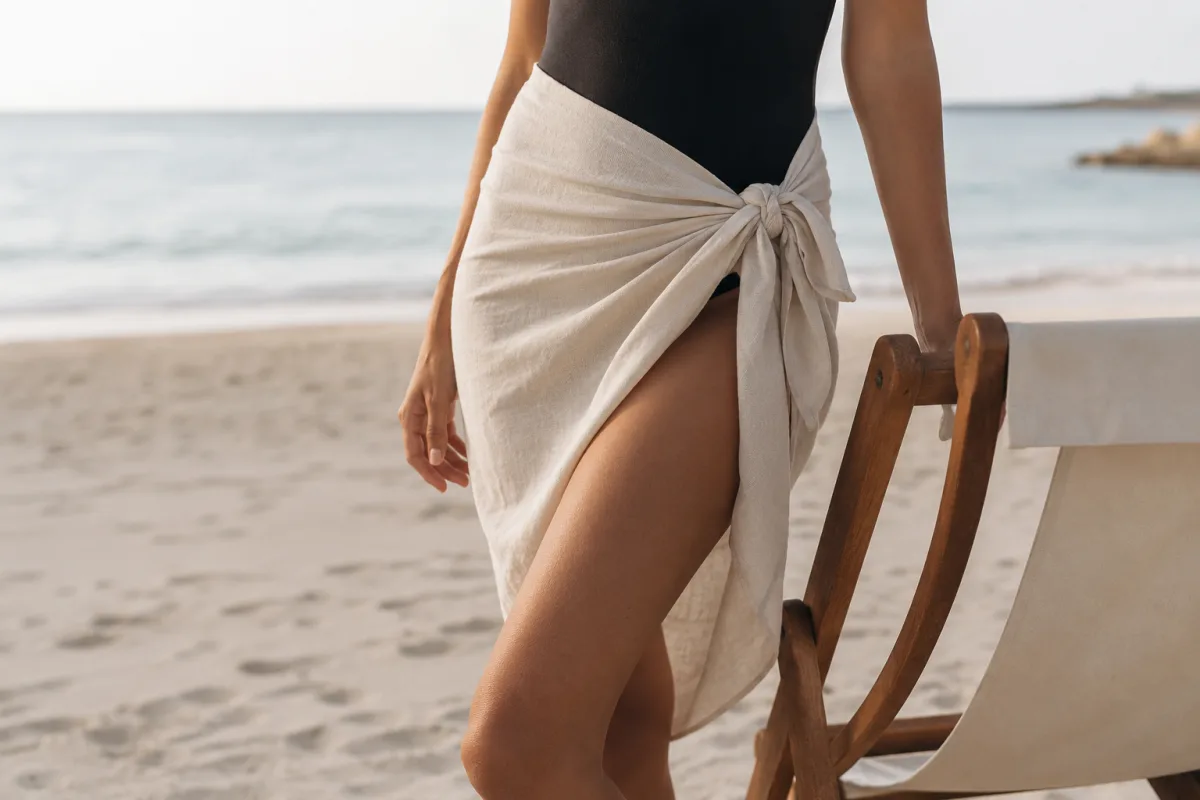
The hip-knot skirt is the most forgiving tie because it uses the body's widest shelf - the hips - to hold tension. Start with the long edge horizontal behind you. Bring both upper corners forward, keeping the top edge level. Cross the corners once at the hip where you want the opening to fall, then tie a flat double knot. Pull the knot outward, not upward, so the fabric tightens around the waist without riding into your ribs.
The failure mode is a knot that sits too high and too centered. It makes the fabric bunch at the stomach and creates a straight vertical split when you walk. Shift the knot slightly toward the front of one hip instead. That angle lets the front panel overlap naturally and keeps the opening from flashing open with every step. If you want more coverage, wrap the fabric one-and-a-half times before tying, then let the final layer fall over the first.
For a cleaner skirt, fold the top edge down once before wrapping. That creates a waistband and shortens the length without a bulky roll. A smaller sarong can become a mini by folding diagonally first, but diagonal folds create a pointed hem; that can look intentional with a print and messy with a plain fabric. InStyle's sarong styling guide treats the full skirt as a beach-to-table option, which works only when the knot is secure enough that you are not adjusting it every ten steps.
If you are dressing for a relaxed couples' beach day rather than a solo swim, comfort beats novelty. A skirt tie leaves the shoulders free and makes it easier to sit for lunch, walk back to a hotel, or keep the wrap on while planning a quiet evening with something like a simple relaxation massage after the beach.
How do you make a halter dress from a sarong?
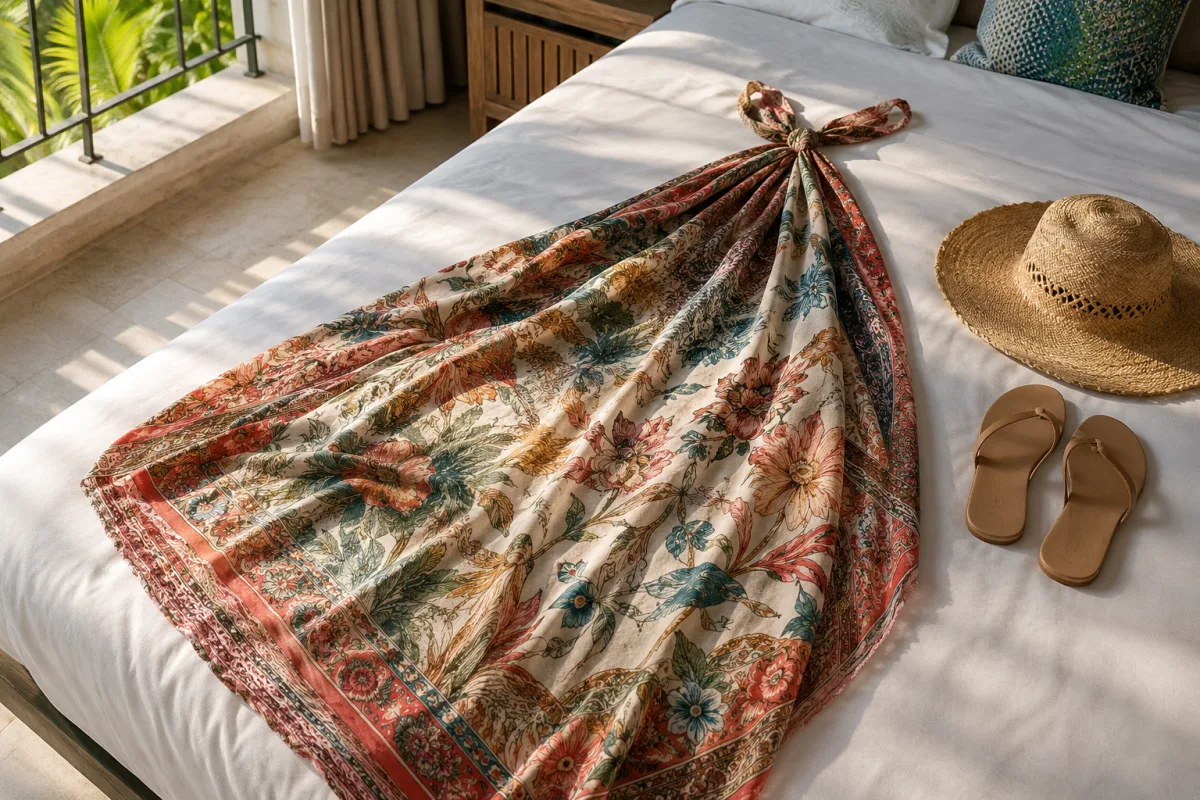
The halter dress needs a larger sarong and a calmer knot. Hold the sarong behind your back with the long edge under your shoulder blades. Bring the two upper corners forward under your arms. Cross them once over the bust, pull them upward, and tie them behind the neck. The cross creates the bust coverage; the neck knot only carries tension. If the neck knot is doing all the work, the dress will pull and feel heavy within minutes.
For more security, twist each front tail once before tying behind the neck. The twist narrows the strap and keeps the fabric from spreading into the armpit. If the front feels too open, pull the fabric higher on the chest before crossing the corners. If the back gaps, lower the back edge and tighten around the ribs first. The dress should feel anchored around the torso, not suspended from the neck.
A second halter version works better on narrow frames: hold the sarong in front of the body, wrap both corners behind your back, cross them, bring them forward under the arms, then tie behind the neck. This creates more back coverage and a flatter front. It is less dramatic, but it solves the common problem of a front knot that presses into the sternum.
Do not use the halter tie for rough swimming, water slides, or any situation where fabric drag can pull the knot loose. It is a cover-up, not active swimwear. For pregnancy or body-size changes, the wrap can be kinder than a fitted beach dress because the tension is adjustable; the same principle - soft pressure, no pinching - also shows up in comfort-focused intimacy advice during pregnancy.
How can a sarong work as a shoulder wrap or beach cover-up?
The easiest shoulder wrap is not tied at all. Drape the sarong across both shoulders like a shawl, then bring one front side across the chest if wind picks up. This is useful when you want light coverage at a pool chair or beach cafe without adding another garment. Choose a more opaque weave if you are using it for shade; sheer fabric looks pretty but gives limited physical coverage.
A one-shoulder cover-up needs one knot. Place the sarong behind your body, bring one upper corner over the shoulder, and bring the opposite corner under the other arm. Tie them near the collarbone or just behind the shoulder. The diagonal line gives more coverage than a plain shawl and stays put better when you walk. Keep the knot small; a heavy shoulder knot can dig into the skin and pull the whole wrap sideways.
For a quick cafe cover-up, use the sarong as a long scarf over a swimsuit and add a plain shirt or loose button-down. The wrap supplies color and shape; the shirt supplies coverage. That combination looks less like you are trying to turn beachwear into formal clothing and more like you planned the transition. It is also easier to undo when you get back to the water.
How do you keep the knot comfortable and secure?
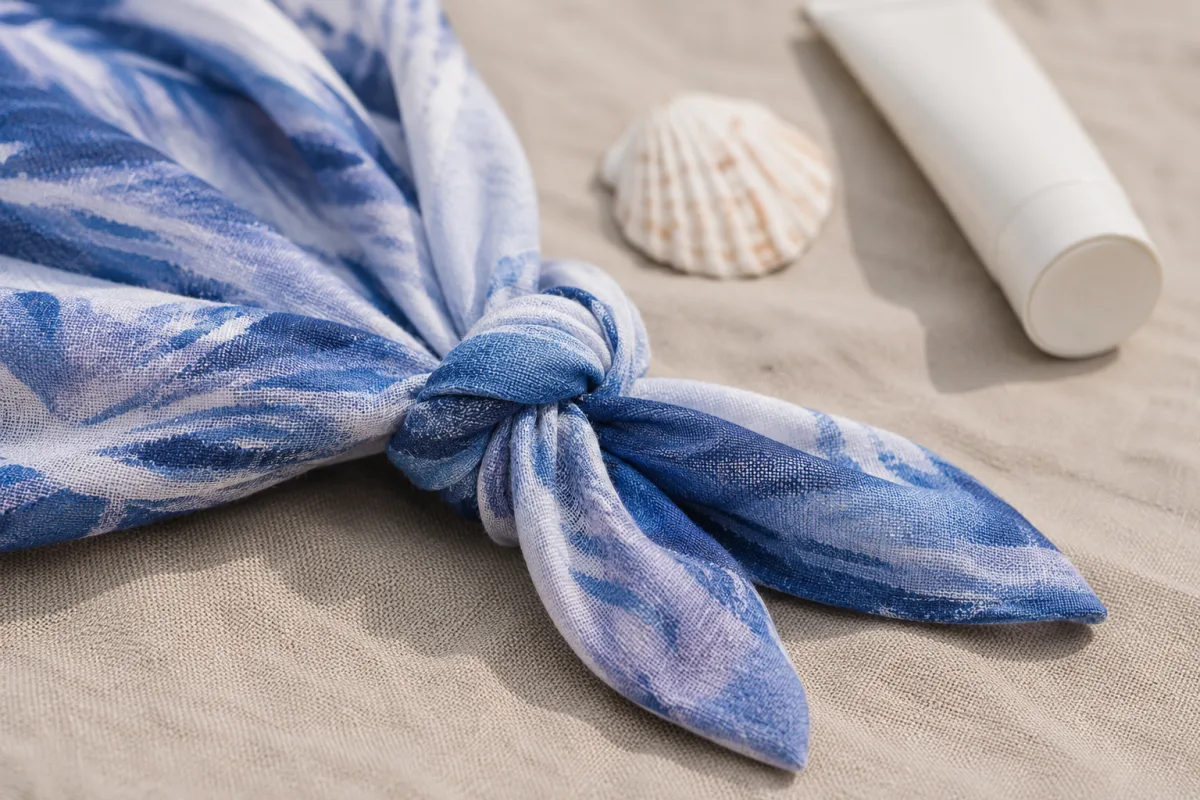
A good sarong knot is flat, reachable, and placed where the body can carry it. Avoid hard knots on the spine, directly under the arm, or at the back of the neck if the fabric is heavy. For skirts, the hip is usually best. For dresses, the upper back or side chest works better than the center front. For shoulder wraps, place the knot high enough that it does not rub under the arm.
Two knot habits help. First, tighten the fabric before tying, not after. Pulling on the knot after it is formed stretches one side and makes the hem uneven. Second, tie with fabric tails of similar length. If one tail is much shorter, the knot will twist toward the long side and loosen as you move.
Sarong rings and small buckles can help if your fabric is slippery, but they should not carry the entire garment. Thread both corners through the ring, spread the fabric flat, then tuck the tails back through. Test it by taking ten normal steps and sitting once. If it slips in that small test, it will not improve at the beach. Pins can puncture fine fabric and create stress points, so use them only on sturdy cotton and never as the primary closure.
The same touch rule applies to any close-contact styling: pressure should feel intentional, not sharp. If a knot leaves a red mark after five minutes, move it. That is the clothing equivalent of overworking a shoulder during a home massage - more force does not make the result better.
What should you avoid with sheer or slippery fabric?
Sheer sarongs work best when you stop pretending they are opaque. Use them as texture, color, or a light layer over swimwear. For a skirt, double the fabric before wrapping or tie it over a solid swimsuit bottom. For a dress, choose a darker print or wear it only in settings where see-through coverage is expected. The problem is not modesty alone; sheer fabric also shows every tension line and twisted edge.
Slippery fabric needs wider knots. A tiny knot in slick fabric behaves like a drawstring: it tightens in one spot, then relaxes as the fabric slides through itself. Make the knot flatter by using more cloth in each tail, or fold the top edge once before tying. Avoid lotion-heavy hands while tying because sunscreen and body oil reduce grip. Tie first, then apply extra sunscreen to exposed shoulders, chest, and legs.
Wind is the other enemy. If the beach is breezy, avoid front-split skirt ties unless you have enough overlap. A side split gives movement without opening straight forward. For dinner near the water, a halter or one-shoulder tie usually behaves better than a loose shawl. If you will be carrying bags, kids' towels, or food, choose the tie that leaves both hands free and the knot within reach.
Frequently Asked Questions
Can you tie a sarong without showing too much leg?
Yes. Use a larger sarong, wrap it one-and-a-half times around the hips, and place the knot slightly forward on one side. The extra overlap keeps the front panel from opening as you walk.
What is the easiest sarong tie for beginners?
The hip-knot skirt is the easiest because it uses only two corners and one flat double knot. It also lets you test length, coverage, and tension quickly.
Can a sarong be worn as a real dress?
It can work as a casual cover-up dress if the fabric is large and opaque enough. For restaurants or streetwear, add a slip, shorts, or a fitted base layer so the wrap is not doing all the coverage.
How do you stop a sarong from slipping?
Use a grippier fabric, fold the top edge once before tying, and make the knot flat rather than tiny. Place the knot on the hip or upper back where it is supported by the body.
Is a sarong enough sun protection?
Only partly. Opaque, tightly woven fabric gives more coverage than sheer fabric, but rated UPF clothing is more predictable. Use sunscreen on exposed skin and reapply after swimming.
The simplest rule is this: choose the tie based on what you need to do next. Walking and lunch call for a hip-tied skirt. Sitting in sun calls for a shoulder wrap. A halter dress works for a short beach-to-room transition. Once the function is clear, the knot looks cleaner because it stops trying to solve every problem at once.

Chiara Bradshaw
Covers education, culture and creative topics with an emphasis on readable explanations and verifiable references.
Leave a reply
Replying to