
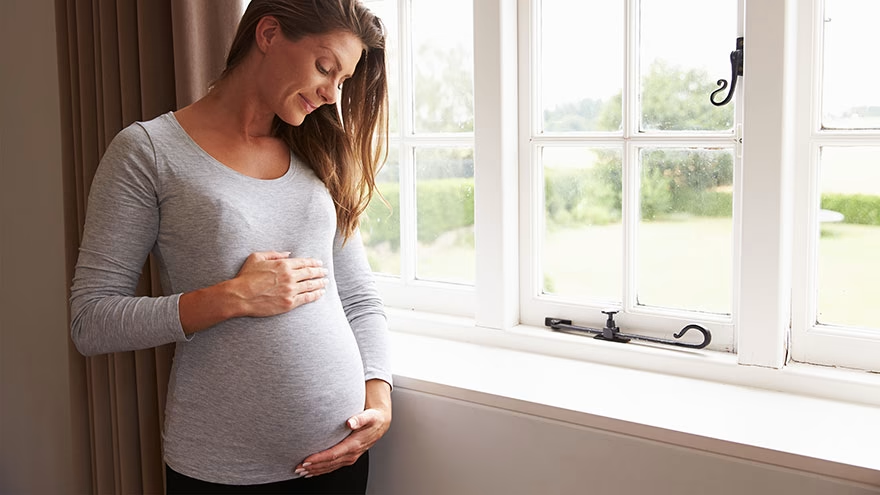
Is It Safe to Run During the First Few Weeks of Pregnancy? For many healthy people with uncomplicated pregnancies, continuing a familiar running routine can be safe. But the answer depends on your health, symptoms, pregnancy history, fitness level, and provider guidance. Early pregnancy is not the time to ignore warning signs.
This article is general pregnancy education, not medical advice. Ask your obstetrician, midwife, or clinician about running if you have bleeding, pain, dizziness, heart or lung disease, high-risk pregnancy concerns, prior pregnancy complications, or you are new to running.
Start With Your Baseline
If you were running comfortably before pregnancy, your provider may allow you to continue with adjustments. If you were not running before, start with walking and gentle activity unless your clinician recommends more. Pregnancy is not the best time to start an aggressive running plan from zero.
ACOG's exercise during pregnancy FAQ says regular exercise can benefit many pregnant people and lists conditions where exercise may not be safe.
The First Few Weeks Can Feel Strange
Before a bump appears, fatigue, nausea, breast soreness, dizziness, smell sensitivity, and overheating can change how running feels. A pace that used to be easy may suddenly feel hard. That does not mean you are failing.
If you are still confirming pregnancy, Livecub's first-week pregnancy signs article can help with early symptom context, but testing and prenatal care matter more than symptom guessing.
Use The Talk Test
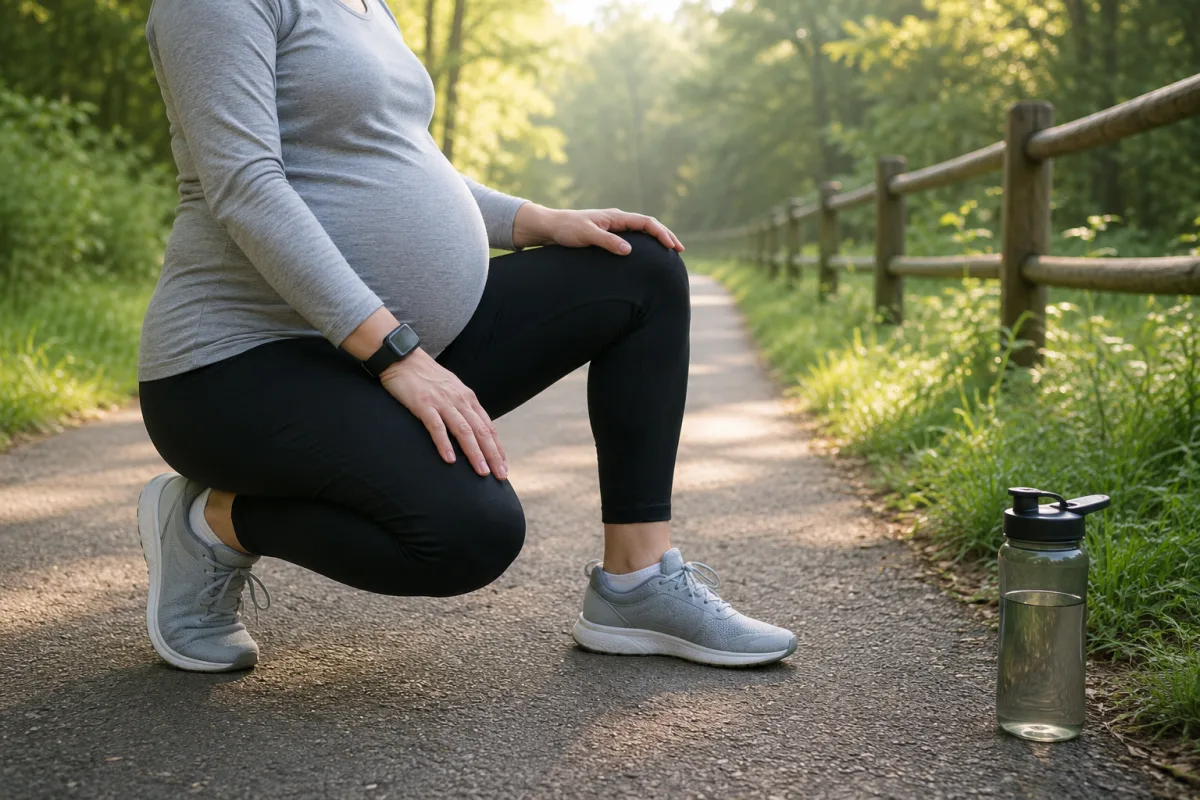
A practical rule is to run at an intensity where you can still talk in short sentences. If you are gasping, dizzy, or pushing through chest tightness, slow down or stop. Some runners switch to run-walk intervals early in pregnancy.
NHS exercise in pregnancy guidance advises continuing normal daily physical activity or exercise for as long as comfortable, while avoiding exhaustion.
Hydration And Heat

Early pregnancy nausea can make hydration harder. Drink before and after runs, choose cooler times of day, avoid overheating, and slow down in humid weather. Dark urine, dizziness, headache, or feeling faint are signs to stop and reassess.
If nausea makes eating difficult, Livecub's bland diets for pregnancy may help with simple fuel ideas around runs.
Warning Signs To Stop

Stop running and call your provider for vaginal bleeding, fluid leakage, chest pain, regular painful contractions, severe abdominal pain, dizziness, fainting, shortness of breath before exercise, calf swelling or pain, severe headache, or weakness.
These warning signs deserve more than a training adjustment. They need medical guidance.
Adjust Pace And Distance
Pregnancy running should respond to the day you are having. Shorter routes, walk breaks, flatter paths, and lower intensity can keep movement useful without turning it into a test of toughness.
If fatigue is high, swap a run for a walk. Consistency does not require identical workouts.
Safety Outside
Choose well-lit routes, stable surfaces, and shoes with good traction. Bring ID, a phone, and water if needed. As pregnancy progresses, balance can change, but even early pregnancy dizziness can make uneven routes less appealing.
Tell someone your route if you run alone, especially in heat or remote areas.
Pelvic And Breast Comfort
Breast tenderness can make running uncomfortable in the first weeks. A supportive bra may help. Pelvic heaviness, leaking, or pain should be discussed with a clinician or pelvic floor physical therapist.
Livecub's feeling attractive during pregnancy and staying intimate during pregnancy may help with body-change conversations that sometimes affect movement and confidence.
If You Have A History Of Loss
Many people worry that running will cause miscarriage. In uncomplicated pregnancies, ordinary exercise is not usually blamed for miscarriage, but your own history matters. If you have bleeding, recurrent pregnancy loss, fertility treatment concerns, or severe anxiety, ask for individual guidance.
Do not force yourself to run just to prove you are not anxious. Walking is valid.
Food Timing
Try a small snack before running if nausea or low energy hits. Crackers, toast, banana, yogurt, or a simple smoothie may work. Avoid experimenting with new supplements or stimulants without clinician approval.
If emotions or depression are affecting movement, Livecub's depression during pregnancy can help name symptoms before a prenatal conversation.
When To Skip The Run
Skip the run if you are sick, feverish, dehydrated, bleeding, dizzy, severely nauseated, in pain, or told to restrict activity. Rest can be the safest training choice during pregnancy.
March of Dimes' exercise during pregnancy guidance encourages talking with a provider about what activities are safe and when to stop.
Ask At The First Visit
Bring your running routine to the first prenatal visit: weekly mileage, longest run, pace, terrain, strength training, injuries, and goals. Ask what symptoms should stop a run and whether your history changes the plan.
If you use a watch, remember that pregnancy can change heart rate, heat tolerance, sleep, and perceived effort. Your body may not match old training zones.
Safer Alternatives
On rough days, swap running for walking, swimming, stationary cycling, gentle strength work, or prenatal mobility if your clinician allows it. Keeping movement in your life does not require running through every symptom.
Use alternatives before resentment builds. A flexible runner is still a runner.
Bleeding Or Spotting
If bleeding or spotting appears, stop running and call your clinician. They may ask about amount, color, pain, timing, and whether you had sex, an exam, or heavy activity. Do not keep running while waiting to see if it goes away.
Bleeding can have many causes, but pregnancy bleeding deserves direct guidance.
Fuel Without Perfection
Early pregnancy can make normal sports nutrition impossible. If gels, coffee, or strong flavors turn your stomach, keep it simple. Small carbohydrates, salty crackers, water, or a bland snack may be enough for a short easy run.
Ask about iron, vitamin D, nausea treatment, and prenatal vitamins if fatigue feels extreme.
Strength And Mobility
Light strength work can support running if your clinician allows it. Think gentle glute work, calf strength, hip stability, and mobility rather than maximal lifts. Stop if you feel pain, dizziness, or pelvic heaviness.
Good shoes and a shorter stride may reduce discomfort. Pregnancy is a good time to value comfort over pace.
Group Runs And Races
Races and group runs can make it harder to slow down. Tell a trusted running partner that you may walk, leave early, or skip hills. Choose events where dropping out is easy and medical help is available.
Do not use a race fee as a reason to ignore bleeding, dizziness, or pain.
After A Run
Notice how you feel for the next few hours. Mild fatigue can be normal. Worsening cramps, bleeding, dizziness, unusual shortness of breath, or symptoms that continue after rest should be reported.
Keep notes if your provider asks, but do not turn every run into a fear audit.
Morning Sickness Runs
If nausea is strongest in the morning, run later or shorten the session. Some people feel better after gentle movement; others feel worse. Use the response you actually have, not the routine you expected.
Vomiting, dizziness, or inability to keep fluids down is a reason to skip running and call if it continues.
Do Not Chase Pre-Pregnancy Numbers
Pace, mileage, and heart rate may shift quickly. Early pregnancy is already a physical load. Let the goal be safe movement, not proving that nothing changed.
A slower run that leaves you well is more useful than a fast run that costs the rest of the day later at home afterward too.
Frequently Asked Questions
Can running cause miscarriage in early pregnancy?
In many uncomplicated pregnancies, ordinary exercise is not considered a cause, but bleeding or risk factors need medical advice.
Can beginners start running while pregnant?
Walking and gradual activity are usually safer starting points unless a clinician advises otherwise.
How hard can I run?
Use a conversational pace and avoid exhaustion, overheating, dizziness, or pain.
Should I stop if I feel cramps?
Stop and assess. Severe, one-sided, worsening, or bleeding-related cramps need medical advice.
What is the safest route?
Choose stable ground, cooler weather, easy exits, and a route where help is available.
The Early Pregnancy Running Rule
Running in the first weeks of pregnancy may be safe for many experienced runners with uncomplicated pregnancies, but the plan should be flexible. Slow down, use the talk test, avoid heat and dehydration, stop for warning signs, and ask your provider for guidance when risk factors or symptoms appear.

Olivia Prete
Edits culture and personal-development articles, distinguishing opinion and experience from verifiable claims.



Leave a reply
Replying to