
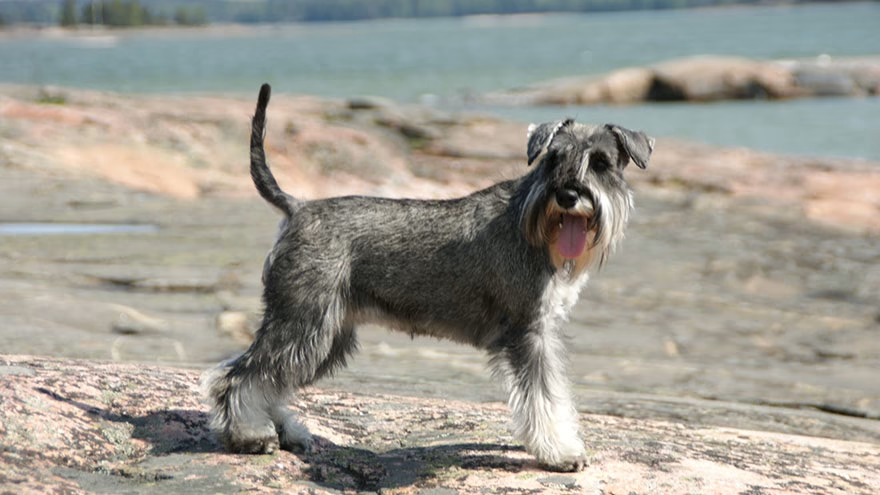
Ranked among the AKC's top 15 most popular breeds for decades, the Miniature Schnauzer has earned that standing the hard way — not through trendiness, but through genuine versatility. First recognized by the American Kennel Club in 1926, this compact terrier-type dog weighs between 11 and 20 pounds and stands 12 to 14 inches at the withers. It adapts equally well to a city apartment and a country yard, sheds far less than most breeds, and bonds fiercely with the people it lives with. Below are the ten questions prospective owners ask most often, with the kind of substantive answers that help you decide whether this breed fits your life.
What Is the History of the Miniature Schnauzer?
The Miniature Schnauzer was developed in Germany in the latter half of the 1800s, and the earliest documented record of the breed dates to 1888. German farmers who already kept Standard Schnauzers — themselves a fixture on German farms since at least the 15th century — wanted a smaller version capable of chasing rats and mice out of tight spaces where the larger dog could not reach. Breeders crossed small Standard Schnauzers with Affenpinschers and, likely, Miniature Poodles, producing a dog that retained the wiry double coat and alert temperament of its ancestors but at a fraction of the size.
The name "Schnauzer" comes from the German word schnauze, meaning snout — a nod to the breed's prominent muzzle whiskers. The first Miniature Schnauzers arrived in the United States in 1924, and the AKC granted formal recognition two years later in 1926. At that point, Miniature and Standard Schnauzers were still considered variants of the same breed in America; they were formally split into distinct breeds that same year, following a separation that had already occurred in Germany in 1899. After World War II the breed's popularity surged, and at its peak it ranked as America's third most popular dog. The American Miniature Schnauzer Club (AMSC), the AKC parent club for the breed, was formed in 1933 and remains the primary authority on breed standards today.
How Big Does the Miniature Schnauzer Get?
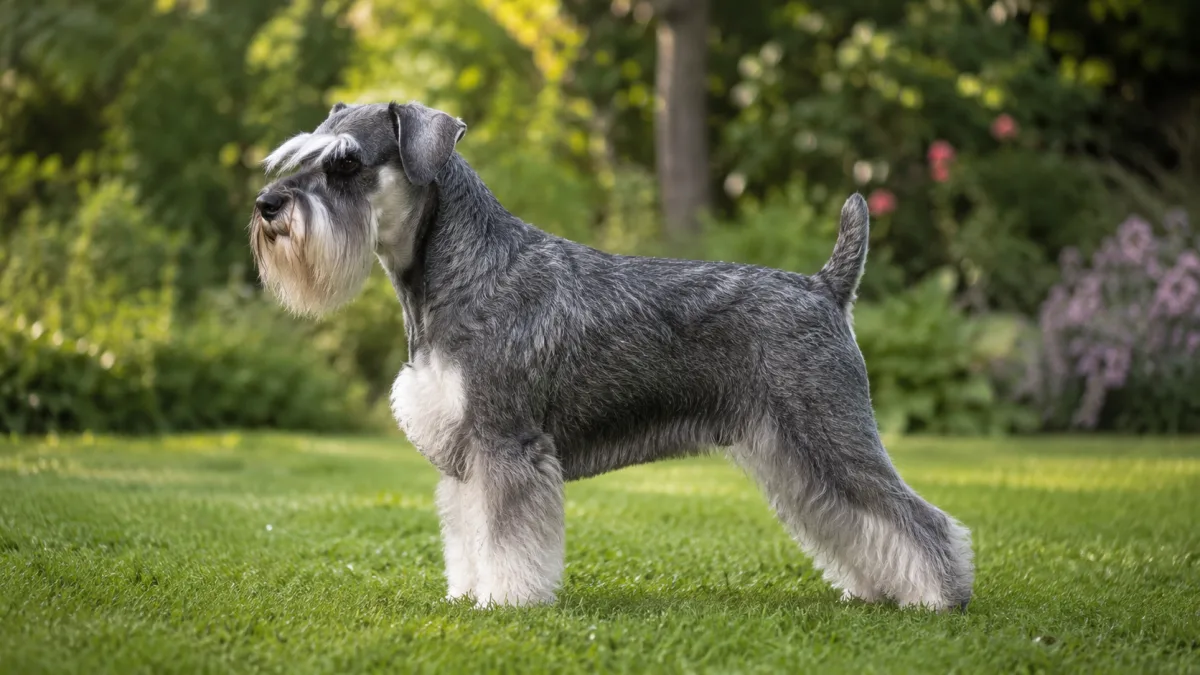
According to the AKC official breed standard, Miniature Schnauzers stand 12 to 14 inches at the withers. Any dog under 12 inches or over 14 inches is a disqualification in the show ring — the standard is unusually strict on this point. In terms of weight, VCA Animal Hospitals places the typical range at 13 to 15 pounds, though well-fed pets can reach 20 pounds without being overweight by build alone.
The AKC breed standard also specifies that the dog should appear nearly square — body length roughly equal to height — with substantial bone and no hint of toyishness. That sturdy build is a deliberate design feature: the farmers who developed this dog needed an animal that could work, not merely look charming. Lifespan for the breed typically runs 12 to 14 years, which is respectable for any dog and particularly good for one this active.
Is the Miniature Schnauzer Good With Children?
The Miniature Schnauzer scores well with children, and VCA characterizes the breed as "playful and good with children" with a rating of 4 out of 5. The key trait driving that compatibility is energy: these are busy, alert, often mischievous dogs that genuinely enjoy a household with activity. A school-age child who wants a dog to run around the yard with will find the Miniature Schnauzer an enthusiastic partner.
That said, a few caveats matter. Miniature Schnauzers were bred partly as watchdogs, and they carry a degree of wariness around strangers — including children they have not met before. Early socialization, beginning as a puppy, reduces that wariness significantly. The breed also has a terrier's independence and may resist rough handling; very young toddlers who have not yet learned gentle touch can frustrate a dog that prefers purposeful play over being grabbed. Supervision during early interactions is straightforward common sense. Dogs raised alongside children from puppyhood adapt far more smoothly than adult dogs brought into a family with established young kids. If you are interested in how other small breeds handle family life, our article on the Maltese covers similar temperament ground.
Can a Miniature Schnauzer Live in an Apartment?
Yes — and they do it well, provided exercise requirements are actually met. The AKC notes that Miniature Schnauzers can thrive in city apartments just as well as on acres of farmland, as long as they get roughly an hour of physical activity daily. That hour does not need to come all at once; two 30-minute walks achieve the same effect as one longer outing.
What makes apartment living viable for this breed is temperament rather than size alone. Miniature Schnauzers are alert housedogs rather than restless working dogs. They are content to settle near their owner between activity periods, unlike terriers with higher prey drives that pace unless given constant stimulation. The one apartment-specific challenge is barking: this breed tends to vocalize when it detects something unusual, which matters in shared-wall situations. Discouraging excessive barking from an early age — through consistent training, not punishment — keeps that tendency manageable. Mental stimulation through puzzle toys and training sessions also burns energy without requiring outdoor access, a practical advantage on bad-weather days.
Are Miniature Schnauzers Hypoallergenic?
The term "hypoallergenic" deserves scrutiny before any breed gets that label. Human dog allergies are triggered primarily by a protein called Can f 1, which is carried in saliva, urine, and dander — not in the hair itself. No dog produces zero allergens. What varies between breeds is how much dander disperses into the environment, and that is where the Miniature Schnauzer has a genuine, mechanism-based advantage.
The breed carries a double coat: a wiry, hard outer layer and a denser soft undercoat. When the undercoat sheds — and it does shed, though minimally — the loose hairs become trapped between the outer coat's wiry strands rather than floating free into your home. The result is far less airborne dander than you would get from a single-coated or heavy-shedding breed. Regular grooming removes that trapped hair before it accumulates. The AKC includes the Miniature Schnauzer on its list of breeds recommended for allergy sufferers, and VCA rates its shedding at 2 out of 5. For people with mild to moderate dog allergies, many find this breed tolerable — but spending time with an individual dog before committing remains the most reliable test.
What Colors and Coat Types Does the Miniature Schnauzer Come In?
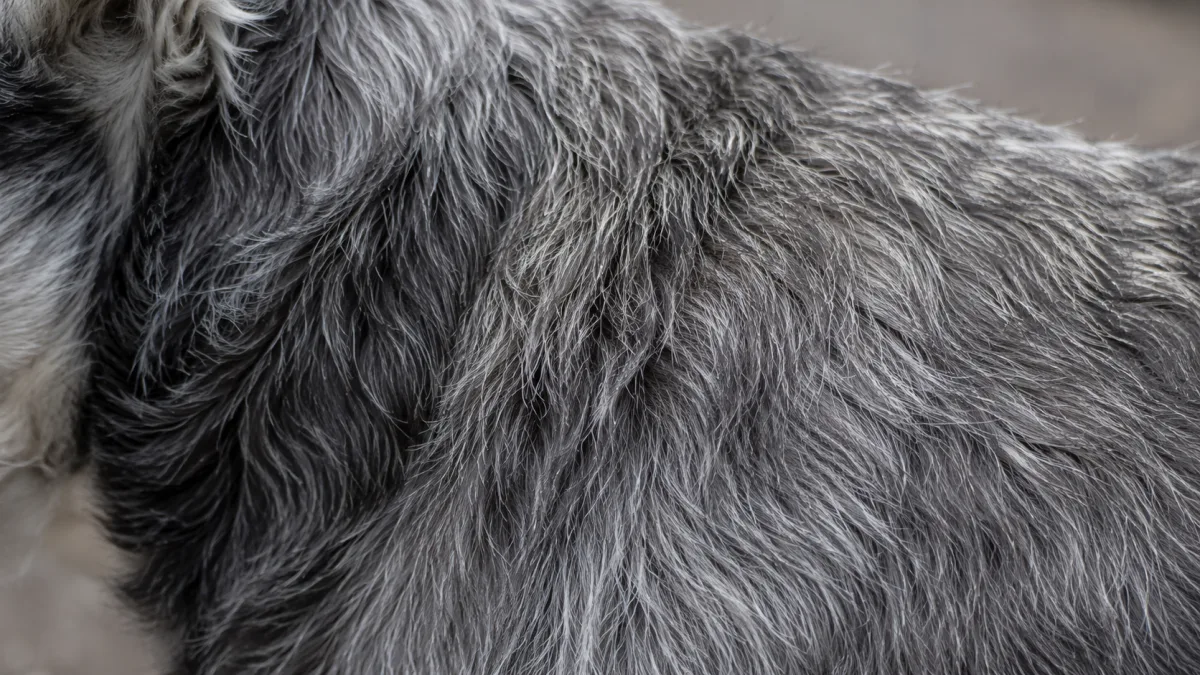
The AKC recognizes three standard colors: salt and pepper (the most common), black and silver, and solid black. White is not an accepted AKC standard color, though white Miniature Schnauzers do exist and are bred by some kennels outside the show circuit. In terms of coat structure, the breed standard calls for a hard, wiry outer coat with a close, dense undercoat. The leg furnishings — the longer hair on the legs — are softer than the body coat.
The breed's signature look — bushy eyebrows, a thick beard, and longer leg hair — is not purely aesthetic. The eyebrows and facial hair protected working dogs from debris while hunting through dense brush and tight farm spaces. Today that distinctive silhouette is one of the most recognizable in the dog world. Keeping that look intact, however, requires more than an occasional bath, which leads directly to the next question.
What Health Conditions Should I Know About?
The Miniature Schnauzer carries a handful of breed-specific health predispositions that every prospective owner should understand before purchasing or adopting. The most clinically significant is idiopathic hyperlipidemia — abnormally high blood lipid (fat) levels with no underlying secondary cause. The breed has the highest documented risk for this condition among all dog breeds. Elevated triglycerides and cholesterol strain the pancreas, which is why Miniature Schnauzers are three to five times more likely to develop pancreatitis than the average dog. Pancreatitis presents as sudden abdominal pain, vomiting, lethargy, and loss of appetite. High-fat table scraps are a common dietary trigger; keeping meals consistent and low-fat is a straightforward prevention strategy. An annual fasting lipid panel is recommended for dogs over four years old.
Bladder stones are another genuine concern — approximately 15% of Miniature Schnauzers develop them, and the breed is predisposed to both calcium oxalate and struvite stone types. Adequate water intake and diet management help reduce risk. Diabetes mellitus occurs in Miniature Schnauzers at two to three times the average breed rate, partly because repeated pancreatitis can damage the insulin-producing cells of the pancreas. Hereditary cataracts also appear more frequently in this breed than in most, along with progressive retinal atrophy (PRA). Annual eye examinations by a board-certified veterinary ophthalmologist are standard practice for responsible breeders. For a comparison of how health conditions vary across working breeds, see our overview of Staffordshire Bull Terrier health problems.
How Much Grooming Does a Miniature Schnauzer Need?
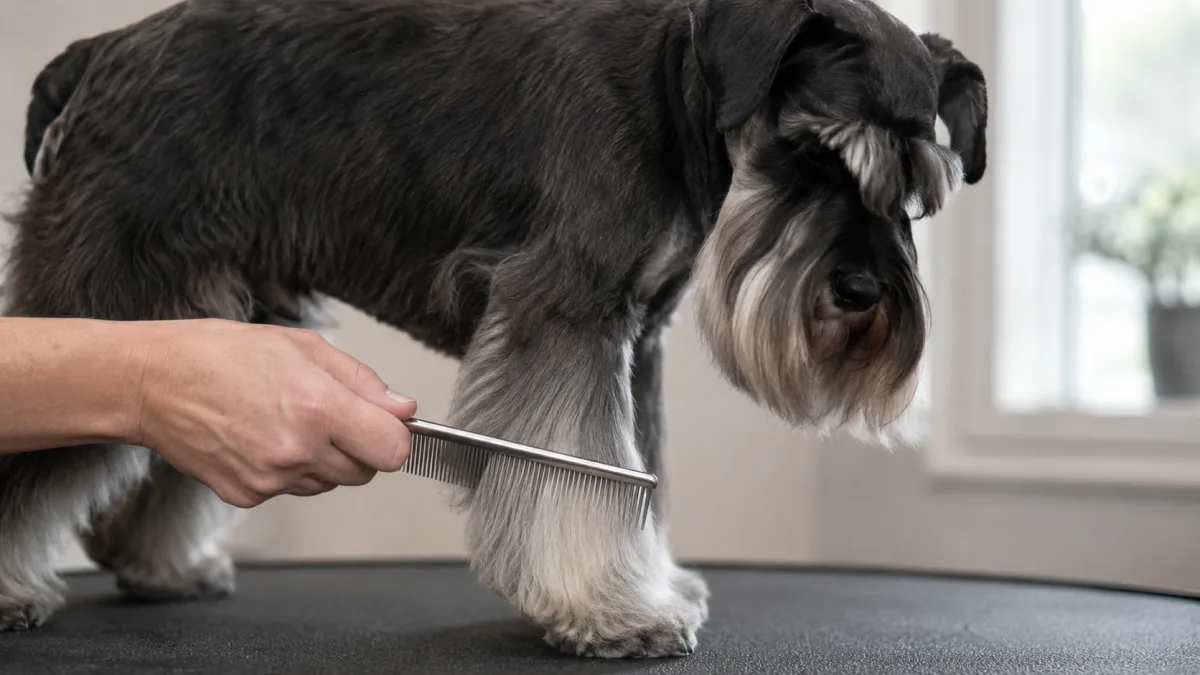
More than most small breeds — though the work is manageable with the right routine. The coat needs brushing or combing two to three times per week to prevent the undercoat from matting, particularly in the furnishings on the legs, beard, and eyebrows, where longer hair tangles most easily. A slicker brush followed by a steel comb works well for routine maintenance.
Beyond brushing, the overall trim needs attention every six to eight weeks. Show dogs must have their coats hand-stripped — a technique where dead outer coat is pulled out by hand or with a stripping knife rather than cut. Hand-stripping preserves the wiry texture and true color that define the breed standard; clipping softens the coat over time, causing it to lose the characteristic hard feel and sometimes fade in color. For pet owners not entering the show ring, clipping is perfectly acceptable and far more practical. Most families use a professional groomer for the full trim while maintaining brushing at home between appointments. The beard collects food and water and benefits from a quick wipe-down several times a week — a small task that prevents staining and odor. For another perspective on maintaining longer coats in small breeds, the guide to grooming a Longhair Dachshund shares some useful technique overlap.
Is the Miniature Schnauzer Suited to Outdoor Living?
This is not an outdoor dog, and trying to keep one primarily outside works against the breed's core nature. The Miniature Schnauzer was developed as a house companion alongside its farm-working role — it slept indoors and worked in close proximity to its family. That history shaped a dog with a strong need for human contact and mental engagement.
Left alone in a yard for extended periods, Miniature Schnauzers become bored quickly. Boredom in an intelligent dog produces predictable results: excessive barking, digging, or destructive behavior. The breed scores only 2 out of 5 as a jogging partner on VCA's rating scale — built for alertness and bursts of activity rather than sustained endurance work. They handle moderate cold and heat adequately (3 out of 5 on both scales per VCA), so brief outdoor time in varied weather poses no real concern. As a watchdog that thrives on connection and routine, though, the Miniature Schnauzer belongs inside with the family, not stationed in a kennel. For breeds genuinely suited to outdoor working roles, the German Shorthaired Pointer offers a very different comparison point.
What Is the Best Way to Potty Train a Miniature Schnauzer?
Crate training is the method most consistently recommended by Miniature Schnauzer breeders, and the reason it works is biological rather than arbitrary. Dogs descended from den-dwelling ancestors retain a strong instinct to keep their sleeping area clean. A correctly sized crate — 24 inches works well for most adult Miniature Schnauzers — creates a den-like space just large enough for the dog to stand, turn around, and lie down. That sizing matters: a crate with excess room gives the puppy space to designate a corner as a bathroom, which defeats the purpose entirely.
The practical schedule follows from that instinct. Puppies can typically hold their bladder for roughly one hour per month of age, up to about nine months. A three-month-old puppy needs a trip outside every two to three hours, plus immediately after eating, drinking, and waking. Morning and evening outings are the non-negotiables. Consistent timing, not occasional trips, is what builds the habit. Positive reinforcement — a treat or verbal praise within three seconds of a successful outdoor elimination — marks the behavior clearly for the puppy. Miniature Schnauzers are quick learners; the AMSC notes that the breed learns rapidly but also bores rapidly, so short, upbeat training sessions outperform long repetitive ones. Most puppies achieve reliable housetraining within two to three months of consistent effort.
Frequently Asked Questions
How long do Miniature Schnauzers typically live?
The Miniature Schnauzer has a lifespan of 12 to 14 years according to VCA Animal Hospitals, placing it among the longer-lived small breeds. Individual dogs that avoid the metabolic conditions the breed is prone to — particularly hyperlipidemia and pancreatitis — often reach the upper end of that range or beyond. Maintaining a low-fat diet, keeping the dog at a healthy weight, and scheduling annual veterinary wellness exams are the most reliable ways to support longevity.
Do Miniature Schnauzers get along with other pets?
Generally well. VCA notes that most Miniature Schnauzers get along with other dogs and with other household pets. The breed does carry some terrier prey drive — a leftover from its ratting heritage — so households with small animals like hamsters or gerbils should use common sense about supervised introductions. With cats, early socialization typically produces a comfortable coexistence. Miniature Schnauzers that attend dog parks regularly tend to socialize easily with unfamiliar dogs, which is useful if you live in an urban area with shared dog spaces.
Are Miniature Schnauzers easy to train?
Yes, with the right approach. These dogs are intelligent and genuinely motivated by food and games, which gives trainers clear levers to work with. VCA rates ease of training at 3 out of 5 — solid but not unconditional. The qualifier is the terrier tendency to experiment with independent ideas once a lesson grows repetitive. Keeping sessions short (10 to 15 minutes), varied, and reward-based produces better results than drilling the same command repeatedly. The breed excels at obedience, agility, and earthdog competitions, which suggests the intelligence ceiling is high — it just requires consistent engagement from the owner to reach it.
Do Miniature Schnauzers bark a lot?
They can, and VCA rates barking tendency at 4 out of 5 — higher than most people expect from a small companion dog. The breed was developed partly as a watchdog, and it still takes that role seriously. A Miniature Schnauzer will typically alert to strangers at the door, unusual sounds, and passing dogs on the street. That alertness has genuine value; it becomes a problem only when the barking is indiscriminate or prolonged. Teaching a "quiet" command early, before the behavior entrenches, is far more effective than trying to suppress it in an adult dog. Adequate daily exercise and mental stimulation also reduce nuisance barking by lowering overall arousal levels.
What should a Miniature Schnauzer eat, and are there dietary restrictions?
A high-quality commercial dog food appropriate for the dog's age and activity level forms the baseline. The critical breed-specific restriction is fat content: given the Miniature Schnauzer's documented hyperlipidemia risk, high-fat diets and fatty table scraps should be avoided. Many veterinarians recommend a food with moderate protein and controlled fat levels, particularly as dogs move past four years of age. Calorie management matters too — the breed tends to gain weight if free-fed, and obesity compounds both the pancreatitis risk and the strain on joints. Fresh water available at all times helps dilute urine and reduces the mineral concentration that contributes to bladder stone formation.

Chiara Bradshaw
Covers education, culture and creative topics with an emphasis on readable explanations and verifiable references.
Leave a reply
Replying to