
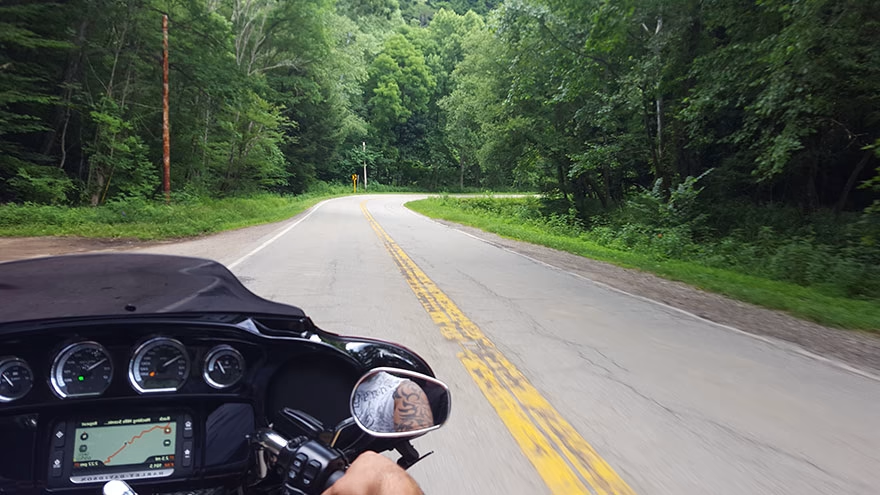
Motorcycle Trips in Hocking Hills in Ohio can be a strong day ride or an easy overnight from Columbus, Athens, Lancaster, or Chillicothe. The appeal is simple: forested roads, rock formations, covered-bridge stops, small towns, and enough curves to make the ride feel different from flat interstate miles.
Road conditions, closures, weather, and park rules change, so check official sources before leaving. A motorcycle route that feels relaxed in September can be slick with leaves, gravel, fog, or freeze-thaw damage at another time of year.
Start With The Hocking Hills Region
Hocking Hills sits in southeastern Ohio, with Logan often serving as the practical hub. The official Hocking Hills tourism site is useful for lodging, food, events, and local planning. Riders can build loops around Logan, Nelsonville, Laurelville, South Bloomingville, and Hocking Hills State Park.
If you like planning scenic travel around a single anchor, Livecub's Petoskey travel guide and Laughlin sights guide use the same idea: pick a base, then make the roads part of the trip.
Ride State Route 664 With Patience
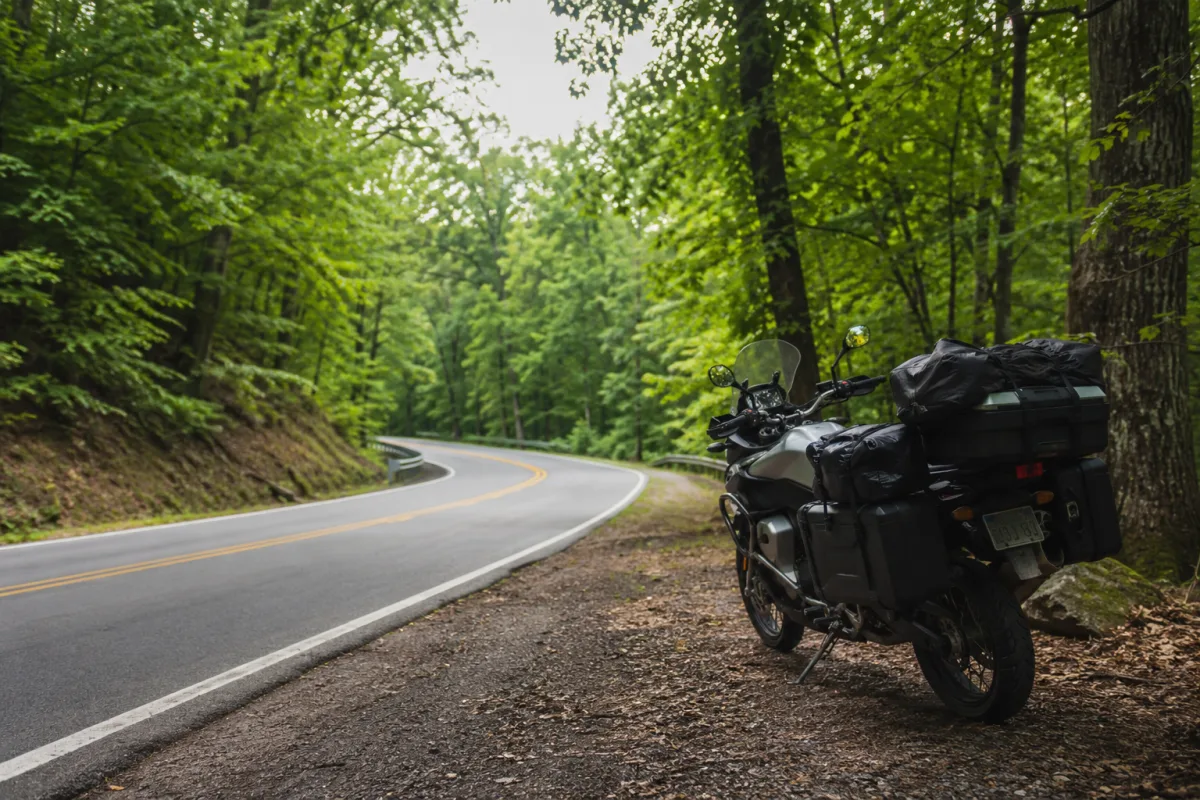
State Route 664 is one of the better-known Hocking Hills corridors. It connects riders with the Logan area, Old Man's Cave access, and the park landscape. Expect curves, elevation changes, tourist traffic, slow vehicles, and possible gravel near pull-offs.
Do not treat scenic roads like a closed course. Cars may brake suddenly for trailheads. Visitors may cross near parking areas. A clean corner in the morning can have gravel or leaves by afternoon.
Use Hocking Hills State Park As A Stop, Not A Race
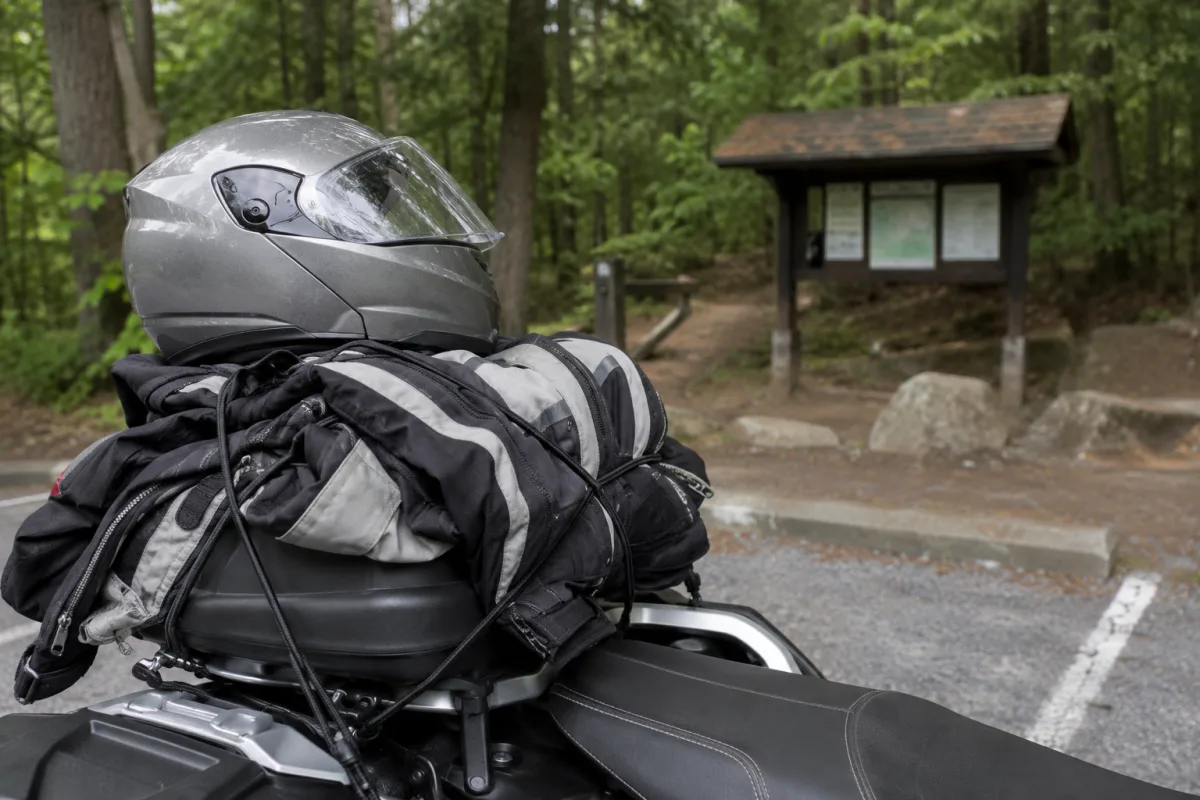
The Ohio Department of Natural Resources page for Hocking Hills State Park gives official information for the park, including facilities and visitor guidance. Old Man's Cave, Ash Cave, Cedar Falls, and other areas can be crowded on weekends and holidays.
Lock riding gear, carry walking shoes, and give yourself time if you plan to hike. Livecub's walking sticks guide is a practical companion if you plan to get off the bike and walk trails after riding.
A Columbus To Old Man's Cave Day Ride
A simple plan is Columbus to Lancaster, then toward Logan and Old Man's Cave, with a meal stop in Logan or Nelsonville. Add time for fuel, water, traffic, photos, and one short walk. Do not pack so many stops that the ride becomes a checklist.
From Columbus, the trip can work as a long half-day or a full day depending on pace. Riders who want a slower visit should stay overnight and ride the loop fresh the next morning.
If you are riding from farther away, consider trailering or staying nearby the night before. Starting a technical scenic loop already tired can make every corner feel harder. The ride should begin with attention, not recovery from a long highway push.
Build A Loop Around Logan
For an easy loop, use Logan as a base and connect park roads, nearby state routes, covered bridge stops, and small-town food breaks. Avoid routing only by shortest distance. Scenic motorcycle trips work better when you choose roads for flow, pavement, fuel access, and rest stops.
The Federal Highway Administration byway page for the Hocking Hills Scenic Byway gives useful context for the area's road character and landscape. Use it as background, then check current local conditions.
Download offline maps before the ride. Cell signal can be uneven in rural hills, and a missed turn can turn a short loop into a long detour. Paper notes in a tank bag still work when a phone overheats or loses service.
Watch For Seasonal Hazards
Spring can bring wet roads, sand, potholes, and storm debris. Summer brings tourist traffic and heat. Fall brings beautiful color plus leaves in corners. Winter may bring ice, salt, and shaded-road surprises. Choose your pace for the season you are actually riding.
If your route includes waterfalls or hiking stops, Livecub's Skyline Drive waterfalls guide is outside Ohio, but the trail lesson applies: wet rock and scenic stops slow the day down.
After storms, expect branches, gravel washouts, and mud near driveways. In leaf season, shaded curves can stay slick after sunny straights are dry. In rural areas, watch for farm equipment, deer, and vehicles turning into gravel lanes.
Fuel, Food, And Rest Stops
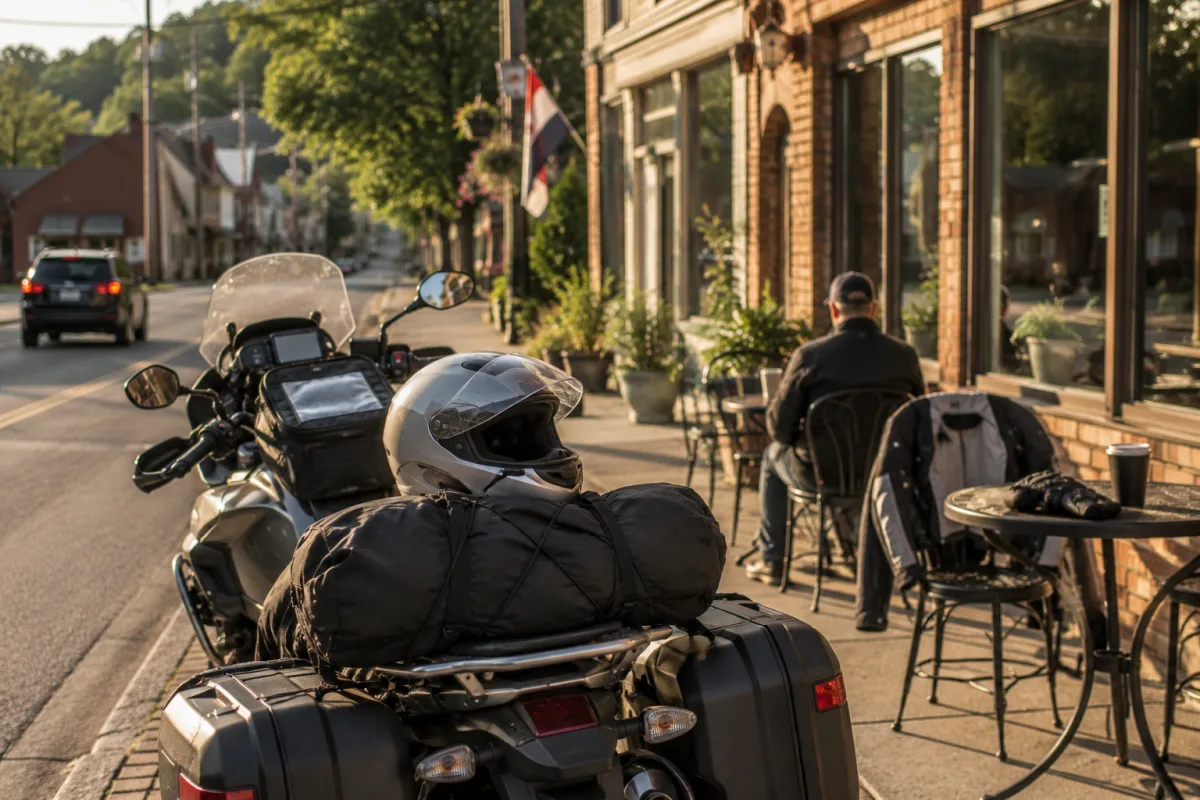
Do not assume every rural road has fuel. Top off before entering the tighter scenic parts, especially if your bike has a small tank. Carry water and a snack. Small towns can be busy during peak visitor periods, and some restaurants keep limited hours.
For overnight trips, book lodging early during fall weekends, holiday periods, and festival dates. Campgrounds, cabins, inns, and motels can fill faster than a casual rider expects.
Build rest into the route before fatigue appears. Scenic riding asks more attention than straight highway travel because the view, corners, and traffic all compete for focus. A ten-minute stop can make the next section safer and more enjoyable.
Group Ride Etiquette
Keep group size manageable, stagger formation where appropriate, and ride your own pace. Decide stops before leaving. Use hand signals or communicators, but do not let chatter distract from corners and traffic.
Newer riders should not be pressured to keep up on unfamiliar roads. Hocking Hills is better when everyone arrives relaxed. The rider in front can wait at turns instead of forcing the whole group into a speed contest.
Choose a sweep rider who knows the route and can help if someone stops. Share the destination, not just the next turn. If a rider misses a light or needs fuel, the group should have a simple regroup plan that does not require risky passing.
Gear For A Scenic Ride
Wear protective gear even for a short day ride. Curvy rural roads are still public roads with gravel, animals, tourists, and changing weather. Pack rain layers, a clear visor or glasses, tire repair basics, phone charger, and any medication you may need.
Do not overload the bike for a day trip. Secure bags tightly and check that nothing touches hot exhaust or moving parts. A loose strap can ruin a ride fast.
Before leaving, check tire pressure, lights, brakes, chain or belt condition, and fuel range. Hocking Hills riding is more pleasant when the bike is already sorted and you are not troubleshooting on the shoulder.
If you stop for photos, pull fully off the road and avoid blind curves. The scenery is part of the draw, but other drivers may not expect a motorcycle parked just past a bend.
Pair Hocking Hills With Nearby Trips
If you are building a longer Midwest or Appalachian-edge route, combine Hocking Hills with Athens, Lancaster, Chillicothe, or other southern Ohio stops. Riders who like unusual destinations may also enjoy Livecub's Spiral Jetty travel guide for a very different kind of remote-road planning.
For a Kentucky extension, Livecub's Waverly Hills tour guide can sit in a separate road-trip plan. Keep daily mileage realistic if you are adding several states.
Build the route around daylight. Rural curves, deer movement, and unfamiliar pavement are easier to handle when visibility is good. If you want sunset photos, plan a short ride back to lodging instead of a long dark return.
Frequently Asked Questions
Is Hocking Hills good for motorcycles?
Yes, the area has scenic roads, curves, hills, and small-town stops, but tourist traffic and road debris require patience.
What is a good base town?
Logan is the most practical base for many riders because it is close to park areas, fuel, food, and lodging.
When is the best time to ride?
Late spring, summer mornings, and fall weekdays can be good, but always check weather and road conditions.
Can I hike during a motorcycle trip?
Yes, but bring walking shoes, secure your gear, and allow extra time for crowded parking areas and trail conditions.
Are the roads beginner-friendly?
Some are, at a controlled pace. New riders should avoid wet, dark, crowded, or leaf-covered conditions until more confident.
The Best Ride Mindset
Motorcycle trips in Hocking Hills work best when the route leaves room for weather, traffic, trail stops, fuel, and slow corners. Ride for the landscape, not the lap time, and the hills will give you a better day. Keep the plan flexible enough to skip a road, add a rest stop, or wait out rain without feeling that the trip failed. That flexibility is part of good riding.

Timothy Davidson
Edits step-by-step general-interest guides for clarity, realistic limits and source verification.



Leave a reply
Replying to