
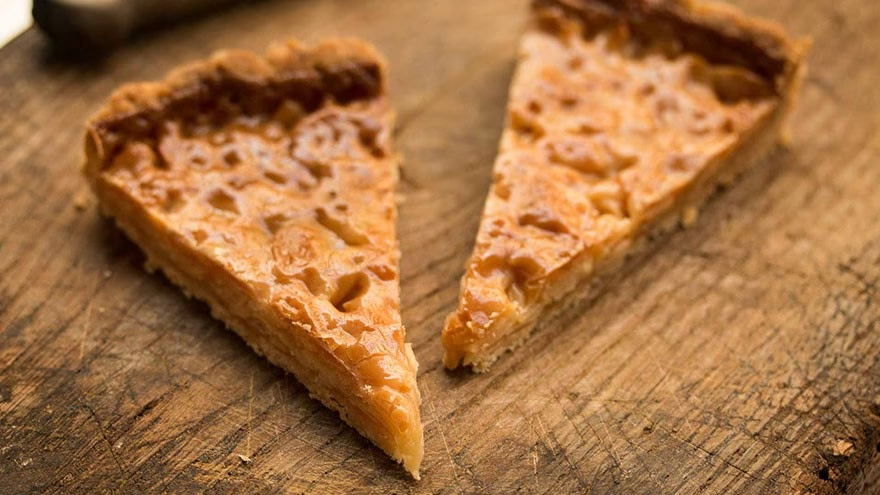
A good tart looks polished, but the work behind it is usually quiet: cold dough, a pan that fits, a filling that is not too loose, and enough patience to let the slice set. These tips for totally terrific tarts are written for home bakers who want cleaner crusts, better fillings, and less drama at serving time.
What makes a tart work?
A tart works when the shell and filling agree. A crisp shell can hold fruit, curd, custard, ganache, nuts, or savory fillings, but each filling has a different moisture level. The shell has to be baked, cooled, and handled with that moisture in mind.
Tarts also need contrast. A sweet shell with a sweet filling can taste flat. Add acidity, salt, bitter chocolate, toasted nuts, citrus zest, or unsweetened cream so each bite has shape.
If you are planning a dessert table, Livecub's cookie display guide has useful serving logic for spacing, height, and clean presentation.
Which dough should you use?
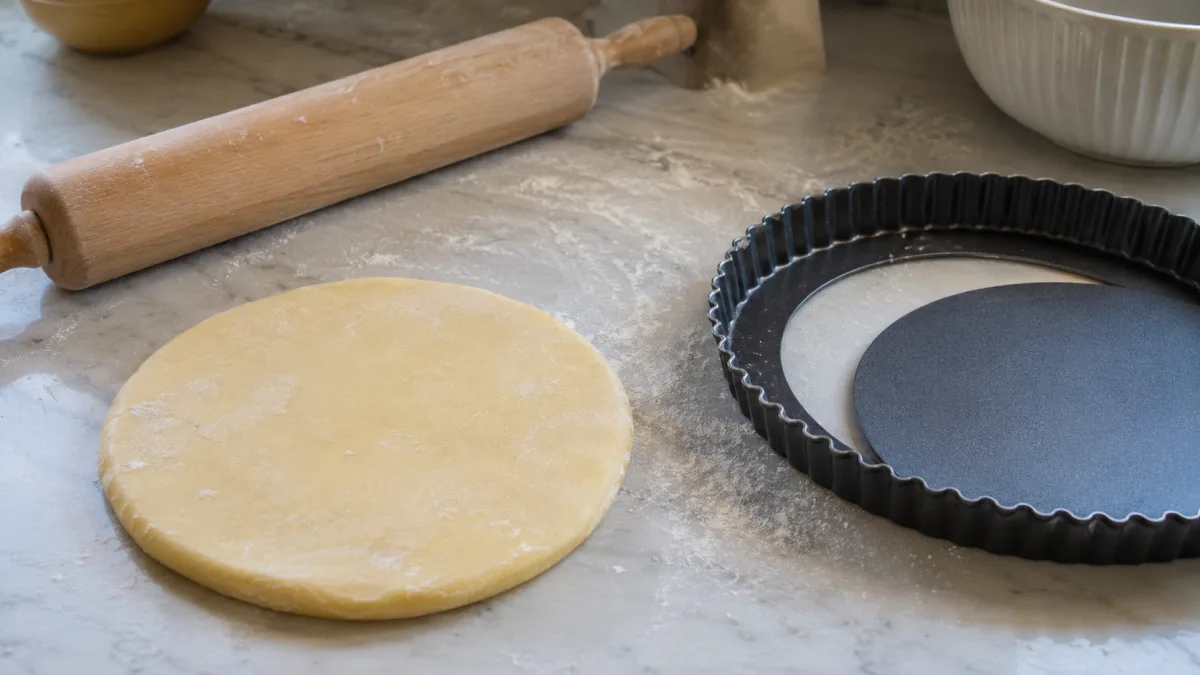
The dough should match the filling. Sweet dough is common for fruit, lemon, chocolate, and custard tarts. Plain pie-style dough can work for savory fillings or less sweet fruit. Press-in crusts are useful when you want speed and do not need a perfect fluted edge.
Sweet tart dough
Sweet dough is tender, rich, and cookie-like. It can crack if handled too warm, so chill it before rolling and after fitting it into the pan.
Plain pastry dough
Plain pastry is less sweet and a little flakier. It suits quiche-style tarts, rustic fruit, and fillings that already bring plenty of sugar.
Crumb or nut crusts
Crumb crusts are fast and forgiving. Press them firmly and bake until set so the slice does not collapse at the table.
How do you keep tart crust from shrinking?
Warm dough shrinks. Overworked dough shrinks. Dough stretched into the corners also shrinks. Roll the dough gently, lift it into the pan, and press it into the edge without pulling. Trim after chilling if the recipe allows.
King Arthur Baking's sweet tart dough recipe shows how a proper tart shell starts with dough that can be rolled, chilled, and baked with care. The King Arthur pate sucree recipe is a useful reference for that style.
Chill twice if needed: once after mixing, and again after the dough is in the pan. That second chill is not wasted time; it helps the edge hold.
When should you blind bake?
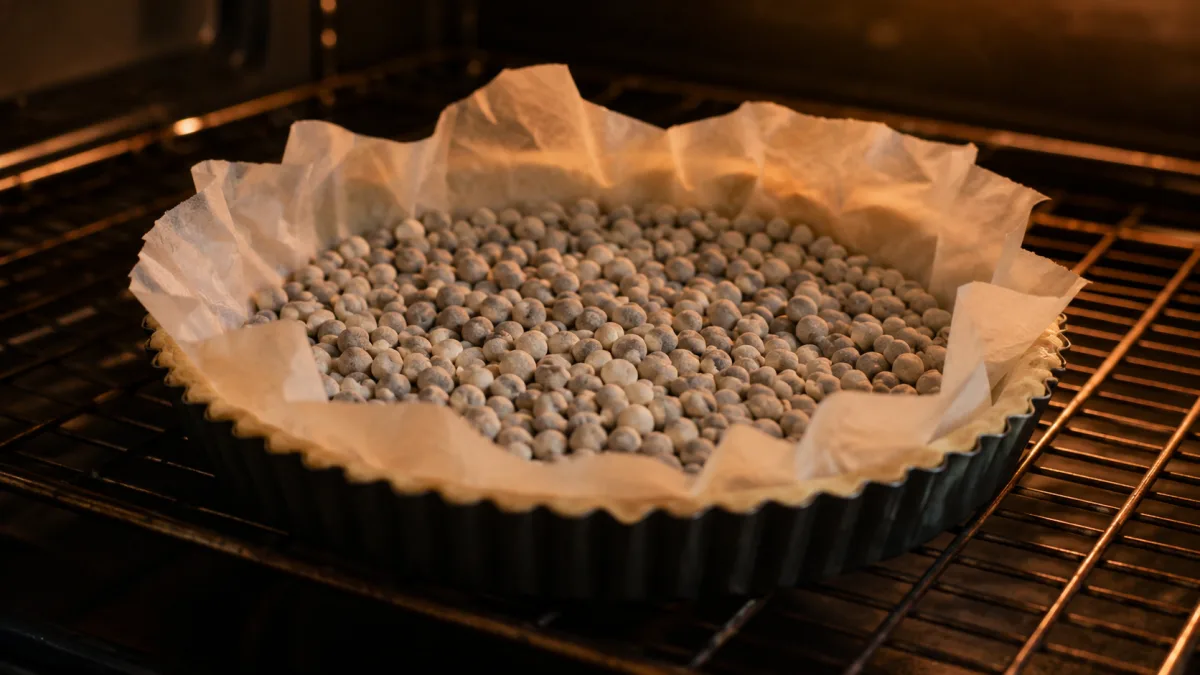
Blind baking means baking the empty shell before the filling goes in. Use it for no-bake fillings, pastry cream, lemon curd, ganache, fresh fruit, or any filling that will not spend long enough in the oven to bake the crust fully.
Use parchment and weights so the bottom stays flat. King Arthur's blind-baking guide explains the method, and the King Arthur blind-bake guide is helpful for understanding why weights and chilling matter.
For fillings that bake inside the shell, partial blind baking may be enough. The goal is not always a dark shell; it is a shell that stays crisp after the filling lands.
How do fillings change the plan?
Think about moisture, setting power, and serving temperature before you fill the shell. A fruit tart with pastry cream needs a fully baked shell. A baked custard needs enough oven time to set without curdling. A ganache tart needs time to firm before slicing.
Fruit fillings
Fresh fruit needs a barrier such as pastry cream, jam, chocolate, or a thin glaze. Cooked fruit needs thickening and cooling so it does not flood the shell.
Custard and curd
Custard and citrus curd should be smooth, strained if needed, and cooled according to the recipe. Do not pour hot filling into a fragile shell unless the recipe is built for it.
Chocolate and nut fillings
Chocolate fillings should be glossy but sliceable. Nut fillings need enough structure that the tart does not ooze after cutting.
Livecub's perfect tiramisu guide is a good reminder that creamy desserts often depend on chill time as much as ingredients.
How do you finish fruit tarts cleanly?
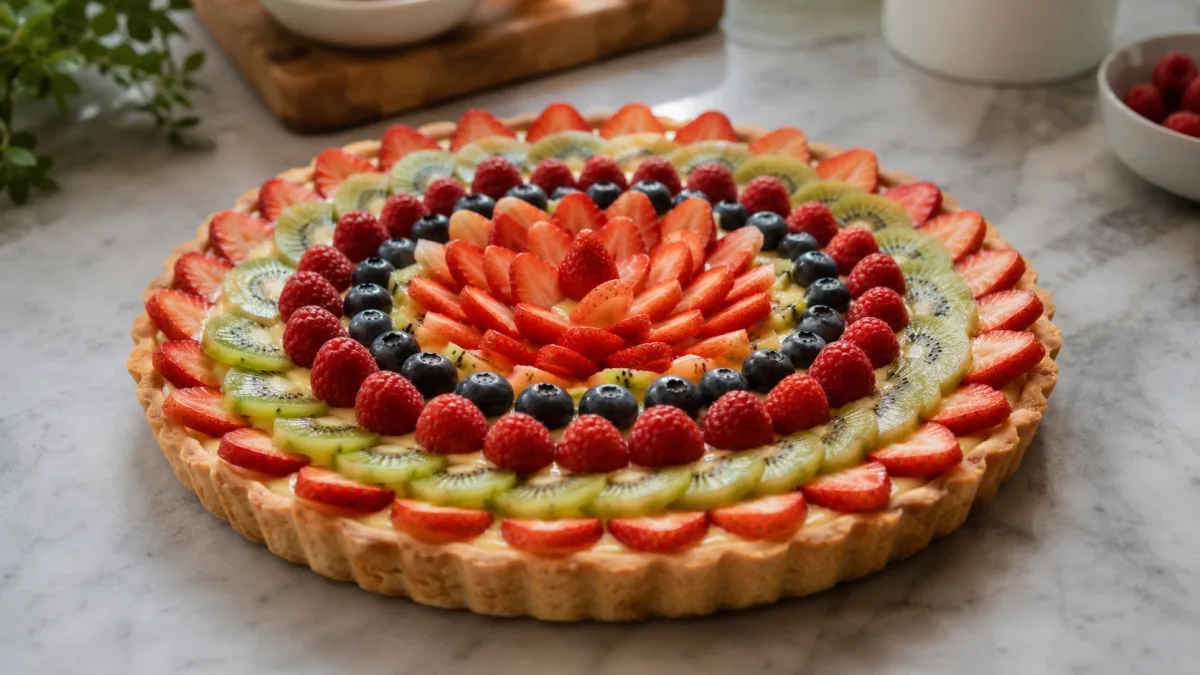
Dry the fruit before arranging it. Wet berries and sliced fruit can weep into the filling and make the surface look tired. Cut pieces to similar sizes, then arrange from the outside in so the pattern looks intentional.
A light glaze of warmed jam can add shine and slow drying. Keep it thin. Heavy glaze can make a fresh tart taste sticky and cover the fruit.
Neat fruit work starts before the first slice. Wash, dry, trim, and sort before the shell comes out.
How should tarts be stored and served?
Storage depends on the filling. Dry nut tarts may hold at room temperature longer than tarts filled with cream, custard, or fresh fruit. Perishable fillings should be kept cold and served within a safe window.
FoodSafety.gov gives broad storage and temperature guidance for perishable foods, and the FoodSafety.gov cold storage chart is a practical reference when a tart contains dairy, eggs, or cream.
Use a thin sharp knife, wipe between cuts, and let very cold chocolate tarts sit briefly if the recipe allows. Clean slicing is often about temperature, not strength.
Can savory tarts use the same rules?
Yes, with a few changes. Savory tarts still need a shell that is baked enough to stay crisp, but the filling may include eggs, cream, vegetables, cheese, fish, or meat. Moisture control becomes the main job.
Cook watery vegetables before they go into the shell. Drain mushrooms, spinach, onions, and leeks well so they do not leak into the pastry. Let hot fillings cool slightly before adding eggs or cream so the mixture stays smooth.
Season the filling before it goes in. A tart shell will not rescue bland vegetables or under-salted custard.
How do you plan tarts for guests?
Work backward from serving time. Bake shells early if the filling can be added later. Chill creamy tarts long enough to slice. Keep fresh fruit separate until the last reasonable moment if the fruit is very juicy.
Do not test a brand-new dough and a brand-new filling on the same day as a party. Try one new element at a time. That way, if something cracks, weeps, or sets softer than expected, you know what changed.
For transport, use the tart pan base or a flat board so the shell does not flex. A cracked edge is often a carrying problem, not a baking failure.
Have a serving plan before guests arrive. Put the tart on the platter while it is still easy to move, set out the knife and cloth for wiping, and decide whether whipped cream, creme fraiche, or fruit should be served on the side. That small setup keeps the first slice from becoming a public experiment. It also helps you notice soft filling before service, while there is still time to chill it longer or adjust the garnish. Calm service starts early, before the room gets busy.
What mistakes make tarts disappointing?
The big mistakes are stretching dough, skipping chill time, underbaking the shell, filling too early, and slicing before the filling sets. Another mistake is making every element sweet. Salt, lemon, coffee, nuts, bitter chocolate, or tart fruit can keep the dessert from tasting heavy.
If a tart is part of a richer meal, Livecub's foie gras serving guide shows how small portions and contrast can make a course feel more balanced.
For chocolate finishes, Livecub's fudge icing recipe can spark ideas for glossy dessert presentation, even though tart fillings need their own ratios.
Frequently Asked Questions
Why did my tart crust shrink?
The dough may have been warm, stretched into the pan, overworked, or baked without enough chilling and support.
Can I make tart shells ahead?
Yes. Many shells can be baked ahead and stored dry, then filled closer to serving so the crust stays crisp.
Do all tarts need blind baking?
No. Blind bake when the filling is no-bake or too wet to bake the shell fully. Some baked fillings go into a raw or partly baked shell.
How do I keep fruit tarts from getting soggy?
Use a fully baked shell, dry the fruit, add a barrier filling, and fill close enough to serving that moisture does not sit too long.
A tart rewards restraint. Handle the dough less, chill more, sweeten carefully, and give the finished dessert enough time to set before the knife touches it.

Linda Fehrman
Edits general wellness and relationship explainers. Health material is educational, avoids diagnosis and links to health-authority guidance.




Leave a reply
Replying to