
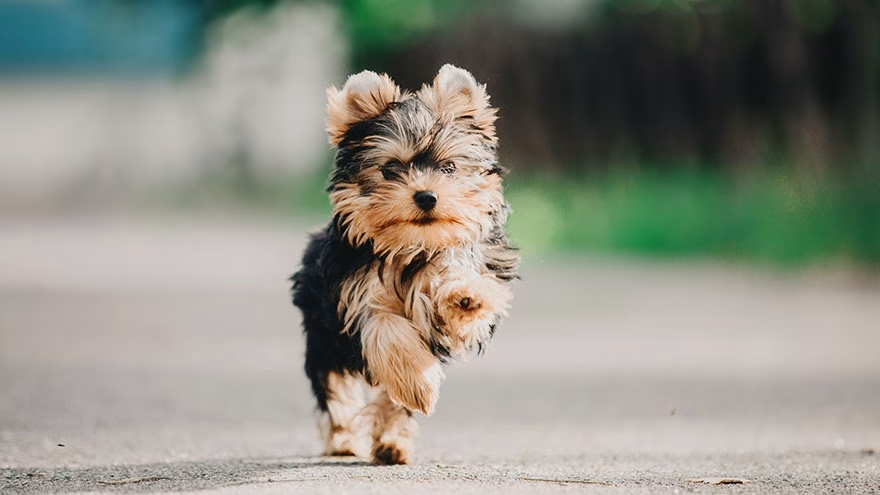
A Yorkipoo is not a tiny teddy bear with guaranteed traits. It is a cross between a Yorkshire Terrier and a Poodle, usually toy or miniature, and the puppy can inherit different pieces from each side. That is the straight answer to what are Yorkipoos: small companion dogs with potential charm, intelligence, coat variety, barking, grooming work, and health questions that should be handled before anyone falls for the photo.
What breeds make a Yorkipoo?
A Yorkipoo is commonly a Yorkshire Terrier crossed with a Toy or Miniature Poodle. Some breeders also breed Yorkipoo-to-Yorkipoo or use backcrosses, but the more generations involved, the more you should ask what the breeder is trying to produce and how health is being tracked.
The AKC Yorkshire Terrier page describes Yorkies as terriers with a small frame and a bold history. The AKC Yorkshire Terrier breed page is useful because a Yorkipoo's behavior may lean toward that alert, vocal, terrier side.
If you are comparing small companion breeds, Livecub's Maltese questions guide shows why size alone does not tell you grooming, training, or health needs.
Are Yorkipoos a recognized breed?
Yorkipoos are usually considered designer mixed-breed dogs, not an AKC-recognized purebred breed. That does not make an individual dog lesser. It does mean there is less predictability than with a breed whose type has been selected through many generations.
Predictability matters for adult size, coat texture, shedding, barking, and temperament. A breeder should not promise that every Yorkipoo will be hypoallergenic, silent, tiny, or perfect for children. Mixed genes do not work like a menu.
Hybrid does not mean health guaranteed. A cross can reduce risk for some inherited issues, but it can also inherit risks from both parent breeds.
What do Yorkipoos usually look like?
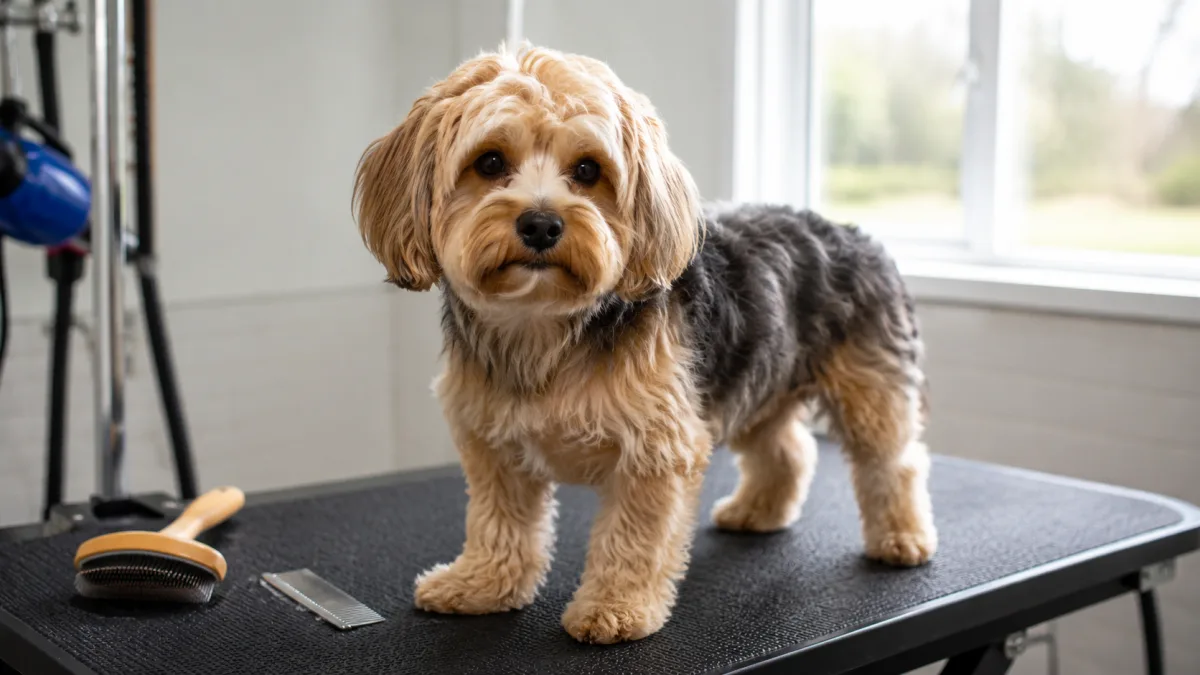
Yorkipoos are usually small, but adult size can vary depending on the Poodle parent, the Yorkie parent, and the puppy's individual genetics. Coats may be curly, wavy, silky, wiry, or a mix. Color can shift as the dog matures.
The AKC Toy Poodle page describes the Toy Poodle as a small, curly-coated companion and athlete. The AKC Toy Poodle breed page helps explain where the curl, trainability, and low-shedding reputation may come from.
If grooming sounds simple because the dog is small, compare that assumption with Livecub's longhair Dachshund grooming guide. Coat type changes the schedule, not just the look.
What is a Yorkipoo temperament like?
Many Yorkipoos are affectionate, alert, playful, and quick to learn. They may also bark, guard laps, chase movement, resist being alone, or become bossy if every small-dog habit is excused. A good owner treats the dog as trainable, not fragile decoration.
The Yorkie side can bring terrier confidence and alertness. The Poodle side can bring quick learning and sensitivity. Together, that can be delightful or noisy depending on socialization, genetics, and daily structure.
Small dogs still need rules. A Yorkipoo that never learns to settle, greet politely, or be handled calmly can become hard to live with despite weighing very little.
What health issues should buyers ask about?
Ask about both parent breeds. Small dogs can face dental disease, patella issues, eye problems, tracheal concerns, and liver-related issues. Poodle lines can bring their own screening needs. A breeder should discuss health testing rather than relying on the word "hybrid."
OFA's CHIC program explains breed-specific health screening protocols and public health-test records. The OFA CHIC program page is useful because serious breeders should understand verifiable screening.
Ask for registered names or numbers for parent dogs, veterinary records, and the reason for the cross. If the answer is only "cute puppies," keep looking.
How much grooming do Yorkipoos need?
Grooming depends on coat type, but many Yorkipoos need regular brushing, face trimming, professional grooming, nail trims, ear checks, and dental care. A curlier coat may mat close to the skin. A silkier coat may tangle around ears, legs, and collar areas.
Start handling early: paws, ears, mouth, face, tail, collar, and brushing. Grooming should be trained in short pieces before the first full appointment. A puppy that learns tools only when mats hurt may fight every session.
The coat is not low work just because it sheds less. Low-shedding dogs often move the work from the floor to the brush and groomer.
Who is a Yorkipoo best suited for?
A Yorkipoo can suit an owner who wants a small companion, can handle grooming costs, enjoys training, and is home enough to prevent long stretches of isolation. Apartment living can work if barking is managed early and the dog gets daily activity.
Very young children may need close supervision because small dogs can be injured by rough handling. Older children can do well if they learn how to invite contact, respect retreat, and avoid treating the dog like a toy.
For another small breed with strong personality, Livecub's Miniature Schnauzer questions guide is a reminder that small size and easy personality are not the same thing.
How should you train a Yorkipoo?
Start with name response, recall, polite handling, quiet time, potty routine, and short separation practice. Yorkipoos can be clever enough to learn quickly and clever enough to learn the wrong lesson if barking, jumping, or nipping always gets attention.
Use short sessions and real rewards. A tiny dog does not need rough correction to understand boundaries. It needs consistency, timing, and a household that stops laughing at behavior it will dislike in six months.
Train before the habit hardens. Alert barking, lap guarding, and grooming resistance are easier to prevent than to undo.
What should owners budget for?
Budget for professional grooming, dental care, vaccines, parasite prevention, food, pet insurance or emergency savings, training help, and replacement of tiny chewed items. A small dog can still generate adult-sized bills.
Dental care deserves special attention. Small breeds often need routine brushing and veterinary dental discussions. Waiting until breath is terrible or chewing changes can make care more expensive and less comfortable for the dog.
Also budget time. A Yorkipoo may want companionship, daily play, brushing, and mental work. Buying a small dog because there is no room for a large dog does not remove the need for attention.
What should you ask a Yorkipoo breeder or rescue?
Ask about parent breeds, adult size expectations, coat care, health testing, veterinary records, socialization, return policy, and the age at placement. A rescue should discuss known behavior, medical care, grooming condition, and how the dog handles people, dogs, and being alone.
Be careful with extreme tiny marketing, allergy guarantees, no-health-problem claims, and sellers who refuse records or questions. A responsible source will talk about risks, not only selling points.
If you are comparing breeder practices across breeds, Livecub's Brittany Spaniel breeder guide shows how the same documentation habit applies even when the breed type is completely different.
Ask where the puppies spend their day and what they have already experienced. Gentle grooming, household sounds, short crate time, safe visitors, and calm handling all matter. A puppy raised with no normal-life practice may struggle after the sale.
For rescue dogs, ask why the dog was surrendered, what the temporary home has observed, and what training or medical follow-up is already recommended. A rescue may not know the full background, but honest uncertainty is better than a perfect story.
What are common owner mistakes?
Common mistakes include assuming the dog will not shed at all, delaying grooming, ignoring dental care, carrying the dog out of every social situation, and failing to teach quiet time. Another mistake is choosing by color or face shape before meeting the puppy's temperament.
Small dogs often get less training because people can physically pick them up. That shortcut solves the moment and delays the skill. A Yorkipoo still needs to learn walking, waiting, handling, and being alone calmly.
Frequently Asked Questions
Are Yorkipoos hypoallergenic?
No dog is guaranteed hypoallergenic. Some Yorkipoos shed less, but allergies depend on the person and the individual dog.
How big do Yorkipoos get?
They are usually small, but adult size varies with the parents and individual genetics. Ask about mature relatives, not only puppy weight.
Do Yorkipoos bark a lot?
Some do. Yorkie alertness and Poodle sensitivity can make barking likely unless training and management start early.
Are Yorkipoos good first dogs?
They can be, if the owner is ready for grooming, training, dental care, and small-dog safety. They are not care-free starter pets.
A Yorkipoo can be a lovely companion when expectations are honest. Choose the dog, source, and care plan instead of buying the label.

Timothy Davidson
Edits step-by-step general-interest guides for clarity, realistic limits and source verification.

Leave a reply
Replying to