
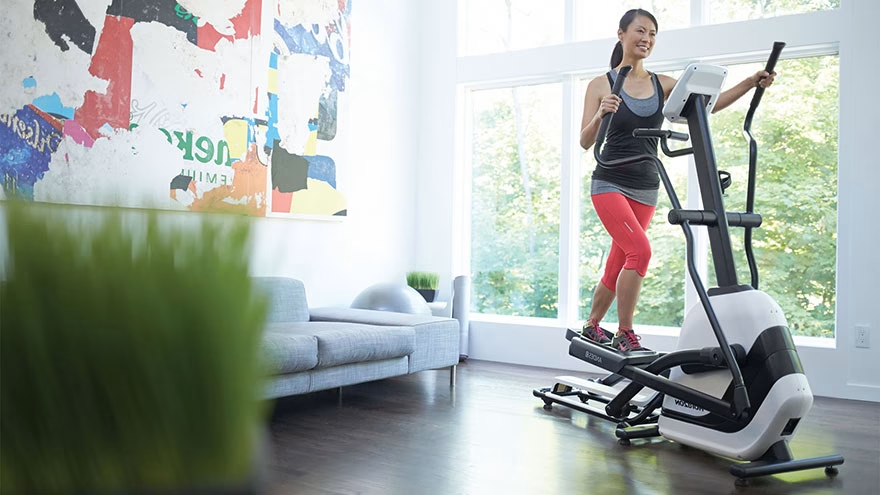
Does the Elliptical Build Bulk Instead of Losing Weight? For most people, no. The elliptical is mainly a cardio machine with some lower-body and upper-body muscle involvement, not a shortcut to bulky legs. Bulking usually requires progressive resistance training, enough food to support muscle gain, time, and recovery. The elliptical can make legs feel pumped or tired after a hard session, but that temporary feeling is not the same as building large muscle mass.
Why the elliptical usually does not build bulky muscle
Muscle size grows when the body receives repeated mechanical tension that is high enough to force adaptation. Heavy squats, lunges, presses, and loaded hinges create that signal more directly than steady elliptical work. The elliptical uses repeated cycles with modest resistance, which is better suited to aerobic conditioning and muscular endurance.
That does not mean the machine is easy. High resistance, steep incline, and hard intervals can challenge the glutes, quads, calves, and arms. The challenge still comes through repeated motion, not the same loading pattern as serious strength training.
A burn is not bulk. A tired muscle can feel swollen after exercise because of blood flow and fluid shifts, then return to normal.
How the elliptical supports weight loss
The elliptical can support weight loss by adding calorie-burning activity to the week. The result depends on total movement, food intake, sleep, stress, and consistency. A machine cannot override a daily pattern that adds back more energy than the workout used.
CDC's adult activity guidance recommends weekly aerobic activity and muscle-strengthening work. The elliptical can help with the aerobic piece, while strength training should cover the loading piece.
If your goal is fat loss, compare the elliptical with other activities such as Tae Bo for weight loss. The best option is the one you can repeat without pain, dread, or schedule chaos.
Why legs may feel bigger after a workout
After a hard elliptical session, legs can feel full, tight, or heavy. That sensation can come from temporary swelling, muscle pump, fatigue, and water retention from hard work. It does not mean permanent bulk appeared in one workout.
Scale weight may also rise briefly after a new exercise routine because muscles store carbohydrate with water and repair tissue after unfamiliar work. That is not failure. It is one reason daily scale readings can confuse beginners.
Judge trends, not the next morning. Use several weeks of measurements, clothing fit, energy, and performance instead of one post-workout feeling.
Use resistance and incline intentionally
Low resistance at a steady pace feels different from high resistance intervals. If you keep increasing resistance until every session becomes a grind, your legs may feel overworked while your overall plan stalls. If resistance is too low, the workout may become casual movement that never challenges your breathing.
Choose resistance by purpose. For easy aerobic days, keep the effort conversational. For interval days, increase resistance or pace for short periods, then recover. Do not make every day the hardest day.
One hard variable is enough. Change speed, resistance, or duration, not all three at once.
Balance cardio with strength training
Many people fear that strength training will make them bulky, then use only cardio and wonder why their body shape does not change much. Muscle tone usually comes from having enough muscle and low enough body fat to see it. That requires some resistance work, not only machine cardio.
Strength work can be simple: squats, hip hinges, rows, presses, step-ups, and core exercises done with good form. If you enjoy class-style exercise, basic aerobic steps can add coordination, while strength sessions handle progressive loading.
Cardio and strength solve different problems. The elliptical can build endurance; weights or bodyweight strength work build load capacity.
Use heart rate and effort to guide sessions
Heart rate helps you avoid turning every elliptical workout into the same middle-intensity slog. The American Heart Association's target heart rates page can give broad context for intensity, though individual response varies.
Perceived effort is useful too. Easy days should allow short conversation. Hard intervals should feel controlled but demanding. If you feel dizzy, have chest pain, or cannot recover, stop and seek appropriate medical guidance.
Intensity needs contrast. Easy sessions, hard sessions, and rest days each have a job.
Try a simple elliptical week
A practical week might include two easy elliptical sessions, one interval session, and two strength sessions. The easy sessions build consistency. The interval session raises effort without taking over the whole week. Strength work protects muscle and helps body composition.
Beginners can start with twenty minutes at a comfortable pace, then add five minutes after the habit feels stable. Intervals can be as simple as one minute harder, two minutes easy, repeated five times.
For people who like more variety, chair dancing or low-impact classes can keep movement interesting without making every workout machine-based.
When the elliptical may not be the right tool
The elliptical is low impact compared with running, but it is not perfect for every body. Some people feel hip, knee, foot, or back irritation from the fixed path. Others lean heavily on the handles and turn the workout into poor posture practice.
Adjust stride, posture, resistance, and session length before blaming yourself. If pain persists, switch machines, walk, cycle, swim, or get professional assessment. A useful workout should train the body, not bully it.
Comfort matters. A workout you can repeat safely beats a machine you force because it looks efficient.
Adjust the machine to your body
Form changes how the elliptical feels. Stand tall, keep the feet flat enough to avoid toe gripping, and let the handles assist without yanking the shoulders. If the stride feels too long or too short, try another machine before deciding the elliptical is wrong for you.
Some machines let you change incline or stride path. A steeper path may involve glutes more, while lower resistance may feel more like easy cardio. The best setting is the one that matches the session goal without irritating joints.
Fit comes before intensity. A machine that forces awkward motion will not become better because the workout is hard.
Stop chasing soreness as proof
Soreness can happen after a new elliptical routine, especially with higher resistance or incline. It is not the scorecard. You can improve endurance and body composition without being sore after every session.
Use performance markers instead: lower effort at the same pace, more minutes at the same resistance, better recovery, or stronger lifts on strength days. Those markers say more than sore calves.
Use measurements that match the goal
If the fear is bulky legs, measure the thing you are worried about instead of guessing from a mirror after a hard workout. Use a soft tape around the same point on the thigh or calf every few weeks, not every day. Pair that with strength numbers, cardio minutes, and how clothes fit.
If measurements rise while strength and body weight are stable, the change may still be temporary water or training swelling. Look for a trend over several weeks before changing a plan that is otherwise working.
Better data calms bad guesses. A measured trend is more useful than a post-workout panic.
Do not turn posture into a hidden problem
Many elliptical users lean forward, lock the elbows, or hang on the handles when fatigue rises. That can make the workout feel harder without improving the result. Check posture every few minutes: ribs stacked, shoulders relaxed, feet steady, and grip light enough that the legs still do the work.
Rotate machines if boredom wins
Use the bike, rower, or treadmill sometimes if variety keeps the plan alive.
Frequently Asked Questions
Will the elliptical make my thighs bigger?
It is unlikely to create large thigh growth by itself. Temporary pump and fatigue can make legs feel bigger after hard sessions.
Is the elliptical good for fat loss?
It can help if it adds consistent activity and supports an overall energy balance that fits your goals.
Should I use high resistance on the elliptical?
Use high resistance for selected sessions, not every workout. Mix easy aerobic work, harder intervals, and strength training.
Is the elliptical better than running?
It depends on joints, goals, preference, and consistency. The elliptical is lower impact, while running transfers more directly to running fitness.
The elliptical is not a bulk machine for most people. Use it for repeatable cardio, pair it with strength work, and judge progress by weekly patterns instead of one pumped-leg workout.

Linda Fehrman
Edits general wellness and relationship explainers. Health material is educational, avoids diagnosis and links to health-authority guidance.
Leave a reply
Replying to