
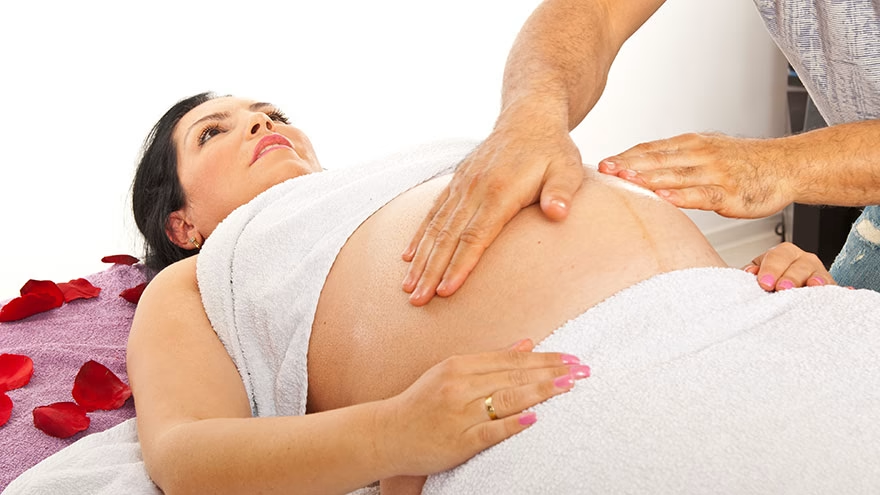
How to Massage a Woman in Labor starts with one rule: ask first, and keep asking. Touch that helped five minutes ago may feel awful during the next contraction.
Labor massage is not about performing a technique perfectly. It is about comfort, consent, pressure, timing, and staying responsive to the person giving birth.
Ask Before Touching
Before labor, ask what kind of touch usually helps: firm pressure, light touch, no touch, foot rubs, shoulder work, or counterpressure.
During labor, ask in short phrases: more pressure, less pressure, stop, same spot? Then follow the answer without taking it personally.
Use Counterpressure
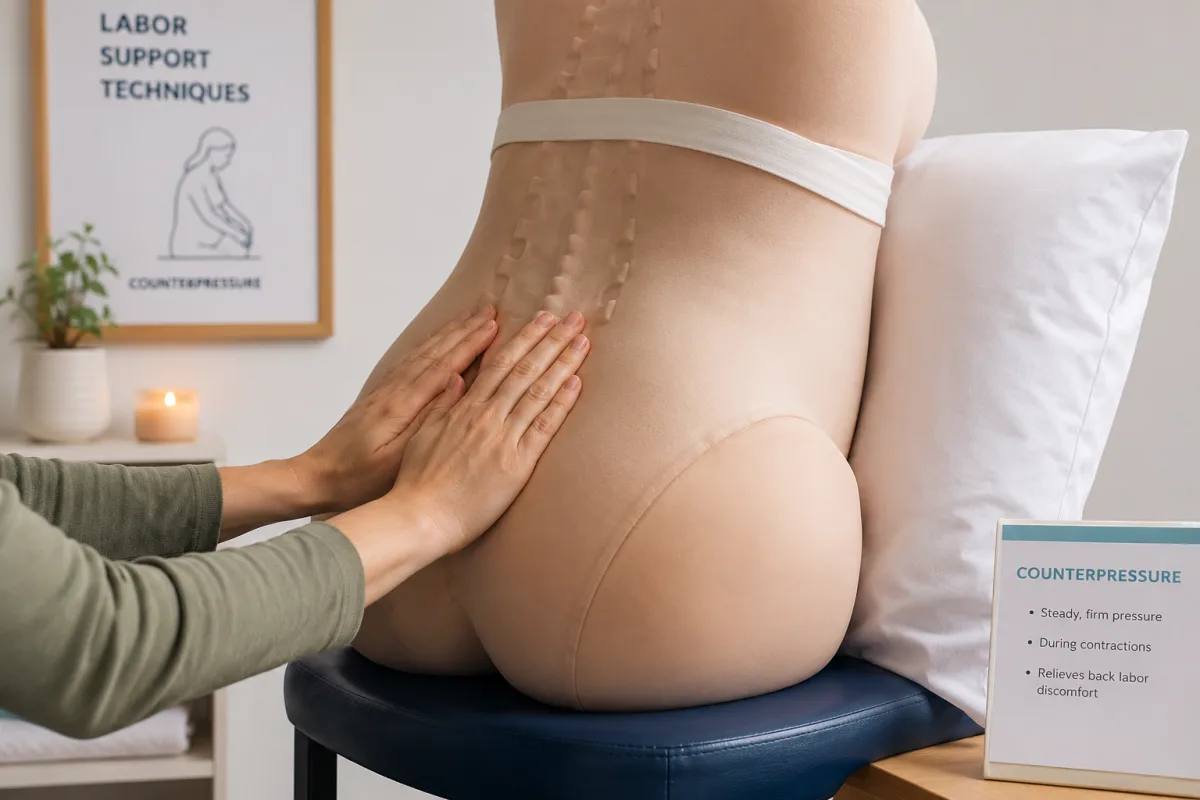
Back labor may feel better with firm pressure on the lower back or sacrum. Use the heel of your hand, a tennis ball in a sock, or both hands if the person wants firm contact.
Cleveland Clinic describes counterpressure and massage as possible comfort measures during labor support: Cleveland Clinic labor support.
Shoulders And Jaw
Some people tense the jaw, shoulders, and hands during contractions. Gentle shoulder pressure or a reminder to unclench can help if it is welcomed.
Keep words short. Too much coaching can feel like noise.
Hands And Feet
Hand or foot massage may help between contractions, especially if the person does not want belly or back touch. Avoid pressure points if the care team has warned against them.
Pregnancy and labor are not the time to experiment with intense reflexology claims. Comfort is the goal.
Use Oil Carefully
Ask before using lotion or oil. Hospitals may have rules, allergies may exist, and slippery hands can make position changes harder.
Unscented options are usually safer than strong fragrances. Labor can make smells suddenly unbearable.
Position Changes

Massage may work better in side-lying, hands-and-knees, standing lean, sitting on a birth ball, or leaning over the bed.
Mayo Clinic notes that movement and positions such as standing, walking, swaying, and leaning can help during labor: Mayo Clinic labor positions.
Heat And Cold

A warm pack on the lower back or a cool cloth on the neck can pair with massage. Ask staff what is allowed and check skin often.
Do not leave heat in place too long. Labor focus can make it harder for someone to notice skin irritation quickly.
During Contractions
During a contraction, keep the pressure steady if the person likes it. Do not change techniques rapidly unless they ask.
A steady hand can be more helpful than a fancy routine.
Between Contractions
Between contractions, offer water if allowed, wipe sweat, adjust pillows, and ask if the last pressure helped.
Livecub's emotional support during early labor guide can help with the broader support role around massage.
Consent Can Change
A person may want touch early and reject it later. That is not rejection of you. It is labor changing.
Livecub's staying intimate during pregnancy guide can help partners understand that closeness includes listening to no.
When To Stop
Stop massage for numbness, pain, skin irritation, dizziness, medical procedures, monitoring adjustments, or if staff ask you to move.
ACOG describes comfort measures and support as part of low-intervention labor care when appropriate: ACOG labor comfort measures.
Emotional Safety
If labor brings fear, trauma memories, or panic, touch may need to stop. Ask what feels safe and involve the care team.
Livecub's depression during pregnancy guide can help families think about mental health support before birth.
Your Body Mechanics
Keep your own wrists, shoulders, and back safe. Use body weight rather than finger strain for firm pressure. Switch hands and rest between contractions.
A labor support person who burns out after an hour becomes less useful.
After Birth
Massage may or may not feel good after birth. Ask before touching. The person may prefer warmth, water, food, quiet, or help holding the baby.
The support continues, but the form changes.
Practice Before Labor
Practice a few pressure options before labor starts. The person can say which touch feels good, annoying, ticklish, or too intense.
Practice also teaches the support person where to stand without straining their hands and back.
Back Labor
Back labor may call for firmer pressure than ordinary massage. Some people want a steady press on the sacrum through the whole contraction.
Others hate pressure there. The only reliable answer is the birthing person's response.
Use A Tennis Ball Carefully
A tennis ball in a sock can help apply pressure, but do not roll hard over bones or irritated skin. Keep pressure controlled.
If the person says stop, stop immediately and switch to another comfort measure or no touch.
Coordinate With Staff
If monitors, IV lines, epidural placement, or exams are happening, ask staff where you can safely stand and touch.
Good labor support works with the room, not against it.
Non-Touch Support
If massage stops helping, support can still continue through words, water, pillows, advocacy, room control, and calm presence.
Touch is only one tool. A quiet, useful support person is still valuable.
Rhythm Matters
Massage often works best when the rhythm matches contractions. Firm steady pressure during a contraction and lighter touch between contractions may feel better than constant rubbing.
Ask for feedback in short words. Labor is not the time for a long review.
Lower Back Technique
For lower back pressure, place both hands on the sacrum and lean in with body weight rather than pushing with only wrists. Keep shoulders relaxed.
If the person wants more pressure, use your body position, not forceful jabbing.
Hip Squeeze
Some people like a double hip squeeze during contractions. Place hands on the outer hips and press inward if staff says the position is safe and the person wants it.
Stop if the pressure feels wrong, if monitoring is disturbed, or if the care team needs space.
Neck And Scalp
Between contractions, gentle neck, scalp, or temple touch may help some people reset. Others may hate light touch when labor intensifies.
Let the person choose. Comfort is personal and can change in minutes.
Partner Fatigue
Massage can tire the support person. Switch positions, rest between contractions, and use tools such as a ball only if the person likes them.
A steady support person who lasts is better than a dramatic effort that burns out.
Trauma-Informed Touch
Some people have trauma histories that make touch complicated. Agree on a stop word, no-touch zones, and who can be in the room before labor begins.
Consent-based massage is not only polite; it helps the person feel safer.
Side-Lying Support
Side-lying can be useful when the person is tired or needs rest. A support person can place pillows, press the lower back, or rub shoulders if invited.
Keep the top leg supported and ask staff about positioning if monitors or epidural lines are present.
Shower Or Tub Settings
If water is allowed, massage may shift to holding a shower spray, pressing the back through a towel, or helping the person change positions safely.
Wet floors and tired legs can be risky. Stability matters more than technique.
Words During Massage
Pair touch with short words only if wanted: softer, breathing with you, one at a time, or almost done. Silence may be better.
Do not narrate the contraction unless the person asked for that style.
If Touch Stops Working
Labor can move from touch-friendly to no-touch quickly. Put your hands away and switch to environment support: dim lights, water, pillows, privacy, and questions for staff.
Good support follows the person's cues, not the coach's plan.
After An Epidural
If an epidural is used, massage needs may change. The person may still want hand, shoulder, scalp, or emotional support, but positioning must follow staff guidance.
Do not move numb legs without help or permission from the care team.
Frequently Asked Questions
Is massage safe during labor?
It can be safe for many people when welcomed and allowed by the care team, but stop if it hurts, irritates skin, or is not wanted.
Where should I massage during labor?
Common areas include the lower back, shoulders, hands, feet, and hips, depending on what the laboring person wants.
What is counterpressure?
Counterpressure is firm steady pressure, often on the lower back or sacrum, used to ease contraction discomfort for some people.
Should I use oil for labor massage?
Only if the person wants it and the setting allows it. Use mild, unscented products and avoid slippery hands during position changes.
What if the person says stop?
Stop immediately. Consent can change during labor, and no one should have to accept touch that no longer helps.
Massage in labor should be simple, consent-based, and responsive. Ask often, use steady pressure, stop quickly, and let the birthing person's cues lead.

Cashie Evans
Covers parenting and practical household topics with clear steps, safety notes and links to current guidance.


Leave a reply
Replying to