
What is a mini beagle — and is it a separate breed?
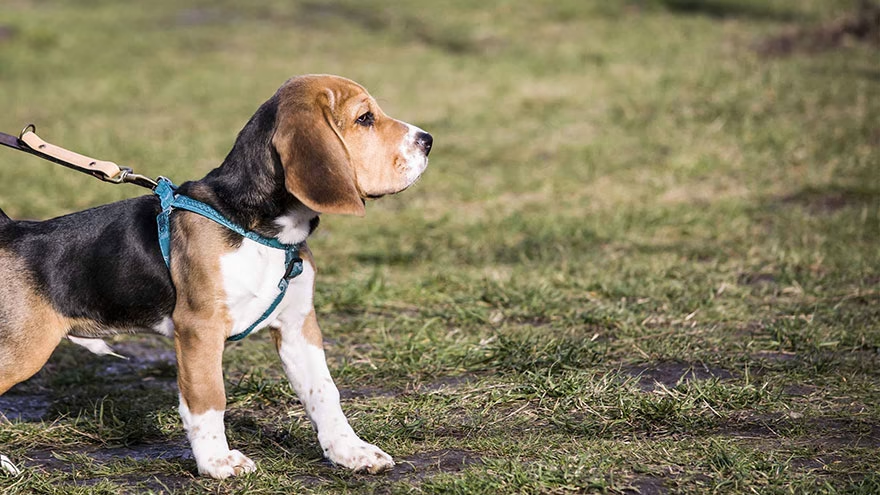
Search for "mini beagle" online and you will find hundreds of listings, adorable photos, and price tags well above what a standard beagle costs. What you will not find is a distinct recognized breed. The American Kennel Club registers exactly one beagle breed, and it comes in two size varieties: dogs measuring 13 inches and under at the shoulder, and dogs measuring over 13 but not exceeding 15 inches. The smaller of those two — a compact dog sometimes barely cracking 11 or 12 inches — is what breeders have co-opted the label "mini beagle" or "pocket beagle" to describe. It is not a different breed. It is the smaller AKC size variety, and calling it something else does not make it something else.
This distinction matters more than it might seem. Because "pocket beagle" and "mini beagle" carry no official definition, those terms can be applied to almost anything: genuine 13-and-under variety beagles from health-tested lines, runts from consecutive litters bred together to push size downward, dogs with pituitary dwarfism, or crossbreeds carrying miniature dachshund or chihuahua genetics (which is also how non-standard colors like merle get introduced into beagle coats). The name is a marketing frame, not a breed description. Knowing that before you start shopping changes what questions you ask and where you ask them.
The history of the pocket beagle
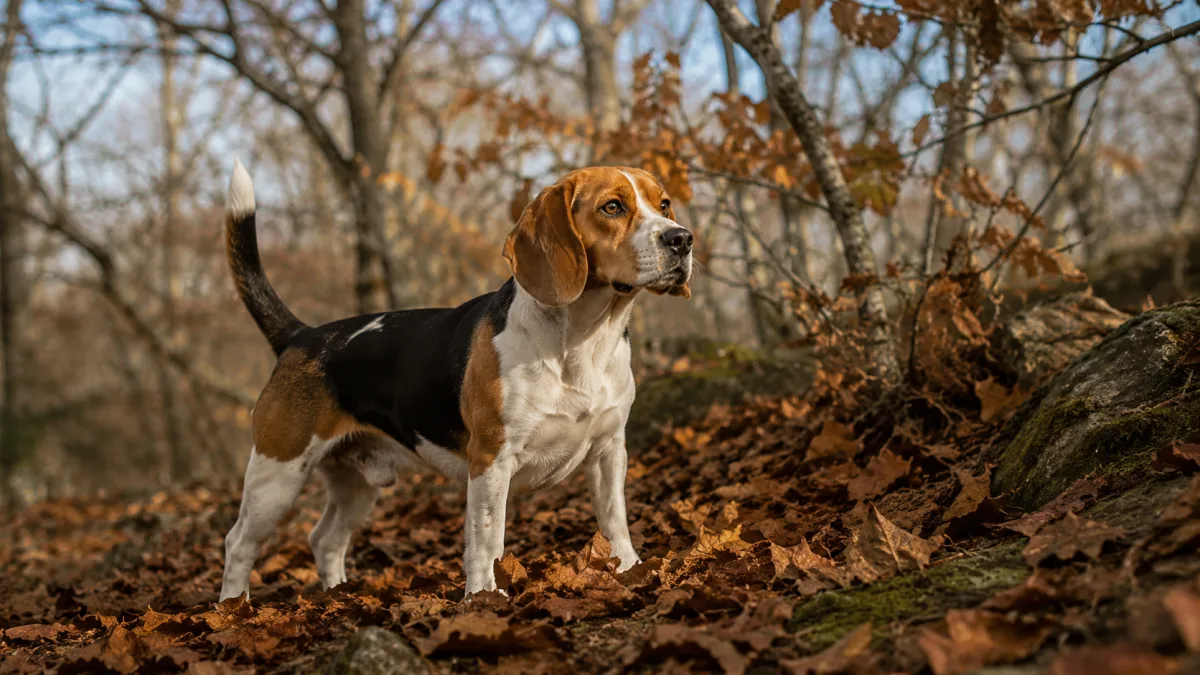
The appeal of a very small beagle is genuinely ancient. In medieval England, "beagle" was a loose term applied to small scent hounds as a type rather than a fixed breed, and miniature versions were documented from at least the reigns of Edward II and Henry VII. The hounds said to belong to those monarchs were called Glove Beagles — not because they were gentle, but because they were reportedly small enough to perch on a falconer's gauntlet. Whether that claim is entirely accurate or has gained embellishment over six centuries is difficult to verify, but the general outline appears in multiple historical sources.
What stands on firmer ground is the account of Queen Elizabeth I, who kept a pack of tiny hounds she called her "singing beagles" and famously let them roam across her dining table during royal meals. These dogs stood roughly 8 to 9 inches at the shoulder — small enough to be carried in a hunter's saddlebag until quarry went to ground, which is where the term "pocket beagle" originates. Standards for the Pocket Beagle variety were still being drawn up as late as 1901, but those genetic lines eventually died out. By the 1920s the diminutive type had become uncommon; by the 1930s it had effectively vanished.
Since the 1970s, some breeders have attempted to recreate the type under names like "Olde English Pocket Beagle." These efforts are ongoing, but the original bloodlines are gone. What modern breeders produce under that banner is a reconstruction, not a continuation — and the results vary enormously in health, temperament, and conformity to any standard.
Mini beagle size, appearance, and AKC recognition
The AKC breed standard for beagles describes a compact, solid, well-muscled hound with a slightly domed skull, large brown or hazel eyes set wide apart, and low-set ears that reach nearly to the tip of the nose when drawn forward. The coat is close, hard, and weather-resistant. Color combinations run the full range typical of hounds: tricolor, red and white, lemon and white, and several others. The tail is carried gaily upright but never curled over the back.
Both size varieties share those same structural requirements. A 13-and-under beagle is not a scaled-down version with different proportions — it is the same dog at a smaller height. Dogs advertised as "mini beagles" that fall dramatically below the 13-inch floor, say into the 7- to 9-inch range, are outside the AKC standard entirely and raise questions about how that size was achieved.
The United Kennel Club does not recognize a separate mini or pocket beagle variety either. If you are comparing a breeder's "mini beagle" to any official breed standard, you will not find one to compare against. The AKC's 13-and-under variety is the closest reference point, and that variety competes in AKC conformation shows alongside its taller counterparts in the Hound Group.
Beagles of both varieties are also among the most recognizable dog shapes in the world, which partly explains why "miniaturizing" them has become a cottage industry.
Beagle temperament and personality
Temperament in beagles is consistent enough across size to treat them as one type. These are pack hounds, bred over centuries to work alongside other dogs and follow a scent trail for hours. That history has shaped a personality that is sociable, cheerful, and largely non-aggressive — toward people, toward children, and toward other dogs. The friendly, tail-up demeanor that made beagles appealing to hunters navigating tight woodland also makes them naturally comfortable in busy households.
That same pack-dog temperament means beagles dislike solitude. A beagle left alone for extended periods tends to vocalize — and "vocalize" is a polite term for a bay that carries well beyond the property line. This is not a behavioral problem that training alone will fix; it is the breed expressing what it was developed to do. Howling was how a hunting beagle signaled its location to handlers following behind. Your neighbors may not share your appreciation for the tradition.
Beagles are also famously food-motivated, which is a gift for training and a hazard for the kitchen counter. They are curious, often clownish, and genuinely interested in the world around them — provided that world contains interesting smells. If it does, their attention budget shifts decisively toward the ground.
For households with other dogs, beagles generally adapt well. For households with small animals like rabbits or guinea pigs, the hunting heritage is worth taking seriously. The nose does not distinguish between a wild cottontail and a pet one.
Training a mini beagle — the scent hound challenge
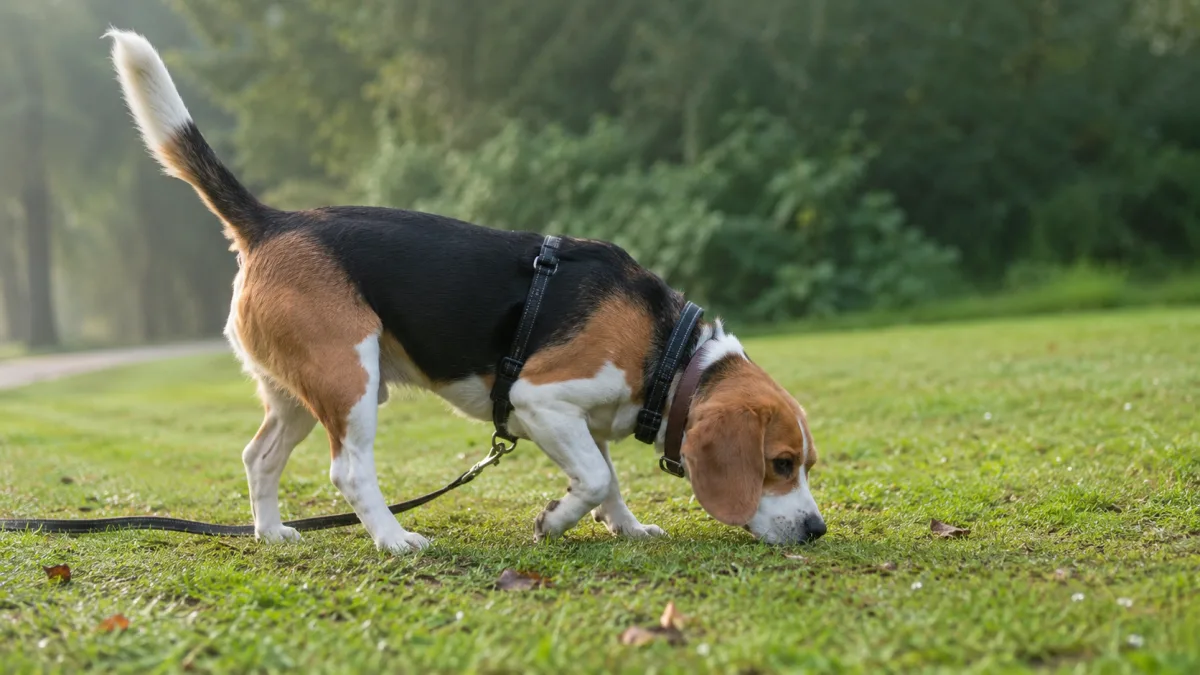
A beagle's nose contains roughly 220 million scent receptors. A human nose has about 5 million. That ratio does more than make beagles useful airport detectors — it shapes how the brain processes incoming information. When a beagle locks onto a scent trail, sensory priority shifts almost entirely to olfactory input. Hearing dims. Visual focus narrows. The dog is not ignoring you; the neural processing capacity that would register your voice is occupied.
This is the core challenge of training a scent hound, and understanding the mechanism is more useful than interpreting it as stubbornness. A beagle that has picked up a deer track 30 yards ahead of you is not disobeying a recall command — it may genuinely not be processing the sound. Building reliable recall requires starting the training before the nose-override reflex gets established as a default, using extremely high-value rewards (the kind that compete with the smell of a rabbit), and accepting that in an unfenced, scent-rich environment, 100% recall may never be achievable. That last point is not a failure of training or ownership; it is the honest ceiling for the breed.
Practical consequences: a fenced yard is close to mandatory. Long-line training outdoors is safer than off-leash until recall is very solid. Teaching "leave it" early gives you a tool for interrupting scent-following before the dog fully commits. Short training sessions work better than long ones — 10 to 15 minutes of focused work beats an hour of diminishing returns once the dog has found something more interesting to track.
Housetraining beagles also tends to take longer than owners expect. Patience and consistency matter more than any particular method. Positive reinforcement — food rewards specifically — aligns with how beagles are wired and tends to produce faster results than correction-based approaches.
If you want to see the scent-hound brain put to practical use, look at the CBP Agriculture Canine Program. The Beagle Brigade, operating across 88 major US international airports, deploys beagles and beagle mixes specifically to detect prohibited food and agricultural products in passenger luggage. The dogs are chosen for three reasons: their nose is exceptional, their small size is non-threatening to travelers, and their food drive makes reward-based training efficient. By 2022, the program was intercepting more than 150,000 agricultural items per year. The dogs are trained to detect five primary odors — apples, citrus, mango, beef, and pork — but can identify a much wider range in practice. It is the same nose, the same food motivation, and the same breed you would be bringing home.
The basset hound shares a similar scent-hound training profile and is worth reading about if you are weighing low-scent-drive versus high-scent-drive breed choices.
Common health problems in mini beagles
Standard-sized beagles from health-tested lines are generally a sturdy breed. The conditions most commonly associated with them include the following.
Intervertebral disc disease (IVDD) affects the cushioning discs between vertebrae and can range from painful stiffness to partial or full paralysis depending on severity and how quickly it is treated. Beagles are among the breeds with elevated IVDD risk, and obesity significantly increases that risk — keeping weight in check is one of the more actionable preventive measures owners can take.
Epilepsy in beagles tends to have an age of onset around 5 years and is reported to be more severe and more drug-resistant than in many other breeds. Genetic epilepsy is the most common type. Management rather than cure is typically the goal.
Hypothyroidism — underactivity of the thyroid gland — presents as weight gain, lethargy, coat changes, and cold intolerance. It is manageable with daily medication once diagnosed.
Musladin-Lueke Syndrome (MLS), sometimes called Chinese Beagle Syndrome, is a genetic connective tissue disorder unique to the breed. Affected dogs have tight, thick skin, limited joint mobility, slanted eyes set wide apart, and an abnormal "tip-toe" gait. It is inherited recessively, meaning two copies of the gene are required for expression. Responsible breeders test for it.
Cherry eye — prolapse of the third eyelid gland — appears as a red mass in the inner corner of the eye and typically requires surgical correction.
Allergies, both environmental and food-related, appear at above-average rates in beagles and can manifest as recurring ear infections, skin irritation, or gastrointestinal upset.
Dogs marketed as "mini beagles" outside legitimate 13-and-under AKC lines carry additional risks. Runts bred to runts may pass on the health vulnerabilities that made those individuals small in the first place. Dogs with introduced dwarfism can develop chronic pain, respiratory problems, and joint issues that a standard-sized beagle would not face. This is worth factoring into any conversation with a breeder who uses the "pocket" or "mini" label heavily in their marketing. Asking for health test documentation — genetic panel results, hip and eye clearances — is reasonable and tells you quickly what kind of operation you are dealing with. Responsible breeders test for MLS as part of standard genetic screening.
The health problem profile of the Staffordshire Bull Terrier makes for an instructive comparison — different breed, similar lesson about how much health outcomes vary between responsibly and irresponsibly bred lines.
Grooming and care requirements
The beagle coat is short, dense, and weather-resistant, which keeps grooming demands low. A weekly brush-through with a medium-bristle brush removes loose hair and keeps the coat clean between baths. Monthly bathing is adequate for most dogs unless they have found something memorable to roll in.
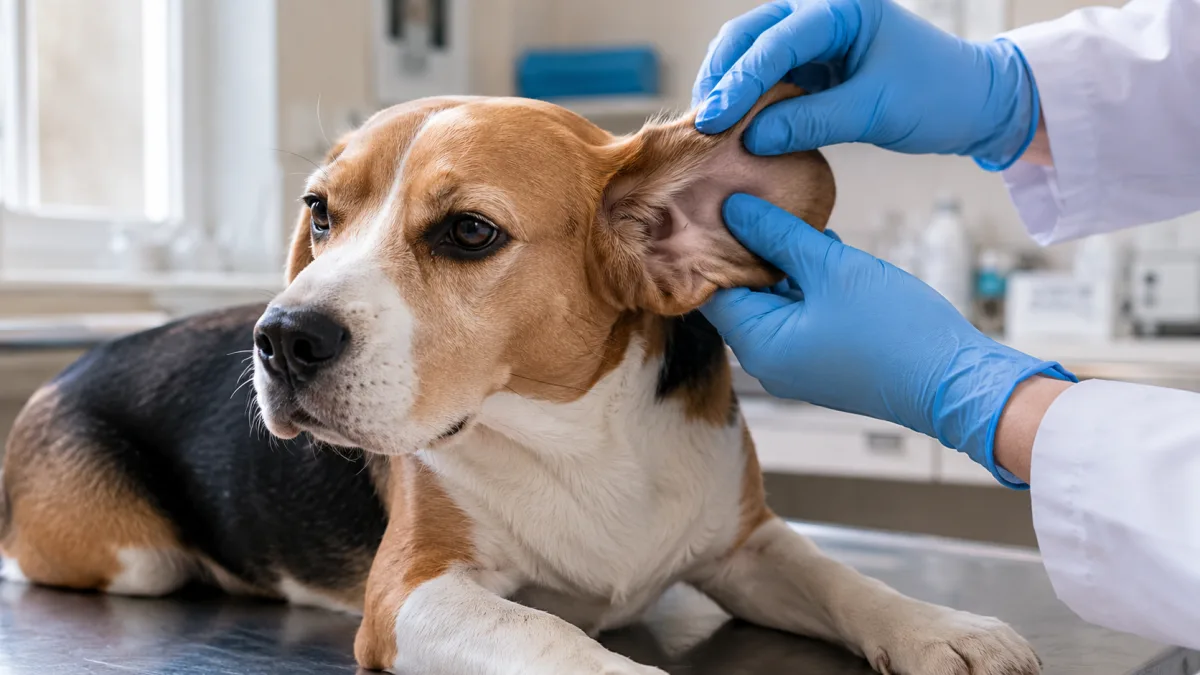
Ear care deserves more attention than the coat does. Those long, low-set ears restrict airflow to the ear canal, creating warm, moist conditions where yeast and bacteria multiply. Checking and cleaning the ears weekly — gently, with a vet-approved solution — reduces the risk of infection significantly. Any persistent odor, head-shaking, or scratching at the ears warrants a veterinary visit rather than a more vigorous home cleaning.
Nail trimming every three to four weeks keeps nails from interfering with gait. Beagles that walk regularly on pavement will wear their nails down somewhat, but most still need routine trimming. Dental hygiene — brushing several times per week or using veterinary-approved dental chews — matters for long-term health in any dog.
Exercise requirements are moderate to high. A beagle that does not get adequate physical and mental stimulation tends to redirect that energy into digging, chewing, or sustained baying. Daily walks of at least 30 to 45 minutes, ideally with opportunities to use the nose — even structured sniff sessions — go a long way toward a calmer household. Puzzle feeders and scent games can supplement physical exercise on days when a full walk is not possible.
For detail on short-coated dog grooming techniques, the longhair dachshund grooming guide offers useful context on ear and coat care that translates across breeds.
Is a mini beagle right for your home?
The beagle in either size variety suits active households that can provide consistent exercise, a securely fenced outdoor space, and the patience that comes with training a nose-first thinker. They are good with children, tend to coexist well with other dogs, and carry a natural cheerfulness that is genuinely hard not to enjoy. They also bay, they follow their nose into trouble, and they can be difficult to recall once a scent has their full attention.
Apartment living is possible with a committed exercise routine, but the vocalization can create friction with neighbors. A house with a fenced yard is the more natural fit.
If you are drawn to the smaller end of the beagle size range, the path with the fewest surprises is finding a breeder who works with the AKC 13-and-under variety, tests their dogs genetically (including for MLS), and can show you hip and eye clearances. Beagles marketed specifically as "pocket" or "mini" at prices significantly above standard-variety beagles should prompt extra scrutiny rather than extra enthusiasm. The premium typically reflects marketing, not health.
Questions about other small-breed choices? The miniature schnauzer and Maltese offer different temperament profiles in comparable size ranges.
Frequently Asked Questions
Is a mini beagle a recognized breed?
No. Neither the AKC nor the UKC recognizes a "mini beagle" or "pocket beagle" as a separate breed. The AKC recognizes one beagle breed with two size varieties: 13 inches and under, and over 13 up to 15 inches. The smaller variety is sometimes informally called a pocket beagle, but it is not a distinct breed with its own standard.
How big does a mini beagle get?
Beagles in the AKC 13-and-under variety typically stand 10 to 13 inches at the shoulder and weigh between 15 and 20 pounds. Dogs advertised as "mini" or "pocket" beagles outside this variety, especially those in the 7- to 9-inch range, fall outside the AKC standard and may have been bred through practices that carry health risks.
Are mini beagles good with children?
Yes. Beagles were bred as pack animals and are naturally sociable and gentle. They typically do well with children and other dogs. As with any dog, early socialization and supervised interactions with very young children are recommended.
Why are beagles hard to train off-leash?
Beagles are scent hounds with approximately 220 million olfactory receptors. When they lock onto a scent trail, their auditory and visual processing effectively takes a back seat. Recall commands may not register in that state regardless of how well-trained the dog is. Fenced areas and long-line training are standard recommendations for the breed. Some individual beagles develop reliable off-leash recall; many do not, and that is a breed characteristic, not a training failure.
What health tests should a beagle breeder perform?
Responsible beagle breeders typically test for Musladin-Lueke Syndrome (MLS) via genetic panel, hip dysplasia (OFA or PennHIP evaluation), and eye conditions (CAER exam). Factor VII deficiency is another condition that can be screened for genetically. Asking to see documentation of these tests before purchasing a puppy is standard practice with reputable breeders and tells you a great deal about the program's priorities.
Sources and verification
Check current details with these primary or subject-authority sources before acting on the information.

Timothy Davidson
Edits step-by-step general-interest guides for clarity, realistic limits and source verification.

Leave a reply
Replying to