
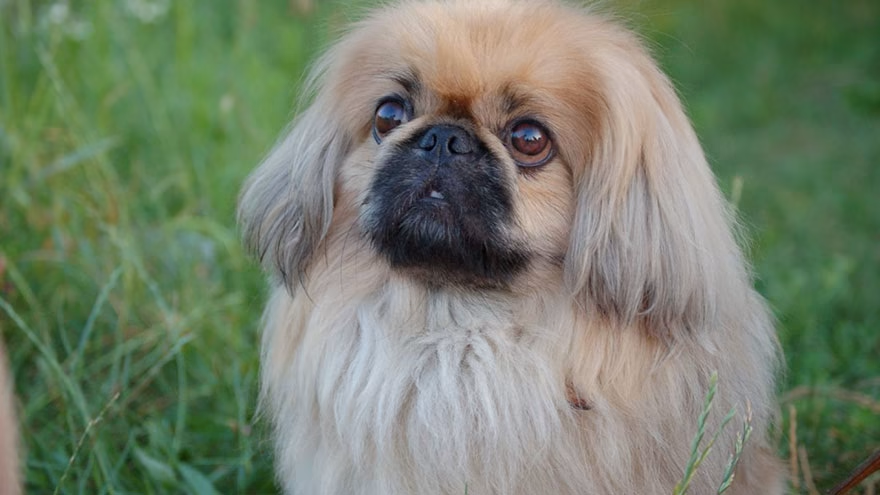
A Pekingese health guide has to begin with the face. The breed's short muzzle, prominent eyes, long coat, and compact body are part of its identity, but they also shape everyday care. A healthy Pekingese life depends on breathing comfort, heat management, eye protection, skin-fold care, dental care, weight control, grooming, and fast veterinary attention when something looks wrong.
This guide is educational and does not replace veterinary care. If a Pekingese has labored breathing, blue or pale gums, collapse, heat distress, eye injury, sudden pain, repeated vomiting, weakness, or signs of a spinal emergency, seek veterinary or emergency care quickly.
A normal day should be built around comfort: cool rooms, gentle walks, clean folds, protected eyes, small meals, and steady grooming. Owners do not need to panic over every snore, but they should learn the difference between ordinary breed noise and distress.
What Health Issues Are Common In Pekingese?
The American Kennel Club describes the Pekingese as a compact toy companion with a distinctive body and face. Those traits make the breed charming, but they also mean owners should understand brachycephalic breathing issues, eye vulnerability, dental crowding, skin-fold irritation, heat sensitivity, and back or neck concerns.
Do not treat noisy breathing, chronic eye discharge, or heat intolerance as cute. These are health topics. If you are still choosing a breeder, Livecub's Brittany Spaniel breeder recommendations can help frame early buyer questions even though the health details differ by breed.
Why Does Breathing Matter So Much?
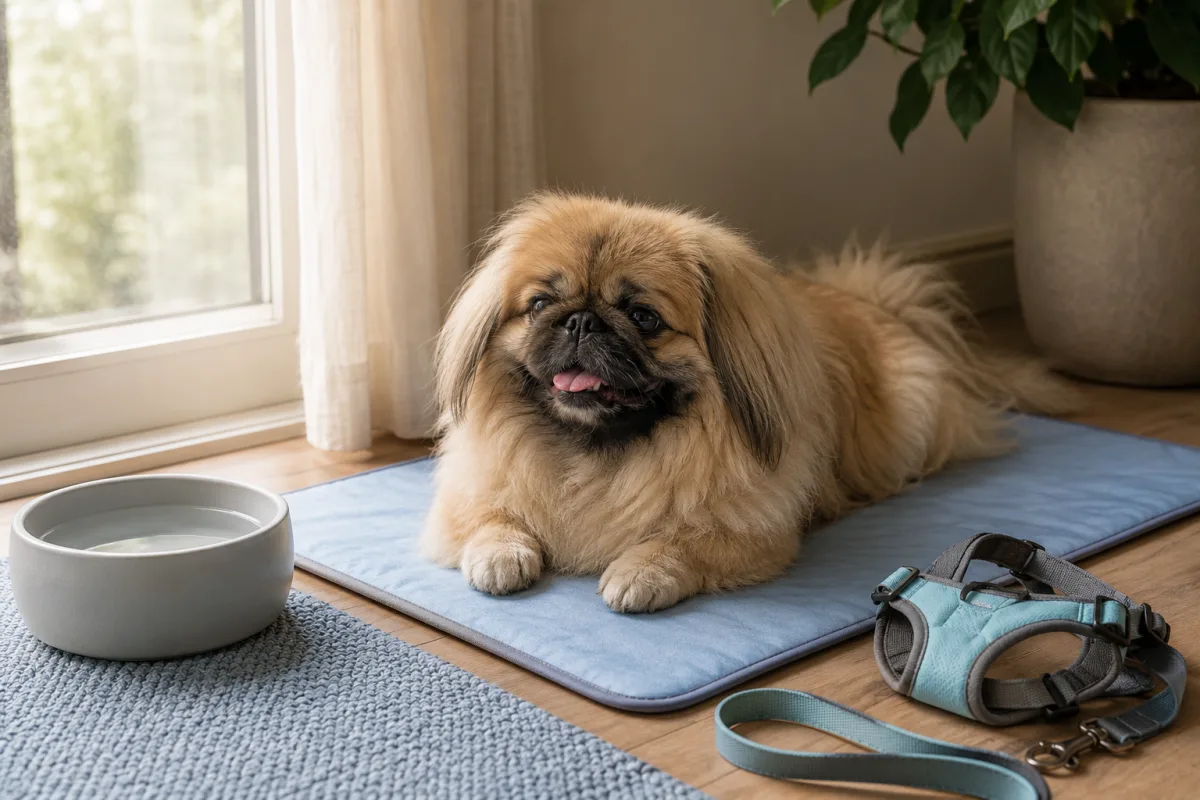
Pekingese are brachycephalic, meaning the skull and muzzle are shortened. VCA explains that shortened facial bones can alter soft tissues and cause upper-airway problems. Snoring is not the only concern; some dogs struggle to move air, especially in heat, stress, or exertion.
Watch for loud breathing at rest, gagging, exercise intolerance, heat distress, collapse, or gums that look blue, gray, or pale. Keep the dog lean, avoid hot-weather activity, use cool rooms, and ask your veterinarian whether airway evaluation is needed. Breathing comfort is quality of life.
Ask your vet what is normal for your dog before summer, travel, anesthesia, or dental work. A short baseline video of resting breathing can also help you explain changes later. The goal is not to alarm yourself; it is to notice meaningful changes early.
How Do You Protect A Pekingese In Heat?
Heat is one of the biggest daily risks. Walk during cool hours, keep outings short, provide shade and water, and use air-conditioning when needed. Do not leave a Pekingese in a hot car, sunny room, or outdoor space without cooling. Flat-faced dogs can overheat faster than owners expect.
The MSPCA-Angell recommends avoiding stress and heat, maintaining ideal body weight, and using body-clip walking gear rather than neck pressure for brachycephalic dogs. That advice fits Pekingese care well. Cooling and weight are not optional details.
Make a heat plan before summer starts. Know which room stays coolest, keep water bowls clean, test pavement with your hand, and move grooming or training to air-conditioned spaces. If the dog pants hard, slows down, or looks glassy-eyed, stop first and evaluate second.
What Eye Problems Should Owners Watch?

Pekingese eyes are large and exposed, so injuries and irritation can become serious quickly. PetMD notes that flat-faced dogs are at increased risk for ulcers and abrasions because the muzzle does not protect the eyes as well. Squinting, redness, cloudiness, discharge, pawing at the face, or sudden light sensitivity needs a vet call.
Do not use leftover eye drops without veterinary guidance. Some medications can make ulcers worse. Keep hair away from the eyes, wipe debris gently, and avoid rough play where a paw, branch, or furniture corner can injure the eye.
How Important Is Grooming?
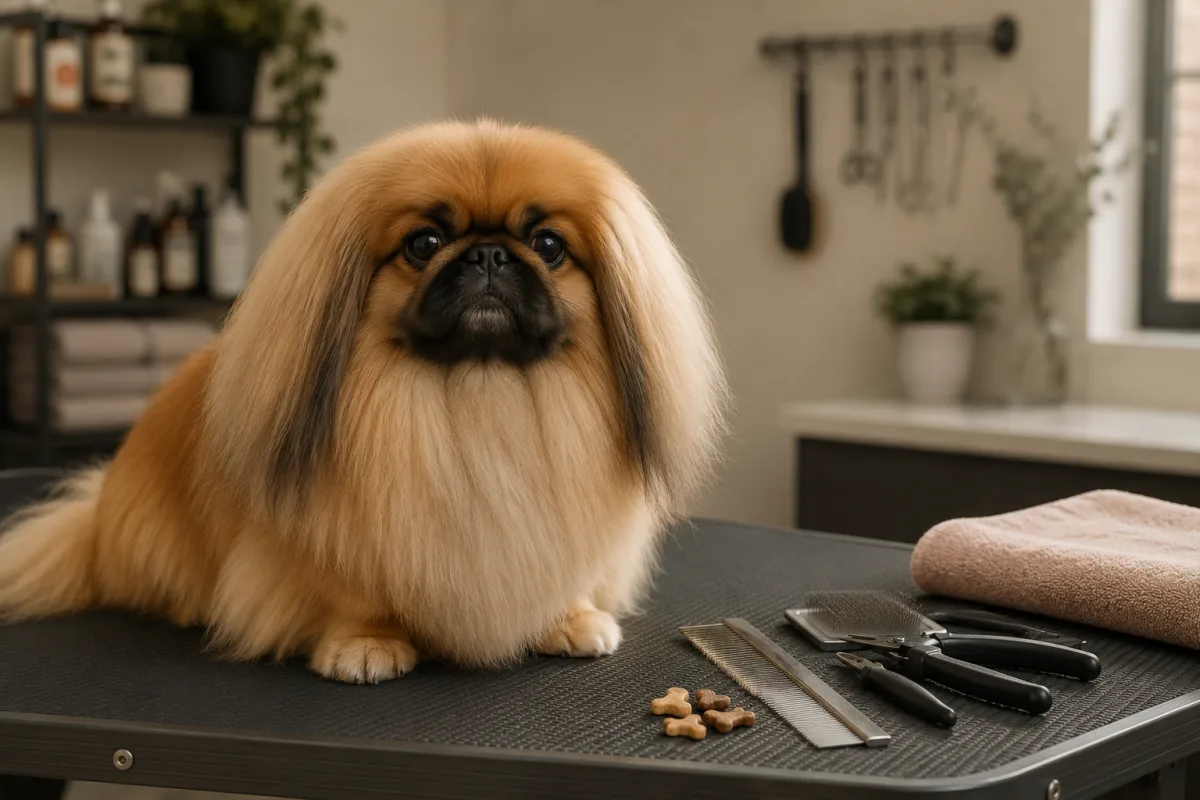
Grooming is health care for this breed. Long-coated Pekingese can mat, trap debris, and hide skin issues. PetMD says many long-coated Pekingese need professional grooming every six to eight weeks, with regular brushing at home. Face, feet, ears, tail area, and belly need careful checks.
If you choose a shorter pet trim, the dog still needs face cleaning, nail trims, tooth care, and skin checks. Livecub's longhair Dachshund grooming guide covers a different breed, but the same principle applies: grooming should reveal health problems before they become painful.
Keep grooming sessions short if the dog gets hot or stressed. Work in stages: brush one section, reward, pause, then continue later. A matted coat can pull skin and hide sores, so small sessions are usually kinder than a long battle.
How Do Skin Folds Cause Problems?
Moisture, tears, food, and debris can collect in facial folds. That can lead to odor, redness, infection, or itching. Clean folds gently with a vet-approved method and dry them well. Do not scrub raw skin. If there is odor, swelling, bleeding, or discharge, ask the vet.
Skin-fold care should be routine, not a last-minute fix before a groomer visit. A few calm seconds every day can prevent a painful problem. Reward the dog so face handling stays normal.
What About Teeth And Mouth Health?
Short-faced toy dogs often have crowded teeth. Crowding can make plaque and gum disease more likely. Brush if you can, use dental products your veterinarian recommends, and schedule dental checks. Bad breath, drooling, pawing at the mouth, loose teeth, or chewing on one side can signal pain.
Dental pain changes behavior. A Pekingese that seems fussy about food may not be stubborn. It may hurt to chew. Small dogs can need serious dental care even when they still eat.
How Does Weight Affect Health?
Extra weight makes breathing, heat tolerance, joints, spine, and exercise harder. A Pekingese does not need much extra food to gain weight. Measure meals, count treats, and ask your veterinarian for a body condition score under the coat.
If training treats are part of your day, use tiny pieces or part of the measured meal. If you compare small companion breeds, Livecub's Maltese questions shows another toy breed where coat and weight can hide body condition.
Weight checks should use hands as well as eyes. The coat can hide extra pounds, so feel for ribs under light cover and watch how easily the dog rises, walks, and breathes after mild activity.
Are Back And Neck Problems A Concern?
Some Pekingese can have back or neck pain, and any small dog with a longish body and compact structure should be protected from careless jumping. Use steps or ramps for furniture if needed, keep nails short, and prevent rough handling by children.
Call the vet for sudden yelping, reluctance to move, dragging feet, weakness, a hunched posture, or pain when picked up. Do not assume the dog is being dramatic. Small dogs can be stoic and still be in pain.
Home setup matters here. Use low beds, rugs on slippery floors, and careful lifting with one hand supporting the chest and the other supporting the rear. Jumping from couches may look harmless until a sore back turns it into a problem.
What Should Breeders And Owners Track?
Ask breeders about breathing, eye health, patellas, heart history, dental issues, skin folds, spine problems, and how adult relatives age. Owners should keep records of weight, breathing changes, eye problems, heat reactions, dental care, grooming, and medications.
If you want a contrast with another breed's health planning, Livecub's Staffordshire Bull Terrier health problems article shows why honest health conversations are part of responsible breed ownership.
Frequently Asked Questions
Do all Pekingese have breathing problems?
No, but the breed's flat-faced structure increases risk. Loud or labored breathing deserves veterinary attention.
How often should a Pekingese be groomed?
Brush at home regularly and plan professional grooming often if the coat is kept long.
Are Pekingese heat sensitive?
Yes. Use cool-hour walks, shade, water, air-conditioning, and a low threshold for stopping activity.
Why are Pekingese eyes vulnerable?
The eyes are prominent and less protected by the muzzle, so scratches and ulcers can happen more easily.
What is the best daily health habit?
Watch breathing, eyes, folds, teeth, weight, and heat tolerance. Small daily checks catch problems earlier.
What Is The Core Health Rule?
Do not normalize suffering because it is common in the breed. A Pekingese should breathe as comfortably as possible, see without irritation, move without pain, stay cool, and have clean skin and teeth. The breed is ancient and charming, but modern care should still put comfort first.

Chiara Bradshaw
Covers education, culture and creative topics with an emphasis on readable explanations and verifiable references.

Leave a reply
Replying to