
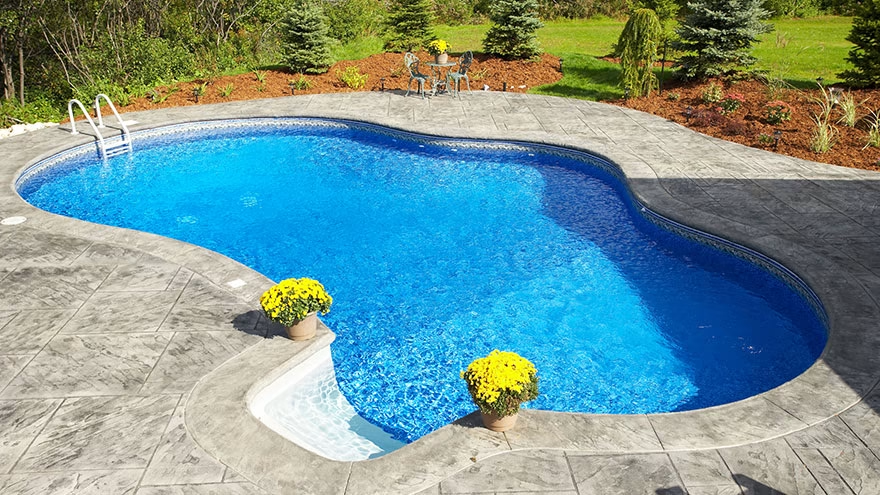
The Type of Chlorine for Pool Care Depends on Your Water
The type of chlorine for pool care should not be chosen by habit alone. Liquid chlorine, trichlor tablets, dichlor granules, and calcium hypochlorite all add chlorine, but they change the water in different ways. The right choice depends on test results, stabilizer level, calcium hardness, pH, storage, and label directions.
CDC's pool chemical safety guidance warns pool chemical users to read labels, follow directions, and never mix different pool chemicals with each other. That safety rule comes before brand preference.
Test first, then choose. Do not add chlorine blindly.
Start With a Water Test
Before adding chlorine, test free chlorine, combined chlorine, pH, total alkalinity, cyanuric acid, and calcium hardness. A pool store test or a reliable home kit can give a better picture than guessing from water color.
Free chlorine is the active sanitizer available to work. Combined chlorine is tied up with contaminants and can contribute to odor and irritation. pH affects how well chlorine works.
Livecub's total residual chlorine guide is a good companion if you need to understand chlorine readings before choosing a product.
Stabilized Versus Unstabilized Chlorine
Stabilized chlorine products add cyanuric acid along with chlorine. Trichlor and dichlor fall into this group. They can be useful outdoors when stabilizer is low, but they can slowly raise cyanuric acid with repeated use.
Unstabilized products do not add cyanuric acid. Liquid chlorine and calcium hypochlorite fit here, though cal-hypo adds calcium. That difference matters if stabilizer or calcium is already high.
The side effect matters. Every chlorine product changes more than one number.
Liquid Chlorine
Liquid chlorine, often sodium hypochlorite, adds chlorine without adding stabilizer or calcium. That can make it useful when cyanuric acid is already high or calcium hardness is already high.
It is bulky, loses strength over time, and needs careful storage away from heat and sunlight. It can also raise pH, so the pool still needs full water balance, not only sanitizer.
Use liquid chlorine according to label directions and pool volume. Pouring more because the pool "looks bad" can create unsafe conditions or waste chemical.
For broader pool care routines, Livecub's chlorine pool maintenance guide fits naturally here.
Trichlor Tablets
Trichlor tablets are common because they dissolve slowly in feeders or floaters and add stabilized chlorine. They are convenient for routine chlorination in many outdoor pools.
The tradeoff is cyanuric acid. Trichlor adds stabilizer as it adds chlorine. Over time, cyanuric acid can climb too high, making chlorine management harder.
Trichlor is also acidic, so pH and alkalinity may need attention. Never put tablets in the skimmer unless the product and equipment instructions allow it.
Convenience has chemistry attached. Tablets are easy, but they are not neutral.
How pH Changes the Choice
pH affects swimmer comfort, equipment condition, and chlorine performance. If pH is already low, an acidic product may push it lower. If pH is high, chlorine may work less effectively until balance is corrected.
Adjusting pH should be done with the right chemical, in the right order, and according to label instructions. Do not add multiple products at once because you are impatient.
Run the pump, let the water circulate, and retest after changes. Pool chemistry needs steps, not panic.
Dichlor Granules
Dichlor is another stabilized chlorine product. It dissolves faster than tablets and can be convenient for certain dosing situations. Like trichlor, it adds cyanuric acid.
That makes dichlor a poor long-term choice if stabilizer is already high. It may be more useful when a pool needs both chlorine and some stabilizer, depending on the test results.
Read the label for how to apply it. Some products require pre-dissolving, broadcasting, or pump circulation rules. Do not mix dichlor with other chemicals in a bucket or feeder.
Calcium Hypochlorite
Calcium hypochlorite, often called cal-hypo, adds chlorine and calcium. It is strong, widely used, and often sold as shock or granular chlorine.
The tradeoff is calcium hardness. In a pool that already has high calcium, regular cal-hypo use can push hardness higher and raise scaling risk. In a pool with low calcium, that may be less of a concern.
Cal-hypo must be stored and handled carefully. Keep it dry, separate, and away from other chemicals. Follow the label exactly, especially for application method and circulation.
Cyanuric Acid Changes the Decision
Cyanuric acid, often called stabilizer, protects chlorine from sunlight in outdoor pools. Too little can let sunlight burn off chlorine quickly. Too much can make sanitation harder to manage.
CDC's fecal incident response guidance discusses free chlorine, pH, and cyanuric acid in pool response tables. That shows how stabilizer level changes chlorine decisions.
If cyanuric acid is high, products that add more stabilizer may not be the best next step. Liquid chlorine or another unstabilized option may make more sense, depending on the rest of the test.
For home maintenance parallels, Livecub's drywall primer failure article is a reminder that the right product depends on the surface and conditions, not habit.
Pool Smell Is Not a Product Selector
A strong chlorine smell does not automatically mean the pool has too much free chlorine. It can point to combined chlorine, contamination, poor ventilation, or water balance problems.
Do not respond to smell alone by dumping in more product. Test the water, check combined chlorine, review bather load, and make sure circulation and filtration are working.
If the pool burns eyes or smells harsh, close it to swimmers until the water is tested and corrected.
Safety and Storage Rules
The EPA's read the label first guidance tells consumers to follow pesticide label directions. Pool chlorine products are chemicals with specific label rules, not interchangeable powders.
Store pool chemicals in original containers, dry, cool, ventilated, and away from children, pets, fuels, acids, and other pool chemicals. Do not use a wet scoop. Do not reuse a bucket that held another chemical.
If you smell strong chemical fumes, see smoke, or feel burning in your eyes or throat after handling chemicals, move away and seek appropriate help. Do not lean over a chemical reaction trying to fix it.
Never mix pool chemicals. That rule includes different chlorine products.
Choosing the Next Product
If cyanuric acid is high, consider an unstabilized chlorine option and investigate water replacement or professional advice if levels are far out of range. If calcium hardness is high, be cautious with cal-hypo. If pH is already low, trichlor may worsen the trend.
If the pool is cloudy or algae is present, chlorine type is only one part of the fix. Circulation, brushing, filtration, pH, stabilizer, and accurate dosing all matter.
When in doubt, take a fresh water sample to a reputable pool professional and bring a list of what you have already added. Guessing after several chemicals can make the problem harder.
When to Get Help
Get help if readings do not make sense, if chemicals reacted, if the pool stays cloudy after repeated treatment, or if cyanuric acid or calcium is far outside normal range. A good water test can save money and prevent unsafe guesses.
Also get help before changing feeders, switching chemical systems, or treating a large algae bloom. Equipment setup affects what products are safe and effective.
Fresh test results beat memory. Bring numbers, not estimates.
Switch Products Carefully
If you switch from tablets to liquid chlorine, or from cal-hypo to another product, clean and use equipment according to manufacturer and label instructions. Never place a new product into a feeder that still contains residue from another chlorine type.
Use up or dispose of old chemicals according to local rules instead of keeping half-empty containers for years. Old, damp, or mislabeled pool chemicals are not worth the risk.
Make one change at a time, then test again. That makes it easier to know what changed the water.
Frequently Asked Questions
Is liquid chlorine better than tablets?
It depends on the water. Liquid chlorine does not add stabilizer or calcium, while tablets add cyanuric acid and are more convenient.
What chlorine should I use if cyanuric acid is high?
A product that does not add more stabilizer may be better, but test the full water balance and follow label directions.
Can I mix different pool chlorines?
No. Never mix pool chemicals or different chlorine products. Store and apply each product according to its label.
Why does my pool smell like chlorine?
A strong odor often points to combined chlorine or poor water balance, not simply "too much good chlorine."

Olivia Prete
Edits culture and personal-development articles, distinguishing opinion and experience from verifiable claims.


Leave a reply
Replying to