
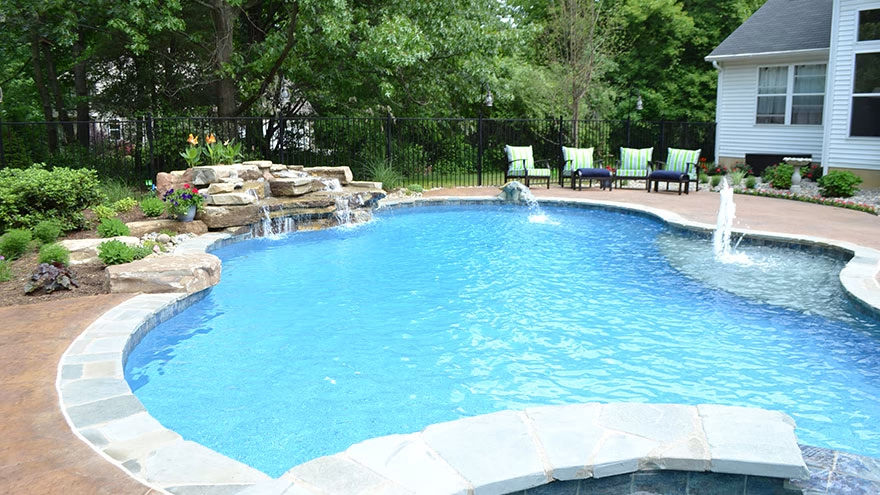
Total residual chlorine is the chlorine still present in water after the chlorine has reacted with germs, organic matter, sunlight, and whatever else the water has carried through the system. In practical pool language, total residual chlorine is the sum of free chlorine and combined chlorine. Free chlorine is the active sanitizer still available to work; combined chlorine is chlorine tied up with contaminants, often discussed as chloramines. The number matters because a pool can show chlorine on a strip and still have weak sanitation if most of that reading is combined chlorine. For drinking water, the idea is similar but the context and safe ranges are regulated differently.
What is total residual chlorine in plain terms?
Total residual chlorine answers a simple question: after chlorine has done some work in the water, how much chlorine-related disinfectant remains? Pool test kits often separate the answer into free chlorine, combined chlorine, and total chlorine. The basic formula is direct: total chlorine equals free chlorine plus combined chlorine.
That formula is useful because the total number alone can hide trouble. A pool with 3 ppm total chlorine and 2.8 ppm free chlorine is very different from a pool with 3 ppm total chlorine and 0.5 ppm free chlorine. The first has useful sanitizer still available. The second may have too much chlorine bound up in waste products.
This is why total residual chlorine should not be treated like a single green light. It is one reading in a small set. Pool owners also need pH, water clarity, bather load, stabilizer use, and local code requirements before deciding what to add.
How do free chlorine and combined chlorine differ?
Free chlorine is the portion still available to kill many germs. Combined chlorine forms after chlorine reacts with sweat, urine, body oils, dirt, leaves, and other nitrogen-containing material. Combined chlorine is not automatically a disaster, but a rising combined reading often explains that sharp "chlorine smell" people blame on too much sanitizer.
CDC guidance for home pools and hot tubs says chlorine must be routinely tested and adjusted, and that many factors reduce chlorine concentration, including swimmer waste, dirt, sunlight, and hot tub spray. CDC also recommends at least 1 ppm chlorine in pools, at least 3 ppm in hot tubs, and pH 7.0 to 7.8 in its home pool and hot tub guidance.
The relationship matters more than the label. Free chlorine protects the water. Combined chlorine tells you what the free chlorine has already been forced to handle. Total residual chlorine gives the combined picture, but it does not tell you whether the water is ready for swimmers until you split the reading.
Why do pools need both chlorine and pH readings?
Chlorine and pH work together. If pH climbs too high, chlorine becomes less effective at killing germs. If pH falls too low, the water can irritate swimmers and corrode parts. CDC's public pool operating guidance recommends maintaining minimum free chlorine and pH 7.0 to 7.8, with disinfectant and pH testing at least twice per day for public pools and more often in heavy use. The details are in CDC's public pool operation guidance.
Homeowners should still follow product labels and local rules. A backyard pool is not run like a municipal aquatic center, but the chemistry does not stop mattering because the gate is private. Heat, sunlight, rain, leaves, heavy use, and poor circulation can change readings faster than a weekend owner expects.
This is where pool care resembles other home maintenance work. Ignoring readings because the surface looks fine can lead to later rework, much like chasing drywall primer failure after the wall already shows problems. Testing early is less dramatic than fixing late.
How do you test total residual chlorine correctly?
Use a kit that can distinguish free chlorine and total chlorine. Many strips and drop kits can do this, but the instructions matter. Dip time, color-read time, sample depth, wet fingers, old reagents, and bright sunlight can all skew results. Store test materials away from heat and replace them when expired.
Test away from return jets and chemical feeders so the sample represents pool water, not a fresh chemical stream. If the pool has been used heavily, after a storm, or after adding chemicals, wait the amount of time the product label requires before retesting. Record the result with date, time, and action taken.
Test timing matters because chlorine demand changes through the day. Morning readings may look steadier than late afternoon readings after sun, heat, and swimmers have used up sanitizer. A small log helps you see the pattern before the water turns cloudy.
The useful calculation is simple. Subtract free chlorine from total chlorine to estimate combined chlorine. If total is 3 ppm and free is 2.5 ppm, combined is about 0.5 ppm. That number helps decide whether more routine sanitation, oxidation, filtration, or professional help is needed. For owners choosing products, what type of chlorine to add to a pool depends on the pool surface, stabilizer level, equipment, and local conditions.
What does total residual chlorine mean for drinking water?
Drinking water uses chlorine for microbial control, but the conversation is not the same as pool care. Utilities manage disinfectant residuals within regulatory limits, monitor distribution systems, and balance disinfection with byproducts. A glass of tap water should not be treated like a tiny swimming pool.
EPA's National Primary Drinking Water Regulations list chlorine and chloramines as disinfectants used to control microbes and show a maximum residual disinfectant level of 4.0 mg/L for chlorine as Cl2 and for chloramines as Cl2. The regulatory table is on the EPA's drinking water regulations page.
If you are testing tap water because of taste, odor, aquarium needs, brewing, dialysis-related concerns, or a private well system, read the test kit's intended use. Pool strips may give a rough sense of chlorine, but they are not a full drinking-water analysis. For private wells, local health departments or certified labs are the better route.
When should you adjust or retest?
Retest when the reading does not match the situation. If the water smells harsh, swimmers complain of eye irritation, or combined chlorine appears high, do not assume more tablets are the answer. Check pH, circulation, filter condition, and the difference between free and total chlorine.
Retest after rain, heavy swimmer use, long sun exposure, equipment repair, or chemical addition. Keep swimmers out while chemicals are being added and until the product label and local guidance say the water is ready. Pool chemicals can injure people when mixed, stored badly, or added in the wrong order.
Routine care is easier when it has a rhythm. A homeowner following chlorine pool maintenance should know the normal free chlorine range for their setup, the stabilizer situation, and the pH pattern after rain or refill water. Trends beat one-off guesses.
If the numbers keep drifting after careful testing, stop guessing and check the basics: circulation time, filter pressure, skimmer baskets, sunlight exposure, stabilizer level, and how chemicals are stored. A pool professional or local health guidance can be cheaper than repeated random chemical additions.
Keep the log plain: date, free chlorine, total chlorine, pH, weather, and what you added. After two weeks, patterns often become easier to spot than they felt in the moment.
Frequently Asked Questions
Is total residual chlorine the same as free chlorine?
No. Free chlorine is the active portion still available for sanitation. Total residual chlorine includes both free chlorine and combined chlorine.
Why does my pool smell like chlorine if the free chlorine is low?
A strong smell often points to combined chlorine or chloramines, not simply too much free chlorine. Test free and total chlorine, then check pH and circulation.
Can I use pool strips to test drinking water?
Some strips may detect chlorine roughly, but pool strips are not a full drinking-water test. Use drinking-water-specific kits or a certified lab when the result matters.
What should I do if combined chlorine is high?
Follow your pool product label, local code, and equipment guidance. In many cases the answer involves improving filtration, oxidation, ventilation for indoor pools, and retesting.
Total residual chlorine is useful only when you read it with free chlorine, pH, and context. The goal is not a prettier test strip; it is water that is clear, properly disinfected, and managed with records instead of guesses.

Alyssa Curlin
Edits general health, nutrition and education explainers. Medical topics are educational and link to public-health guidance.


Leave a reply
Replying to