
Start With Wind, Not Just a Beach Name
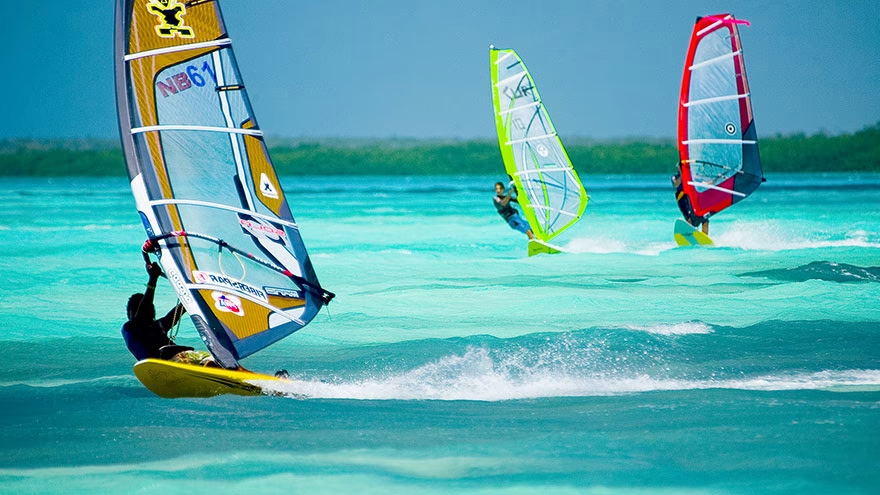
Windsurfing in the Philippines sounds simple until you start planning around islands, ferries, monsoon winds, reef lagoons, and changing sea conditions. The country has more than one beach that can work, but the right trip starts with wind first. A beautiful bay without usable wind is a swim day. A windy beach without lessons, safe launch space, or rescue support can be frustrating for a beginner.
For most travelers, Boracay is the easiest first answer because it has an established water-sports scene and a clear split between White Beach and Bulabog Beach. The Guide to the Philippines travel guide notes Bulabog Beach on Boracay's eastern side as a hub for kite surfing and windsurfing, while White Beach remains the better known leisure shore. You can use that Boracay travel guide as a starting map, not as a final weather forecast.
The better question is not "Where is the prettiest beach?" It is where can you sail safely today. Ask about wind direction, tide, reef, rescue boat access, and lesson availability before you book a board. The right operator will answer those questions without making you feel difficult.
Boracay Is the Easiest Place to Begin
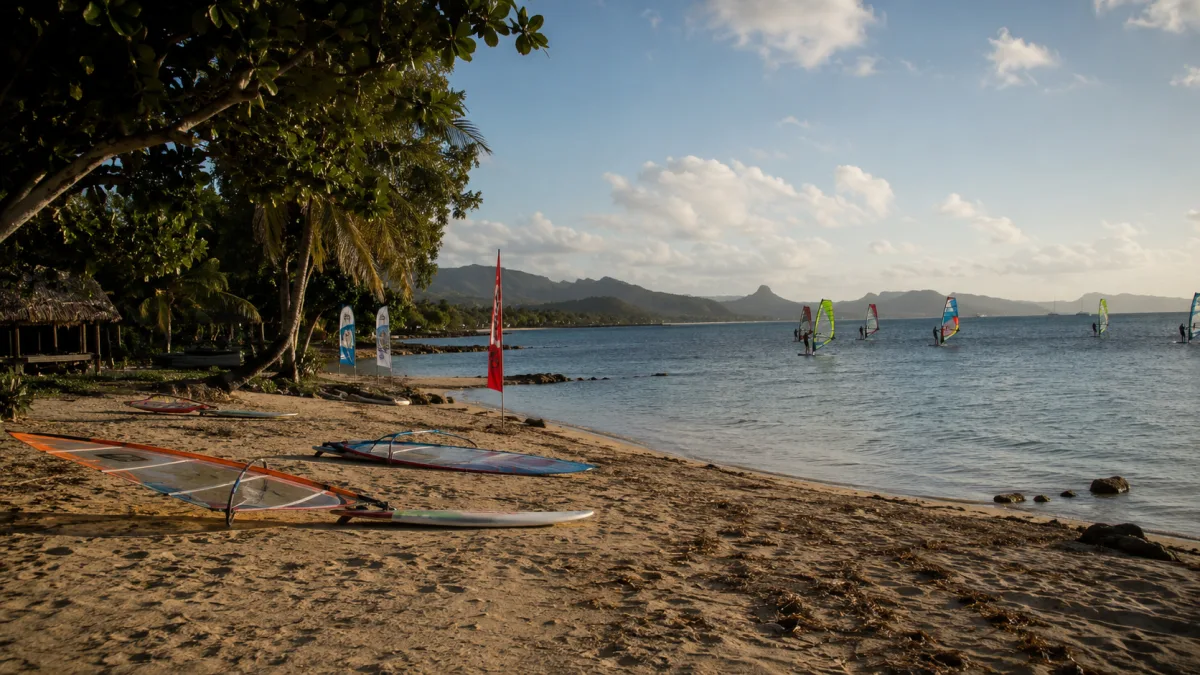
Boracay works well for many first-time windsurfing travelers because lessons, rentals, lodging, restaurants, and airport transfers are all easy to arrange. Bulabog Beach is the usual wind-sports side of the island. It is not the same scene as White Beach, and that is part of the appeal. You can spend the morning learning water starts or basic tacks, then cross to the other side later for sunset.
Bulabog Beach
Bulabog is the practical base for lessons. During the windier months, schools and rental shops set up around the lagoon, and the shallow protected water helps new sailors recover from falls. Beginners still need instruction because shallow water can hide reef, sea grass, and traffic from other riders. A calm-looking lagoon is not the same as a risk-free lagoon.
White Beach
White Beach is better for swimming, walking, food, and non-sailing travel companions. Many visitors stay near White Beach and walk or ride to Bulabog for sessions. That split works well if one person wants windsurfing and another wants an easier beach day. It also gives you more choices if wind shuts down or rain moves in.
Beyond Boracay
Travelers sometimes look toward northern Luzon, Cebu, and other island areas for wind and open water. These trips need more local checking because rental depth and rescue coverage can vary. If you are the kind of traveler who likes unusual shoreline logistics, Livecub's guide to visiting the Spiral Jetty is a useful reminder that remote-feeling water trips need timing, transport, and backup plans.
Use the Seasons as a Planning Tool
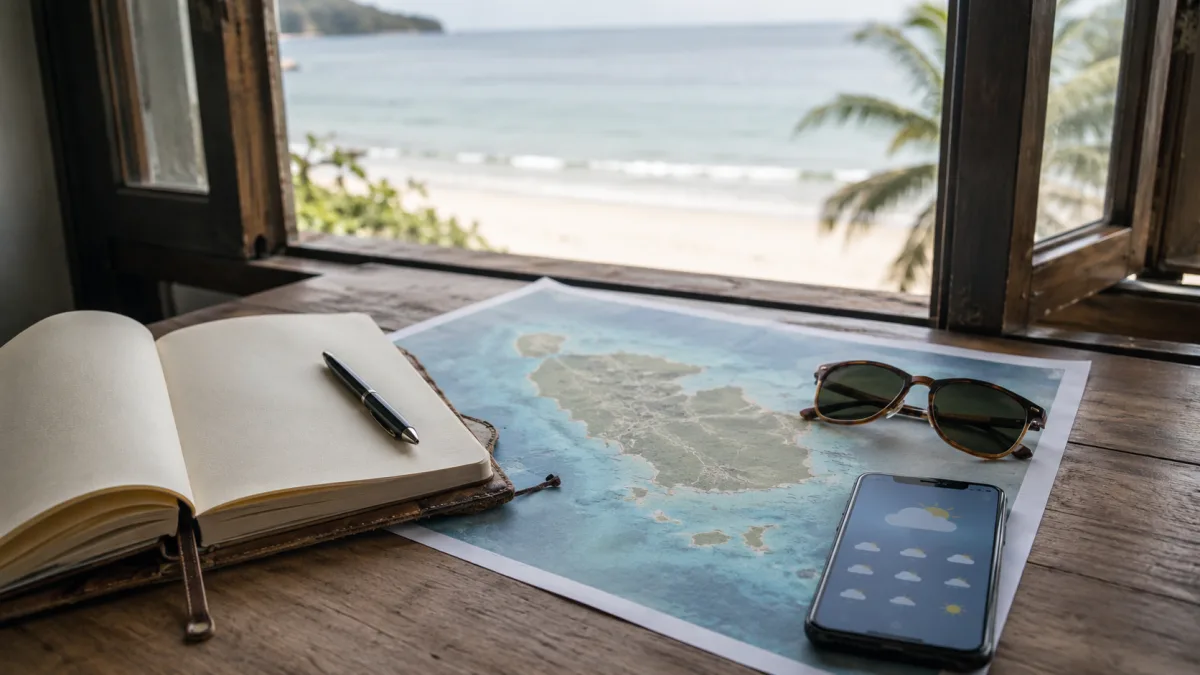
The Philippines is shaped by shifting monsoon patterns, and those patterns affect beach days. PAGASA describes the northeast monsoon, or Amihan, and the southwest monsoon, or Habagat, as key seasonal influences. Its climate advisory page notes that Habagat brings warm, moist southwest winds and rain over western parts of the country from May to September.
For Boracay wind sports, many schools and travelers look to the Amihan period, often roughly late October through April, because the wind pattern can favor Bulabog. That does not mean every day is good. Tropical weather, squalls, no-wind mornings, and crowded water can still change the plan. Treat seasonal timing as a probability, not a promise.
If you are traveling a long way, leave extra days. A three-day stay can be ruined by two bad wind days. A week gives you room to learn, rest, and switch plans. It also lets you avoid forcing a session when your instructor says the wind is messy or the water is too crowded.
Pick Lessons Before You Pick Gear
Beginners should pay for a lesson before renting a board alone. Windsurfing looks like standing on a board with a sail, but the real lesson is balance, sail angle, steering, and recovery. A good first lesson teaches you how to carry the rig, climb onto the board, uphaul the sail, turn around, and return close to the launch area. That last skill matters most.
Ask each school what is included. You want instruction time, gear matched to your size, a life jacket or buoyancy aid, local safety briefing, and a plan for getting back if you drift. The board should be big enough for learning. A tiny board that looks exciting on shore will make the first hour harder than it needs to be.
Intermediate sailors can ask about board volume, sail sizes, line setup, reef boundaries, and rescue support. Use plain questions. "What sail sizes are usually used this week?" and "Where should I not sail?" are better than trying to sound expert. A careful school will prefer honest skill levels over confident guesses.
Safety and Travel Checks Matter
The water is only one part of the trip. Before booking, check current travel guidance, local weather, and your own insurance. The U.S. State Department currently advises travelers to exercise increased caution in the Philippines and lists specific areas with higher risk. Read the full Philippines travel advisory close to departure because security guidance can change.
On the water, do not sail alone in unfamiliar conditions. Wear the flotation gear offered by the school. Protect your feet if reef, shells, or rocky entries are present. Use reef-safe habits, avoid stepping on coral, and listen when staff point out current, boat traffic, or no-go areas. A cheap rental is not a bargain if rescue support is vague.
On shore, keep travel days flexible. Ferries and small airports can be affected by weather. If you enjoy reading travel details before a trip, Livecub's article on identifying cruise lines by smoke stacks has the same observational spirit: travel becomes easier when you notice the practical clues around you.
What to Pack for a Windsurfing Trip
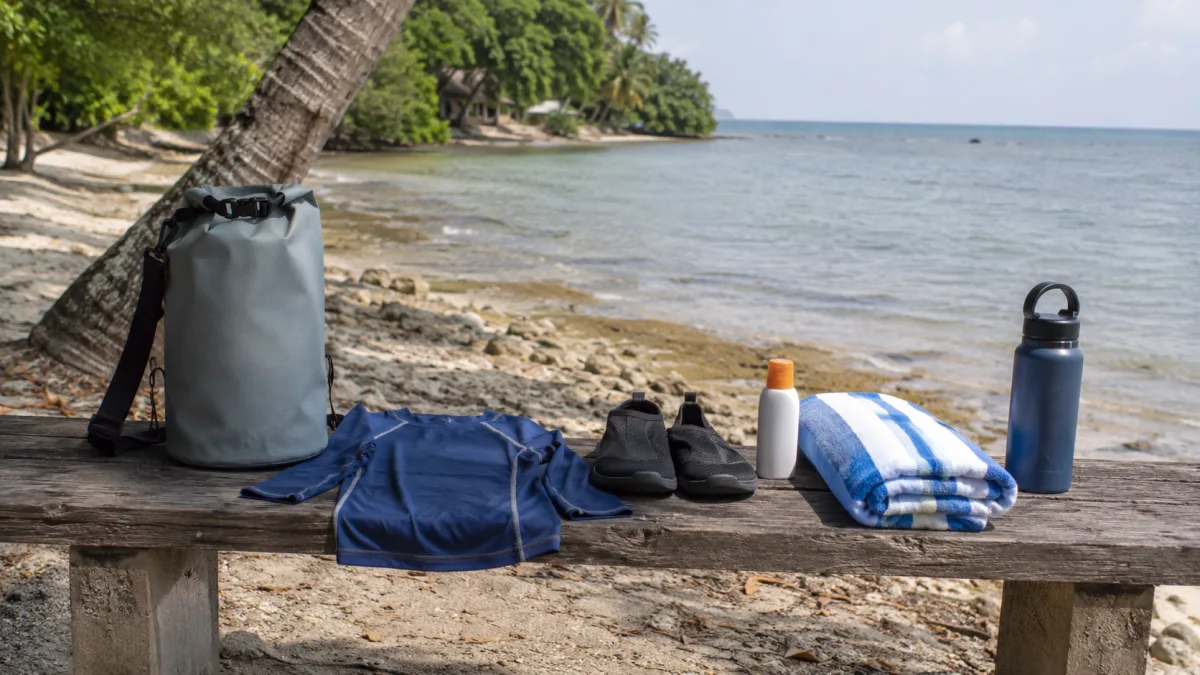
Pack light, but do not rely on beach shops for every small item. Bring swimwear that stays put, a rash guard, high-SPF sunscreen, sunglasses with a strap, a hat for shore time, and a dry bag. A small towel, reusable bottle, and basic blister care can save a session. If your feet are sensitive, pack water shoes and ask whether they are safe on the board surface.
Bring copies of travel documents and keep your phone dry. If you plan to walk rocky viewpoints or uneven shore paths on rest days, Livecub's guide on adjusting walking sticks can help with non-sailing side trips. Beach travel often includes more walking than expected, especially when roads, sand, and tricycles do not line up neatly.
Do not overpack technical gear unless you already windsurf often. Most travelers are better off renting locally because airlines can make boards and sails expensive. If you bring your own waist belt, rigging lines, or wetsuit top, label everything. Keep the rest simple so you can move between airport, ferry, hotel, and beach without turning the trip into luggage management.
Build a Trip That Works Even Without Wind
The best windsurfing trip has a backup plan. Book a flexible lesson window when possible, not the last hour before leaving the island. Keep one full day open for weather changes. Add snorkeling, sailing, a beach walk, a food plan, or a quiet morning as backup.
If the wind arrives, you sail. If it does not, the trip still feels like travel rather than waiting.
For couples or groups, discuss expectations before booking. One person may want three sessions a day, while another may want one lesson and a long lunch. Boracay makes that easier because the island has enough non-sailing activity nearby. More remote spots may be better for experienced sailors who are happy to organize the day around the water.
Windsurfing in the Philippines rewards patience. Go in the right season, choose a school with local judgment, respect the water, and leave enough days for the wind to show up. That is the difference between chasing a postcard and planning a trip that actually works.
Frequently Asked Questions
Is Boracay good for beginner windsurfing?
Yes, Boracay is one of the easier places to begin because Bulabog Beach has lessons, rentals, and a long water-sports history. Beginners should still take instruction and listen to local safety rules.
What is the best season for windsurfing in the Philippines?
For Boracay, many travelers aim for the Amihan period, often late October through April. Conditions still change by day, so leave extra time rather than relying on one planned session.
Do I need to bring my own windsurfing gear?
Most visitors should rent locally unless they are advanced sailors with strong gear preferences. Boards and sails are difficult to fly with, and local schools can match gear to the day's conditions.
Is windsurfing safe for first-timers?
It can be safe with a good instructor, proper flotation gear, suitable beginner equipment, and conservative conditions. Avoid going alone in unfamiliar water, especially around reef, boat traffic, or offshore wind.

Olivia Prete
Edits culture and personal-development articles, distinguishing opinion and experience from verifiable claims.



Leave a reply
Replying to