

Can You Get Pregnant a Month After You Had a Baby? Yes, it can happen. Ovulation can return before the first period, so waiting for bleeding to restart is not a reliable birth control plan.
The exact timing depends on breastfeeding, hormones, recovery, contraception, and individual cycles. The practical answer is simple: if you have sex after birth and do not want another pregnancy right away, talk about contraception before sex resumes.
Ovulation Can Happen Before A Period
A period follows ovulation. That means the first egg after birth can be released before you have any warning period.
ACOG's postpartum birth control FAQ says ovulation can occur before your period returns and that pregnancy can happen before the first postpartum period: ACOG postpartum birth control.
This is why a person can be surprised by a positive test even when cycles have not restarted.
One Month Is Early But Possible

At one month postpartum, many people are still bleeding, healing, sleep deprived, and not ready for sex. Others may resume intimacy earlier or have unplanned sex.
Fertility may be lower in some breastfeeding situations, but lower is not zero unless strict criteria are met.
If sex has happened and pregnancy is possible, a test at the right time and a call to a clinician can give clearer guidance than guessing from symptoms.
Breastfeeding Is Not Always Birth Control
Exclusive breastfeeding can delay ovulation for some people, but it has rules. The lactational amenorrhea method works only under specific conditions.
CDC describes lactational amenorrhea as effective when the baby is under six months, the parent has no return of menses, and the baby is fully or nearly fully breastfed: CDC lactational amenorrhea guidance.
Pumping, formula supplementation, longer sleep stretches, return of bleeding, or a baby older than six months can change the reliability.
Sex After Birth Needs Healing Context
Many clinicians discuss waiting until postpartum bleeding slows, tears or incisions heal, pain is controlled, and the parent feels ready. The six-week visit is common, but it is not magic.
Pain, heavy bleeding, fever, foul discharge, severe pelvic pain, or worsening mood symptoms should be discussed before resuming sex.
If intimacy feels complicated, staying intimate during pregnancy is pregnancy-focused, but its communication ideas can still help postpartum couples.
Birth Spacing Matters
Getting pregnant very soon after birth can be physically demanding. Recovery, iron stores, breastfeeding, mental health, cesarean healing, and prior complications all matter.
Mayo Clinic notes that short intervals between pregnancies are linked with increased risks and advises discussing timing with a health care professional: Mayo Clinic pregnancy spacing.
Your own best interval may depend on age, fertility history, pregnancy complications, and family goals.
Contraception Can Start Early
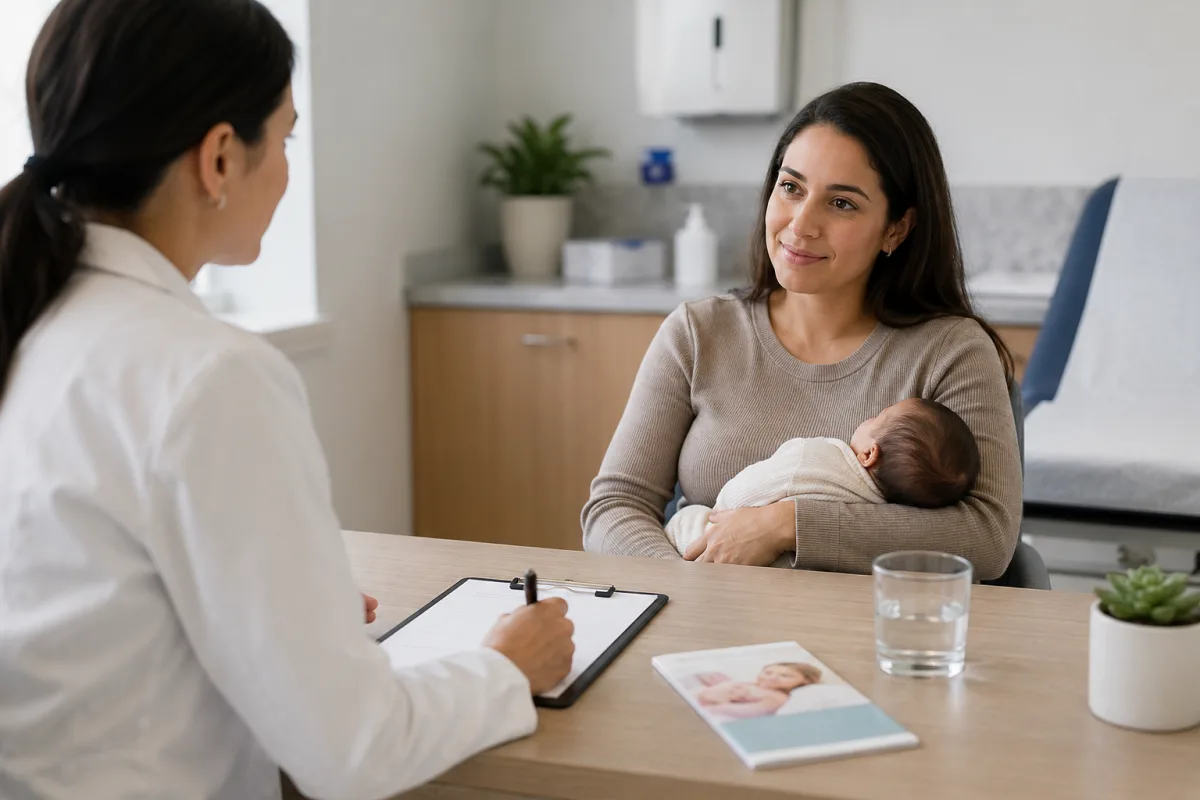
Some methods can be started immediately postpartum; others depend on breastfeeding, blood clot risk, blood pressure, and personal preference.
Options may include condoms, progestin-only pills, implant, IUD, injection, or later combined hormonal methods if appropriate. The right method is individual.
Ask before leaving the hospital or at the first postpartum check, not only at six weeks.
Emergency Contraception Questions
If unprotected sex happened and you do not want pregnancy, call a clinician or pharmacist promptly to ask what emergency contraception options fit postpartum and breastfeeding status.
Timing matters. Some methods work better sooner, and some are affected by weight, medications, or breastfeeding considerations.
Do not wait for the first period if the concern is recent unprotected sex.
Testing After Birth
A pregnancy test can become positive with a new pregnancy, but timing matters. Testing too early after sex may be negative even if conception later happens.
If test lines are confusing, evaporation lines on pregnancy tests may help with reading issues.
If you had a recent pregnancy loss, abortion, fertility treatment, or retained pregnancy tissue concern, ask a clinician how to interpret hCG tests.
Signs Are Not Reliable Enough
Fatigue, nausea, breast tenderness, mood swings, and missed periods can all happen postpartum without a new pregnancy. They can also happen with one.
Breastfeeding can hide periods. Sleep deprivation can mimic pregnancy symptoms. Recovery can make the body feel unfamiliar.
Use testing and medical advice instead of symptom matching.
If You Want Another Baby Soon
Some families want closely spaced children. That decision deserves a medical conversation, not judgment.
Ask about cesarean or tear healing, anemia, blood pressure, diabetes, breastfeeding goals, mental health, medications, and when to start folic acid again.
If you are thinking about trying again, conception timing claims should not replace clinician guidance.
If Pregnancy Would Feel Overwhelming
Postpartum recovery can be intense. A pregnancy scare may trigger panic, guilt, or conflict.
If mood is low or anxiety is high, depression during pregnancy is not postpartum-specific, but it can help you recognize symptoms that need support.
Ask for help early. Birth control, testing, and emotional support are all part of postpartum care.
What To Ask At The Postpartum Visit

Ask when sex is medically okay for you, what contraception can start now, what breastfeeding changes mean for fertility, and what symptoms should delay sex.
Ask what to do if you miss a pill, a condom breaks, or you have unprotected sex before choosing a method.
If a partner attends, ask them to listen rather than assume breastfeeding prevents pregnancy.
If You Had A C-Section Or Complication
A recent cesarean, heavy bleeding, severe anemia, infection, high blood pressure, or birth trauma can change the conversation about sex and another pregnancy.
Ask your clinician what healing signs matter and what pregnancy spacing they recommend for your history.
Do not use another person's smooth recovery as the standard for your body.
Use Condoms Even Temporarily
If you are not ready to choose a long-term method, condoms can be a bridge while you decide. They also help reduce exposure to semen if sex irritates healing tissue.
Use lubricant if dryness is an issue, especially while breastfeeding. Pain is a reason to stop and reassess, not something to push through.
If condoms break or are not used, ask promptly about emergency contraception options.
Periods May Return Irregularly
The first postpartum cycles can be irregular, especially with breastfeeding, sleep disruption, and recovery. Irregular bleeding is not a reliable fertility calendar.
If bleeding is very heavy, foul-smelling, or paired with fever or severe pain, call your clinician rather than assuming it is a period.
Tracking can help, but contraception is still needed if pregnancy is not wanted.
Talk Before Sex Resumes
The first postpartum sex conversation should include healing, pain, bleeding, birth control, sleep, emotions, and whether both people actually feel ready.
A partner may be focused on permission from the six-week visit, while the birthing parent may still feel sore, touched out, or anxious.
A clear conversation prevents resentment and reduces the chance of unprotected sex happening by default.
If The Test Is Positive
If a postpartum test is positive, call your clinician. They may ask about delivery date, bleeding, breastfeeding, symptoms, and whether hCG from the prior pregnancy should already be gone.
A new pregnancy soon after birth needs individualized care, but so does a confusing test result. Do not assume the answer without follow-up.
Seek urgent care for severe pain, fainting, heavy bleeding, shoulder pain, fever, or dizziness.
If The Test Is Negative
A negative test after sex may simply be too early. Ask when to repeat based on the date of sex and the type of test used.
If you do not want pregnancy, use contraception while waiting. A negative test today does not protect you from ovulation tomorrow.
If periods remain absent because of breastfeeding, use the contraception plan rather than a calendar guess.
Breastfeeding And Hormonal Methods
Some hormonal methods are compatible with breastfeeding, but timing and medical history matter. Progestin-only methods are often discussed early postpartum; combined estrogen methods may be delayed for some people.
Ask about milk supply concerns, clot risk, blood pressure, migraines, smoking, and prior complications before choosing.
If one method affects mood or bleeding in a way you cannot tolerate, ask about switching rather than stopping contraception silently.
Frequently Asked Questions
Can I ovulate before my first postpartum period?
Yes. Ovulation can happen before bleeding returns, which means pregnancy can happen first.
Does breastfeeding prevent pregnancy?
Only under strict conditions for some people. It is not automatically reliable.
Can I get pregnant four weeks after birth?
It is possible, though timing varies. Ask about contraception if pregnancy is not desired.
When should I take a test?
Test based on timing after sex or a missed expected period, and repeat or call if results are unclear.
Which birth control is safe postpartum?
Several options may be safe, but the best choice depends on breastfeeding, health history, and preferences.
This article is for general information only and isn't a substitute for medical advice. Talk to a clinician who knows your full history before making changes.

Cashie Evans
Covers parenting and practical household topics with clear steps, safety notes and links to current guidance.




1 Comment
Join the discussion. Comments are moderated before appearing.