
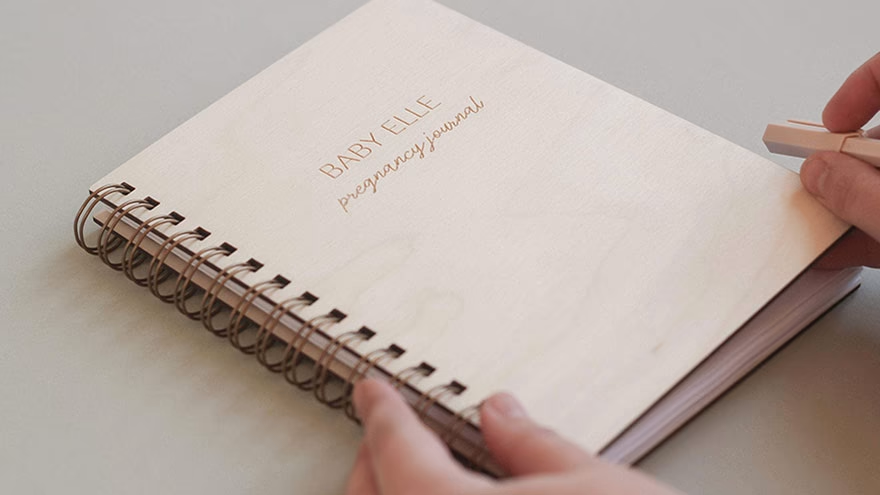
How to Create a Pregnancy Memory Journal works best when it feels easy to keep, not perfect enough to abandon. The point is to save the details you will actually want later: dates, feelings, appointments, cravings, photos, questions, and small ordinary days.
Start with a format you can open on tired nights. A cheap notebook, notes app, photo book draft, binder, or printed template can all work if the system fits your real life.
Pick A Format
Choose one main home for the journal. A paper notebook feels warm and private. A digital file is easier to search, back up, and share with a partner.
Do not split everything across five apps unless you already love that style. Pregnancy already has enough scattered paperwork.
Start With Dates
Write the first day of the last period if you know it, the positive test date, first appointment date, and estimated due date.
Mayo Clinic explains that pregnancy dating usually starts from the first day of the last menstrual period and uses a 40-week time frame: Mayo Clinic due date calculator.
Make A Weekly Page
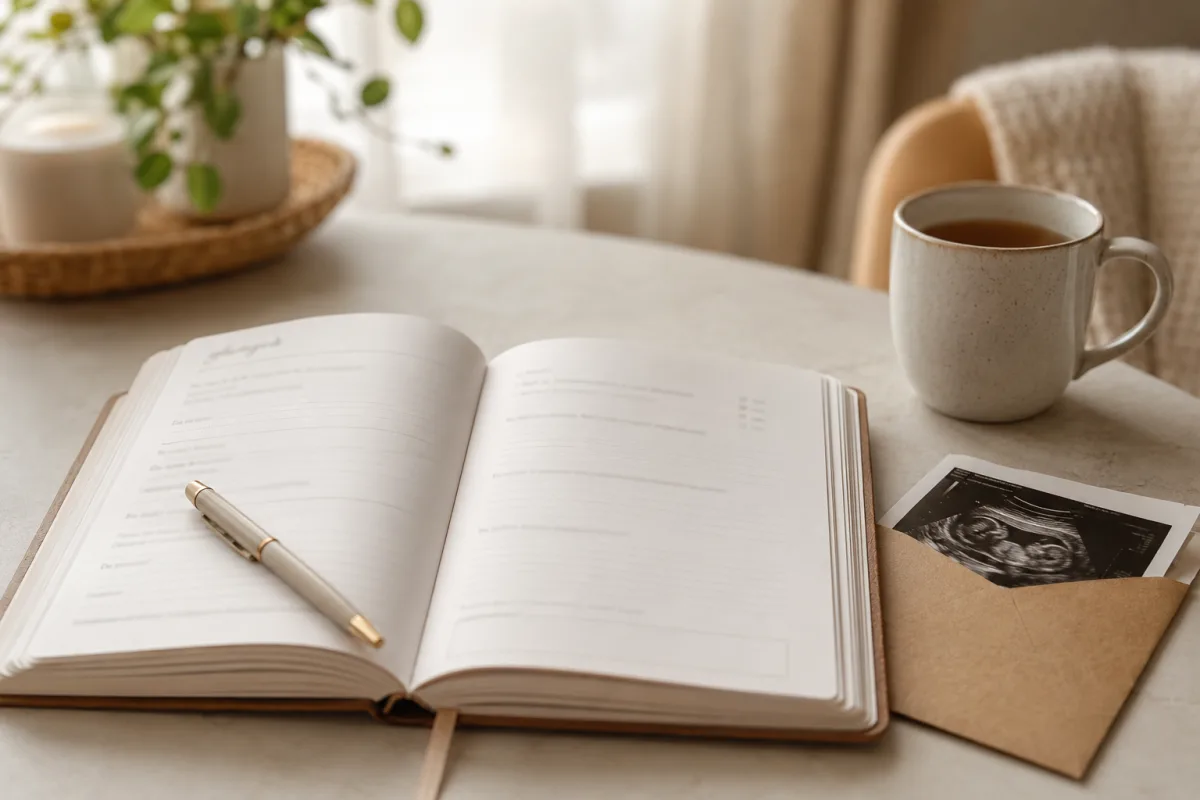
A weekly page keeps the journal from becoming a giant assignment. Use the same five prompts each week: body, mood, food, appointment, and one thing I want to remember.
Mayo Clinic's pregnancy week by week hub is useful for pairing your notes with general development and prenatal topics: Mayo Clinic pregnancy week by week.
Record The First Signs
Add the small beginning details: the test, who knew first, what you felt, what scared you, and what you did next.
Livecub's first week pregnancy signs guide can help you remember which early clues were symptoms and which were guesses.
Keep Appointment Notes
After each visit, write what was checked, what changed, which questions were answered, and what you need to ask next time.
This turns the journal into a memory book and a practical record. Future you may care about both.
Add Ultrasound Context
Do not just paste a scan photo. Write the date, gestational age, who was there, what the clinician said, and what you noticed.
If the image made you anxious, write that too. A memory journal does not have to pretend every appointment felt magical.
Save Body Notes Kindly
Body changes deserve honest language. Write about clothes, skin, sleep, movement, sex, appetite, and strength without turning the page into a complaint list.
If confidence is taking a hit, Livecub's feeling attractive during pregnancy guide can give you prompts that do not shame the body.
Track Food Without Judging
Food notes can be funny later: the snack you ate daily, the smell you hated, the meal that suddenly stopped working.
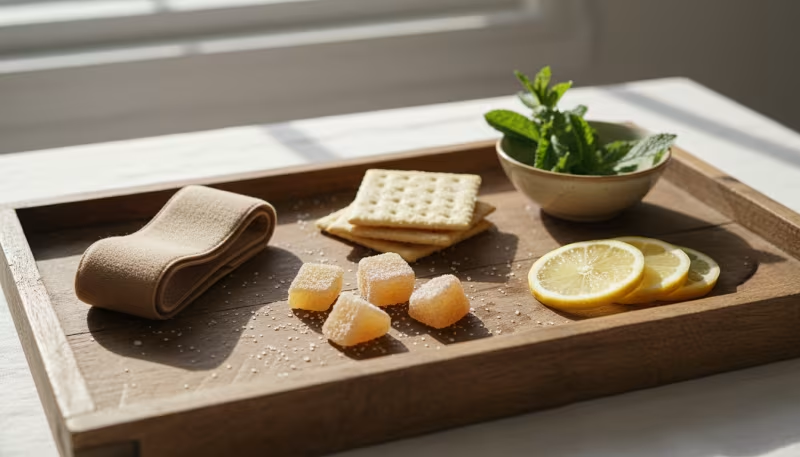
If nausea is the reason your notes are mostly crackers and soup, Livecub's bland pregnancy foods guide can sit beside the journal as a practical list.
Include The Partner
Give a partner one small job: a monthly note, a photo caption, a question list, or a page about what they noticed that you did not.
Livecub's staying intimate during pregnancy guide may help if the journal opens a conversation about closeness, touch, and changing comfort.
Write The Hard Pages
A real pregnancy journal has tired pages, scared pages, annoyed pages, and blank pages. Those do not ruin the book.
ACOG says signs of depression can look like normal pregnancy ups and downs, and talking with an ob-gyn can help: ACOG depression during pregnancy.
Make A Keepsake Pocket
Use one envelope or folder for paper items: appointment cards, hospital wristband, tiny notes, shower cards, or a printed photo.
Do not save everything. Save the few things that make the time feel specific.
Use Photo Rules
Decide how often you want belly photos, if at all. Weekly photos work for some people. Monthly photos feel better for others.
Use the same spot if you like visual consistency, but do not let the streak become another pressure.
Gender And Name Pages
If you learn or share the baby's sex, write how you found out, who you told, and what boundaries you set around opinions.
Livecub's gender announcement ideas can give you simple reveal options that still leave privacy in your hands.
Add A Belly Cast Page
If you make a belly cast, add the date, who helped, what supplies you used, and where you stored it afterward.
Livecub's belly bowl cast guide can turn that one keepsake into a page with clear steps and fewer messy surprises.
Write Letters Carefully
Letters to the baby can be sweet, but they do not need to be grand. Try three lines: what I wonder, what I hope, what today felt like.
Short letters are easier to keep honest. A plain sentence often ages better than a speech.
Build A Question List
Keep one running page for questions to ask at visits. Cross off answers and write who answered them.
That list can reduce late-night searching because the next appointment already has a place to hold the worry.
Respect Privacy
Before sharing pages online, decide what belongs to you, your partner, and the future child.
A journal can be honest without becoming public. Private pages often let you write better.
Back It Up
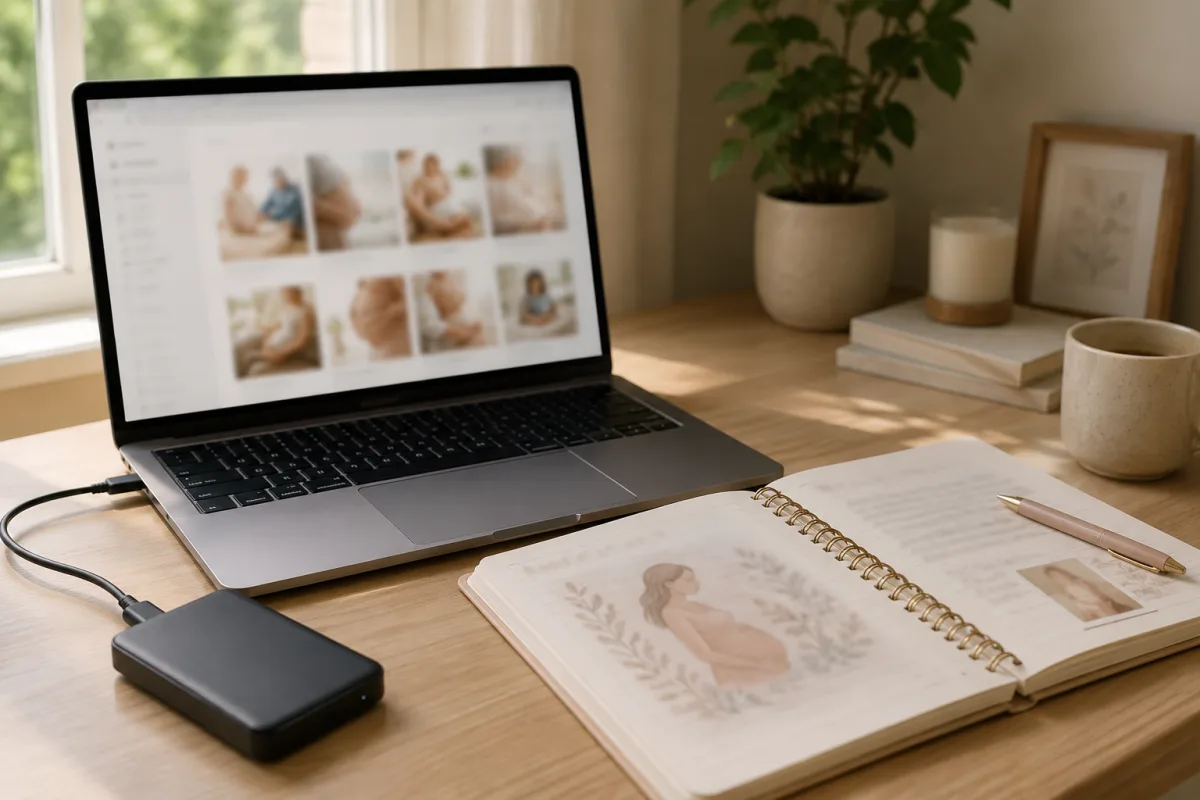
If the journal is digital, export a copy monthly. If it is paper, photograph the pages that would hurt to lose.
Backups are boring until they save the only copy of a first ultrasound note.
Monthly Snapshot
At the end of each month, write one snapshot page: what changed, what stayed hard, what helped, what you bought, and what you want to remember.
This page is useful when weekly entries fall apart. It gives the pregnancy a rhythm without asking you to write every few days.
Voice Notes Count
If writing feels like too much, record a short voice note and label it by week. You can transcribe it later or keep the audio as its own memory.
A tired voice, a laugh, or a shaky sentence may capture the moment better than a polished paragraph.
Medical Boundaries
Keep medical facts accurate, but do not turn the whole journal into a chart. Put lab values and detailed records somewhere secure if that feels more appropriate.
The memory journal can simply say what the appointment was for, what you learned, and how you felt walking out.
Baby Shower Notes
If there is a shower, save a guest list, a few cards, the menu, a photo, and one sentence about who made the day easier.
You do not need to document every decoration. The people and small moments usually matter more than the theme.
Birth Preferences Page
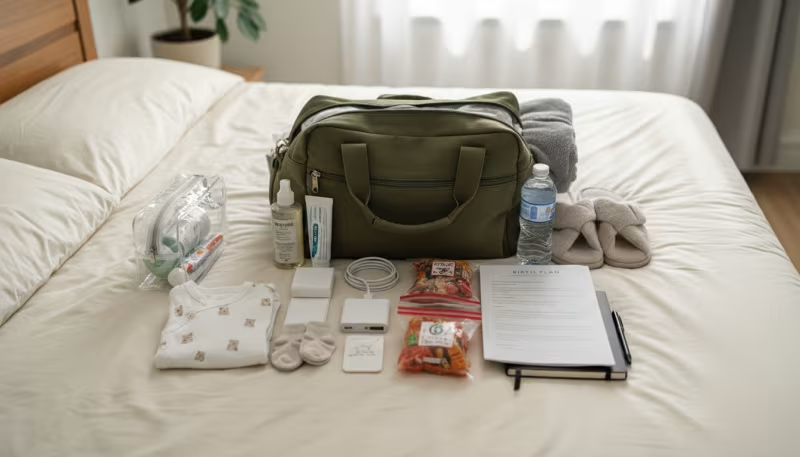
Add a page for birth preferences, but write it as flexible notes rather than a promise. Include comfort measures, support people, feeding hopes, and things that make you anxious.
After birth, you can add what matched the page and what changed. That contrast may become one of the most honest parts of the journal.
For The Future Child
If you plan to share the journal one day, leave out details that belong only to adults or write those on private pages.
A future child may love the ordinary pieces: what music you played, what names you considered, what made you laugh, and who waited for them.
Printing And Storage
For digital journals, decide whether you want a printed book, a folder of PDFs, or a private cloud album after birth.
For paper journals, store it away from damp closets, loose markers, and anything that could stain ultrasound paper or photos.
Do Not Chase Perfect
Missed weeks are normal. Fill the gap with one page titled what happened while I was not writing.
A journal with gaps still tells the truth. Pregnancy does not happen on a neat content calendar.
Postpartum Page
Leave space for birth details, first feeding notes, first night feelings, recovery thoughts, and who helped.
You may write it two days later or two months later. The page can wait until your hands and mind are free enough.
Frequently Asked Questions
What should I put in a pregnancy memory journal?
Include dates, symptoms, appointments, photos, ultrasound notes, cravings, mood, questions, partner notes, family moments, and birth details.
Should I use paper or digital?
Use whichever you will keep using. Paper feels personal, while digital journals are easier to search, edit, back up, and share.
How often should I write?
Weekly is enough for many people. If that feels too much, write after appointments or when something changes.
Can I include hard feelings?
Yes. Honest pages about fear, sadness, or frustration can make the journal more real and may help you notice when you need support.
How do I keep the journal private?
Store paper safely, protect digital files, and decide before posting which details belong offline.
A pregnancy memory journal should feel like a place to return, not a test to pass. Keep it simple, honest, and easy enough to use on ordinary days.

Chiara Bradshaw
Covers education, culture and creative topics with an emphasis on readable explanations and verifiable references.


Leave a reply
Replying to