
How to Do the Double Hip Squeeze is best understood as a comfort technique, not a medical treatment. It may help back labor or pelvic pressure for some people, and it should stop the second it feels wrong.
The technique uses steady inward pressure on both sides of the pelvis during a contraction. Many birth partners learn it because it gives them a clear job and gives the laboring person a strong counterpressure sensation.
When It May Help
Back labor, sacral pressure, and a baby pressing into the pelvis can make contractions feel sharp in the lower back. A double hip squeeze may create counterpressure across the sacrum and hips.
Mayo Clinic's labor-position guide notes that trying different positions can help with pain and control during labor: Mayo Clinic labor positions. The hip squeeze fits that same comfort-tool category.
It may work best when the person is standing and leaning forward, kneeling, sitting on a birth ball, or on hands and knees. It is harder to do well if hips are not reachable.
Ask Permission Every Time
Do not walk up and squeeze someone in labor because you learned a technique. Ask: do you want pressure on your hips? More, less, or stop?
Labor changes fast. A technique that was perfect five minutes ago can feel unbearable during the next contraction.
Consent also matters between partners. staying intimate during pregnancy can help couples practice asking for touch instead of assuming it.
Hand Placement
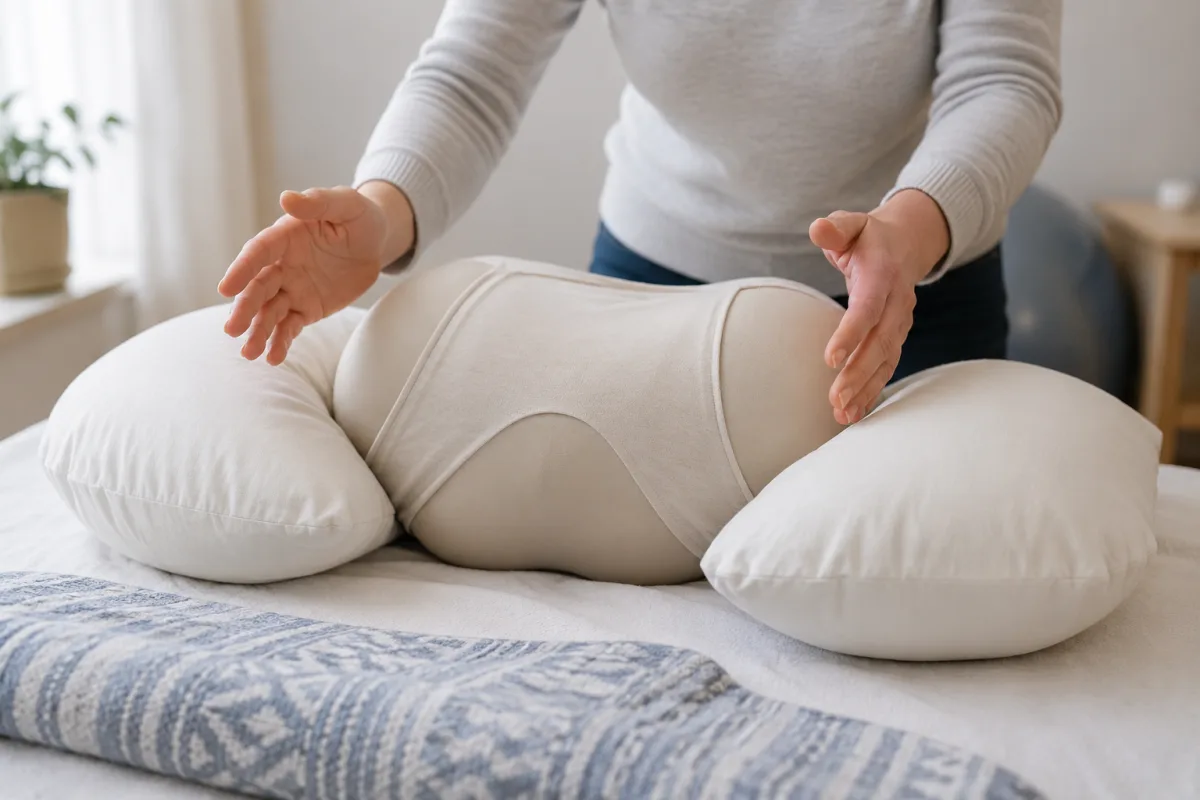
Stand or kneel behind the laboring person. Place the heels of your hands on the back of the hip bones, not on the spine. Your fingers can angle toward the front of the pelvis.
During the contraction, press inward and slightly forward, as if bringing the hips toward each other. Keep pressure broad and steady. Sharp poking pressure is not the goal.
If you are unsure where to press, ask the nurse, midwife, doula, or clinician to show you. A small placement change can make the difference between relief and annoyance.
Timing The Pressure
Start as the contraction builds, hold through the peak if wanted, and release as it fades. Some people want pressure only at the peak. Some want it between contractions too.
Use the laboring person's words and body cues. If shoulders climb, breathing tightens, or they pull away, lighten or stop.
NHS guidance for birth partners recommends helping with breathing, movement, hydration, and speaking up about needs: NHS birth partner tips. The double hip squeeze is one tool inside that larger support role.
One-Person And Two-Person Versions
One person can stand behind and use both hands. Two people can each press one side, but they need to match timing and pressure so the sensation feels even.
If two helpers are involved, one person should listen for feedback and call adjustments. Too many voices can become noise during labor.
For a tired support person, switch jobs: one handles counterpressure, one handles water, one handles timing, then trade.
Positions That Make It Easier

Hands and knees gives good access and may help with back pressure. Standing while leaning over the bed can work if the person has enough energy and balance.
A birth ball can help if the person sits forward and the helper stands behind. With an epidural, staff must guide any position changes; do not try unsupported movement.
If an epidural is part of the plan, movement needs a safer framework from the care team. Ask directly which positions are allowed instead of adapting the hip squeeze on your own.
When Not To Use It
Do not use the double hip squeeze over injuries, severe pelvic pain, areas with numbness, medical devices, epidural tubing, or if the laboring person says stop.
Pause if fetal monitoring, blood pressure checks, cervical exams, or medical care needs access. Comfort techniques should not interfere with needed care.
If panic is part of the moment, combine pressure with short words. early labor support can help the support person stay useful without taking over.
Practice Before Labor
Practice lightly before labor with clothes on, using a pillow or chair for support. The goal is finding the hip bones and learning how to ask for feedback.
Do not practice hard pressure on a pregnant person's pelvis for long periods. Gentle rehearsal is enough.
If body image or touch sensitivity is an issue, feeling attractive during pregnancy can help start a conversation about what kind of touch feels supportive.
Support Person Checklist

Keep hands warm, nails short, and pressure broad. Ask before touching. Follow the contraction. Stop without sulking. Drink water and rest your own body between contractions.
If your hands tire, use body weight carefully rather than arm strength. Keep your back straight and bend knees. Support people can injure themselves by trying to be heroic for hours.
If the technique stops helping, move on. Labor comfort is trial and error, not loyalty to one move.
How To Tell If It Is Helping
A helpful hip squeeze often changes the laboring person's face or breath within a few seconds. The jaw softens, the shoulders drop, or the person says keep doing that.
If the person becomes more tense, lifts away from your hands, or says too much, reduce pressure or stop. Do not argue with feedback. The person in labor is the only reliable judge of whether the sensation helps.
Ask between contractions, not during the peak, unless something seems wrong. A quick more, less, same, or stop gives enough guidance.
Protect Your Own Body
Support people often lean with locked knees and tired shoulders. That will not last. Stand close, bend your knees, keep wrists neutral, and use body weight gently rather than squeezing from the thumbs.
If you are exhausted, switch with another support person or choose a different comfort measure. A shaky tired squeeze can become uneven and irritating.
Keep water nearby for yourself too. Labor support can last hours, and a dehydrated support person becomes less useful.
Pair It With Other Comfort Tools
The hip squeeze can pair with low sounds, slow exhales, heat on the lower back, cool cloths, position changes, or a birth ball. Pairing tools works better than forcing one technique to carry the whole labor.
If back labor is intense, ask whether position changes might help. Hands and knees, side-lying, forward leaning, and supported lunges may be options depending on the clinical situation.
The best comfort plan stays flexible. Keep the technique only as long as it earns its place.
How To Communicate During A Contraction
Agree on signals before contractions intensify. A thumbs up can mean keep going, a flat hand can mean less pressure, and a tap can mean stop now.
Signals help when speaking is hard. They also prevent the support person from guessing while the laboring person is using all their energy to cope.
Between contractions, ask one question only. Was that pressure right? If the answer is yes, do not keep analyzing.
If There Is An Epidural Or Monitoring
With an epidural, numbness can change feedback. Staff should approve positioning before anyone uses firm counterpressure.
With continuous fetal monitoring, belts may sit near the area where the support person wants to work. Ask staff before moving belts or pressing around equipment.
The technique should fit the medical setup, not compete with it.
After The Contraction
Release slowly instead of snapping your hands away. A sudden release can feel jarring after strong pressure.
Check in with a simple question: same next time? If the answer is yes, save the discussion. If the answer is no, ask more, less, higher, lower, or stop.
Offer water, a cool cloth, or quiet. Support is not only what happens during the contraction.
Frequently Asked Questions
Does the double hip squeeze speed labor?
No reliable promise. It is mainly a comfort and counterpressure technique.
Can it be used with an epidural?
Only if staff say positioning and sensation make it safe.
How hard should I press?
Use broad steady pressure and let the laboring person guide intensity.
Can it hurt the baby?
It is external pressure on the hips, but stop if pain, medical concern, or staff instruction says to stop.
What if it does not work?
Try a different position, heat or cold, breathing, water if allowed, or another comfort measure.
This article is for general information only and isn't a substitute for medical advice. Talk to a clinician who knows your full history before making changes.

Alyssa Curlin
Edits general health, nutrition and education explainers. Medical topics are educational and link to public-health guidance.



Leave a reply
Replying to