
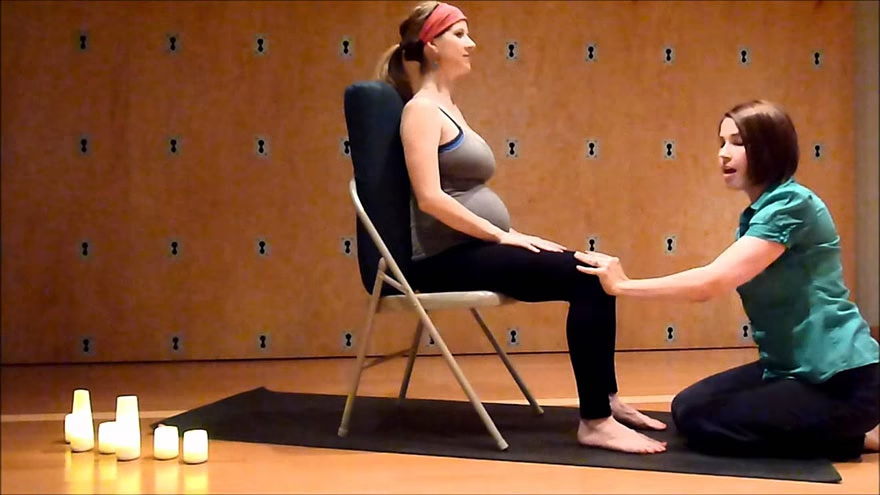
How to Do the Seated Knee Press depends on what you mean by the move. In pregnancy and gentle fitness settings, the seated knee press is often a light inner-thigh or pelvic-floor awareness exercise: you sit tall, place a soft ball, pillow, or folded towel between the knees, and gently press inward.
It should feel controlled, not strained. During pregnancy, the safest version is small, slow, and cleared by your clinician if you have pain, complications, bleeding, dizziness, pelvic symptoms, or exercise restrictions.
What Does The Seated Knee Press Work?
The move can wake up the inner thighs, pelvic floor awareness, lower belly support, and posture. It is not a heavy strength exercise. It is a gentle coordination drill, often used with breathing.
The NHS explains that exercise in pregnancy can include pelvic floor exercises, which help muscles under strain during pregnancy and birth. The seated knee press is not a replacement for pelvic floor training, but it can sit beside gentle awareness work.
Who Should Ask A Clinician First?
Ask before doing it if you have pelvic girdle pain, placenta concerns, bleeding, contractions, dizziness, severe back pain, high-risk pregnancy, a history of preterm labor, or any instruction to limit activity.
ACOG's guidance on exercise during pregnancy says regular physical activity is safe for many people, but individual conditions matter. Do not use a general article to override medical advice.
What Equipment Do You Need?
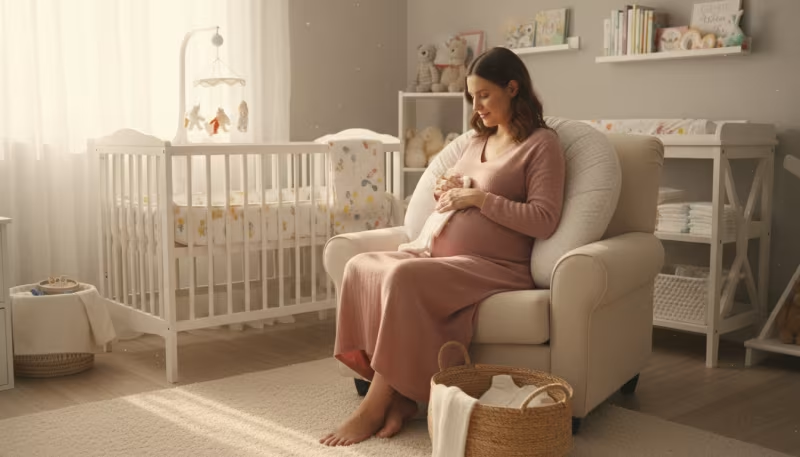
Use a sturdy chair, a pillow, folded towel, yoga block, or small soft exercise ball. Your feet should reach the floor. Avoid a rolling chair or a couch that lets your pelvis sink backward.
If you are late in pregnancy or feel unstable, place the chair near a wall or have support nearby. The exercise should not require balance bravery.
How Do You Set Up?
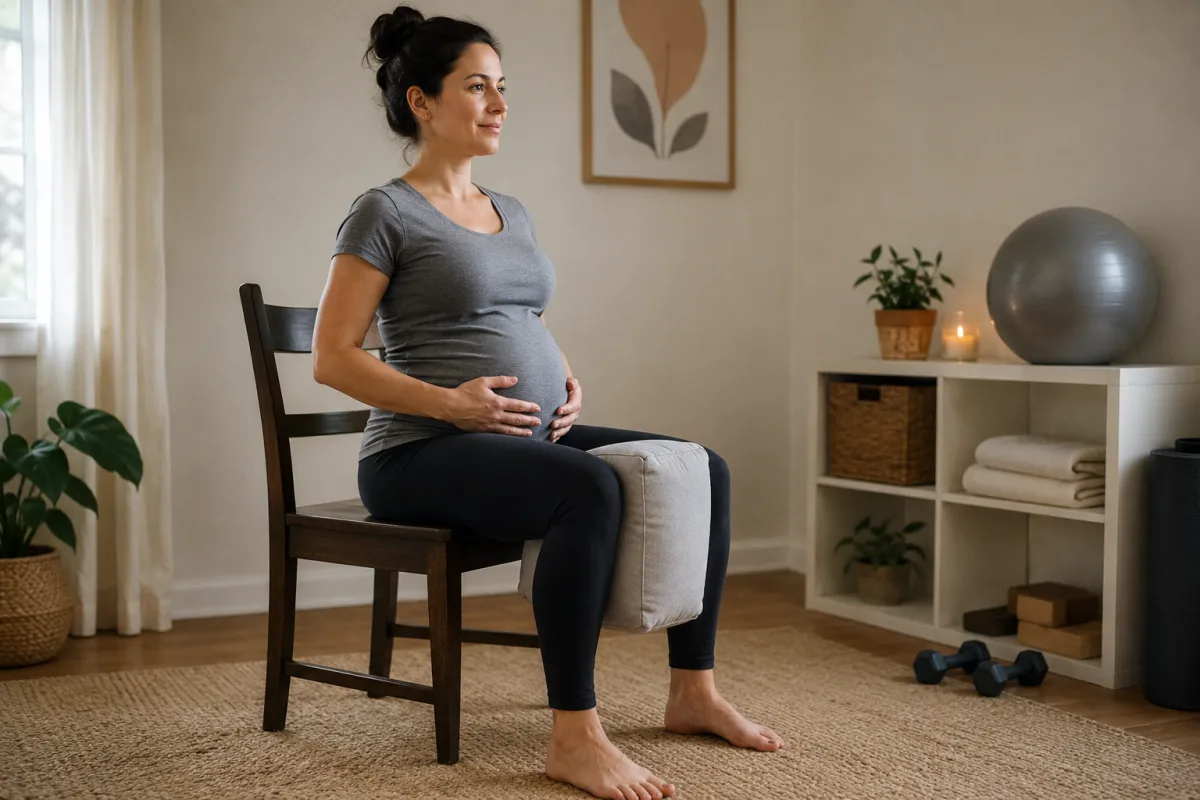
Sit tall near the front of the chair with both feet flat. Keep knees about hip-width apart. Place the pillow, towel, or ball between the knees. Let shoulders relax and keep the jaw soft.
Think of stacking ribs over pelvis. Do not arch hard or tuck aggressively. A neutral, comfortable seated position is enough.
How Do You Do The Press?
Inhale gently. As you exhale, press the knees into the pillow at about 30 to 50 percent effort. Hold for two to four seconds, then release fully. Repeat 8 to 12 times if it feels comfortable.
The release matters. Do not clamp the pillow and stay there. Press, breathe, release, reset. If you feel pelvic pressure, pain, leaking, dizziness, or cramping, stop.
How Should You Breathe?
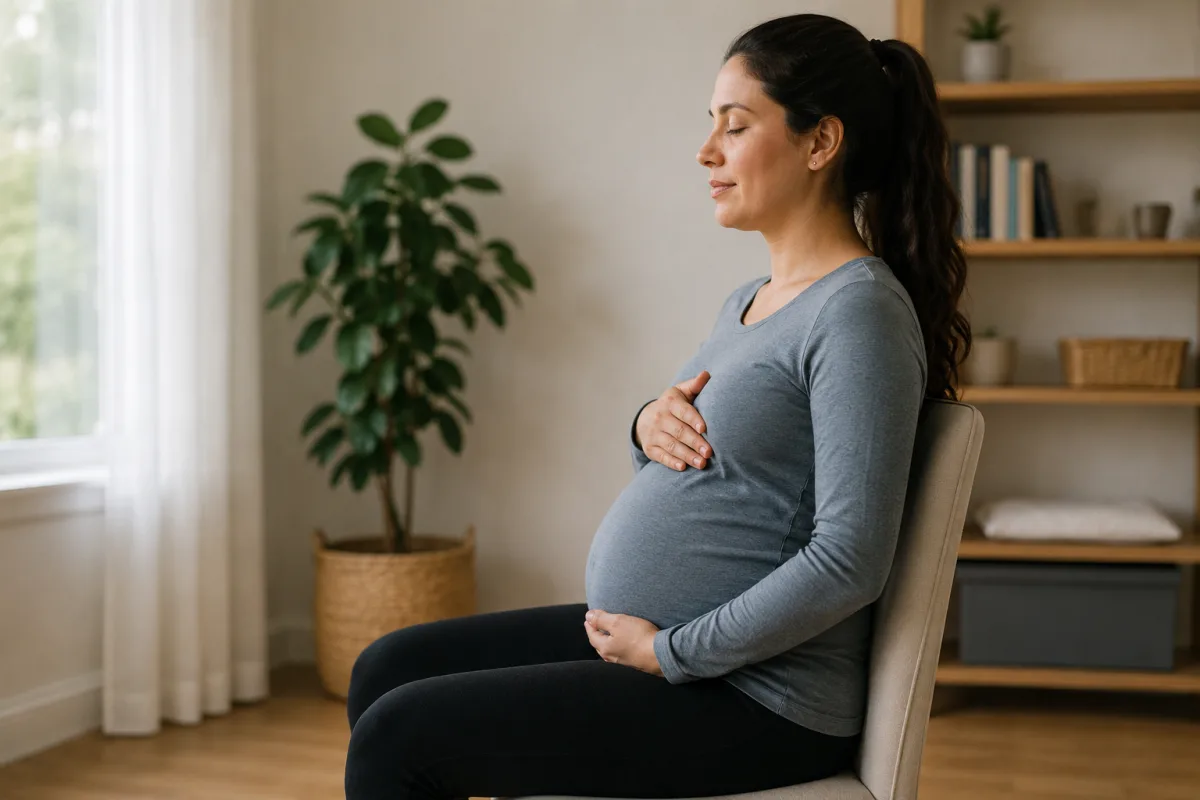
Use the breath to keep the exercise gentle. Inhale to prepare. Exhale during the press. Some people also feel a light pelvic floor lift during the exhale, but do not force it.
NHS Inform's pelvic floor guidance warns against clenching buttocks, holding breath, or squeezing legs together during pelvic floor contractions. That is a useful caution here too: more tension is not better.
What Should It Feel Like?
You may feel light inner-thigh engagement, a sense of sitting taller, and gentle support through the center. You should not feel sharp pain, numbness, strong pelvic pressure, contractions, or breath-holding.
If the exercise feels awkward, reduce the effort. If it still feels wrong, skip it and ask a prenatal physical therapist or clinician. Exercise during pregnancy should be adapted, not forced.
What Are Helpful Variations?
Use a softer pillow for less feedback, a firmer ball for clearer pressure, or no prop at all while practicing breath and posture. You can also place hands on the ribs to feel if you are holding your breath.
Some people prefer a very small press while exhaling and then a longer release. Others feel better doing only breathing and posture that day. The variation should match symptoms, not ego.
What If You Have Pelvic Girdle Pain?
Skip or reduce the press if it increases pelvic pain, pubic bone pain, hip pain, or one-sided discomfort. Some people with pelvic girdle pain do not tolerate squeezing inward, even gently.
Use a smaller effort, keep knees aligned, or practice only breathing until you can ask a clinician. Pain is not a sign that the exercise is working. It is feedback to change the plan.
How Many Sets Should You Do?
Start with one set of 8 to 12 gentle presses. If it feels good, use one or two sets a few times per week. This is not a daily max-effort challenge.
Pair it with walking, approved prenatal movement, or basic posture work if your clinician says those are appropriate. Livecub's staying intimate during pregnancy and feeling attractive during pregnancy articles cover different parts of body comfort and confidence.
Can You Do It After Birth?
Postpartum exercise timing depends on birth, symptoms, healing, and medical advice. Some people may use gentle breathing and pelvic-floor awareness early; others need more recovery time.
Do not rush if you have pain, heaviness, leaking, tearing, surgery, or symptoms that worry you. A pelvic health physical therapist can help choose the right progression.
What Mistakes Should You Avoid?
Avoid pressing too hard, holding your breath, squeezing the buttocks, arching the back, using a rolling chair, or doing the exercise through pain. Also avoid treating it as a cure for pelvic floor symptoms.
If pregnancy stress is high, Livecub's depression during pregnancy guide may be relevant. Physical exercises help some people feel grounded, but mental health symptoms deserve proper support.
How Does It Fit With Other Pregnancy Movement?
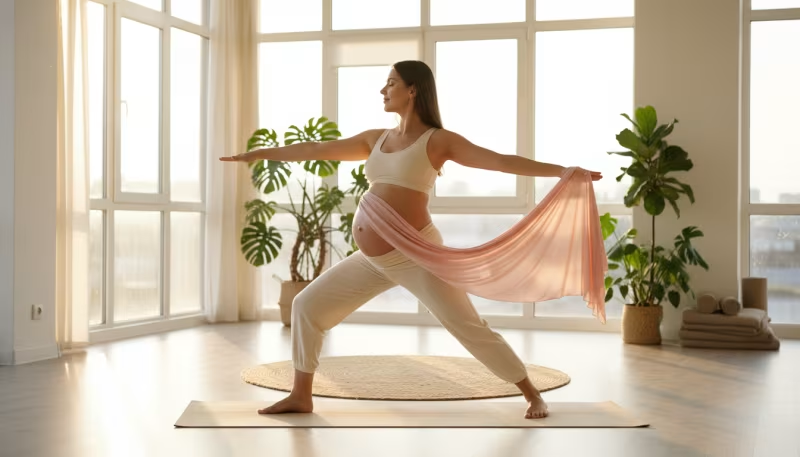
The seated knee press can be one small part of a larger routine: walking, gentle mobility, pelvic floor work taught correctly, and rest. It should not replace medical care, strength work approved by a clinician, or exercises chosen for a specific symptom.
If you already have a prenatal routine, add the press lightly and watch how your body responds later that day. Pregnancy symptoms can show up after the session, not only during it.
How Can A Partner Help?
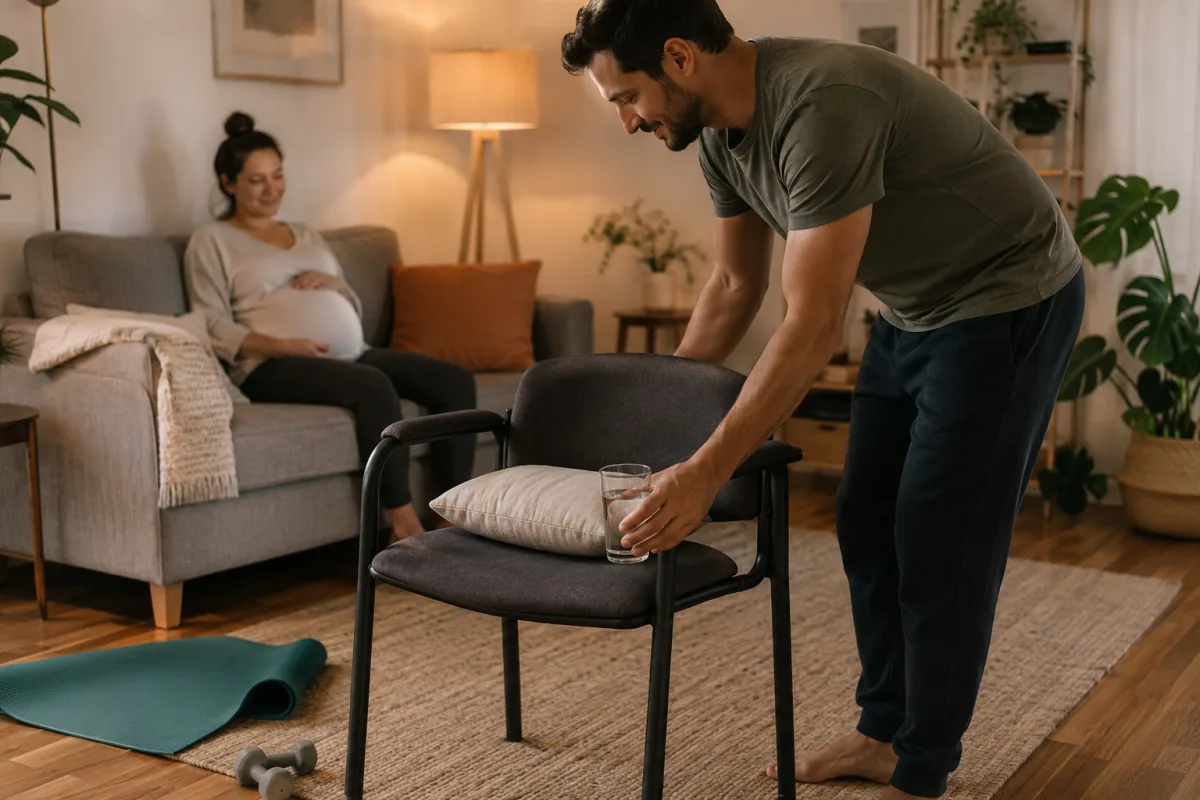
A partner can set up the chair, bring water, time the set, or simply keep the space calm. They do not need to coach harder effort. Comfort is the goal.
If labor support is on your mind, Livecub's early labor emotional support guide may help with the broader support role.
When Should You Stop Immediately?
Stop if you feel dizziness, chest pain, bleeding, fluid leakage, contractions, calf pain or swelling, severe headache, sharp pelvic pain, or anything that feels alarming. Get medical advice rather than trying to push through.
A gentle exercise should make you feel steadier, not scared. The safest pregnancy movement plan leaves room to stop without guilt.
How Do You Track Progress?
Track comfort rather than bigger effort. Notice if you can sit taller, breathe more smoothly, release tension faster, or feel less guarded during daily movement. Those are better signs than squeezing harder.
If symptoms improve, keep the exercise gentle. If symptoms worsen, stop and get advice. Pregnancy exercise should serve daily comfort, not become another pressure point.
Use a simple note on your phone if you are trying to understand patterns: date, repetitions, comfort during the set, and how you felt later. That record can help a clinician adjust the plan.
Keep the note factual and short. You are looking for comfort trends, not grading yourself. If a pattern is confusing, bring the note to a prenatal appointment.
Frequently Asked Questions
Is the seated knee press safe during pregnancy?
It may be safe for many people when gentle, but ask your clinician if you have symptoms, complications, or restrictions.
Should I press hard?
No. Use light to moderate effort and release fully between repetitions.
Can it replace Kegels?
No. It may support awareness, but pelvic floor training should be done correctly and individualized when needed.
What if I feel pelvic pressure?
Stop and ask a clinician or pelvic health physical therapist for guidance.
Can I do it on an exercise ball?
Only if you are stable and comfortable. A sturdy chair is safer for many people.
This article is general pregnancy fitness information, not medical advice. Ask your obstetric clinician, midwife, or pelvic health physical therapist before starting or changing exercise, especially if you have pain, bleeding, dizziness, contractions, pelvic symptoms, or a high-risk pregnancy.
What Is The Best Way To Practice?
Use a sturdy chair, light pressure, steady breathing, and a full release. The seated knee press should feel gentle and controlled. If your body says no, listen first and get qualified guidance.

Cashie Evans
Covers parenting and practical household topics with clear steps, safety notes and links to current guidance.
Leave a reply
Replying to