

How to Write Your Own Labor Relaxation Script is about preparing words your body can actually use during contractions. The script should be short, familiar, and flexible enough for real labor.
A labor script is not a promise that birth will be painless or predictable. It is a cueing tool for breath, release, focus, support, and confidence while your care team handles medical safety.
Choose The Purpose
Decide what the script should do: calm fear, guide breathing, release jaw and shoulders, invite rest between contractions, help with back labor, or prepare for pushing.
A script that tries to do everything can become too long. Pick one job for each version: early labor, active labor, transition, or postpartum repair.
Use Your Own Voice
Write in words you would actually believe. If a phrase sounds fake in pregnancy, it will sound worse during labor. Use plain language: soften, breathe down, one wave, one minute, I can ask for help.
Avoid copying someone else's birth personality. Some people like spiritual language; others prefer practical coaching. Both can work if the words feel honest.
Keep Lines Short

During labor, attention narrows. Short lines are easier to hear: drop your shoulders, unclench your jaw, breathe out, let the bed hold you, sip water, rest now.
ACOG lists breathing exercises, massage, water therapy, music, and calming smells as ways some people cope with labor without pain medication. Its childbirth preparation article can help you choose cues.
Start With The Body
Begin the script with physical release because the body often leads the mind in labor. Try: forehead soft, jaw loose, shoulders heavy, hands open, hips supported, breath slow.
If back pain is likely, add a line that asks for pressure or position change. Pain relief often needs action, not only words, so build that request into the script.
Use Breath Cues
Breath cues should be simple. Inhale soft, exhale longer. Smell the flower, fog the mirror. Breathe in for me, breathe out for the baby. Let the exhale do the work.
A narrative review in PMC describes breathing techniques across labor stages, but real use should be guided by your class, midwife, nurse, doula, or clinician. See the breathing techniques review for research context.
Write For The Partner

Your support person may need exact lines. Write a partner version: say this quietly, press here, stop talking if I shake my head, offer water after each contraction.
Livecub's early labor emotional support guide can help a partner understand that support includes timing, observation, and doing fewer things well.
Add Choice Language
Labor can feel out of control, so choice language helps: you can change position, you can ask a question, you can pause, you can choose medication, you can say no to touch.
Choice language should respect medical safety. A script should never tell someone to ignore a clinician or refuse necessary monitoring without discussion.
Make Versions For Each Stage
Early labor script: rest, hydrate, eat if allowed, move gently, save energy. Active labor script: breathe, release, pressure, water, one contraction at a time.
Transition script: this is intense and temporary, stay with the exhale, ask for help, do not solve the next hour. Pushing script should follow the care team's direction.
Include Medical Flexibility
Birth plans can change. Add a section for induction, epidural, cesarean, assisted delivery, or unexpected monitoring: I can be cared for here; I can ask what is happening; this is still my birth.
This prevents the script from breaking the moment the plan changes. A good script supports the person, not a perfect scenario.
Use Sensory Anchors

Add safe sensory cues: dim light, cool cloth, lavender only if allowed and tolerated, one playlist, a photo, a rosary, a comb in hand, or a textured blanket.
NHS guidance on labor stages says breathing exercises, massage, and a warm bath or shower may help ease pain during early labor. The stages of labour page gives a practical overview.
Practice Out Loud
Read the script during pregnancy while holding an ice cube, walking, sitting on a birth ball, or practicing a position. Notice which lines help and which annoy you.
Delete any line that irritates you. Labor is not the time to be polite to a sentence.
Print A One-Page Version
Put the script on one page with large spacing. Your support person may be tired, the room may be dim, and contractions may interrupt every few minutes.
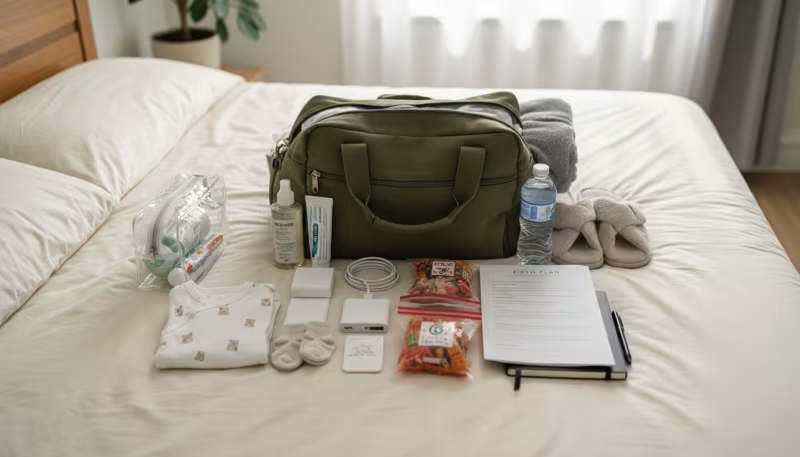
Keep a copy in the hospital bag and a copy on the phone. Place it where someone will actually find it, not under clothes or baby items.
Sample Script
Try this structure: This is one wave. Jaw soft. Shoulders heavy. Breathe in. Longer breath out. You are not behind. Ask for pressure. Let the next breath be enough.
Between contractions: release your hands. Drink. Rest your eyes. You do not need to think ahead. We will listen, ask, and choose the next step together.
Emotional Safety
If past trauma, panic, or depression is part of pregnancy, write lines that create safety rather than pressure: I can open my eyes, I can ask who is touching me, I can request a pause, I am allowed support.
Livecub's depression during pregnancy guide may help readers bring mood symptoms into the birth plan instead of hiding them. If confidence and body changes affect preparation, Livecub's feeling attractive during pregnancy article can support a kinder mindset.
Record An Audio Version
Some people respond better to audio than paper. Record yourself or your partner reading the script slowly, with long pauses and no background clutter.
Keep the file downloaded offline. Hospital Wi-Fi, low battery, or a locked phone should not be the reason the script disappears.
Make A No-Touch Version
During intense labor, some people suddenly hate touch. Write a no-touch version: stand near me, speak softly, do not rub, offer water, call the nurse.
This gives the support person a plan without forcing physical contact that no longer feels good.
Use Names Carefully
Some people like hearing their name; others find it irritating during contractions. Test it during practice and tell your support person what you prefer.
The same is true for phrases like good job or almost there. If a line does not help, remove it before labor.
Cesarean Script
A cesarean version might include: look at me, breathe with me, ask what step we are on, remind me the baby is being cared for, keep one hand near my shoulder if allowed.
This can be helpful for planned surgery, unplanned surgery, or any moment when the room becomes more medical than expected.
Postpartum Script
After birth, the body may shake, emotions may swing, and the room may feel busy. A short postpartum script can say: you are safe, ask your question, drink water, look at the baby when ready.
Recovery cues are part of the birth experience too. The script does not have to stop when the baby arrives.
Partner Practice
Practice with the support person reading the script while you change positions. They should learn the pace, volume, and moments when silence works better than coaching.
This practice also reveals awkward phrases early. If either person stumbles on a line, rewrite it in simpler words.
Translation And Culture
Use the language, prayer style, humor, or cultural cues that feel natural to you. A script does not have to sound like a childbirth class handout.
If family members will be in the room, decide which lines are private and which lines they may hear or repeat.
Keep Consent In The Script
Add consent reminders for touch and procedures: ask me before touch if possible, tell me what is happening, give me a moment to answer when it is safe.
These lines can help the room stay respectful during a fast-moving birth.
Frequently Asked Questions
How long should a labor relaxation script be?
Keep the main version to one page. Short lines are easier for a support person to read and easier for the laboring person to receive.
Should I memorize the script?
You can practice parts of it, but memorizing is not required. The point is familiar cues, not a performance.
Can a script replace childbirth class?
No. A script can support breathing and focus, but childbirth education, provider guidance, and medical support still matter.
What if the script annoys me during labor?
Stop using it. Switch to silence, touch, music, pressure, water, medication, or whatever your care team says is appropriate.
Can I use a script with an epidural or cesarean?
Yes. Relaxation cues can help with fear, positioning, waiting, surgery preparation, and postpartum recovery, even when medical pain relief is used.
A labor relaxation script should sound like you on a hard day: clear, kind, and direct. Write it short, practice it out loud, and let it change with the birth in front of you.

Linda Fehrman
Edits general wellness and relationship explainers. Health material is educational, avoids diagnosis and links to health-authority guidance.



Leave a reply
Replying to