

The Average Cost of Trip Insurance is usually discussed as a percentage of prepaid, nonrefundable trip cost. The actual premium changes with age, trip price, trip length, destination, coverage type, and optional benefits.
Use averages only as a planning range. A policy for a refundable weekend hotel should not be priced or judged like coverage for an international cruise with medical evacuation.
Use A Percentage Range
NAIC says travel insurance policies usually cost 5% to 10% of the total trip price, with rates varying by factors such as season, origin, destination, age, and other details: NAIC travel insurance cost overview.
That means a $4,000 prepaid trip might roughly land between $200 and $400 before plan choices change the number.
Compare Market Data
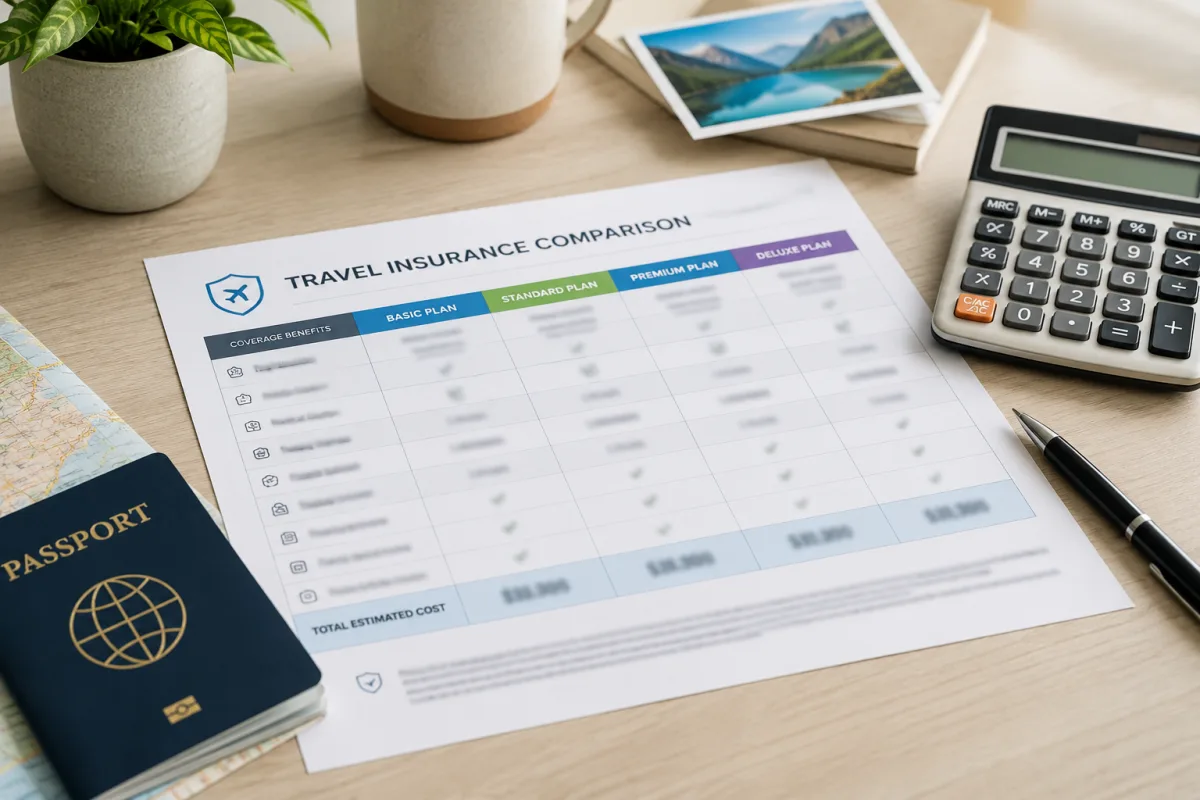
Squaremouth says a policy with trip cancellation generally costs between 5% and 10% of total trip cost, while medical-only coverage is much less expensive: Squaremouth travel insurance cost range.
InsureMyTrip gives a similar planning range of 4% to 10% of prepaid, nonrefundable trip cost: InsureMyTrip cost guide.
Trip Cost Drives The Premium
Cancellation coverage is tied to the amount the insurer may reimburse. A $10,000 trip costs more to insure than a $1,000 trip.
Use prepaid, nonrefundable costs, not the full amount you might spend on food, souvenirs, or refundable hotel nights.
Age Changes Price
Older travelers often pay more because medical and cancellation risk can be higher.
Two people taking the same trip can see different prices if their ages differ.
Coverage Type Matters
A medical-only policy usually costs less than a policy that includes trip cancellation.
A plan with higher medical, evacuation, baggage, delay, or rental car benefits can cost more.
CFAR Costs More
Cancel-for-any-reason coverage usually raises the premium and still reimburses only part of the prepaid loss.
Do the math before adding it. The extra cost may be worth it only when flexibility matters more than price.
Trip Length Matters
A longer trip gives more time for delays, illness, baggage problems, or interruption.
That can raise price, especially when medical and evacuation benefits are included.
Destination Matters
International trips may cost more to insure because medical care, evacuation, and travel disruption can be more expensive.
Remote destinations, cruises, and multi-country itineraries can change the value of higher limits.
Refundable Trips Cost Less To Risk
If most trip costs are refundable, the need for cancellation coverage may be lower.
A traveler may still want medical or evacuation coverage, but the insured trip cost may be smaller.
Use A Cost Worksheet

List flights, hotels, cruise fare, tours, rental car deposits, event tickets, excursions, and package costs.
Livecub's money guide for families is not about travel, but the same habit of naming costs before choosing applies.
Do Not Insure What Is Refundable
Refundable costs usually do not need cancellation coverage because the supplier already gives the money back.
Check the refund deadline, because a refundable booking can become nonrefundable later.
Compare Existing Benefits
Credit cards, airline protections, health insurance, auto insurance, and homeowner or renters policies may already cover pieces of the risk.
Do not pay for duplicate protection unless the extra limit or broader policy is worth it.
Keep Savings Separate
Insurance is not a savings account. It pays only for covered losses under policy rules.
For broader money recordkeeping, Livecub's saving bonds value guide can help readers think about known asset values.
Short Term Money Choices
Some travelers keep trip funds in safer short-term places until final payment.
Livecub's small Treasury bond guide covers one kind of cash planning outside insurance.
Read Contract Terms
A cheaper policy may have lower limits, narrower covered reasons, or more exclusions.
Livecub's annuity comparison guide is a different product, but it shows why contract wording matters.
Use Real Quotes

Averages help with budgeting, but quotes decide the actual number.
Compare at least a few plans using the same trip cost, traveler ages, destination, and dates.
Think About Claim Size
If the likely loss would be small, the premium may not be worth it.
If a cancellation or medical evacuation would damage your finances, the premium may be easier to justify.
Do Not Buy On Fear Alone
Travel checkout pages can make insurance feel urgent. Some urgency is real, especially for early-purchase benefits, but panic is a poor shopping tool.
Read the policy certificate before paying or during the review period.
Review Each Trip
The average cost changes from trip to trip. Do not assume last year's price will apply to this year's cruise, tour, or family visit.
Reprice coverage when the trip cost, age group, destination, or risk changes.
Family Size Changes Quotes
A family policy can price differently from a solo traveler policy because more people create more chances for cancellation, illness, or delay.
Enter every traveler accurately when comparing quotes.
Deductibles And Limits
Some benefits may include deductibles, per-day caps, per-person caps, or total policy limits.
A lower premium can be less useful if the benefit limit is too low for the likely loss.
Annual Plans
Frequent travelers may compare annual coverage with buying a policy for each trip.
Annual plans can cost less per trip for some travelers, but cancellation coverage may be lower or structured differently.
Medical Only Plans
Medical-only travel insurance can be cheaper because it does not insure the full trip cost for cancellation.
This may fit a traveler with refundable bookings who mainly worries about medical care abroad.
Adventure Activities
Higher-risk activities can require special coverage or may be excluded entirely.
A policy that looks affordable may not fit a trip involving scuba, climbing, racing, or backcountry travel.
State Of Residence
Travel insurance is regulated by state, and available plans can differ by where the traveler lives.
Use the correct residence state when comparing quotes.
Supplier Plans
Airlines, cruise lines, tour operators, and vacation rental sites may offer plans at checkout.
Compare those plans with third-party options because cash reimbursement, credits, medical limits, and exclusions can differ.
Do The Break Even Test
Ask what loss would make the premium feel worthwhile: a canceled cruise, a medical evacuation, a lost bag, or a hotel delay.
If no realistic covered loss would hurt much, the premium may not be a good fit.
Keep Quote Notes
When comparing quotes, save screenshots or notes showing trip cost, ages, dates, destination, benefits, and premium.
This prevents confusion when two plans have similar names but different limits.
Price Can Change
Travel insurance pricing can change when trip cost, dates, age, destination, or available products change.
If you add a large nonrefundable expense, recheck the insured trip cost promptly.
Cheap Policy Tradeoffs
The cheapest policy may fit a simple trip, but it may also have lower medical limits, fewer covered reasons, or weaker delay benefits.
Compare the benefit table before choosing only by premium.
Expensive Policy Tradeoffs
The most expensive policy is not always the right one either.
If the plan adds benefits you do not need, the extra premium may not improve the trip in any practical way.
Older Travelers Should Quote Early
Because age can affect price, older travelers may benefit from comparing plans before locking in large nonrefundable payments.
Early comparison can also reveal whether medical or evacuation limits need more attention.
Cruise Cost Example
A cruise can make trip insurance look more expensive because the insured cost may include fare, flights, hotel, transfers, and excursions.
That does not mean the percentage is unusual; it means the insured base is larger.
Do Not Forget Review Periods
Many plans have a period to review the policy after purchase if no trip has started and no claim has been filed.
Use that time to check whether the premium bought the benefits you expected.
Frequently Asked Questions
What is the average cost of trip insurance?
A common planning range is about 4% to 10% of prepaid, nonrefundable trip cost, but quotes vary.
Why does travel insurance cost more for some trips?
Trip cost, traveler age, trip length, destination, coverage limits, medical benefits, and add-ons all affect price.
Is medical-only travel insurance cheaper?
Usually yes. Medical-only coverage often costs less than a plan that includes trip cancellation.
Should I insure refundable costs?
Usually no. Focus on prepaid, nonrefundable costs unless the policy or situation says otherwise.
How do I know if the premium is worth it?
Compare the premium with the financial pain of a covered cancellation, medical emergency, delay, or evacuation.
The average cost of trip insurance is a planning range, not a rule. Price the real trip, compare benefits, skip refundable costs, and read the policy before buying.

Tory Stearns
Edits practical household, travel and lifestyle explainers. Claims that can change are linked to current primary or subject-authority sources.




Leave a reply
Replying to