

Things Never to Give Newborns can sound like a scary list, but the useful version is short: no honey, no early solids, no cow's milk, no cough medicine without a doctor, no loose sleep items, and no small objects near the mouth.
Newborn care works best when the first weeks stay boring. Feeding, sleep, diapering, skin checks, and safe handling matter more than gadgets. If a baby was born early, has a medical condition, or leaves the hospital with special instructions, follow that plan first and ask the pediatrician before copying advice meant for older infants.
Solid Food Before The Baby Is Ready
A newborn's mouth, tongue, gut, and posture are not ready for spoon-feeding. CDC says children can begin foods other than breast milk or infant formula around 6 months, while feeding before 4 months is not recommended: CDC solid food guidance.
That timing is not about tradition. A baby needs head and neck control, the ability to sit with support, and a swallow pattern that moves food back instead of pushing it out. Those signs are missing in the newborn period. Until then, nutrition should come from breast milk, infant formula, or a clinician-directed medical plan.
If you are sorting out feeding patterns, keep the setup simple and safe. Parents who also need practical cleaning help can use how to wash an infant as a related hygiene guide, but feeding questions belong with the baby's clinician when weight gain, vomiting, or sleepiness looks off.
Honey And Sweet Syrups

Honey is the one food rule that deserves a bright red line. CDC warns that honey given to children younger than 12 months can cause infant botulism and should not be added to food, water, formula, or a pacifier: CDC foods and drinks to avoid.
AAP's HealthyChildren guidance explains the reason more directly: honey can carry spores linked with botulism, and babies under 12 months should not have it. This includes baked goods, home remedies, and tiny tastes offered by a well-meaning relative.
The same caution applies to sweet syrups and sugar-heavy drinks. They do not solve crying, gas, or hiccups. For common hiccup worries, use a newborn-specific guide like how to ease newborn hiccups instead of adding anything sweet to the bottle.
Cow's Milk, Juice, Water, And Caffeine
Cow's milk before 12 months is not a shortcut when formula runs low. CDC notes that cow's milk before 12 months may raise the risk of intestinal bleeding, asks more of the baby's kidneys, and lacks the right nutrient balance for a baby. Juice before 12 months is also not recommended.
Water is different. Some older infants can have small amounts once complementary foods start, but a newborn does not need a water bottle unless a clinician gives a specific instruction. Extra water can displace calories and may confuse feeding cues, especially in a baby already struggling to gain.
Coffee, tea, energy drinks, soda, and herbal mixtures should also stay out of newborn bottles. Babies do not process stimulants or plant compounds like adults. Even natural products can irritate the gut, affect sleep, or interact with care plans.
Over The Counter Cough And Cold Medicine
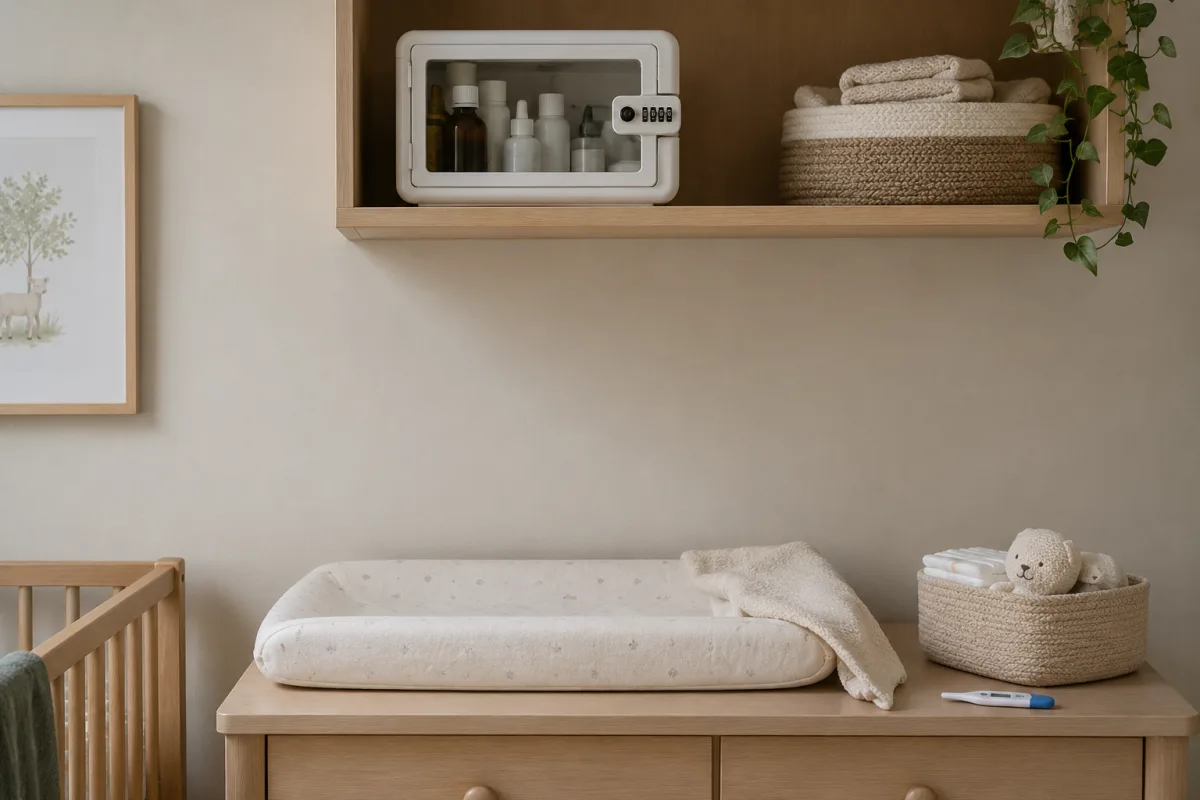
Do not treat a newborn's cough, congestion, fever, or unusual sleepiness with random medicine from the cabinet. HealthyChildren's medication guide says cough and cold products should not be used in children under 2 years old and are not recommended under 4 unless the doctor advises it.
The problem is not only dose. Multi-symptom products can stack ingredients, and a sleepy baby may feed poorly after the wrong medicine. Fever in a newborn also has a lower threshold for medical evaluation than fever in an older child.
If the baby recently had circumcision or another procedure, use the discharge instructions rather than guessing with creams or pain relievers. A related non-emergency care page, how to care for the circumcision site, can help parents keep the doctor's directions organized.
Soft Bedding And Crib Extras

Loose sleep items look gentle. They are not gentle to a newborn's airway. HealthyChildren says babies should sleep on their backs on a firm, flat surface, with no blankets, pillows, stuffed toys, or bumper pads in the baby's bed: HealthyChildren safe sleep guidance.
A safe sleep space is plain: firm mattress, fitted sheet, baby on the back, and no extra objects. Wedges, positioners, nursing pillows, adult blankets, and plush toys do not belong in a crib or bassinet. If the room feels cold, use clothing or a wearable blanket designed for infant sleep rather than a loose blanket.
This same thinking helps across the house. A newborn cannot crawl yet, but safety planning starts early; baby-proofing your home room by room is useful once the baby begins rolling and reaching.
Small Objects, Powders, And Strong Products
A newborn should not be near beads, coins, button batteries, older sibling toys, loose pacifier clips, or anything small enough to enter the mouth. The risk is mechanical: a tiny object can block the airway long before a caregiver understands what happened.
Skin products also deserve restraint. Fragrance-heavy lotions, adult rash creams, essential oils, baby powder, and harsh wipes can irritate newborn skin. For diaper-area irritation, start with gentle cleaning and ask before using medicated products. A broader rash guide such as baby rash blister cures can help parents recognize when a rash needs closer attention.
What To Give Instead
The safe replacement list is refreshingly plain: breast milk or properly prepared infant formula, a clean diaper, a safe sleep surface, skin-to-skin or calm holding, and timely medical advice when the baby looks unwell. That covers more newborn problems than most products sold to anxious parents.
If a baby was premature or had a NICU stay, the rules may be more individualized. Parents can pair this safety list with how to gauge a premature baby's development while still treating the discharge plan as the authority.
A Short Home Safety Pass
Walk through the baby's usual spaces once a day during the first weeks. Look at the crib, changing table, feeding area, sofa, diaper bag, and car seat area. The question is simple: what could end up in the baby's mouth, cover the face, touch healing skin, or be given by a tired adult at 3 a.m.?
Move honey, medicine, small batteries, coins, beads, older sibling toys, and loose pacifier clips out of reach before they become urgent. Put medicine in one closed place, feeding supplies in another, and skin products in a small basket so the wrong tube is less likely to be grabbed in the dark.
Visitors need plain rules too. Ask them not to feed tastes, kiss near the mouth, bring soft toys into the sleep space, or suggest home remedies for crying. Most mistakes are not dramatic; they happen because someone is tired, helpful, and guessing.
If something questionable was already given, do not hide it from the pediatrician. Say what it was, about how much, when it happened, and how the baby looks now. That detail helps the clinician decide whether watching at home is enough or the baby needs care.
The diaper bag deserves the same pass. Remove loose pills, old snacks, hard candies, safety pins, and any cream that was packed for an adult. Keep one infant-safe diaper cream, spare clothes, wipes, and feeding supplies in predictable pockets so nobody has to search while holding a crying baby.
Night care is where tidy systems pay off. A dim room, a tired caregiver, and a crying newborn make labels and routines matter. Prepare safe sleep, feeding, and changing supplies before bedtime, then leave everything else out of the newborn's reach.
Frequently Asked Questions
Can newborns have a taste of food from a spoon?
No. Newborns are not developmentally ready for solid food. Wait for the age and readiness signs your pediatrician recommends.
Is honey safe if it is baked into food?
Avoid it during the first year. Honey in any form can be a botulism risk for babies under 12 months.
Can I give medicine if the bottle says infant?
Ask the baby's doctor first. Newborn dosing depends on age, weight, symptoms, and the exact ingredient.
What should be in a newborn crib?
Use a firm, flat mattress and fitted sheet. Keep pillows, blankets, toys, bumpers, and positioners out of the sleep space.
When should I call the doctor?
Call for fever, poor feeding, trouble breathing, unusual sleepiness, blue coloring, dehydration signs, or any behavior that feels sharply different for your baby.
This article is for general information only and isn't a substitute for medical advice. Talk to a clinician who knows your full history before making changes.

Linda Fehrman
Edits general wellness and relationship explainers. Health material is educational, avoids diagnosis and links to health-authority guidance.



Leave a reply
Replying to