
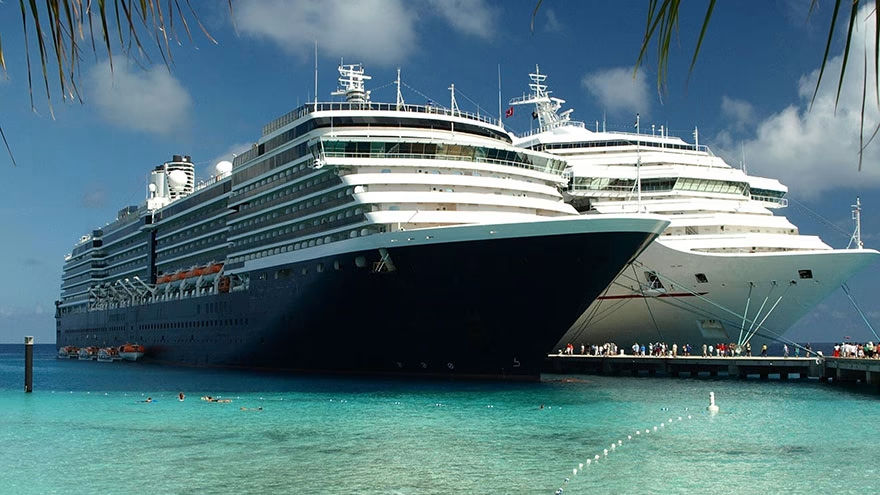
Travel Insurance for Cruises is broader than cancellation coverage. A cruise policy may need to address missed connections, medical care at sea, emergency evacuation, baggage delay, trip interruption, and prepaid shore excursions.
The best policy depends on the route, traveler health, flights, nonrefundable costs, and whether you want cash reimbursement or are comfortable with future cruise credits.
Start With The Whole Trip
A cruise is not only the ship. It may include flights, hotels, transfers, excursions, prepaid packages, and a tight embarkation time.
Write the whole route before comparing policies.
Cancellation And Interruption
NAIC says trip cancellation, interruption, and delay insurance can reimburse prepaid and nonrefundable travel expenses when covered reasons prevent all or part of a trip: NAIC travel insurance.
For cruises, interruption can matter if you must leave the ship early or catch up after a delay.
Cruise Medical Risk
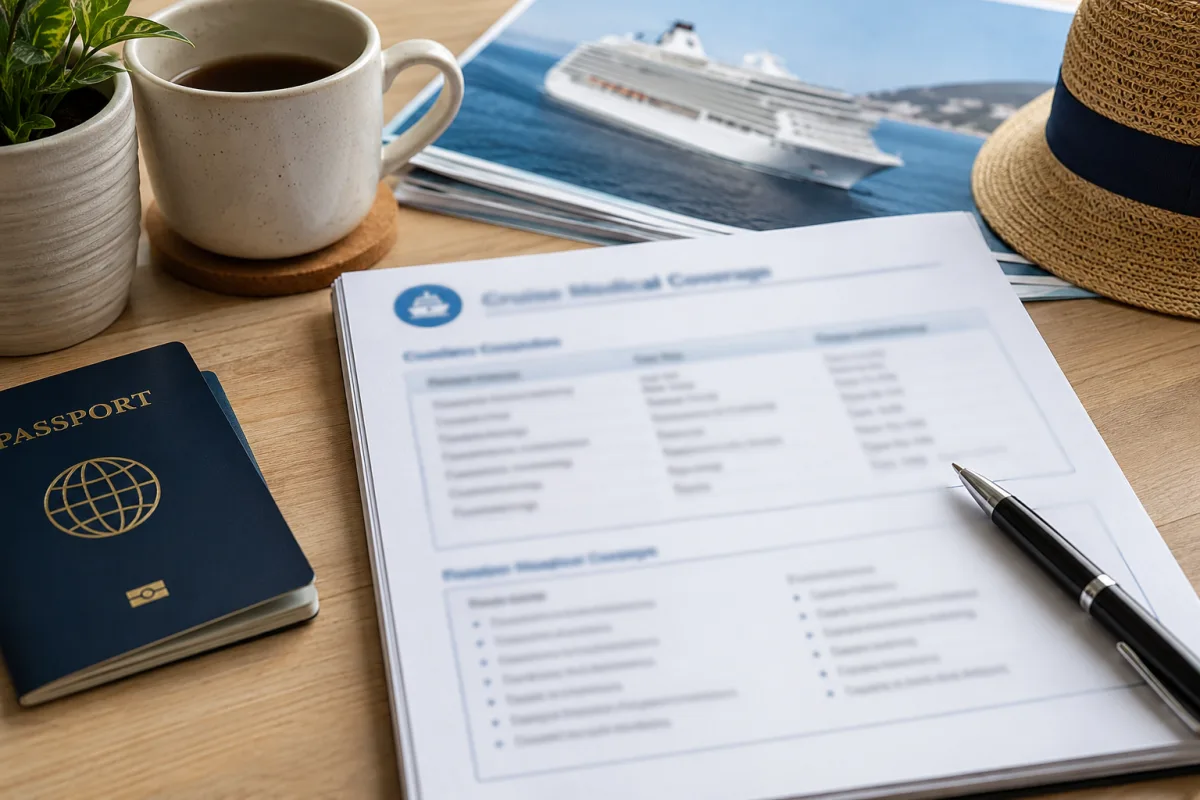
Medical care on a ship or in a foreign port can be expensive. Regular health insurance may not work the same way outside the United States.
Check travel medical limits, emergency evacuation limits, and whether the plan pays primary or secondary.
Emergency Evacuation
Emergency evacuation coverage can matter on itineraries far from home or in places where advanced care requires transport.
Look at the dollar limit and who decides whether evacuation is medically necessary.
Missed Connection
Missing embarkation because of a delayed flight can be costly. Some cruise policies include missed connection benefits.
Check the required delay hours and whether the plan helps you catch up to the ship.
Trip Delay
Trip delay benefits may cover meals, lodging, and transportation after a covered delay.
Read the hourly trigger and daily limit. A benefit that starts after twelve hours is different from one that starts after six.
Baggage Delay
Baggage delay can be more annoying on a cruise because the ship keeps moving.
Check whether the policy pays for clothes and essentials, how long the delay must be, and what receipts are needed.
Pre Existing Conditions
If health conditions could affect the trip, shop early for a policy that may waive pre-existing condition exclusions when requirements are met.
Do not assume a doctor's note after cancellation will override policy timing rules.
Cancel For Any Reason
Cancel-for-any-reason coverage is broader but usually costs more, pays only part of the loss, and has strict deadlines.
InsureMyTrip says CFAR commonly reimburses 50% to 75% of nonrefundable costs and has early-purchase and cancellation timing rules: InsureMyTrip CFAR overview.
Cruise Line Plan
A cruise line plan may be easy to buy, but it may lean on future cruise credits for some reasons.
Compare it with a third-party policy before assuming the cruise line plan is enough.
Third Party Policy
A third-party policy may include more choices for medical, evacuation, and cash reimbursement, depending on the plan.
The tradeoff is that you need to read and compare more documents.
Covered Cruise Cancellation
Squaremouth notes that cruise travel insurance can reimburse prepaid, nonrefundable expenses when a covered reason causes cancellation: Squaremouth cruise cancellation guidance.
Covered reason is the phrase that matters. The policy must list the reason.
Shore Excursions
Privately booked excursions may not follow the cruise line's refund policy.
If they are prepaid and nonrefundable, ask whether they should be included in insured trip cost.
Weather And Itinerary Changes
Cruise lines can change ports for weather, safety, or operational reasons. Travel insurance may not pay simply because a port changed.
Read itinerary-change, common-carrier, and weather wording.
Passport And Visa Issues
Insurance may not cover cancellation because you forgot a passport, misread entry rules, or waited too long for a visa.
Check documents early and keep copies offline.
Use A Cruise Cost Sheet

List cruise fare, port fees, flights, hotels, transfers, excursions, parking, packages, and nonrefundable deposits.
A written sheet keeps cancellation, medical, delay, and excursion decisions tied to real prepaid costs.
Budget The Premium
Travel insurance is part of the trip budget, not an afterthought.
For broader money planning, Livecub's family money guide shows the value of naming costs before committing.
Keep Reserves
Insurance may reimburse later, while hotels, flights, clinics, or taxis may need payment now.
Livecub's small Treasury bond guide can help readers think about reserves separate from insurance.
Read Contract Language
Insurance, cruise fare rules, credit card benefits, and airline tickets are separate contracts.
Livecub's fixed annuity versus fixed index annuity guide is a different finance topic, but it shows why wording matters.
Document Claims

Save the policy certificate, invoices, delay notices, medical notes, cancellation emails, receipts, and proof of refunds or credits.
Claim paperwork is much easier when the folder is built before sailing.
Ask Before Sailing
Before departure, ask the insurer how to contact emergency assistance from the ship, what number to call, and what documents to keep.
Do not wait for a medical or delay problem to learn the process.
Older Travelers
Older travelers may care more about medical, evacuation, and pre-existing condition language than baggage benefits.
Review medication supplies, mobility needs, doctor clearance, and family emergency contacts before sailing.
Children And Family Trips
Family cruises add questions about minors, guardianship letters, pediatric care, delayed flights, and who can approve treatment.
Keep authorization documents, passports, and policy numbers together.
Port Changes
Cruise lines may skip or change ports for weather, safety, or operational reasons.
Travel insurance may not pay just because the itinerary changed, so read itinerary-change wording before buying.
Shipboard Medical Bills
Shipboard clinics may require payment or a charge to the onboard account before any insurance reimbursement.
Ask whether the travel medical benefit pays primary or secondary and what documents the ship's clinic should provide.
Evacuation Decisions
Emergency evacuation benefits often require medical necessity and coordination through the assistance company.
Call the policy's emergency number as soon as possible if a serious medical event occurs.
Traveling To The Port
Driving to the port has different risks than flying the same morning. Flights add delay, baggage, and missed connection risk.
Many cruise travelers arrive a day early because insurance cannot remove the stress of a tight connection.
Private Excursions
Private excursions may have separate cancellation rules and may not be handled by the cruise line.
Ask whether prepaid nonrefundable excursions are part of the insured trip cost and keep receipts.
Adventure Excursions
Zip lines, scuba, ATVs, horseback riding, and climbing can trigger activity exclusions.
If the trip includes adventure excursions, read that section before paying for the tour.
Alcohol And Claims
Some policies exclude losses tied to intoxication or illegal behavior.
Cruise vacations can make this easy to overlook, especially when drinks packages are part of the trip.
Cabinmate Problems
If a cabinmate cancels, gets sick, or has to leave early, your costs may change.
Read how the policy defines traveling companion and whether single-supplement or occupancy changes are covered.
Future Cruise Credits
A future cruise credit may feel useful, but it may expire or fail to cover flights, hotels, or excursions.
If cash reimbursement matters, compare that before choosing a plan.
Claim Help Onboard
The ship's guest services desk can provide some documents, but it is not your insurer.
Keep your own receipts, medical statements, delay notices, and written confirmations.
Compare Assistance Services
Many travelers focus only on reimbursement limits, but emergency assistance can matter during a cruise.
Check whether the plan has 24-hour assistance, medical referral help, translation support, and coordination with hospitals.
Read The Refund Rules
Cruise refund schedules can become stricter as departure gets closer.
Match the policy to the dates when deposits, final payment, packages, and excursions become nonrefundable.
Check Existing Benefits
Premium credit cards and some memberships may include travel protections, but the limits may not fit a cruise.
Compare medical, evacuation, interruption, and missed connection rules before deciding a card benefit is enough.
Frequently Asked Questions
Do cruises need travel insurance?
It is not always required, but it can be useful because cruises combine prepaid costs, medical risk, flights, and tight schedules.
Is cruise insurance different from regular travel insurance?
It may include cruise-focused benefits such as missed connection or higher evacuation needs, but the policy language decides.
Does it cover missing the ship?
Some policies cover missed connections after covered delays. Check delay hours, covered causes, and catch-up transportation rules.
Should I buy the cruise line plan?
Compare it with third-party plans. Look at cash versus credit, medical limits, evacuation, exclusions, and claim rules.
What should I insure?
Insure prepaid nonrefundable costs that the policy requires, such as cruise fare, flights, hotels, transfers, and excursions.
Travel insurance for cruises works best when it covers the whole trip, not just the fare. Compare cancellation, medical, evacuation, delay, baggage, and claim rules before sailing.

Patrick Harwood
Edits sports, consumer-finance and general legal explainers. Regulated or time-sensitive topics link to primary sources and are not professional advice.




Leave a reply
Replying to