

What to Bring to the Hospital for a Soon-to-Be Father is really a support-person packing list. The goal is to stay useful, rested enough, reachable, and ready for a long labor without overpacking the room.
This is general pregnancy education. Follow the hospital's rules and the birthing person's preferences, and ask the care team before bringing food, medicine, recording devices, or special equipment.
Start With Documents
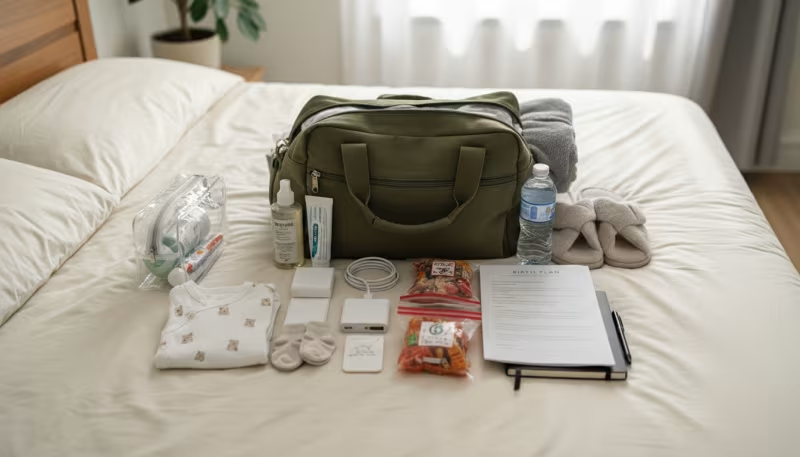
Bring identification, insurance information if needed, hospital registration details, pediatrician information, and any birth plan or notes the birthing person wants available.
ACOG offers a sample birth plan that shows the kinds of preferences families may want to discuss before labor.
Phone And Chargers
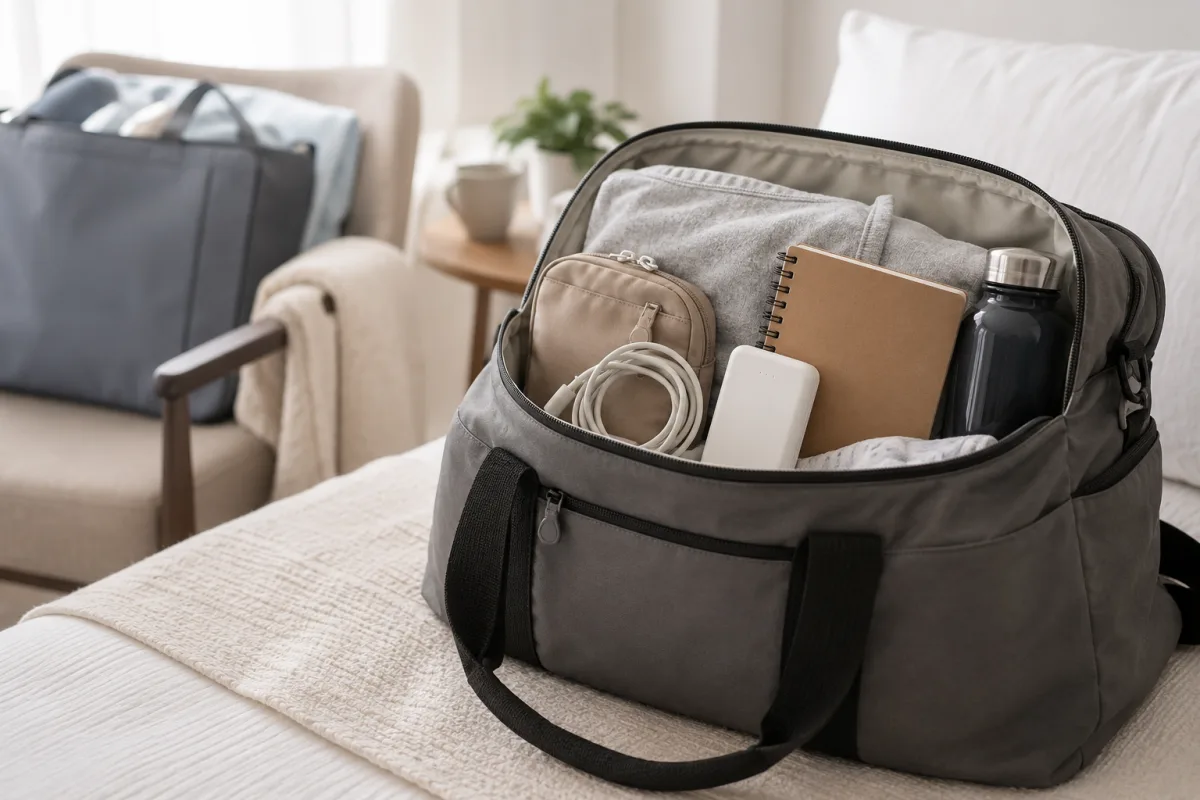
Pack a long charging cable, wall plug, battery bank, and any needed watch charger. Labor can outlast a phone battery easily.
Keep the care team's number, family contacts, and parking information saved offline.
Clothes
Bring one or two changes of comfortable clothes, socks, underwear, a sweatshirt, and shoes you can stand in for hours.
Hospitals can be cool, and support people often sleep badly. Comfort helps you stay patient.
Toiletries
Pack toothbrush, toothpaste, deodorant, contacts or glasses, medication, hair ties if needed, and any personal items you use daily.
Do not rely on leaving the hospital for basics after labor begins.
Snacks And Water
Bring snacks that do not smell strong and a refillable water bottle. Check hospital rules before eating in the labor room.
Banner Health's hospital bag guide lists snacks, drinks, toiletries, chargers, and comfortable clothes for support people.
Comfort Tools

Ask first, then pack massage lotion, a small fan, lip balm, music, headphones, or a printed list of comfort measures.
Livecub's early labor support guide covers the behavior side of support, not only packing.
For Long Labor
Bring a small pillow, light blanket, book, headphones, and something quiet to do. You may wait for hours, then need to become fully present fast.
Do not bring a large entertainment setup that crowds the room.
Money And Parking
Bring a payment card, small cash if useful, parking app details, vending money if needed, and your car location.
If you leave to move the car or get food, tell the birthing person and nurse before disappearing.
Camera And Privacy
Ask before taking photos or video. Hospital rules may limit recording, especially during procedures or staff conversations.
The birthing person controls what is filmed, posted, or sent. Do not turn labor into a live update.
Food For The Birthing Person
Do not pack labor food without checking the care plan. Some people can eat in early labor; others may have restrictions based on medications, risk, or procedures.
For pregnancy nausea or gentle food ideas before labor, Livecub's bland diets for pregnancy may be useful.
Emotional Readiness
Pack patience. Labor can involve fear, pain, quiet, repetition, and sudden changes. Your job is not to control the room; it is to support the person giving birth.
If pregnancy mood has been heavy, Livecub's depression during pregnancy article may help you recognize support needs beyond the bag.
After Birth
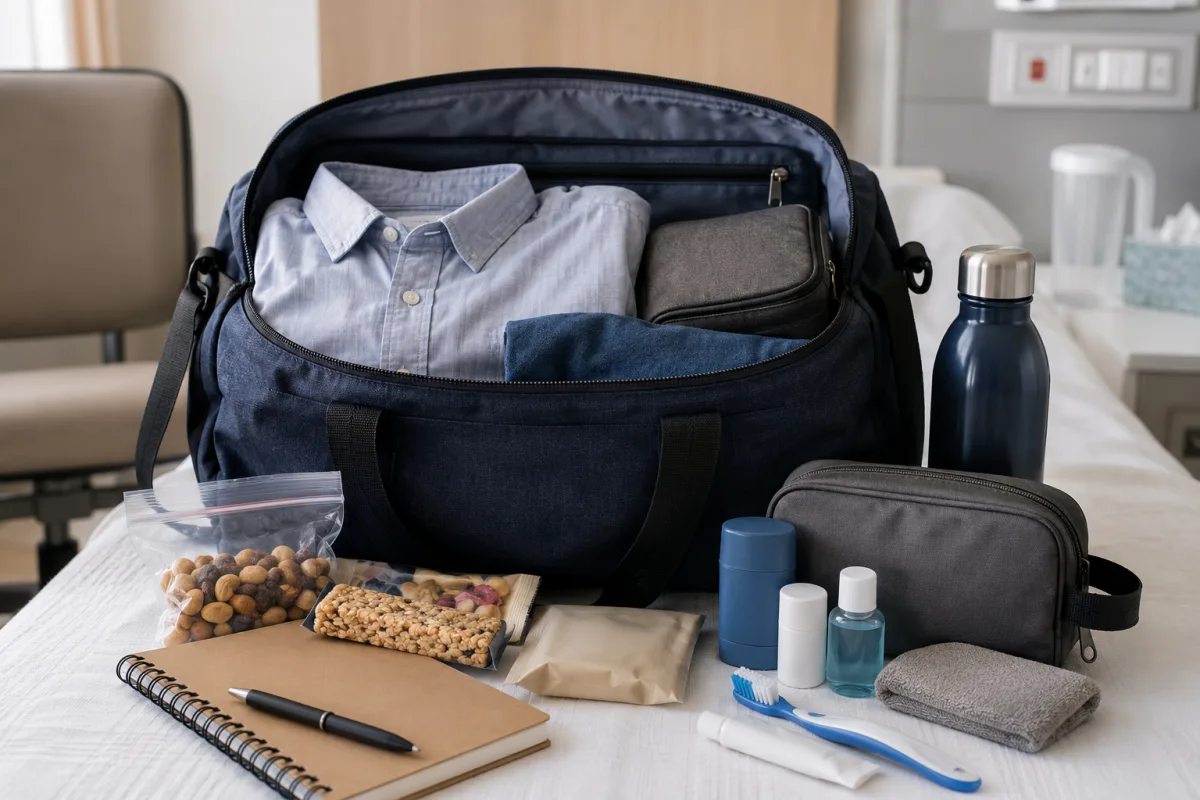
Bring a clean shirt for skin-to-skin if the family plans it, toiletries, snacks, and a going-home checklist. You may also need to install or check the car seat before discharge.
Cleveland Clinic's hospital bag checklist includes support-person items such as clothes, toiletries, snacks, and chargers.
What Not To Bring
Skip candles, strong scents, alcohol, bulky bedding, valuables, weapons, and anything the hospital prohibits.
A smaller bag is easier to move if the birth shifts rooms or becomes a transfer.
Relationship Support
The hospital bag is only one piece. Talk beforehand about touch, visitors, photos, family updates, and what kind of encouragement helps.
Livecub's staying intimate during pregnancy can support those conversations before labor starts.
Medication And Health Needs
Pack your own daily medications, glasses, inhaler, or medical devices. Labor support can last longer than expected, and leaving the hospital may not be easy.
If you have health needs that could affect support, tell the birthing person before labor day and plan backup help.
Visitor Rules
Hospital visitor rules can change by unit, time, illness season, and procedure. Check rules for overnight stays, food, photos, children, and number of support people.
Do not bring relatives because you assumed the room would allow them.
Car Seat And Car
The car seat should be installed before discharge day, and the car should have fuel or charge. Know the route, parking, and entrance after hours.
A support person who handles logistics calmly gives the birthing person one less thing to manage.
Sleep Setup
Pack as if the chair may be uncomfortable and the room may stay bright. A small pillow, light blanket, eye mask, and quiet headphones can help you rest without taking over the patient's space.
Rest is not selfish if it helps you stay kind, alert, and useful through a long labor and the first newborn night.
Notes And Timing
Bring a small notebook or use a notes app for contraction timing, nurse names, questions, feeding times, diaper counts, and discharge instructions. Memory gets unreliable when sleep is short.
Do not turn note taking into a second job for the birthing person. Capture what helps, then put the phone down.
Advocacy Without Taking Over
Know the birth preferences, but remember whose body and care are involved. Your job is to repeat preferences when asked, ask clear questions, and help the patient get time to decide when that is medically possible.
Good advocacy sounds calm. It does not argue for a plan after the patient has changed their mind.
Privacy And Photos
Ask before taking photos, recording video, posting updates, or texting details. Some moments are private even when family is excited.
Pack the phone, but also pack restraint. The best support person protects the room from becoming a group chat.
Money And Practical Items
Bring a payment card, small cash if useful, parking information, and any work paperwork needed for leave. Also bring a pen, because hospitals still ask for signatures at inconvenient times.
These small items do not feel emotional, but missing them can create stress while everyone is tired.
Discharge Day
Pack with the ride home in mind: clean shirt, weather-appropriate baby blanket, car seat, phone charger, and space for hospital paperwork and supplies. The exit can take longer than expected.
Before leaving, listen carefully to warning signs, follow-up appointments, medication instructions, and who to call after hours.
Food Runs And Errands
If you leave the room for food, coffee, or parking, tell the patient and keep your phone on. Labor can change quickly, and a ten-minute errand can become a badly timed absence.
Pack enough basics to reduce errands, then use short trips only when the care team says it is a quiet stretch.
Work And Family Updates
Set expectations with work and family before labor starts. Decide who gets updates, who does not, and what details should stay private.
A support person should not spend active labor managing everyone else's emotions. A short message to one trusted contact can be enough.
Room Etiquette
Keep bags tucked away, silence notifications, avoid strong smells, and ask before adjusting lights, music, or temperature. The room belongs to the patient and the care team.
Small manners matter more in a hospital room because space, sleep, and patience are limited.
Backup Support
If labor is very long, another trusted support person may be useful. Discuss that possibility early, including who is welcome and who would add stress.
Backup support can also handle home tasks, older children, pets, or family messages while you stay present.
Write the backup person's phone number, parking instructions, and childcare limits in the same note so no one has to improvise while contractions are close together.
Frequently Asked Questions
When should a father pack a hospital bag?
Many families pack in the third trimester, before labor feels close.
What is the most useful item?
A charged phone, long cable, comfortable clothes, snacks, water, and documents are high-value basics.
Should I bring food?
Bring support-person snacks, but ask about food rules for the birthing person.
Can I take photos during birth?
Ask the birthing person and follow hospital rules before taking photos or video.
Should I bring a pillow?
A small pillow or light blanket can help during long waits if space allows.
A soon-to-be father's hospital bag should keep him useful: documents, chargers, clothes, toiletries, snacks, water, quiet comfort items, privacy respect, and a clear support role.

Chiara Bradshaw
Covers education, culture and creative topics with an emphasis on readable explanations and verifiable references.



Leave a reply
Replying to