
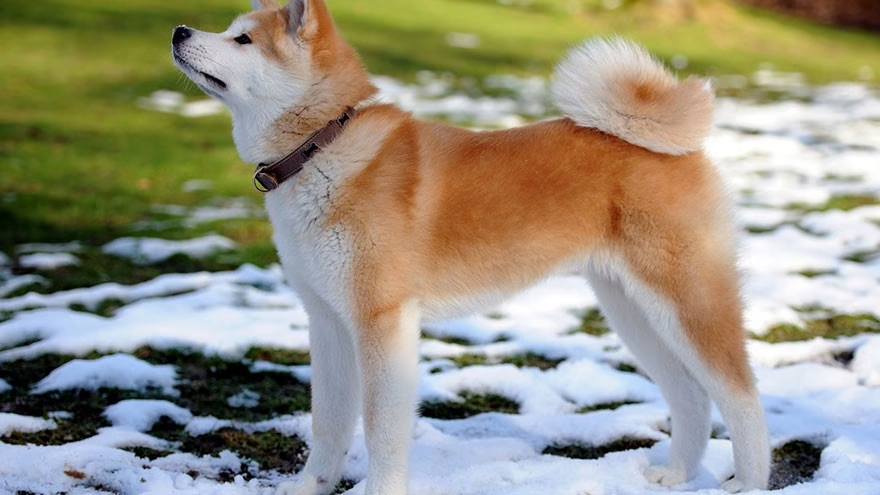
Akita Inu breed information should not sell the dog as a loyal statue that simply guards and adores. The Akita is a large, powerful, independent working breed with a thick coat, strong household attachment, and a serious need for early training. In the right home, the breed can be dignified, clean, quiet, and deeply devoted. In the wrong home, the same traits can become isolation, dog conflict, visitor tension, and a dog too strong for the owner's skill. The safest way to admire an Akita is to learn what daily life with one actually asks.
What is the Akita Inu breed?
AKC describes the Akita as a muscular, double-coated dog of ancient Japanese lineage and notes its reputation for dignity, courage, and loyalty. The official Akita breed information page also places the breed in the Working Group in the United States.
Registry language can be confusing. Some countries and clubs separate Japanese Akitainu and American Akita more sharply than casual U.S. speech does. If you are choosing a puppy, ask the breeder exactly which registry, standard, and line they mean rather than assuming every "Akita" refers to the same look and breeding history.
Breed comparisons help only when they are specific. A reader comparing German Shorthaired Pointer questions is looking at a very different kind of energy and social profile. The Akita's challenge is not endless motion; it is independence, strength, and selectivity.
What temperament should an Akita have?
A good Akita should be alert, self-possessed, and bonded to its household. Many are reserved with strangers rather than socially needy. That reserve should not be confused with permission to be unmanaged. A large dog that makes its own decisions around guests needs training before those moments happen.
The Akita Club of America's breed overview says Akitas should be obedience trained by their owner and that a good class, starting with puppy kindergarten, can build a firm bond. The club's Akita overview also notes they are intelligent and can get bored easily.
Respectful leadership is not intimidation. It is clear routines, calm rules, short training sessions, and an owner who follows through without turning every disagreement into a battle.
What grooming does an Akita need?
The double coat needs regular brushing and serious attention during seasonal coat drop. Akitas can be relatively clean dogs, but clean does not mean no care. Brush to the skin, check ears, trim nails, watch paw pads, and keep dental care on the calendar.
Expect fur. During shedding periods, loose undercoat can come out in large amounts. Short, frequent sessions are kinder than waiting until mats or packed undercoat make the dog impatient. A grooming routine used for longhair Dachshund coat care is not the same technique, but the same discipline applies: coat care protects skin and comfort.
Teach handling early. A full-grown Akita that refuses paw checks, brushing, or mouth handling makes routine care harder for everyone. Reward calm stillness before strength becomes the problem.
What health concerns should owners watch?
Ask breeders about hips, elbows, eyes, thyroid, autoimmune disease, bloat, skin, and temperament in relatives. OFA's CHIC program explains that breed-specific test results help breeders and buyers through a centralized canine health database.
The Japanese Akitainu Club of America encourages breeders to have potential sires and dams undergo hip and eye exams and to provide OFA and PRA results to people on waiting lists. Its breed health page also emphasizes transparency with owners of littermates if a produced puppy is diagnosed with a heritable illness.
Health transparency matters more than a perfect sales pitch. Ask for registered results, family history, and the breeder's plan if a problem appears later.
How much exercise and training does an Akita need?
An Akita needs daily walking, training, and mental work, but not chaotic dog-park exercise. Structured walks, calm obedience, scent games, yard play, and controlled social exposure are better than loose interactions with unknown dogs.
Training should start young and continue after adolescence. Name response, recall on a long line, leash manners, settle, leave it, drop it, muzzle comfort, and visitor routines are practical skills. The dog should learn that the owner handles decisions around doors, food, guests, and other animals.
Large-breed management matters. A page like the top 10 biggest dog breeds can make size feel like trivia, but with an Akita, size changes every training mistake. A pulling puppy becomes a powerful adult quickly.
Who should own an Akita?
The best owner is calm, consistent, and honest about limits. They do not need to be harsh. They do need to be present. Akitas rarely thrive as backyard ornaments or as dogs expected to love every stranger, every dog, and every chaotic gathering.
Homes with children, other dogs, or frequent visitors need a plan. Gates, crates, leashes, closed doors, and supervised introductions are not signs of failure. They are responsible management for a serious breed.
General breeder-selection advice from Brittany Spaniel breeder recommendations applies here too: look for proof, transparency, temperament knowledge, and support after sale. With an Akita, those checks carry extra weight.
What home life suits this breed?
The best home is not always the biggest home. An Akita needs owners who notice tension early, keep doors and gates secure, and teach visitors how to behave around the dog. A fenced yard helps, but it is not a substitute for leash work or judgment.
Household rhythm matters. A chaotic house with constant surprise visitors may be difficult unless the owners are skilled and organized. A quieter home can still fail if the dog is left bored, untrained, and in charge of every doorway.
Apartment life can work for some adults when exercise, elevator manners, noise, and neighbor contact are handled well. It can also be a poor fit if the dog must pass strange dogs in tight halls every day. Think about the actual building, not only the floor plan.
How should grooming be handled?
The coat is not a small detail. Brushing keeps shed hair, skin issues, mats, and seasonal coat drop under control. The dog also needs to accept feet, ears, tail, mouth checks, and bathing without turning every session into a wrestling match.
Start handling early. Touch the paws, reward stillness, introduce the brush in short sessions, and practice standing on a mat. A groomer or veterinarian will have an easier time with a dog that already understands calm body handling.
During heavy shedding, owners need patience and tools that suit a double coat. Shaving is usually the wrong answer unless a veterinarian has a medical reason. The coat protects as well as insulates, so routine care is safer than drastic shortcuts.
What should new owners budget for?
The purchase price is only the beginning. Budget for quality food, larger equipment, training help, grooming tools, secure containment, veterinary care, emergency savings, parasite prevention, and possible orthopedic or autoimmune concerns. A large dog makes ordinary costs larger.
Insurance or savings should be considered before the first problem appears. Responsible ownership is easier when a health issue does not force rushed decisions. The breed deserves an owner who can pay for care, not only admire the look.
Adult adoption can be a better route for some people. With a mature Akita, you may know more about dog selectivity, noise tolerance, grooming behavior, and guest manners before the dog moves in. That does not remove training, but it can reduce some puppy-stage guesswork.
Meet the real dog, not only the idea of the breed. Watch how the dog recovers after excitement, handles restraint, walks past another dog, and accepts a quiet stranger. Those small observations tell more than polished photos.
Frequently Asked Questions
Is Akita Inu the same as Akita?
Usage depends on registry and country. In the U.S., AKC recognizes Akita; Japanese Akitainu clubs and other registries may discuss Japanese and American types separately.
Are Akitas easy to train?
They are intelligent, but independent. Short, consistent sessions and owner involvement work better than long drills or sending the dog away for someone else to fix.
Can Akitas live in apartments?
Some can if exercise, noise, elevators, visitors, and dog encounters are managed well. Size and breed selectivity make planning necessary.
Do Akitas need a fenced yard?
A secure yard helps, but it does not replace walks, training, and supervision. Fences should be sturdy, and gates should be handled carefully.
The Akita Inu is best understood as a serious companion, not a decorative guardian. Choose the breed only if you want the training, records, coat care, and management that come with the loyalty.

Tory Stearns
Edits practical household, travel and lifestyle explainers. Claims that can change are linked to current primary or subject-authority sources.

Leave a reply
Replying to