
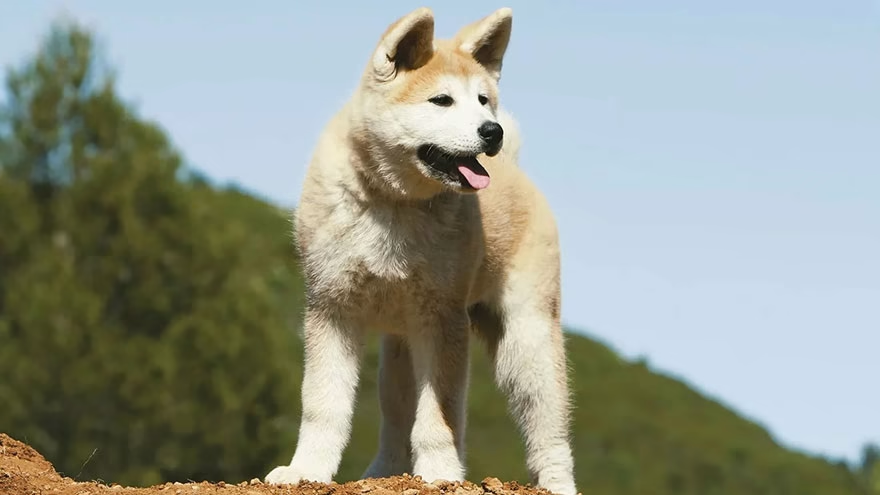
Health Starts Before the Puppy Comes Home
An Akita Inu health guide should start before anyone brings home a puppy. Akitas are powerful, loyal, dignified dogs with real breed-specific health and management needs. Good care begins with breeder questions, veterinary planning, appropriate weight, safe exercise, and early attention to skin, eyes, joints, and behavior.
The American Kennel Club's Akita breed page describes the breed as strong, muscular, and loyal. Those traits are part of the appeal, but they also mean owners should take health decisions seriously. A large, independent dog is harder to manage when pain, anxiety, or poor training has been ignored.
No health guide can promise a disease-free dog. The practical goal is to reduce risk, notice problems early, and choose breeders or rescues who are honest about the breed. Good ownership is preventive care, not waiting until a problem becomes obvious.
Hip, Elbow, and Joint Care
Akitas are large, heavy-boned dogs, so hips, elbows, knees, and overall movement deserve attention. Hip dysplasia and other orthopedic issues can affect comfort, exercise, and quality of life. A puppy that grows too fast, carries extra weight, or does too much hard jumping may face additional strain.
Ask breeders about orthopedic screening and family history. For a rescue or adult dog, ask about gait, stiffness, past injuries, medication, and how the dog handles stairs. A veterinarian can help assess body condition and movement, especially if the dog is limping, slow to rise, or reluctant to exercise.
Keep a simple movement log if something seems off. Note whether stiffness appears after rest, after hard play, in cold weather, or on stairs. Patterns help the veterinarian separate a one-day strain from a repeated comfort problem.
Daily care matters too. Keep the dog lean, use controlled exercise, avoid repeated high-impact jumps, and provide secure footing. Livecub's top 10 biggest dog breeds article is not Akita-specific, but it points to a useful principle: large bodies need thoughtful handling.
Eyes, Thyroid, and Immune Concerns
Akitas can be associated with several health concerns that owners should discuss with breeders and veterinarians, including eye conditions, thyroid disease, and immune-related issues. Symptoms can be subtle at first. Changes in coat, weight, energy, skin, appetite, mood, or vision should not be dismissed as personality.
The Akita Club of America's health information discusses breed health concerns and owner education. Breed club material is useful because it is written for people who live with and preserve the breed, not only for quick breed shopping.
Ask what health testing has been done on the parents and what problems have appeared in relatives. A responsible breeder should be willing to discuss difficult topics without becoming defensive. Documentation and openness are health transparency.
For adult dogs, ask the veterinarian whether baseline bloodwork, thyroid screening, or eye exams make sense based on age, symptoms, and history. Baselines are useful because later changes are easier to interpret when there is an earlier record.
Bloat and Emergency Planning
Large, deep-chested breeds can be at risk for gastric dilatation-volvulus, often called bloat. This is an emergency where the stomach fills with gas and may twist. Symptoms can include restlessness, unproductive retching, swollen abdomen, drooling, distress, and collapse. Immediate veterinary care is needed.
Owners should ask their veterinarian about bloat risk, feeding routines, exercise timing, and whether preventive gastropexy is worth discussing for their dog. Do not rely on home treatment if bloat is suspected. Minutes can matter.
Practical prevention habits may include measured meals, avoiding frantic eating, managing heavy exercise around meals, and knowing the nearest emergency clinic. Keep clinic numbers saved in your phone and posted at home. Emergency planning is boring until it is needed.
Everyone in the household should know the warning signs. If only one person knows what bloat looks like, a crisis can be missed while that person is away. Put emergency instructions somewhere visible and update them when you change veterinarians.
Skin, Coat, and Grooming Health
Akitas have a dense double coat that sheds and needs regular brushing. Coat care is not only about keeping the house cleaner. Brushing helps owners notice hot spots, irritation, parasites, lumps, hair loss, or skin changes. The earlier those changes are seen, the easier they may be to address.
During shedding seasons, undercoat can come out heavily. Use appropriate brushes and work in sections. Livecub's longhair dachshund grooming guide covers a different coat, but the same habit applies: check below the surface, not only the top layer.
Skin problems can be tied to allergies, thyroid disease, infection, parasites, or grooming neglect. If the dog scratches, smells unusual, loses hair, or develops sores, see a veterinarian rather than trying random products. Akita skin deserves early attention.
Weight, Food, and Exercise
Weight control protects joints, stamina, and overall health. Akitas can be food-motivated or selective, depending on the dog, but either pattern needs structure. Measure meals, watch treats, and check body condition regularly. A thick coat can hide weight gain until it is significant.
Exercise should be steady and controlled. Walks, training, supervised yard time, and appropriate games are better than chaotic jumping or uncontrolled dog-park play. Many Akitas are not ideal candidates for crowded dog parks because of size, independence, and possible dog selectivity.
Ask your veterinarian about diet, growth rate for puppies, supplements, and weight goals. Do not add supplements just because they sound natural. A diet plan should fit the individual dog, not a social media rule.
Growth matters in puppies. Large-breed puppies should not be pushed into heavy exercise, excess calories, or quick weight gain. Slow, steady development gives joints and muscles a better chance to mature without unnecessary strain.
Behavior Is Part of Health
Akita health is not only physical. Fear, poor socialization, pain, or chronic stress can change behavior. A dog that suddenly becomes irritable, avoids touch, guards space, or resists handling may be uncomfortable. Medical causes should be considered before blaming attitude.
Early training should include handling, leash manners, calm greetings, vet preparation, and safe separation. Akitas often bond deeply with their families, but they still need clear rules. A powerful dog should understand everyday routines before adolescence makes everything harder.
If choosing a breeder, ask how puppies are raised, socialized, and matched to homes. Livecub's Brittany Spaniel breeder recommendations is for another breed, but the buyer lesson carries over: ask practical questions before falling for a puppy photo.
Handling practice should be part of the routine. Teach the dog to accept paw checks, mouth checks, brushing, and gentle restraint before a medical issue appears. Cooperative care is daily training, not only a vet-clinic skill.
Build a Health Routine
A strong routine includes annual veterinary exams, vaccines and parasite prevention, dental care, weight checks, nail trims, ear checks, coat care, and a plan for emergencies. Keep records of test results, medications, reactions, surgeries, and behavior changes.
For senior Akitas, discuss arthritis, vision, thyroid monitoring, dental disease, lumps, mobility, and pain control. Aging should not be treated as a single explanation for every change. Many older dogs feel better when specific problems are identified and managed.
Keep copies of lab results, imaging notes, vaccine history, and medication changes. If an emergency clinic sees the dog, those records can save time. A health folder also helps new veterinarians understand the dog's story quickly.
At home, do a monthly nose-to-tail check. Look at eyes, ears, teeth, paws, coat, skin, weight, gait, and attitude. Small changes are easier to discuss when you know what normal looks like.
Bring photos or short notes to appointments when a change comes and goes. Intermittent limping, itching, or appetite shifts are easier to evaluate with dated details.
The best Akita Inu health plan is steady rather than dramatic. Choose responsibly, keep the dog lean, notice small changes early, and work with a veterinarian who respects the breed's size and temperament.
Frequently Asked Questions
What health problems are Akitas prone to?
Owners should ask about hips, eyes, thyroid disease, immune-related concerns, skin issues, bloat risk, weight, and any problems known in the line.
How can I protect an Akita's joints?
Keep the dog lean, avoid repeated high-impact jumping, use controlled exercise, provide safe footing, and ask about orthopedic screening.
Do Akitas need much grooming?
Yes. Their dense double coat sheds and needs regular brushing, especially during seasonal coat changes.
What should I ask an Akita breeder?
Ask about health testing, family history, temperament, socialization, bloat awareness, return policy, and how puppies are matched to homes.

Tory Stearns
Edits practical household, travel and lifestyle explainers. Claims that can change are linked to current primary or subject-authority sources.


Leave a reply
Replying to