

Feng Shui Cures for Depression needs careful framing. A room change is not a clinical treatment for depression, but the way a home is arranged can make tiny care steps easier or harder on low-energy days.
Use these ideas as environmental supports alongside real care. If depression is severe, long-lasting, or connected with thoughts of self-harm, professional help matters more than any furniture shift.
Start With Safety, Not Decor
Before thinking about color, plants, or layout, ask what the space needs to support today: getting out of bed, eating, taking medication, showering, opening curtains, or contacting someone.
NIMH describes depression as causing symptoms that affect how a person feels, thinks, and handles daily activities such as sleeping, eating, or working: NIMH depression information.
That is the reason the room should be arranged around tiny daily actions, not around a perfect mood.
A useful first pass is blunt: remove anything that makes the next care step harder. That might mean moving a laundry basket away from the bedroom door, putting medication where the label is visible, or charging the phone near the place where you actually sit.
If the room has objects connected with grief, conflict, debt, or unfinished obligations, do not force yourself to solve all of them at once. Move one painful object to a closed box and notice whether the room feels less hostile.
Use Light As A Morning Cue

Open curtains, move a chair closer to daylight, or place a lamp where it can be turned on without crossing the room. The goal is to make the first signal of day easier.
Light will not cure depression by itself, but darkness and closed rooms can make the day feel harder to start.
If seasonal patterns are strong, ask a clinician about assessment and treatment options rather than buying a light box at random.
Clear One Surface Only
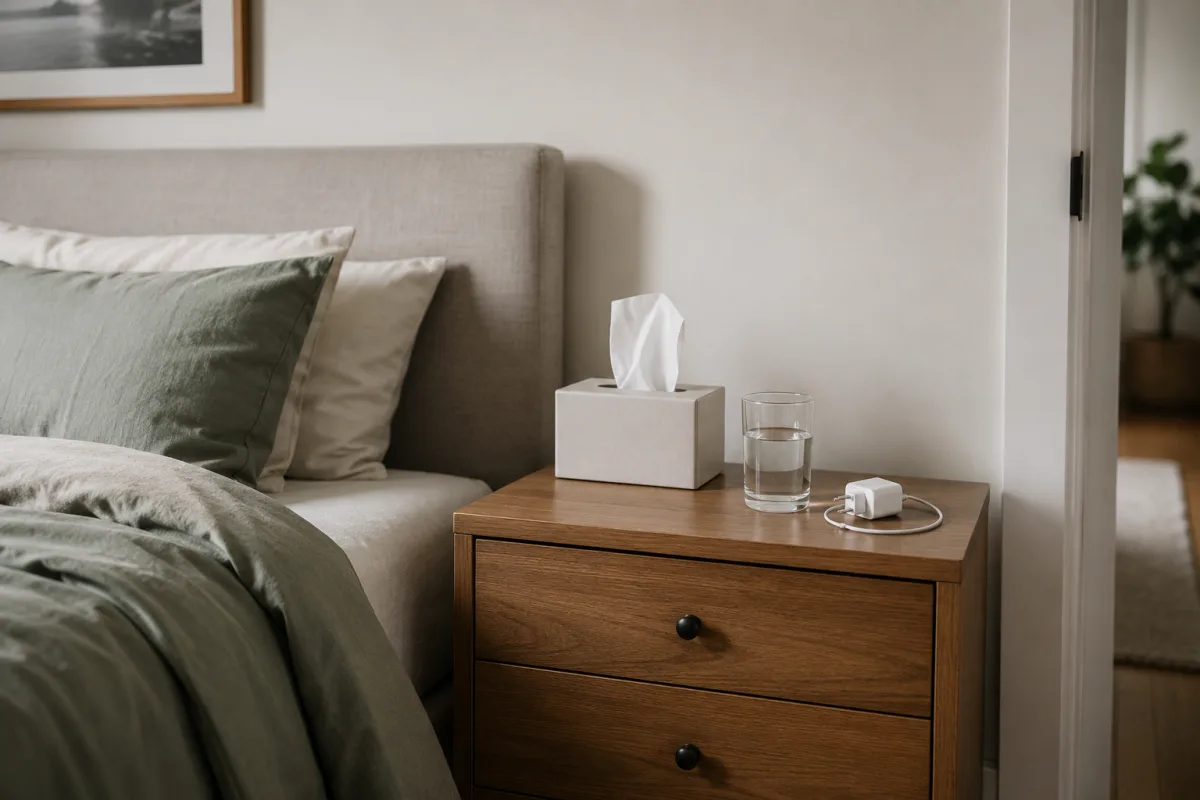
Depression can make cleaning feel impossible. Choose one small surface: a bedside table, sink edge, desk corner, or chair. Clear only that area.
A small clear surface gives the brain one place to land. It also creates room for water, medication, a phone charger, tissues, or a simple meal.
Do not turn clearing one surface into a full-house project. Stopping on purpose is part of making the task survivable.
If the surface fills again by evening, that is information, not failure. Put a small tray there so the same items have a landing spot instead of becoming a new pile.
Make Food And Water Easier
Low mood can disrupt eating. Put water where you rest, keep simple snacks visible, and make the easiest acceptable meal easier to reach.
NHS advice for coping with depression includes staying in touch, being more active, facing fears, and trying to eat a healthy diet: NHS coping with depression.
If tracking meals helps without creating shame, writing a food journal can be adapted into a low-pressure food and mood log.
Put Help In Reach
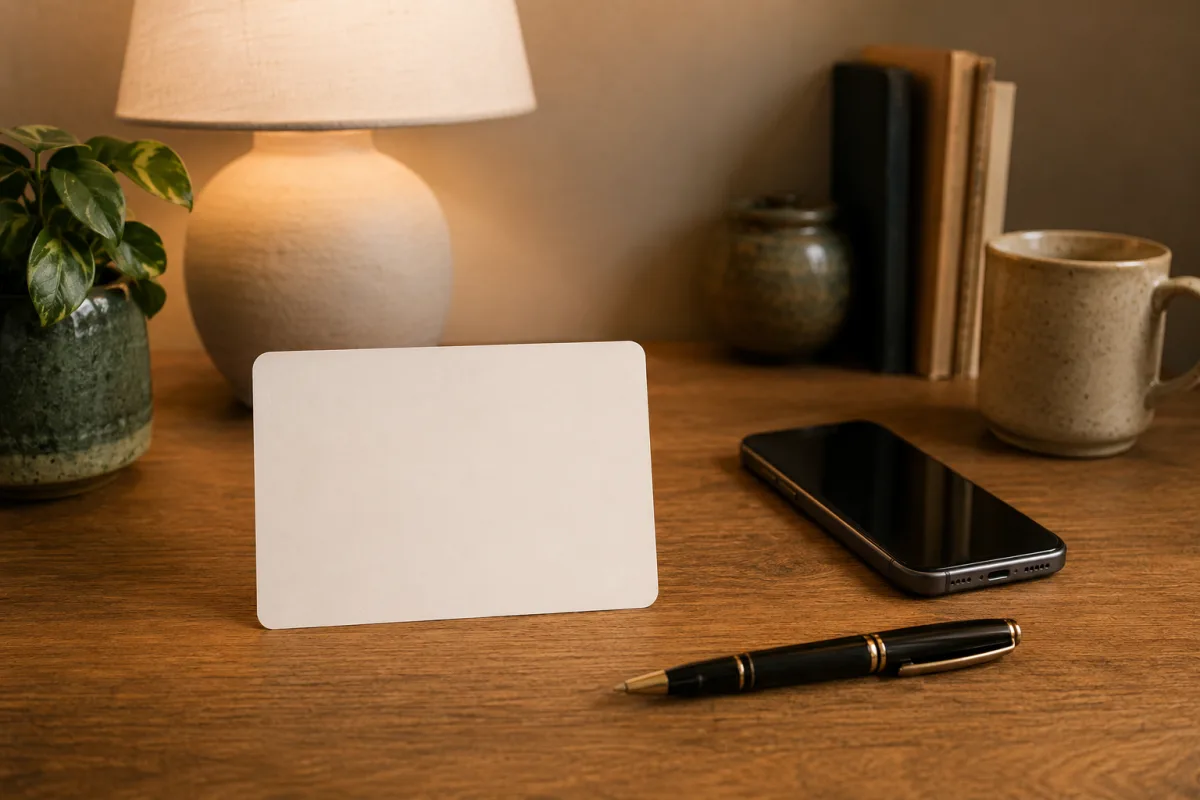
Write crisis numbers, therapist contacts, medication instructions, and one trusted person's number on a card or in a phone favorite. Put it where you can find it when thinking is slow.
Do not rely on memory during a hard episode. Depression can make simple steps feel strangely distant.
If you might harm yourself or cannot stay safe, seek emergency help now. Environmental support is not enough in that moment.
Use The Bedroom For Recovery Cues
A bedroom can become a cave during depression. Add one cue that points toward care: clean clothes in reach, a morning playlist, a lamp, or a glass of water.
If the bed is the only place you can function today, reduce harm there: remove trash, keep water nearby, and set one check-in alarm.
The point is not to shame yourself out of bed. It is to make the next step less far away.
Create A Low-Energy Path
Walk the path from bed to bathroom, kitchen, door, or medication. Remove the smallest obstacles: laundry piles, cords, boxes, or things that make you avoid the path.
A low-energy path is a practical feng shui idea: reduce friction where energy is already low.
If movement is part of your treatment plan, make the first two minutes easier rather than planning a full workout.
Think in doorways. If every doorway asks you to step over something, find a bag, bin, or chair and clear only that route. The room can stay imperfect while the path becomes usable.
Avoid Magical Promises
Be careful with advice that claims a mirror, crystal, plant, or money corner can cure depression. That kind of promise can create more shame when symptoms stay.
Mayo Clinic says psychotherapy and medications are effective for many people with depression: Mayo Clinic depression treatment.
Use objects as reminders, not replacements for treatment.
Invite Warmth Without Clutter
Choose one warm cue: a blanket, lamp, plant, photo, or clean mug. Too many objects can become another mess to manage.
If a plant helps you notice time passing, choose one that survives neglect. If it becomes a guilt object, remove it.
A supportive room should not require constant performance.
Use Sound Carefully
Some people benefit from low music, white noise, or a morning alarm that is gentle instead of jarring. Others need quiet because sound feels irritating.
Try one sound cue for a week. Keep it if it helps you begin or transition; drop it if it makes the room feel crowded.
If depression comes with anxiety or jitteriness, stage fright coping has grounding ideas that can be adapted carefully.
Track What Actually Helps
After changing the room, write one sentence: did this help me eat, sleep, wash, connect, move, or ask for help? If not, it may be decorative rather than supportive.
A useful change should reduce friction in real behavior. A pretty change that adds upkeep may not be the right change during depression.
Keep what helps. Remove what quietly criticizes you.
Do not judge the change by mood alone. A room can help even if you still feel depressed, because it may help you take one meal, one shower, one message, or one appointment more easily.
If a change makes you feel watched, pressured, or guilty, reverse it. A supportive room should feel like a handrail, not a scoreboard.
Make One Weekly Reset
Choose one repeating reset that takes less than fifteen minutes: empty the trash, change pillowcases, refill water bottles, collect dishes, or put clean clothes in one visible place.
Tie the reset to something that already happens, such as a therapy appointment, a grocery delivery, a Sunday call, or the day medication is sorted.
If you live with someone, ask for a specific task instead of asking them to help more. Clear requests are easier to accept and harder to misunderstand.
The reset is not proof that you are cured. It is maintenance for a space that has to carry you on days when energy is thin.
If fifteen minutes is too much, make the reset five minutes. The size should match the day, not an ideal version of you.
Talk To Someone About The Setup
If you have a therapist, doctor, support worker, or trusted friend, describe the room honestly. Mention where you get stuck: bed, bathroom, food, phone calls, clutter, or leaving the house.
Another person may notice a simple change you cannot see from inside the episode. They may also help decide when symptoms need more care.
For depression, the strongest room plan is the one that makes treatment, connection, food, sleep, and safety easier to reach.
If you are arranging support for an older family member, motivating an elderly loved one may help you think about dignity, patience, and practical encouragement.
Frequently Asked Questions
Can feng shui cure depression?
No. It can support daily care, but depression may need therapy, medication, medical evaluation, or crisis support.
What room change should I start with?
Clear one surface and put water, contacts, medication instructions, or a lamp within reach.
Does light help low mood?
Morning light can support routine, but persistent depression should be discussed with a clinician.
What if I cannot clean?
Pick one tiny area and stop there. The goal is less friction, not a perfect room.
When is depression urgent?
Seek urgent help for thoughts of self-harm, inability to stay safe, psychosis, or severe worsening symptoms.
This article is for general information only and isn't a substitute for medical or mental health advice. If symptoms affect daily life, talk with a qualified professional.

Patrick Harwood
Edits sports, consumer-finance and general legal explainers. Regulated or time-sensitive topics link to primary sources and are not professional advice.


Leave a reply
Replying to