
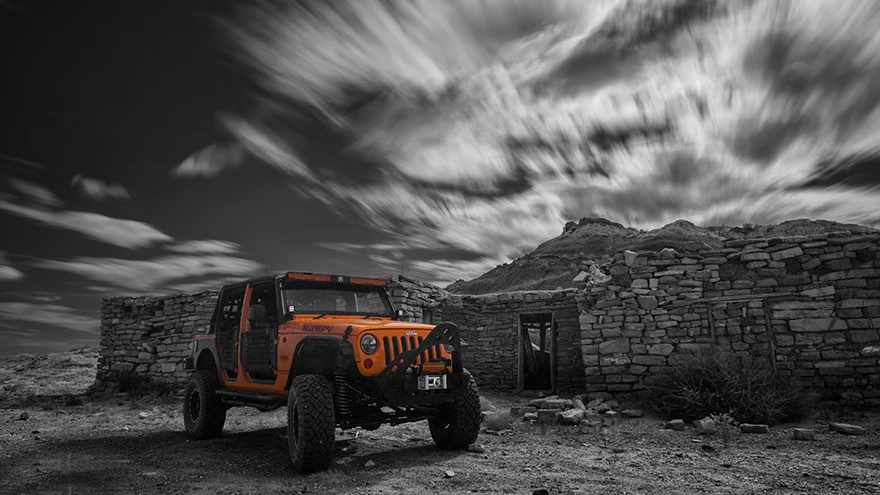
Four Wheel Drive Tours Around Tombstone, AZ Need Planning
Four wheel drive tours around Tombstone, AZ can mean several different things: a guided UTV ride, a self-guided back-road loop, a ghost town drive, or a high-clearance route through desert and mountain country. The fun is real, but the desert does not reward vague planning.
Arizona Highways' Ghost Town Trail guide describes the Tombstone-to-Pearce route as 34 miles one way and warns that back-road travel can be hazardous. That warning should shape the trip before the first turn.
Check weather, road status, fuel, daylight, tires, and water. Do not treat dirt roads like theme rides. Many are remote, exposed, and slow.
Start With the Ghost Town Trail
The classic idea near Tombstone is a ghost town route through or near Gleeson, Courtland, and Pearce. This is the kind of drive that appeals to travelers who want history, open country, old mining remains, and quiet roads.
Explore Cochise describes the Cochise County Ghost Town Trail as visiting towns such as Fairbank, Gleeson, Pearce, and Millville. Use that as a history frame, then verify the exact route and road conditions before driving.
Do not enter unstable ruins, mines, or private property. Photograph from safe public areas, respect fences, and leave artifacts where they are. Old sites are not playgrounds.
For another remote Western route that needs preparation, Livecub's Spiral Jetty travel guide is a useful planning comparison.
Best Seasons and Weather Checks
Spring and fall usually make the most comfortable desert driving windows. Summer heat can make a small delay feel serious, and winter storms can still change higher or shaded roads.
Check the forecast for Tombstone, the Dragoon Mountains, and nearby towns rather than looking at one broad Arizona forecast. Desert weather can be local, and rain miles away can affect washes.
Turn around early if the route starts looking worse than expected. A good back-road day does not require finishing every mile.
Middlemarch Road and the Dragoon Mountains
Middlemarch Road is another well-known back-road option from Tombstone toward the Dragoon Mountains. It offers open desert views, mountain scenery, and a more rugged feel than a paved sightseeing loop.
Arizona Highways' Middlemarch Road guide lists it as 26.6 miles one way from Tombstone and says a high-clearance vehicle is recommended, while four-wheel drive is not necessary in good weather. That "good weather" phrase matters.
Rain can change desert roads quickly. Washes, ruts, mud, loose rock, and heat can all turn a simple drive into a problem. If the forecast looks rough, postpone the route.
Livecub's walking stick adjustment guide is handy if you plan to add short hikes or photo stops to a back-road day.
Cochise Stronghold and Forest Roads
The Dragoon Mountains are tied to Cochise Stronghold, a striking landscape with dirt-road access and limited services. It can make sense as part of a broader day if your route, vehicle, and timing fit.
The Coronado National Forest's Cochise Stronghold page says dirt roads surround the Dragoon Mountains and are required to visit sites there. It also notes that potable water is not available at the site.
Carry more water than you think you need. Bring a paper map or downloaded offline map, because service can be unreliable. Tell someone where you are going and when you expect to return.
Remote scenery still needs logistics. The less developed the stop, the more your preparation matters.
Guided Tours Versus Self-Guided Drives
A guided UTV or four-wheel-drive tour can be easier for visitors who do not know the roads, do not have a suitable vehicle, or want local interpretation. The tradeoff is cost, schedule, group pace, and availability.
A self-guided drive gives more flexibility, but you carry more responsibility. You need the right vehicle, route research, navigation, recovery basics, and judgment about turning around.
Before booking any guided operator, check recent reviews, cancellation terms, age rules, safety gear, insurance language, and whether the route matches the experience you want. A ranch ride, ghost town road, and technical off-road trail are not the same trip.
Questions to Ask Before a Guided Ride
Ask what vehicle is used, who drives, how long the route lasts, how dusty or rough it gets, and whether helmets, goggles, or other gear are supplied. Ask if the trip is scenic, historical, technical, or family-oriented.
Confirm age, height, and mobility rules before paying. Some rides may not suit very young children, pregnant travelers, people with back problems, or anyone who cannot handle rough movement.
Ask about weather cancellation. A careful operator should have clear rules for heat, lightning, heavy rain, poor road conditions, and refunds or rescheduling.
Vehicle and Safety Basics
For easy dirt roads in good weather, high clearance may be enough. For rougher routes, four-wheel drive can help with traction, clearance, and control. Know the difference before you commit.
Bring water, snacks, sun protection, first-aid supplies, spare tire gear, a charged phone, offline maps, and layers. Summer heat can be severe, and winter mornings can still be cold.
Drive slowly through dust, washes, and blind corners. Do not race past homes, ranch gates, hikers, livestock, or other travelers. Leave gates as you found them.
Livecub's Nevada meteorite places article offers another desert-travel example where maps, access rules, and land respect matter.
Navigation and Access
Do not rely on a single phone app. Download offline maps, carry a paper map, and know the name of the road you plan to take. Screens are less useful when batteries die or service drops.
Land ownership can change across a route. Public roads, private ranch land, forest roads, and historic sites may sit near each other. Stay on legal roads and respect posted signs.
Slow travel is the point. If you rush, you miss the scenery and raise the chance of a tire, dust, or navigation problem.
How to Build a Tombstone Back-Road Day
Start early. Have breakfast, fuel the vehicle, check tires, download maps, and carry water before leaving Tombstone. Pick one main route instead of trying to collect every dirt road in one day.
Add time for slow driving. A 30-mile route can take much longer on washboard, gravel, and photo-heavy roads than it does on pavement. Build in a turnaround time so you are not navigating remote roads after dark.
Keep Tombstone itself in the plan. A back-road day works better when paired with a town walk, museum stop, or quiet dinner instead of a rushed checklist.
For another Southwest side trip, Livecub's Laughlin sightseeing guide shows how desert routes work best when grouped by distance and daylight.
Photo Stops and Historic Sites
Plan photo stops where the vehicle can be fully off the travel lane without damaging plants or blocking other drivers. Desert roads can be narrow, and dust can hide approaching traffic.
Use a longer lens or crop later instead of climbing on ruins, mine remains, fences, or old equipment. Many historic places are fragile, unsafe, or privately owned. A respectful photo is better than a dangerous close-up.
Morning and late afternoon usually give better light and cooler temperatures. Midday can be harsh for photos and harder on travelers, especially if the route involves standing in exposed sun.
What Not to Do
Do not drive into a wash if you cannot see the exit. Do not cross flooded roads. Do not assume a rental car agreement allows rough-road travel. Do not follow random tire tracks just because they look interesting.
Do not collect artifacts, disturb graves, enter mines, or cut fences. The landscape around Tombstone has real history, and some of it is dangerous or protected.
If a route feels wrong, leave it for another day. The best travel story is the one where everyone gets back with the vehicle intact. Safety wins every single time.
Frequently Asked Questions
Do I need four-wheel drive near Tombstone?
Not for every route. Some roads may only need high clearance in good weather, while rougher or wet roads may require four-wheel drive.
What is the Ghost Town Trail near Tombstone?
It is a back-road route associated with old Cochise County mining towns such as Gleeson, Courtland, and Pearce.
Are guided off-road tours available around Tombstone?
They may be, but availability changes. Check current operators, safety rules, route details, and recent reviews before booking.
What should I bring on a Tombstone back-road drive?
Bring water, maps, sun protection, first-aid supplies, tire gear, snacks, layers, and a realistic route plan.

Olivia Prete
Edits culture and personal-development articles, distinguishing opinion and experience from verifiable claims.



Leave a reply
Replying to