
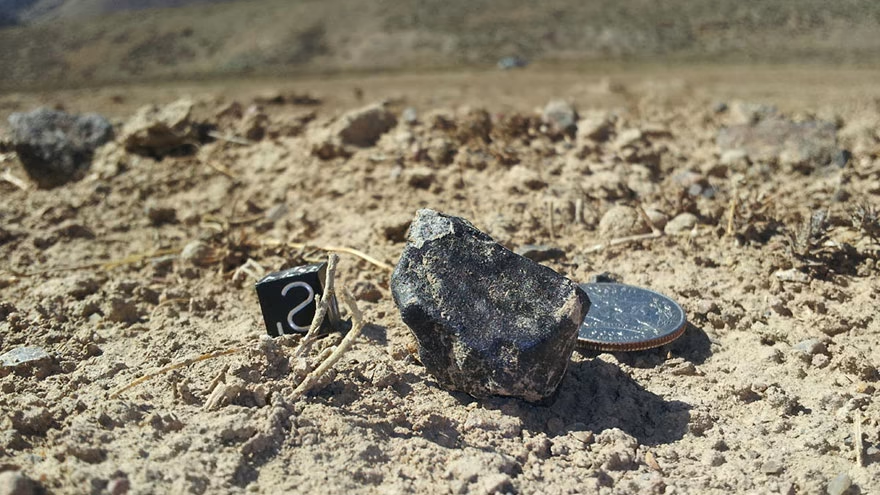
Nevada looks made for meteorite hunting: dry lake beds, desert pavement, long sight lines, and bare ground where dark stones stand out. But places to find meteorites in Nevada cannot be treated like a treasure map with no rules. The best search area is only useful if you can legally be there, safely travel there, and correctly identify what you find.
This guide is educational and not legal advice. Land status, collecting rules, fire closures, military boundaries, mining claims, tribal lands, private property, and vehicle restrictions can change. Before you collect anything, verify current rules with the land manager, county, BLM office, park authority, or property owner. Do not remove objects from protected sites.
Why Nevada Is Good Meteorite Country
Meteorites are easier to spot where vegetation is sparse and the surface is stable. Nevada has many dry basins, playas, desert roads, and open public-land landscapes. That does not mean meteorites are common. It means the background can make searching more practical than in forests or wet soil.
The Southwest has produced many documented finds because dry conditions slow weathering and dark fusion-crusted stones can contrast with pale ground. If you are planning a desert side trip, Livecub's things to see around Laughlin, Nevada can help with regional travel planning, though meteorite hunting needs its own land-status research.
Can You Collect Meteorites On BLM Land?
The Bureau of Land Management meteorite policy allows casual collecting of small quantities of meteorites from public lands under specific limits, while commercial collection and scientific collection have different requirements. The details matter. Casual collecting is not the same as digging, selling, using heavy equipment, or entering closed areas.
Check the local BLM field office before a trip. Ask about land status, road access, wilderness restrictions, fire restrictions, and whether the area has special designations. Nevada has large areas of public land, but public does not mean unrestricted. A legal search starts before the boots leave the car.
Use more than one map. Compare BLM surface management maps, county parcel tools, wilderness boundaries, park maps, and current road reports. A phone map that only shows a dirt road is not enough. The question is not only "Can I drive there?" It is "Who manages the land, what rules apply, and what can I do once I arrive?"
Where Should You Not Search?
Do not collect meteorites in national parks, state parks, tribal lands, private land, military ranges, closed conservation areas, archaeological sites, or active mining claims unless you have clear permission and the rules allow it. The National Park Service generally protects natural objects in parks, and removing rocks or meteorites can violate park rules.
Private land requires permission even if the ground looks empty. Mining claims can also complicate access. If a gate, sign, fence, or map suggests uncertainty, stop and verify. A meteorite is not worth a trespass problem or damage to sensitive desert ground.
Which Nevada Landscapes Are Worth Checking?
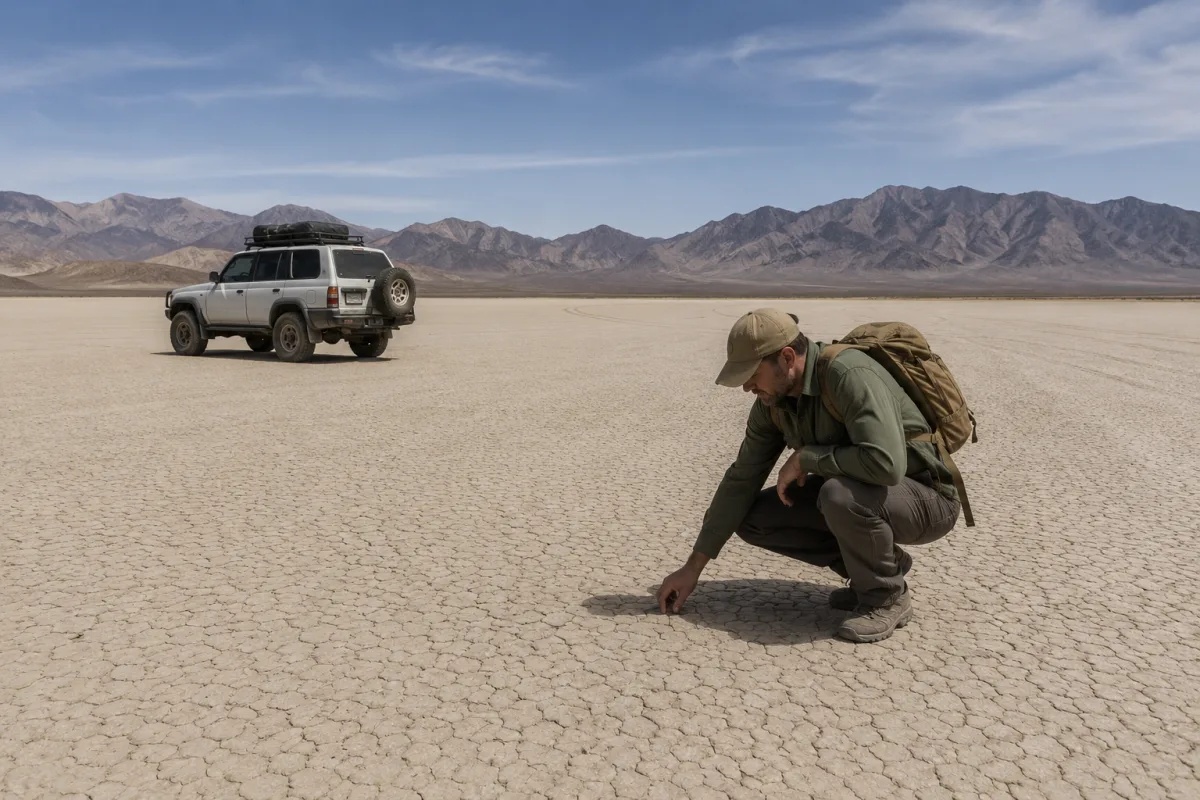
Dry lake beds and desert pavements are the classic search surfaces because dark stones are easier to notice. Areas around known finds may be interesting, but do not assume the exact spot is open or legal. Use maps, land agency layers, recent road reports, and weather conditions before choosing a route.
Remote basins can look simple on satellite maps and become difficult on the ground. Muddy playas can trap vehicles. Summer heat can become dangerous quickly. Bring water, sun protection, tire repair gear, maps, and a way to communicate without cell service. Livecub's walking stick adjustment guide is basic, but it points to a broader rule: desert travel works better when gear is fitted before the trip.
Some hunters prefer broad dry lake margins, while others work desert pavement near known fall regions. Either way, avoid treating old forum posts as permission. Roads wash out, claims change, and access can close. A good plan includes a backup site and a clear turnaround time before heat, darkness, or fuel becomes a problem.
How Do You Identify A Possible Meteorite?
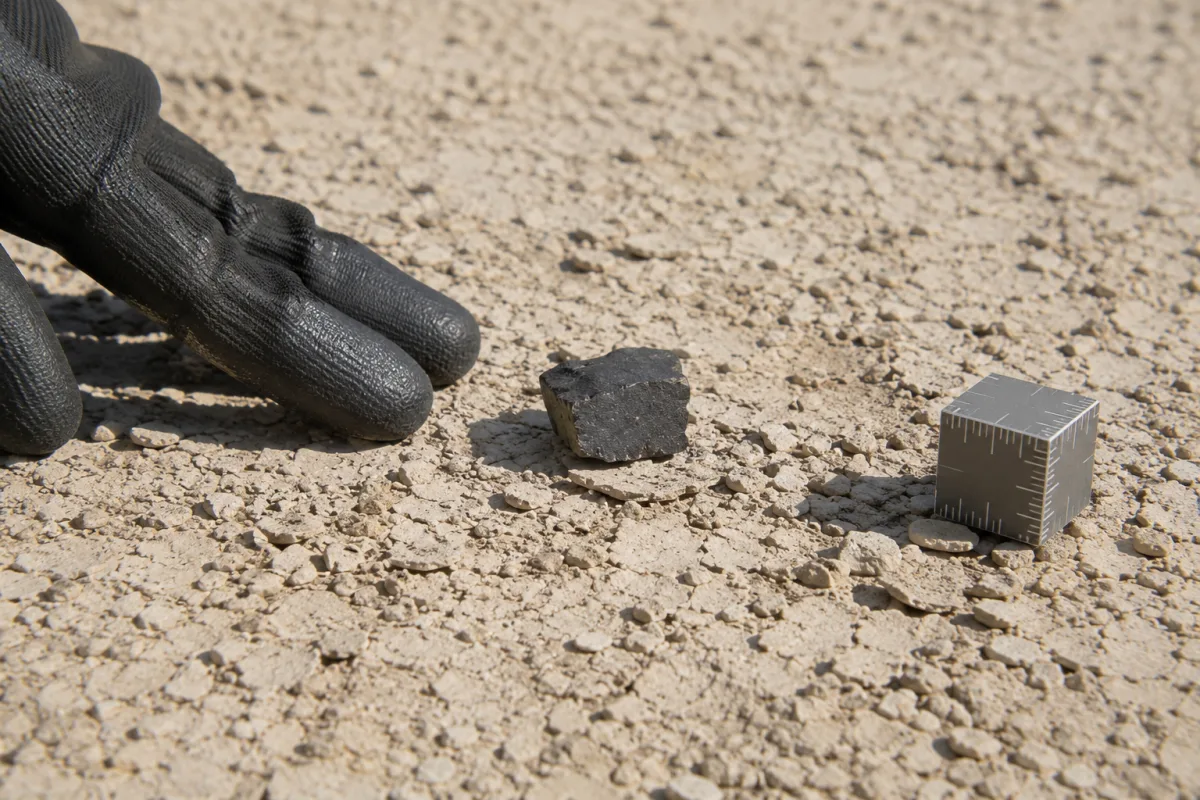
A fresh meteorite often has a dark fusion crust, dense feel, and sometimes attracts a magnet. Many have small metal flecks or chondrules inside. Many earth rocks also fool beginners. Slag, basalt, magnetite, hematite, and industrial debris are common false alarms. Do not rely on one clue.
The Lunar and Planetary Institute meteorite education resources explain that meteorites are scientifically valuable and identification should be careful. If you suspect a real find, photograph it in place, record GPS coordinates, note the surface, and avoid cleaning it aggressively. Context helps scientists and collectors evaluate the find.
Handle candidate stones with patience. A magnet test can help, but it can also mislead. Weight, shape, crust, interior texture, and find context all matter. If the stone has bubbles, glassy slag texture, or a rusty industrial look, it may be terrestrial debris. Keep your excitement, but let evidence carry the claim.
What Tools Should You Bring?
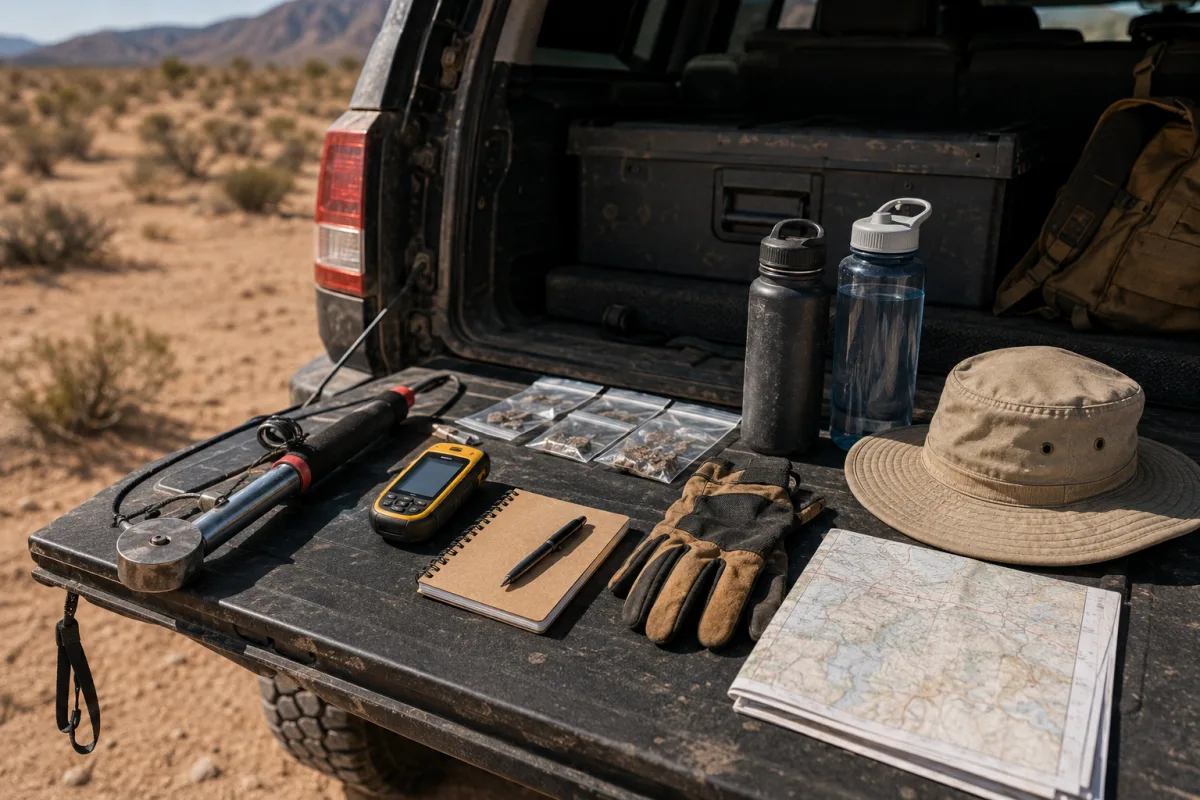
Bring a magnet on a stick, GPS or offline map, small scale, notebook, phone or camera, gloves, sample bags, permanent marker, sun hat, sturdy shoes, water, first-aid supplies, and a trash bag. Do not bring heavy digging tools for casual public-land searching. Surface hunting is usually the cleaner, safer approach.
Use a grid when searching. Walk slowly, keep your eyes ahead of your feet, and mark where you turned. Random wandering gets tiring and makes it hard to know what ground was covered. If you are traveling to a remote art-and-landscape site too, Livecub's Spiral Jetty visiting guide has the same lesson: remote dry landscapes demand planning.
How Should You Record A Find?
Record date, time, GPS coordinates, photos before moving, nearest public road, land status, weight, magnetic response, surface description, and any nearby stones that look related. Put each sample in a separate bag. Do not mix location data. A stone without context is less useful, even if it turns out to be real.
If you believe the find may be scientifically valuable, contact a university geology department, museum, or meteorite identification lab before cutting or polishing it. Some labs require a small sample for classification. Be patient. Most suspected meteorites are not meteorites, and honest rejection is part of the hobby.
Do not scrub away the surface story. Dirt can be brushed off gently, but harsh cleaning can damage fusion crust or remove material useful for study. Label first, clean later, and only as advised. Good documentation is what separates a careful find from a random dark rock in a box.
Respect other searchers as well. Do not crowd someone working a grid, move their markers, or post their vehicle location online. Meteorite hunting depends on trust, quiet field habits, and leaving the landscape usable for the next person.
What Safety Risks Matter Most?
Heat, dehydration, road conditions, flash flooding, getting stuck, and loss of communication are bigger threats than most people expect. Tell someone where you are going. Carry more water than you think you need. Avoid playas after rain. Do not drive across surfaces that look damp or crusted over mud.
Respect desert travel etiquette. Stay on legal roads, avoid crushing vegetation, pack out trash, and leave archaeological or historical items alone. If you are mixing meteorite hunting with sightseeing, Livecub's Petoskey places guide is unrelated geographically but useful as a reminder that rock-focused travel still needs local rules.
Frequently Asked Questions
Can I keep a meteorite found in Nevada?
It depends on land ownership and current rules. Verify BLM, private, park, tribal, military, or claim status before collecting.
Are dry lake beds the best places to search?
They can be good search surfaces, but access, mud, closures, and land status matter more than appearance.
Are all magnetic rocks meteorites?
No. Many earth rocks and slag are magnetic. Use several clues and seek expert identification.
Can I collect in national parks?
Generally no. National parks protect natural objects. Check park rules, but do not assume collecting is allowed.
Should I share exact find locations online?
Be careful. Exact locations can draw crowds, trespass, and damage. Share responsibly and follow land rules.
What Is The Smartest Nevada Meteorite Plan?
Start with maps and rules, not rumors. Choose open legal land, travel prepared, search slowly, document anything interesting, and ask experts before making claims. Nevada can be excellent meteorite country, but the best hunters are patient, lawful, and careful with the desert.

Olivia Prete
Edits culture and personal-development articles, distinguishing opinion and experience from verifiable claims.



Leave a reply
Replying to