
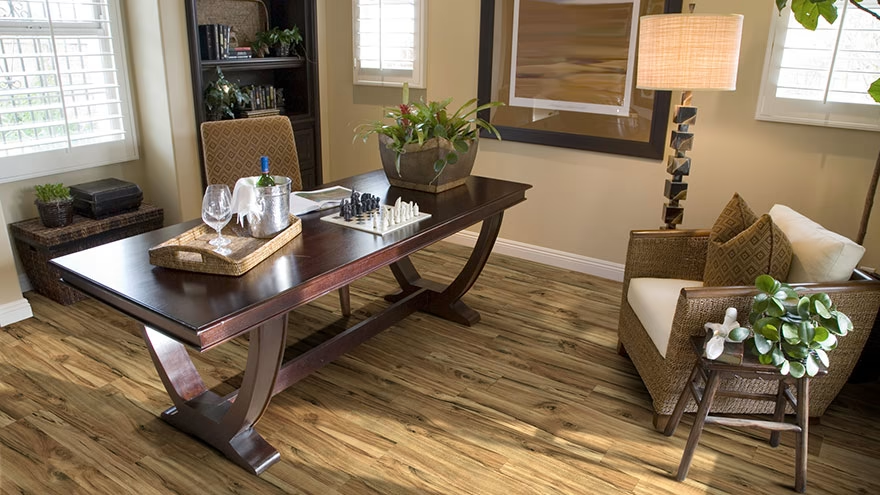
To feng shui a work space without turning your office into a superstition project, treat it as a layout audit with a cultural lens. Feng shui traditionally concerns the arrangement of buildings, objects, and space for harmony and balance; in a work setting, the practical value is that it makes you look at sightlines, clutter, light, movement, and the emotional tone of the desk you use every day. It will not guarantee a promotion or fix a hostile manager. It can, however, help you build a calmer, more intentional place to work.
What does feng shui a work space mean in practice?
National Geographic's education overview describes feng shui as an ancient Chinese art of arranging buildings, objects, and space to achieve harmony and balance. That definition, available from National Geographic Education, is the clean starting point.
For an office, translate it into practical questions. What do you see first, where does clutter collect, can you move easily, and does the room support the work you actually do?
Begin with the desk because it carries most of the decisions. A desk crowded with old mugs, tangled cords, stale sticky notes, and unrelated papers tells your brain that every task is already late. Clearing it is not just aesthetic. It reduces visual decisions before you start the work that pays you.
If you are in a cubicle, the same principle applies at a smaller scale. You may not control walls, overhead lights, or office traffic, but you can control your desktop, screen angle, chair setup, task zones, and one or two personal objects. For more conventional decor choices, personalizing an office cubicle pairs well with this approach.
Where should the desk go?
Traditional feng shui often favors a command position: you can see the door without sitting directly in the doorway's path. In practical office terms, that means fewer surprises behind your shoulder and less need to twist every time someone enters. If you can move the desk, place it so your back has a wall or solid surface behind it and your eyes can pick up entry movement.
Do not force the rule if it ruins the work. A perfect door view is not worth screen glare, a blocked walkway, or cables stretched across the floor. If your desk must face a wall, use a small mirror only if workplace policy allows it and it does not distract you. The goal is awareness, not theatrical staging.
For shared offices, avoid turning your desk into a barrier that makes collaboration awkward. Receptionists and administrative assistants, for example, often need sightlines that support visitors, phones, and supplies. The layout should match the role, much like the duties described in receptionist and administrative assistant office work.
How do light, air, and clutter change the desk?
Light is the fastest mood change in most offices. If you have a window, keep the area near it clean and use it for tasks that benefit from natural light. If you have no window, add a desk lamp with a shade that avoids glare on the monitor. Harsh light makes even a neat work space feel tense.
Air quality and scent require restraint. A living plant can soften a desk if allergies and office policy allow it. Strong candles, plug-ins, and oils can become a problem for coworkers, so do not use scent as a design tool in shared space. Fresh air, a clean trash bin, and dust-free surfaces do more than perfume.
Use the one-touch surface rule. The main work area should hold only the item you are using now, the tool you use constantly, and one small personal cue. Everything else needs a home: drawer, tray, shelf, or bag. Clutter is not a moral failing, but it is a tax on attention.
Which materials and colors should stay subtle?
Feng shui writing often discusses wood, metal, water, fire, and earth elements. In an office, use those as design prompts rather than literal prescriptions. Wood can be a frame or plant. Metal can be a lamp or organized file tray. Water can be a clean glass, not a noisy fountain that annoys the room.
Color should support the work mood. A red object may energize a desk, but a red wall behind your monitor may strain attention. Blue and green can feel steady, but too much cool color can make a room feel flat. Neutrals help only if they are not allowed to turn into visual fatigue.
Choose one accent at a time. A framed photo, a plant, a small object tied to a goal, or one piece of art is enough for most desks. The old advice to fill a "wealth corner" can become clutter quickly. A cleaner version is to place work tools where you can reach them and keep reminders of success visible but not shouting.
How do you blend feng shui with ergonomics?
Any feng shui work space has to respect the body. OSHA's computer workstation guidance describes neutral body positioning with wrists and forearms roughly parallel to the floor, head level, shoulders relaxed, feet supported, and back supported. The details are in OSHA's computer workstation positions guide.
That means the most beautiful desk placement fails if your neck hurts by noon. Raise the monitor, move the keyboard, adjust the chair, and place the mouse where your shoulder can stay relaxed. NIOSH explains that ergonomics is the design of work tasks to fit worker capabilities and reduce work-related musculoskeletal disorders; its overview is on the CDC's NIOSH ergonomics page.
Also plan movement. Staying in one posture too long can wear on the body even if the posture is good. Stand for a short task, walk during a call if appropriate, stretch hands between long typing blocks, and reset the chair after someone else uses it. This is also tied to alertness; small movement breaks can support the same daily goal as staying awake at work without leaning only on caffeine.
A simple weekly reset helps. Check the chair height, wipe the screen, clear old papers, refill supplies, and remove anything that has drifted onto the desk without earning a place. Five minutes can return the room to its intended use.
What if you share a cubicle or small office?
Shared space needs social feng shui. Keep common walkways clear, do not use noisy decor, and ask before adding plants, scents, lamps, or objects to shared surfaces. A peaceful desk that irritates three coworkers is not peaceful in practice.
If a coworker is rude or dismissive, a desk rearrangement will not solve the behavior. It may still help you feel less exposed, but conflict needs direct boundaries, documentation, or management support when needed. Pair the physical reset with interpersonal tools, including the kind used for dealing with a rude coworker.
Small spaces benefit from zones. Put active work in front, reference files to one side, personal items in one tight area, and supplies in a drawer. Give every object a reason to be visible. If it does not help you work, calm down, or remember a real priority, it probably belongs somewhere else.
Noise deserves the same attention as objects. If policy allows it, keep simple headphones, a soft notification setting, or a scheduled focus block so the space protects attention as well as appearance.
Frequently Asked Questions
Do I have to believe in feng shui for this to work?
No. You can use feng shui as a design tradition and still judge the result by practical outcomes: less clutter, better sightlines, fewer distractions, and a desk that supports your tasks.
What is the best desk position for feng shui?
If possible, sit where you can see the door without being directly in the doorway path, with solid support behind you. Do not choose that position if it creates glare or body strain.
Can I feng shui a cubicle?
Yes. Focus on the parts you control: desktop clutter, monitor angle, lighting, one personal object, cable order, and how easily you can move in and out.
Should I use plants in a work space?
Use plants only if office policy, light, care, and coworker allergies make sense. A healthy small plant is better than three neglected ones.
The best feng shui work space feels like it belongs to the job and the person doing it. Put the desk where you can think, keep the body comfortable, and let every visible object earn its spot.

Linda Fehrman
Edits general wellness and relationship explainers. Health material is educational, avoids diagnosis and links to health-authority guidance.

Leave a reply
Replying to