

How to Invest in Low Cost Stocks with Little Money starts by separating low cost from low price. A $2 stock can be expensive for the risk it carries, while a $200 stock can be accessible through fractional shares.
The goal is not to find the cheapest ticker. The goal is to invest small amounts with costs, risk, diversification, and scams in view.
Define Low Cost
Low cost can mean low commissions, low fund fees, small minimums, or fractional shares. It does not have to mean penny stocks.
Start by deciding how much can be invested without touching rent, food, insurance, debt payments, or emergency savings.
Use Fractional Shares
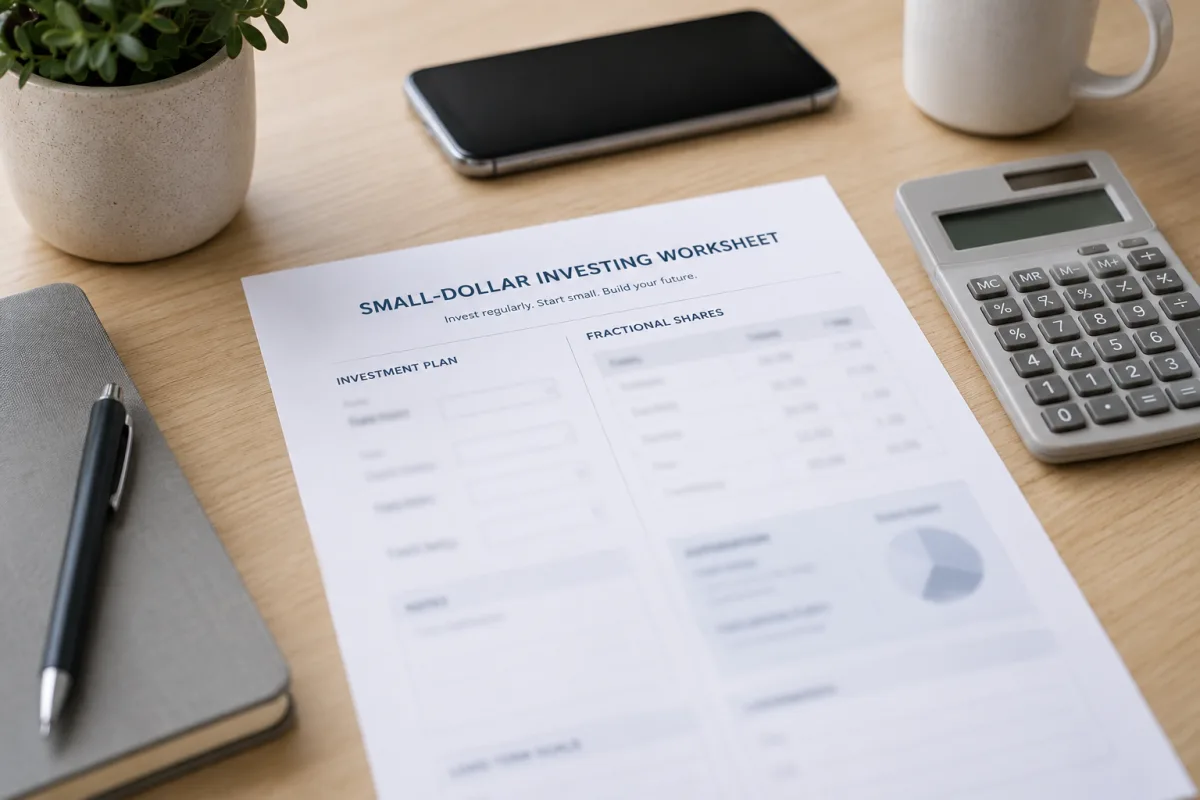
Investor.gov explains that fractional shares let investors buy less than one full share when they do not have enough money for a full share: Investor.gov fractional shares.
This can help a small investor buy a dollar amount of a larger company or fund instead of chasing very low share prices.
Check Fees
A no-commission trade can still have spreads, fund expenses, transfer fees, account fees, or tax costs.
Read the brokerage fee schedule before opening the account. Small accounts feel fees faster.
Avoid Penny Stock Hype

Investor.gov says microcap stocks are among the riskiest investments and may have little public information, low trading volume, and fraud risk: Investor.gov microcap risk.
A cheap share price does not make a company safer. It may simply be a small, weak, or thinly traded company.
Consider Funds
A broad stock fund can provide exposure to many companies with one purchase. That may reduce single-company risk for a small account.
If buying individual stocks, keep position sizes small enough that one mistake does not wreck the plan.
Start With A Schedule

A small monthly amount can build the habit better than one dramatic buy. Automatic deposits can help if the budget is stable.
Do not automate money you may need next week. Investing small works only if the cash can stay invested.
Research The Company
Investor.gov says stock ownership represents a share of ownership in a company: Investor.gov stocks.
Read what the company does, how it makes money, whether it is profitable, and what risks the filings describe.
Use Limit Orders Carefully
With thinly traded stocks, the price can move quickly. A market order may fill at a worse price than expected.
Small investors should understand order types before buying low-volume securities.
Diversify Slowly
A small account may not be diversified on day one. Build toward diversification as deposits accumulate.
Livecub's $100 Treasury bond guide can help compare small-dollar investing outside stocks.
Avoid Social Media Promises
Ignore strangers promising quick profits, secret tickers, or guaranteed returns. Scammers often target people with little money and big urgency.
If the pitch says you must act today, slow down. Real investing does not need panic.
Track Taxes
Selling at a gain can create taxable income. Dividends may also be taxable in a regular brokerage account.
Keep confirmations and year-end forms, even if the account is small.
Learn With Small Money
A small account can be a classroom. Track what you bought, why you bought it, what could go wrong, and when you will review it.
Livecub's teaching kids about money guide can help turn the habit into a family money lesson.
Use Calculations
Before buying, write down price, dollar amount, number of shares, fees, and the percent of the account in that position.
Livecub's financial calculator guide is bond-focused, but the discipline of checking inputs applies to stocks too.
Emergency Cash First
Investing with little money works better when a small cash buffer exists. Otherwise the first surprise bill can force a sale.
Even one month of basic expenses can protect the investing habit from being interrupted.
Dollar Amount Orders
Some platforms let investors enter a dollar amount instead of a share count. That can be easier for small budgets.
Check if dollar orders are available only for certain stocks or funds.
Dividend Reinvestment
Dividend reinvestment can buy more shares automatically, including fractional shares where available.
Automatic reinvestment is useful only if the investment still fits the plan.
Broker Safety
Use a registered brokerage and protect login information. Check the firm and professional through official tools before sending money.
A slick app or social media account is not proof of registration.
Position Cap
Set a rule such as no single stock over a certain percent of the account. The number can be small while learning.
A cap keeps one exciting idea from becoming the whole account.
Review Day
Pick one day each month to review deposits, holdings, fees, and reasons for owning each position.
Looking every hour teaches anxiety. A review day teaches process.
Cash Drag
Tiny amounts left uninvested are normal in small accounts. Do not force a trade only to use every cent.
A small cash balance is better than buying something poor just to feel fully invested.
Account Minimums
Some accounts have no minimum; others require a deposit or minimum balance. Check before opening so small money does not get stuck in an account with fees.
A low minimum helps only if the platform also offers the investments you want.
Taxable Account Reality
A regular brokerage account is flexible, but gains, dividends, and sales can create tax forms.
Small investors should still download tax documents and keep trade confirmations.
Fund Expense Ratios
If using funds, compare expense ratios. A low-cost broad fund can be easier to hold than several tiny stock positions.
A fund fee may look small, but over years it quietly affects return.
Bid Ask Spread
The bid-ask spread is the gap between what buyers offer and sellers ask. Thinly traded low-priced stocks can have wide spreads.
A wide spread can make the trade expensive before the stock even moves.
Practice Watchlist
Before buying, build a watchlist and write why each stock interests you. Wait a week and see if the reason still makes sense.
This slows down impulse buys driven by social media or a one-day price jump.
No Borrowed Money
Avoid borrowing to buy low-priced stocks. Small investors can lose more than confidence when debt enters the trade.
If the idea only feels exciting with borrowed money, the risk is already too high.
Emergency Exit
Decide ahead how you will sell if the reason for owning the stock breaks. That might be a business change, accounting concern, or risk level.
A sell rule is not panic. It is part of owning individual stocks responsibly.
Keep Learning
Read brokerage education pages, company filings, and plain-language investor resources. Do not rely on influencers who never discuss losses.
Good investing with little money is mostly process, not a secret ticker.
Use A Broad Base
Consider building a broad base before buying many single stocks. A small broad fund position can reduce dependence on one company.
Single-stock lessons are fine, but the account should not become five guesses and no plan.
Deposit Rule
Set a deposit rule tied to payday, such as a small amount after bills clear. This prevents investing money needed for immediate expenses.
If the budget changes, pause the deposit rather than selling in a rush later.
Avoid Margin
Margin lets investors borrow against the account. For small accounts, it can turn a learning mistake into debt pressure.
Keep the account cash-only until the risks are understood in plain language.
Company Filings
For individual stocks, read annual and quarterly filings, not just headlines. Look for revenue, debt, profit, cash flow, and risk factors.
If the business cannot be explained simply after reading, it may not be a good learning purchase.
Compare Alternatives
Low-cost stock investing is not the only small-money choice. Savings accounts, Treasury securities, and debt payoff may be better for short-term goals.
The right place for money depends on timeline, risk, and why the money is being saved.
Frequently Asked Questions
Can I invest in stocks with $10?
Some brokerages allow small dollar amounts and fractional shares, but fees, spreads, and account rules still matter.
Are low-priced stocks safer for beginners?
No. Low share price can hide high risk, low trading volume, weak companies, or fraud.
What are fractional shares?
Fractional shares are less than one full share, allowing investors to buy a dollar amount instead of a full share.
Should I buy penny stocks with little money?
Be cautious. Microcap and penny stocks can be risky, thinly traded, and vulnerable to manipulation.
What should I do before buying?
Check emergency savings, fees, company information, diversification, taxes, and whether the money can stay invested.
Investing in low cost stocks with little money is possible, but cheap is not the same as safe. Use small amounts, low fees, research, and patience.

Patrick Harwood
Edits sports, consumer-finance and general legal explainers. Regulated or time-sensitive topics link to primary sources and are not professional advice.




Leave a reply
Replying to