

Staying positive in a negative world does not mean acting cheerful while everything burns. That kind of positivity wears people out. A better goal is honest steadiness: see what is hard, protect what you can, and keep choosing useful action.
The world may feel loud, angry, unfair, or unstable. Your response does not have to be loud to be strong.
Use Honest Optimism
Mayo Clinic explains that positive thinking is not ignoring unpleasant situations, but approaching them in a more productive way: Mayo Clinic positive thinking. That sentence is a helpful boundary.
Honest optimism says: this is hard, and I can take one step. False positivity says: this is fine, and I should not feel bad. Choose the first.
Limit The Firehose

News and social feeds are designed to keep attention moving. You can stay informed without letting every alert move into your nervous system. Pick windows for news, keep the phone away from the bed, and avoid comment sections when you are already tense.
A media boundary is not ignorance. It is attention management.
If social pressure hits your body or voice, Livecub's guide to stage fright may help with the feeling of being watched.
Name What You Can Control

Write three columns: mine, shared, not mine. Mine might be sleep, tone, spending, apology, vote, meal, movement, and who I call. Shared might be family rules or work systems. Not mine might be strangers' opinions or yesterday's decision.
Positivity becomes more realistic when it is tied to the first column. Trying to control the third column often creates bitterness.
Take One Useful Action
Action protects hope from turning into a slogan. Send the email, donate if you can, help a neighbor, clean the kitchen, walk outside, schedule the appointment, or repair one mistake.
Small logs can show progress; Livecub's food journal article is one example of noticing patterns through repeated notes.
Build Resilience Without Pretending
APA describes resilience as adapting well amid adversity, trauma, tragedy, threats, or major stress: APA resilience guide. Resilience is not a personality type. It is a set of supports and habits that can be built.
That may include sleep, movement, close relationships, spiritual practice, therapy, medication, humor, service, boundaries, or a routine that gives the day shape.
Choose Better Company
Some people tell the truth without draining all oxygen from the room. Others turn every conversation into doom, mockery, or outrage. Notice who leaves you clearer and who leaves you depleted.
You may not be able to avoid every negative person, but you can shorten exposure, change topics, stop explaining, or plan recovery after hard interactions.
Use Gratitude Carefully
Gratitude can steady attention. It can also be misused to silence pain. Try a two-part practice: one thing that hurt today and one thing that helped. This keeps gratitude from becoming denial.
Examples can stay small: warm socks, one honest text, a working bus, a quiet hallway, a meal, a kind nurse, a finished task.
Protect The Body
The mind is harder to steady when the body is running on no sleep, no food, too much alcohol, no movement, or constant noise. Positivity is not only a thought pattern. It is also a body with limits.
If pressure is tied to performance, Livecub's article on tryout nerves offers concrete preparation steps.
Know When Positive Thinking Is Not Enough
NIMH encourages self-care habits while also directing people to seek help when symptoms or safety concerns appear: NIMH mental health self-care. If you are depressed, panicking, numb, unsafe, or thinking about self-harm, positivity is not the plan. Care is the plan.
Communication changes can also signal distress. Livecub's piece on selective mutism shows why silence should not be dismissed as attitude.
Make A Nightly Close
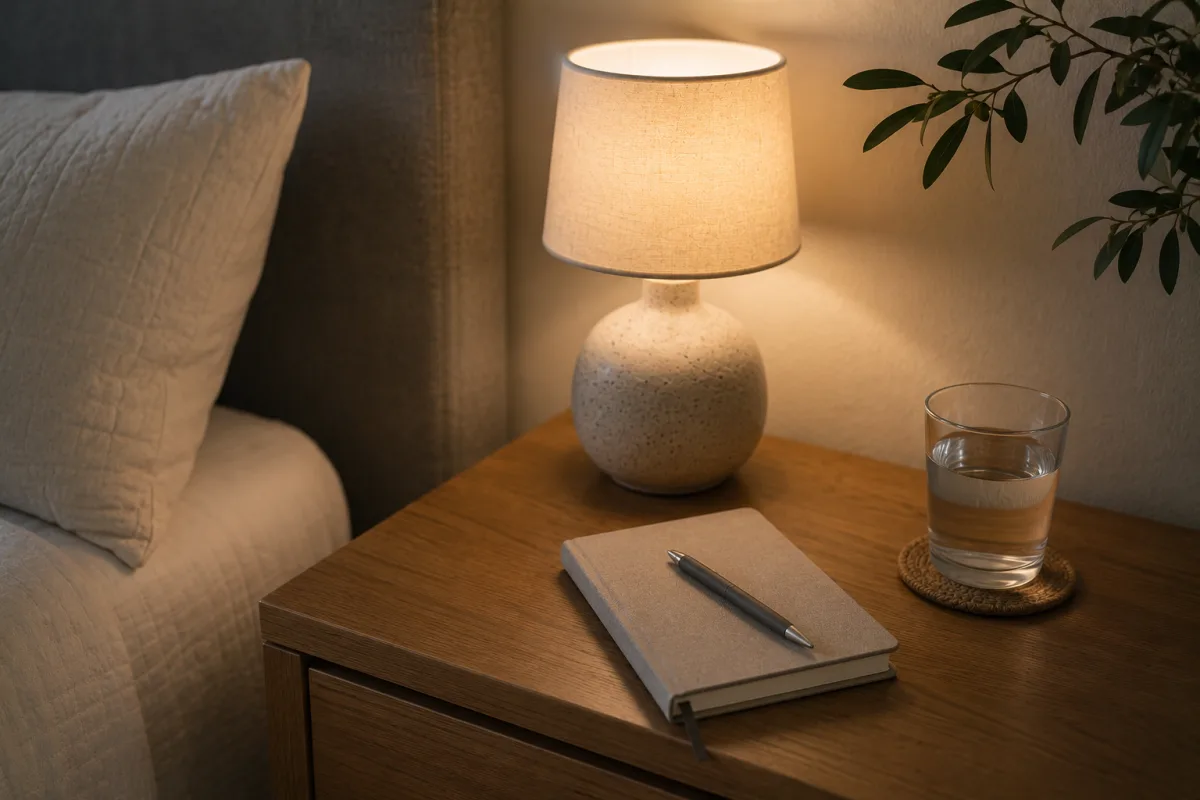
At the end of the day, write: what I did, what I could not fix, what I need tomorrow. Then stop. The stop is part of the practice.
The world will still be unfinished when you sleep. Rest is not a betrayal of concern. It is how you return with a clearer mind.
Keep Hope Practical
Hope does not always feel bright. Sometimes it looks like keeping a boundary, cooking dinner, calling the doctor, showing up sober, or telling the truth in a room that prefers denial.
That kind of positivity is quieter, but it lasts longer. It lets you stay human without pretending the world is easier than it is.
Create A Bad News Routine
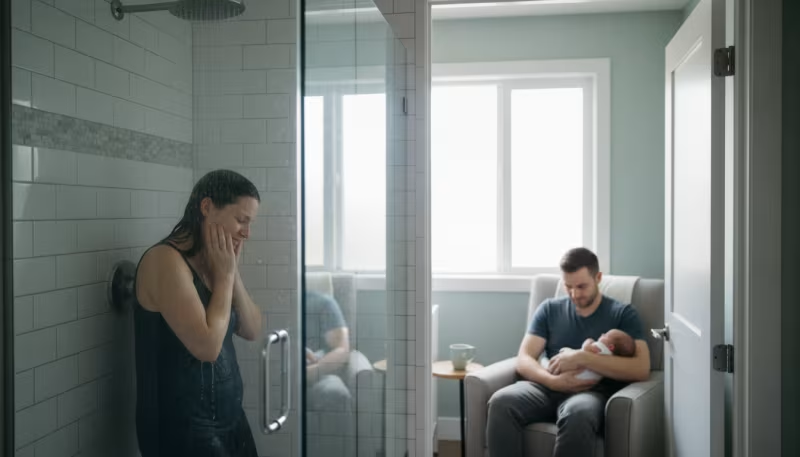
Choose how you will handle bad news before you are flooded by it. Read from a reliable source, check once or twice, name one useful action, then step away. Repeating the same story for hours rarely creates more care.
Stay Near Real People
A negative world feels worse when every problem arrives through a screen. Call someone, sit with a neighbor, attend a meeting, help with a meal, or join a local project. Human scale makes hope less abstract.
Give Anger A Job
Anger is not the enemy. It can point to a boundary, injustice, or loss. Give it a job: write the letter, make the report, donate, vote, rest, or protect someone. Unused anger often turns inward.
Protect Sleep Like A Boundary
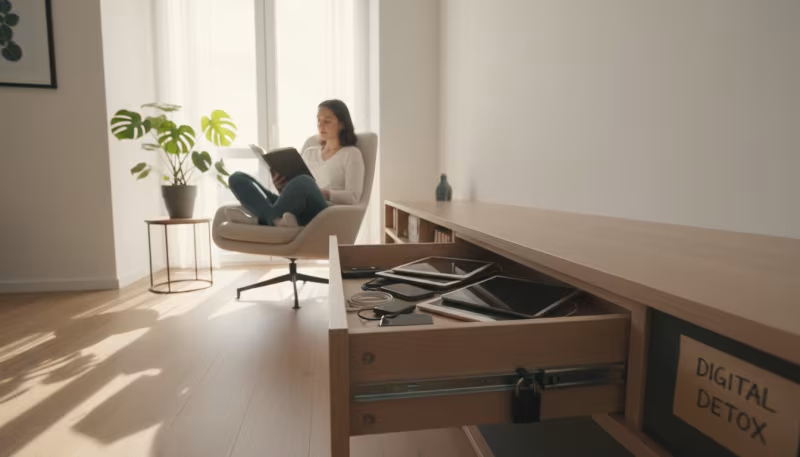
Late-night outrage steals the next day. Keep charging cords away from the bed, set an end time for news, and make the bedroom boring. Sleep will not solve the world, but losing it usually makes your next choices worse.
Collect Micro-Joys
Small pleasures are not shallow. A song, clean socks, sunlight, a joke, a good stretch, or a decent sandwich can keep the nervous system from living only in threat. Let tiny good things count.
Use Therapy Or Community Care
Some seasons are too heavy for private coping. Therapy, support groups, faith communities, peer groups, medical care, and crisis lines exist because people are not built to carry everything alone.
Make A Repair List
When the world feels negative, repair what is close. Return the call, clean the shared space, apologize for the sharp tone, bring food, or finish one boring task. Repair gives the mind proof that not everything is broken.
Let Humor Help Without Hiding Pain
Humor can release pressure. It becomes a problem only when it blocks every serious feeling. Laugh when laughter comes, then return to the truth if something still needs care.
Keep A Short Morning Promise
Choose one promise you can keep before the day gets noisy: drink water, take medication, step outside, read one page, or send one kind message. Kept promises build steadiness.
Use Values To Choose Battles
You cannot answer every argument or fix every system in one day. Values help you choose. Which issue is yours to act on today, and which one needs to be released for now?
Check The Story You Are Repeating
A negative world can make one story repeat: nothing changes, no one cares, people are awful. Test the story. Look for one exception, one helper, one repair, or one place where action worked.
Make Space For Grief
Some negativity is grief with nowhere to go. Let yourself mourn losses without rushing to a lesson. Grief can sit beside hope without canceling it.
Lower The Bar On Bad Days
On a hard day, the positive step may be smaller: shower, answer one message, eat, take medication, or go outside for two minutes. Small does not mean fake.
Return To The Body
A negative mood often sits in the body before it becomes a thought. Loosen the jaw, lengthen the exhale, eat something steady, stretch the neck, or walk to the mailbox. Body care can make hope less abstract.
Frequently Asked Questions
Does staying positive mean ignoring problems?
No. Healthy positivity notices problems and still looks for useful action, support, or repair.
How can I avoid doomscrolling?
Set news windows, remove phone use from bedtime, mute high-stress feeds, and replace one scroll window with a real task.
What is honest optimism?
It is the belief that a hard situation can still have one useful next step, without denying the hard part.
Can gratitude help?
Yes, if it does not silence pain. Pair one hard truth with one thing that helped.
When do I need more than self-help?
Seek professional care for depression, panic, trauma symptoms, self-harm thoughts, substance misuse, or safety concerns.
This article is for general information only and is not medical or mental health advice. If symptoms, distress, or safety concerns are present, contact a qualified professional or emergency services.

Linda Fehrman
Edits general wellness and relationship explainers. Health material is educational, avoids diagnosis and links to health-authority guidance.


Leave a reply
Replying to