
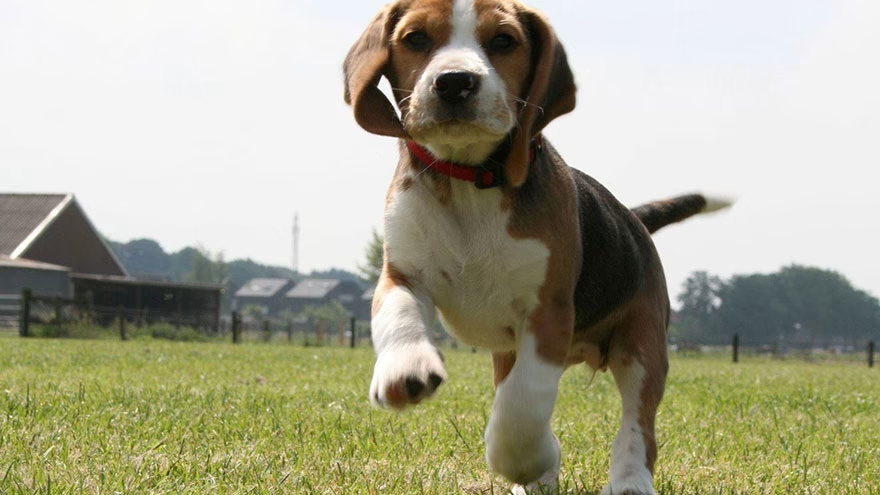
Do Not Fight the Beagle Nose
To train a scent-obsessed Beagle, start by respecting why the dog behaves that way. Beagles were bred to follow scent. The nose is not a bad habit. It is a powerful natural behavior that needs structure, safety, and better rewards.
If every walk becomes a battle between your agenda and the dog's nose, training will feel miserable. The better plan is to teach cues, use management, and give the Beagle legal sniffing work so attention to you becomes worthwhile.
The nose is the training material, not the enemy.
Understand the Breed
The National Beagle Club describes the Beagle as a small scent hound bred for scenting game, with a nose that may move automatically to the ground. That is exactly what many owners see on walks.
Beagles can be cheerful, social, and food-motivated, but they can also ignore weak cues when a scent trail is more interesting. Expect training to need repetition, high-value rewards, and smart setup.
Livecub's Basset Hound questions can help readers compare another scent hound that follows a similar nose-first logic.
Use Reward-Based Training
The American Veterinary Society of Animal Behavior's humane dog training position statement supports reward-based methods for dog training. For Beagles, that is practical, not just kind. You need rewards strong enough to compete with the environment.
Use small pieces of food the dog truly cares about, plus sniff access as a reward. A Beagle who comes back to you can earn a treat and then be released to sniff again. That teaches the dog that checking in does not always end the fun.
For a scent hound, sniffing can be part of the paycheck.
Build a Marker Cue
Teach a marker word such as yes. Say the word, give a treat, and repeat until the dog expects a reward after hearing it. Then use the marker when the Beagle looks at you, turns toward you, or moves away from a scent when asked.
The marker must be clean and quick. Mark the exact behavior you want, then pay. If you wait too long, the Beagle may think the reward was for diving back into the smell.
Start Recall Indoors
Do not start recall training in a park full of scent trails. Start in the house. Say the recall cue once, move backward happily, mark the dog for coming, and pay with a strong reward.
Practice short sessions. Then move to the yard, then a quiet sidewalk, then a long line in an open area. Increase distraction slowly. Calling a Beagle away from a rabbit trail before the cue is ready only teaches the dog to ignore you.
Recall gets stronger when the dog can win the early reps.
Use a Long Line Safely
A long line gives the Beagle room to sniff while preventing a full escape. Use it in open areas away from roads, tangles, and other dogs. Wear gloves if the line burns your hands.
Do not use a long line to yank the dog around. Let the line prevent rehearsal of running away, while rewards teach the dog to return. Management and training should work together.
For active breed planning, Livecub's German Shorthaired Pointer questions shows why high-drive dogs need outlets rather than only commands.
Teach a Sniff Release
Add a cue such as go sniff. Ask for a simple behavior like eye contact, hand target, or loose leash for a few steps. Then release the dog to sniff a safe area. This turns sniffing into something you control together.
Over time, the Beagle learns that cooperation opens the door to scent access. That is much easier than trying to make every interesting smell off limits.
Make Walks Predictable
Use three kinds of walking: training walk, sniff walk, and exercise walk. On a training walk, rewards are frequent and criteria are clear. On a sniff walk, the dog gets more freedom. On an exercise walk, the pace stays steadier.
Do not demand perfect heel position for the entire walk. That is unfair to most scent hounds and unnecessary for daily life. Teach loose leash, safe crossings, and check-ins instead.
A Beagle can have manners without marching like a robot.
Practice Leave It Around Scents
Start with boring items indoors. Mark and reward when the dog turns away from the item. Gradually use more interesting objects, then safe outdoor smells. Keep the first outdoor sessions easy.
Do not poison the cue by using it only when the dog finds the best smell of the day. Pay generously when the Beagle responds. If the dog cannot respond, increase distance and make the setup easier.
Use Scent Games at Home
AKC's guide to teaching scent work at home frames scent work as a positive activity that lets dogs use their strongest natural sense. Beagles are good candidates for simple versions.
Hide treats in boxes, scatter kibble in grass, use snuffle mats, or teach the dog to find a toy. Keep the game easy enough that the dog succeeds. Scent games can reduce frustration because the Beagle gets a legal outlet.
Manage the Environment
Use secure fences, leashes, gates, ID tags, and microchips. A scent-locked Beagle may move fast and far. Do not rely on hope near roads, wildlife, picnic areas, or open gates.
If the dog steals food or follows kitchen smells, manage trash, counters, and doors. Training works better when the dog is not rehearsing the exact behavior you want to reduce.
For another breed-care topic where management matters, Livecub's longhair Dachshund grooming guide shows how routine handling can prevent bigger problems later.
Common Mistakes
The first mistake is calling the dog repeatedly while the dog ignores you. The second is using low-value rewards outdoors. The third is punishing the dog when it finally returns.
Never scold a Beagle for coming back, even if it took too long. The return should always be safe. If you are frustrated, quietly leash the dog and make the next training setup easier.
Train Door and Gate Manners
A scent-obsessed Beagle needs door rules because outside smells can pull hard. Practice waiting at doors, gates, car crates, and yard exits. Reward stillness, release with a cue, and prevent rushing through openings.
Use baby gates or leashes while training. Management prevents the Beagle from learning that bolting works. Once a dog has chased a scent through an open door, that memory can become very strong.
Door manners are recall training before the dog escapes.
Build an Emergency Recall
Choose a special cue that means the best reward in the house. Practice it rarely, pay heavily, and never use it for unpleasant things like nail trims or ending every good time.
Start indoors, then use a fenced yard or long line. The emergency cue is not a magic word. It is a carefully protected signal with a long reward history.
Give the Nose a Job
Use food scatters, box searches, hidden toys, and short tracking games. Five minutes of nose work can tire a Beagle differently than a fast walk. It also gives the dog a legal place to use the skill that causes trouble elsewhere.
Rotate games so they stay interesting. Keep sessions short and end while the dog still wants more. A tired Beagle can learn, but an exhausted Beagle may get sloppy or frustrated.
Structured sniffing makes daily manners easier.
Troubleshooting Outdoor Distractions
If your Beagle cannot respond outside, move farther from the scent, use better rewards, shorten the session, or lower the criteria. Do not keep repeating a cue that is failing.
Practice near mild distractions before hard ones. A quiet driveway comes before a park. A calm sidewalk comes before a rabbit-heavy field. Training should climb the ladder one rung at a time.
A Simple Weekly Plan
Use three short recall sessions, two scent games, two loose-leash sessions, and one longer sniff walk each week. Keep sessions brief enough that the dog succeeds. Ten good minutes beat forty minutes of frustration.
Write down what reward worked, where attention failed, and which smells were hardest. That small log helps you adjust instead of guessing every walk.
Frequently Asked Questions
Can a Beagle have reliable recall?
Yes, but many Beagles need careful training, strong rewards, long-line practice, and realistic expectations around scent distractions.
Should I let my Beagle sniff on walks?
Yes. Sniffing is natural and useful. Put it on cue and balance sniff time with loose-leash skills.
What rewards work best for Beagles?
Many Beagles work well for high-value food, scent access, and games. Use rewards that matter in the environment.
Why does my Beagle ignore me outside?
Outdoor scents may be more rewarding than your cue. Train in easier places first and build distraction gradually.

Timothy Davidson
Edits step-by-step general-interest guides for clarity, realistic limits and source verification.
Leave a reply
Replying to