
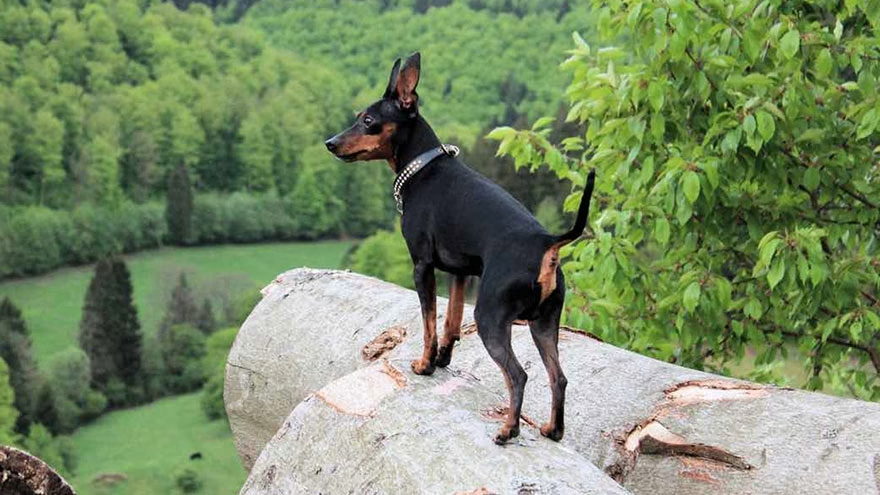
A Miniature Pinscher health guide has to match the breed's body and attitude. The Min Pin is small, smooth-coated, active, and bold, with a springy way of moving and a habit of acting larger than it is. Good health care means protecting joints, teeth, weight, skin, eyes, heart, and safety at home.
This guide is educational and does not replace veterinary care. If a Miniature Pinscher has sudden lameness, collapse, trouble breathing, repeated vomiting, seizures, eye pain, severe pain, or injury from a fall, contact a veterinarian or emergency clinic.
A useful daily routine is simple: watch movement, appetite, weight, teeth, eyes, skin, and energy. Because the breed is bold, owners sometimes miss pain until the dog refuses a normal jump or starts guarding a leg.
What Health Issues Are Common In Miniature Pinschers?
Miniature Pinschers can be sturdy little dogs, but small size does not make them maintenance-free. Ask about patellas, Legg-Calve-Perthes disease, eyes, thyroid, cardiac history, dental health, and injuries from jumping or rough handling. A healthy Min Pin is active without being careless.
The Miniature Pinscher Club of America points buyers toward breed education and health information. That is a better starting point than assuming every tiny red or black-and-rust dog has the same risks.
Ask your veterinarian for a baseline exam while the dog is young and well. Knowing the normal kneecap feel, dental stage, weight, heart sound, and eye appearance makes later changes easier to judge. Small dogs can compensate for discomfort longer than owners expect.
Watch gait on ordinary surfaces. A dog may look fine during excited play but show pain on stairs, slick floors, or after resting. Short phone videos of normal walking can help you compare changes later.
Why Do Knees Matter So Much?
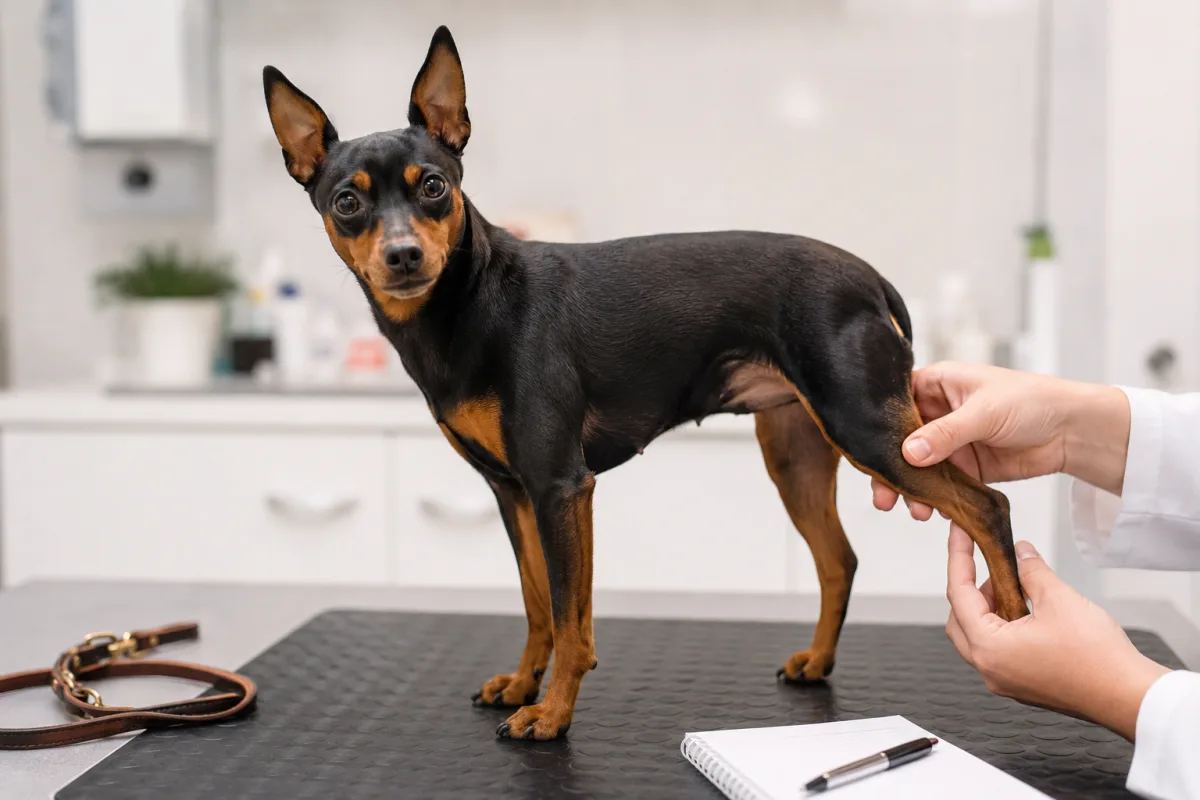
Patellar luxation means the kneecap moves out of its normal position. VCA explains that the patella sits in a groove at the end of the femur, and luxation means it slips from that groove. Small breeds are often watched for this problem.
Owners may notice skipping, hopping, sudden rear-leg lifting, limping, or reluctance to jump. Do not ignore repeated signs because the dog seems fine a moment later. Ask your veterinarian to grade the knee and discuss weight, activity, medication, or surgical options if needed.
At home, reduce avoidable stress on knees. Use rugs on slippery floors, block reckless stair races, keep nails short, and avoid letting children encourage repeated jumping. The goal is not to make the dog fragile; it is to keep athletic movement controlled.
What Is Legg-Calve-Perthes Disease?
Legg-Calve-Perthes disease affects the hip joint and is seen most often in miniature and toy breeds. The Orthopedic Foundation for Animals describes it as a hip joint conformation disorder in dogs, often appearing in young miniature and toy breeds.
Watch for rear-leg pain, lameness, reduced activity, muscle loss, or reluctance to use stairs. A young Min Pin that starts limping should not be dismissed as dramatic. Early veterinary diagnosis gives the dog a better chance at comfort.
If surgery or long rest is needed, mental work becomes part of health care. Food puzzles, quiet training, scent games, and calm handling can keep the dog engaged while the body heals. A bored Min Pin may push activity too early.
How Does Weight Affect A Min Pin?
Extra weight puts more strain on knees, hips, feet, spine, and breathing. A few extra pounds on a small dog are not minor. Measure food, count treats, and ask your vet for a body condition score rather than guessing under a shiny coat.
Training treats should be tiny. Use part of the measured meal when possible. If you compare small companion breeds, Livecub's Maltese questions show how body condition can be hidden by size or coat.
Weight control also protects anesthesia and dental care planning. A lean dog is often easier to examine, easier to dose safely, and easier to keep active. Ask the clinic to record weight at every visit so trends do not sneak up.
Why Is Dental Care A Big Deal?
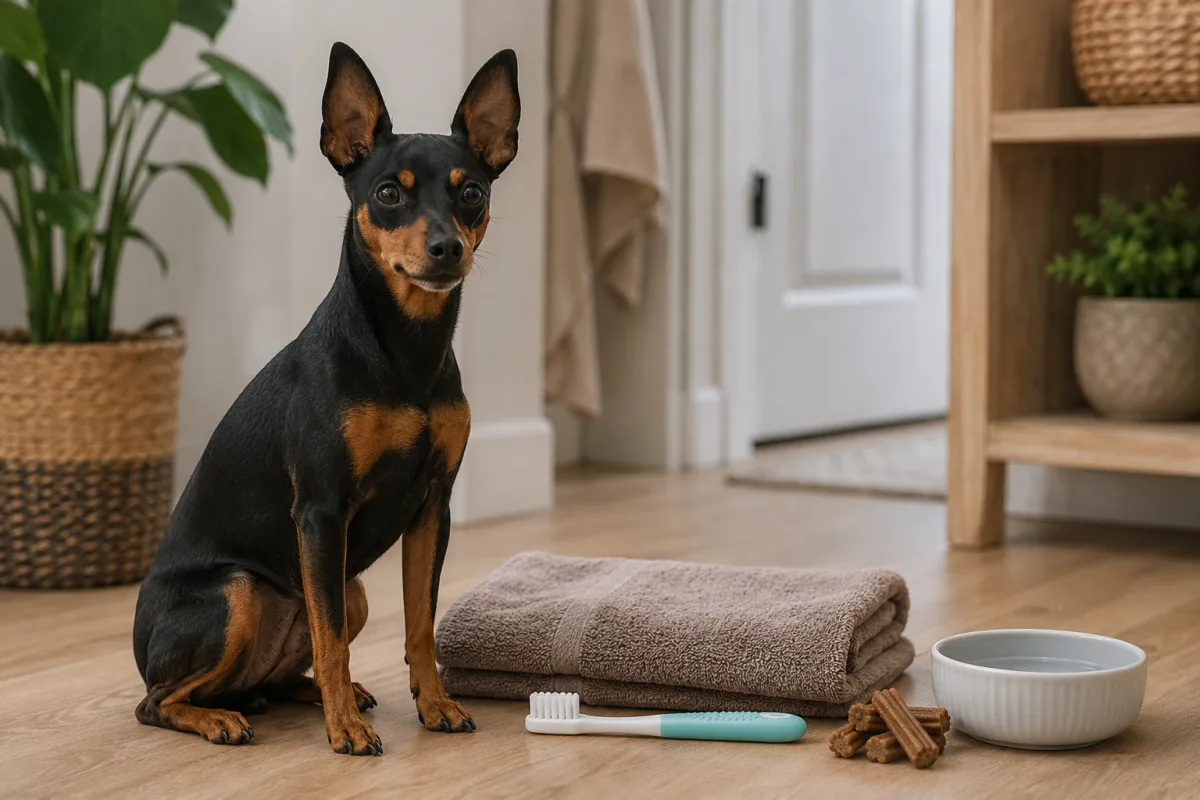
Toy breeds can have crowded mouths, retained baby teeth, tartar, gum disease, and painful loose teeth. Bad breath is not just cosmetic. A Min Pin that chews slowly, drops food, paws at the mouth, or avoids toys may have dental pain.
Brush if you can, use veterinary-approved dental products, and plan dental exams. Small dogs often need professional dental care even when they still eat normally. Eating does not prove the mouth is comfortable.
Make mouth handling normal before there is a problem. Lift the lips for one second, reward, and stop. Build from there. A dog that accepts gentle mouth checks is easier to examine when a tooth breaks or the gums look sore.
What Eye And Thyroid Problems Should Owners Track?
Ask breeders about eye exams and thyroid history. Eye changes can include cloudiness, redness, squinting, discharge, or bumping into objects. Thyroid problems can affect coat, skin, weight, energy, and behavior, but signs can be subtle.
The Miniature Pinscher Club's health statement through AKC lists patella evaluation as primary testing and electives such as thyroid, cardiac, eye exam, and Legg-Calve-Perthes evaluation. Buyers should ask for records, not only verbal reassurance.
Eye changes should move quickly to a vet call. Squinting, cloudiness, rubbing, sudden discharge, or avoiding light can signal pain. Do not use leftover drops from another pet. Some eye problems can worsen if treated with the wrong medication.
Thyroid changes can be slower. Note coat thinning, skin changes, weight gain, chilliness, or low energy, then discuss testing with your veterinarian. These signs overlap with other problems, so guessing rarely helps.
How Do You Prevent Injuries At Home?
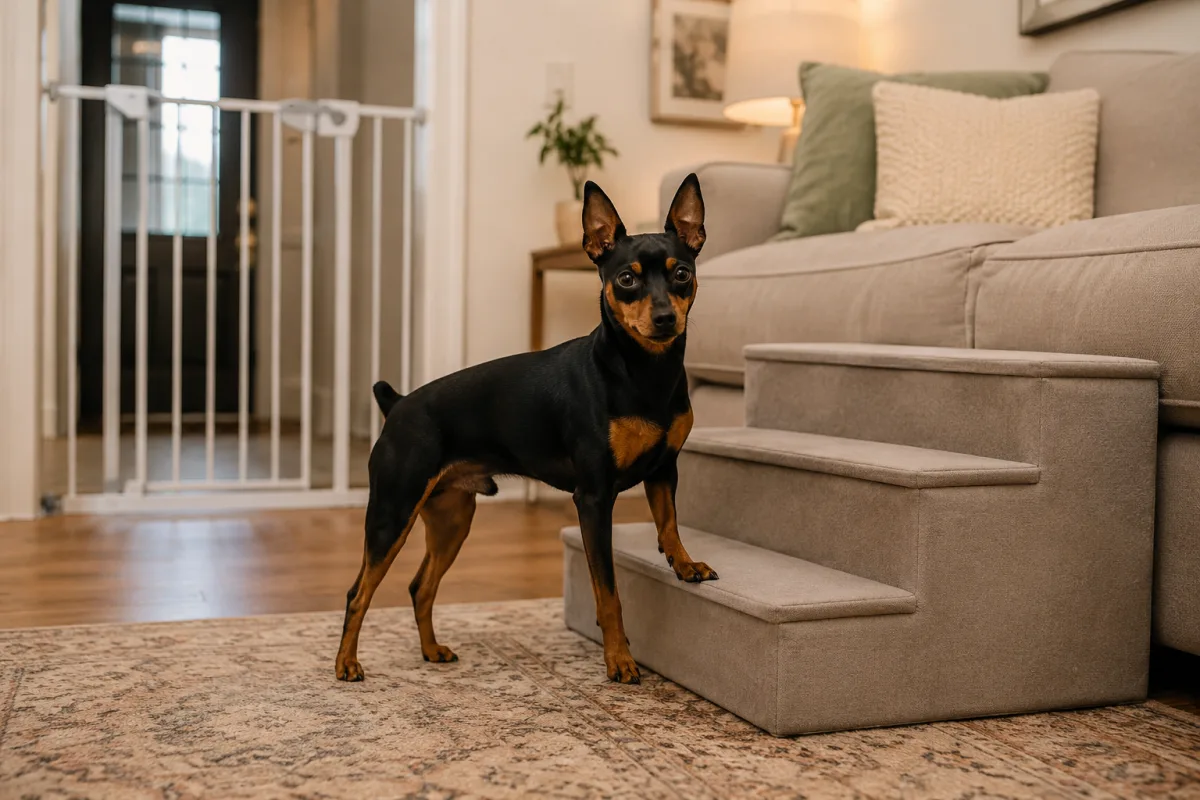
Min Pins are athletic and fearless, which can be a risky combination. Use stairs, ramps, rugs on slippery floors, and careful handling around children. Do not let a small dog launch repeatedly from couches or beds if joints are a concern.
Secure the yard and doors. A Min Pin can be fast, curious, and willing to squeeze through gaps. If you also have a high-energy breed at home, Livecub's German Shorthaired Pointer questions show how activity and safety planning change by breed.
Cold weather can be another safety issue. Smooth coats lose heat quickly, and a chilly dog may rush, shiver, or refuse to potty outside. Use short outings, warm layers when needed, and safe indoor training on harsh days.
What Should Breeders And Owners Document?
Breeders should document health tests, parent ages, temperament, knee evaluations, eye and cardiac history, thyroid testing where done, and any orthopedic issues in the line. Owners should track weight, dental care, lameness, injuries, medications, and changes in vision or energy.
Livecub's Brittany Spaniel breeder recommendations can help organize questions even for a different breed. The principle is the same: responsible breeders explain records clearly.
Keep those records in one place. Medication reactions, dental cleanings, lameness episodes, weights, and test results should follow the dog from puppyhood through senior years. A tidy record can shorten future vet visits.
Senior Min Pins need the same boldness checked against age. Vision, hearing, dental pain, arthritis, and heart changes can make a brave dog more anxious or snappy. Adjust the house before the dog starts failing at normal routines.
Frequently Asked Questions
Are Miniature Pinschers fragile?
They are sturdy for their size, but small bones and bold behavior make injury prevention necessary.
Do Miniature Pinschers need dental cleanings?
Many do. Home brushing and veterinary dental exams help prevent painful mouth disease.
What is the most common orthopedic concern?
Patellar luxation is a common small-breed concern and should be discussed with your vet or breeder.
Should Min Pins jump from furniture?
Repeated jumping can stress joints. Steps, rugs, and controlled habits are safer.
What should I ask a breeder for?
Ask for health-test records, parent history, knee evaluations, eye or cardiac results, and honest line history.
What Is The Core Health Rule?
Keep the Miniature Pinscher lean, protected, checked, and active in a controlled way. The breed is bold, but good owners make sure that confidence does not turn into avoidable injury or missed pain. Keep steps, rugs, dental routines, and records in place before age makes small problems harder to manage. Check movement weekly, write changes down, and bring those notes to veterinary visits as the dog ages.

Chiara Bradshaw
Covers education, culture and creative topics with an emphasis on readable explanations and verifiable references.

Leave a reply
Replying to