
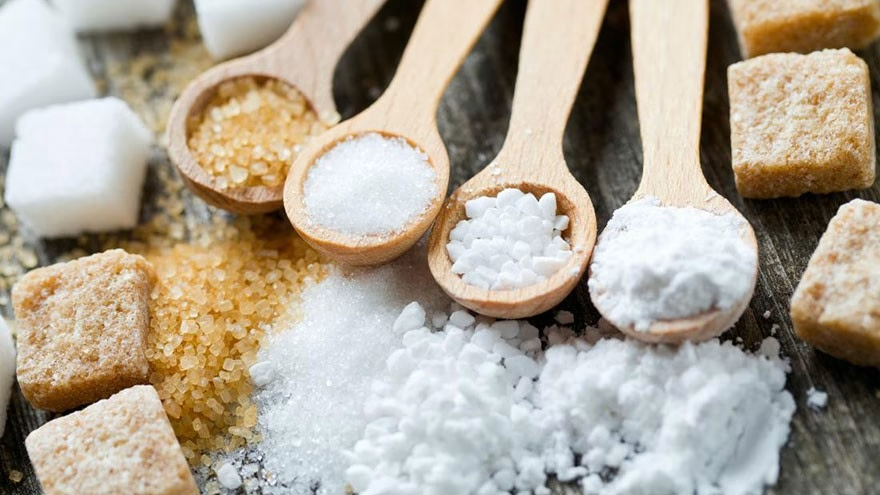
Types of sugar matter because sugar is not just sweetness. It changes spread, browning, tenderness, moisture, crispness, and how fast something dissolves. Swap powdered sugar into a cookie without thinking and the texture changes. Use dark brown sugar where a recipe expects white sugar and you may get more moisture, more molasses flavor, and a darker bake.
The useful way to sort sugar is by crystal size, molasses content, and form. Granulated, superfine, powdered, light brown, dark brown, turbinado, demerara, molasses, honey, and syrups all behave differently. The goal is not to collect every bag. It is to know which one the recipe is asking for and why.
What Does Granulated Sugar Do?
Granulated white sugar is the default in many American recipes. It has uniform crystals, neutral flavor, and enough structure to cream with butter. During creaming, the crystals cut tiny air pockets into the fat. Those pockets help cakes and cookies lift and lighten.
King Arthur Baking's sugar guide describes granulated sugar as a common baking sugar with medium-sized crystals that can dissolve into batters while still creating air pockets when creamed with butter. That is why it is hard to replace casually in cakes, sugar cookies, and butter cookies.
Use granulated sugar for everyday cakes, cookies, muffins, quick breads, sweetened drinks, and many sauces. If a recipe simply says "sugar," it usually means granulated white sugar unless the author says otherwise.
When Should You Use Brown Sugar?
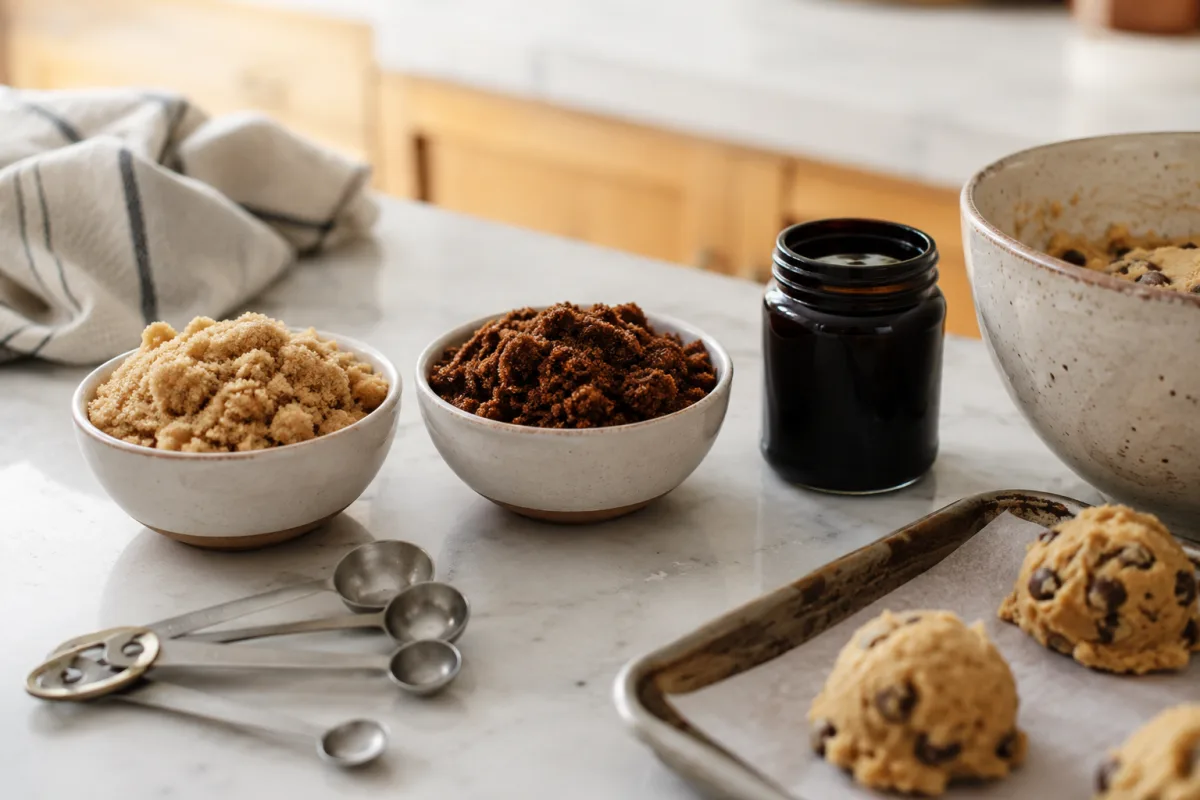
Brown sugar is white sugar with molasses present or added back. Light brown sugar has a milder molasses note; dark brown sugar tastes deeper and makes baked goods darker. It also brings moisture, which is why brown sugar cookies often bake softer and chewier than white sugar versions.
The USDA refined white and brown sugar specification describes light brown sugar as soft with a mild sweet molasses odor and flavor, while dark brown sugar has a stronger brown color and sweet molasses character. That matches what bakers notice in the bowl: color, aroma, and moisture all shift.
Use light brown sugar in chocolate chip cookies, banana bread, spice cakes, barbecue sauces, and glazes. Use dark brown sugar when you want more molasses flavor, such as gingerbread, baked beans, sticky sauces, or deep caramel notes. In a dessert like fudge icing, brown sugar can make the flavor taste warmer and less one-note.
Measuring brown sugar matters. A recipe that says "packed" expects you to press the sugar into the cup so it holds shape when tipped out. Spooned loose brown sugar gives less sugar and less moisture, which can make cookies drier and sauces thinner than the recipe intended.
What Is Powdered Sugar For?
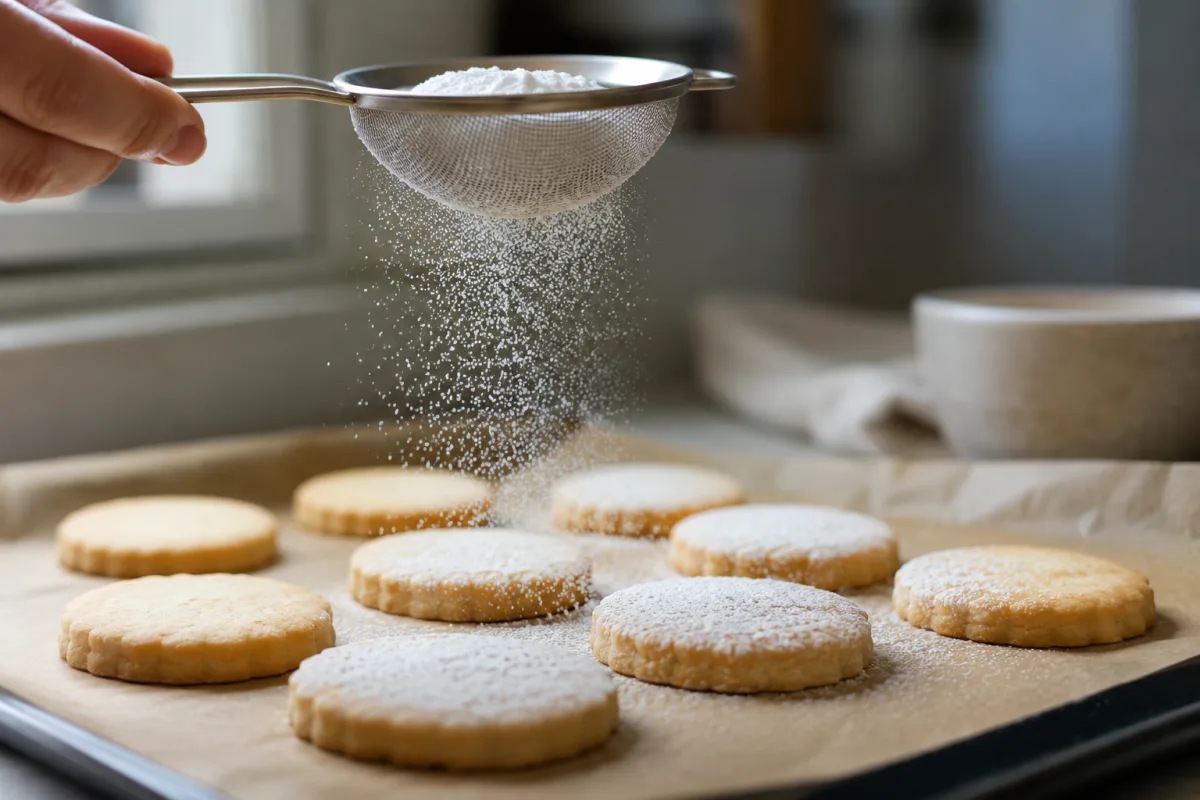
Powdered sugar, also called confectioners' sugar or icing sugar, is finely ground sugar usually mixed with a little starch to reduce clumping. It dissolves fast and makes smooth frostings, glazes, whipped cream, and dusted finishes. It does not behave like granulated sugar in creaming because the crystals are too fine.
Use powdered sugar when smoothness matters more than structure. Buttercream, royal icing, glaze, shortbread, and snow-like dusting all benefit from fine texture. Do not use it as a one-for-one swap in a cake unless the recipe was written for it.
For presentation work, powdered sugar can look good for about five minutes and then disappear into moist desserts. If you are building a dessert table from an ultimate guide to cookie displays, dust right before serving or choose a non-melting finishing sugar.
Why Use Superfine, Turbinado, Or Demerara Sugar?
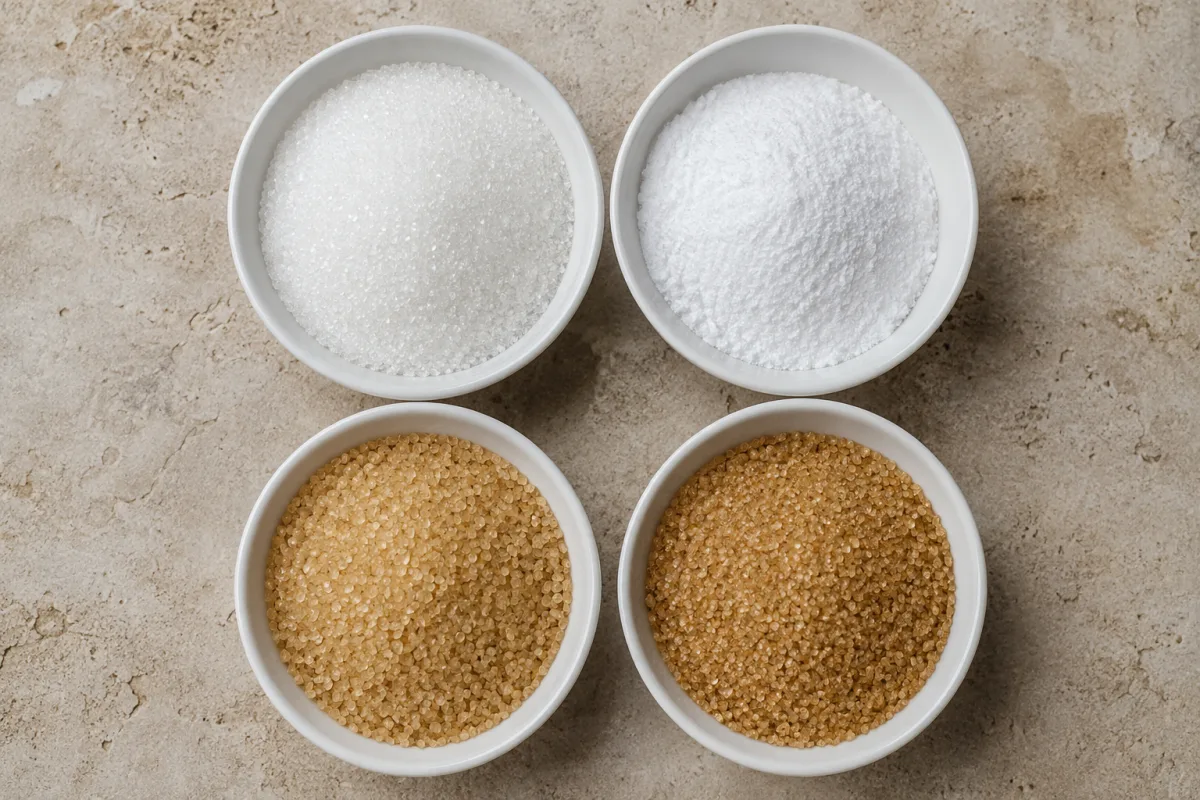
Superfine sugar has smaller crystals than granulated sugar, so it dissolves faster. Use it for meringues, cocktails, delicate cakes, and whipped egg whites where gritty sugar would linger. If you cannot buy it, pulse granulated sugar briefly in a food processor, but stop before it turns powdery.
Turbinado and demerara sugars have larger crystals and a light molasses flavor. They are better as finishing sugars than as invisible sweeteners. Sprinkle them on muffins, pie crust, creme brulee, oatmeal, or quick breads when you want crunch and sparkle.
Sugar.org's types page sorts sugar by crystal size and color, noting that crystal size affects function and molasses affects flavor and moisture. That is the whole decision in one sentence: small crystals dissolve, large crystals crunch, brown crystals add molasses.
How Do Liquid Sweeteners Change A Recipe?
Honey, maple syrup, molasses, corn syrup, agave, and golden syrup are not dry sugar in liquid clothing. They add water, acidity, flavor, and different browning behavior. A cake that works with granulated sugar may turn heavy if you pour in honey without adjusting the rest of the formula.
Use molasses for gingerbread, barbecue sauce, baked beans, and deep spice flavors. Use honey when its floral flavor belongs in the dish. Maple syrup works in glazes, breakfast baking, and sauces. Corn syrup helps some candies stay smooth because it interferes with large sugar crystal formation.
In savory cooking, sugar is often a balancing tool rather than the main flavor. A small amount in one of the stir fry sauces can round salt, heat, and acid without making dinner taste like dessert.
Can You Substitute One Sugar For Another?
Sometimes. In forgiving recipes, light and dark brown sugar can often swap with a flavor change. Granulated and superfine sugar can swap more easily by weight than by volume. Powdered sugar is not a normal swap for granulated sugar in creamed cakes or cookies. Liquid sweeteners require formula changes.
Use weight when possible. One cup of powdered sugar, one cup of brown sugar, and one cup of granulated sugar do not weigh the same. Brown sugar is usually packed in a measuring cup; granulated sugar is leveled; powdered sugar may be sifted or spooned depending on the recipe. That is a lot of room for accidental change.
If a dessert depends on structure, follow the sugar listed. Tiramisu, for example, is less about cookie spread and more about dissolving sugar into cream or yolks. A guide to making the perfect tiramisu shows a different sugar job than a chewy cookie.
If you change sugar for taste or dietary preference, change only one variable at a time. Keep the oven temperature, pan size, fat, and flour the same. That way, if the texture shifts, you know the sugar caused it rather than five edits fighting each other.
How Should Sugar Be Stored?
Keep sugar dry, sealed, and away from strong odors. Granulated and powdered sugar clump when humidity gets in. Brown sugar dries out when air gets in. Store brown sugar in an airtight container; if it hardens, a brown sugar saver or a piece of bread can rehydrate it over time.
The USDA sugar specification also treats texture, foreign material, moisture, and color as quality concerns for refined white and brown sugar. Home cooks do not need lab specs, but the principle is useful: sugar should be clean, dry where appropriate, and predictable.
Freezing is not needed for dry sugar, but moisture control matters across the pantry. If you are already organizing storage for produce with freezing fresh vegetables, keep sugar in a separate dry zone so steam and thawing food do not cause clumps.
Label containers if you decant sugar. Powdered sugar and superfine sugar can look similar in a hurry, and demerara can be mistaken for turbinado. The wrong scoop can change texture before you notice the mistake.
Frequently Asked Questions
What is the most useful sugar to keep at home?
Granulated white sugar is the most versatile. Add light brown sugar and powdered sugar if you bake cookies, frostings, glazes, or quick breads often.
Can I use brown sugar instead of white sugar?
In some cookies and quick breads, yes, but expect more moisture, darker color, and molasses flavor. In delicate cakes, follow the recipe.
Is powdered sugar the same as granulated sugar?
No. Powdered sugar is much finer and often contains starch. It is best for icing, glaze, dusting, and some tender cookies.
What is superfine sugar good for?
Superfine sugar dissolves quickly, so it is useful in meringues, drinks, whipped egg whites, and delicate batters where grittiness would show.
Why does brown sugar get hard?
Brown sugar hardens when moisture leaves the molasses coating. Store it airtight and rehydrate gently if it turns into a block.
Keep the pantry simple: granulated for structure, brown for moisture and molasses, powdered for smooth finishes, superfine for fast dissolving, and liquid sweeteners only when their flavor and water content make sense.

Cashie Evans
Covers parenting and practical household topics with clear steps, safety notes and links to current guidance.




Leave a reply
Replying to