
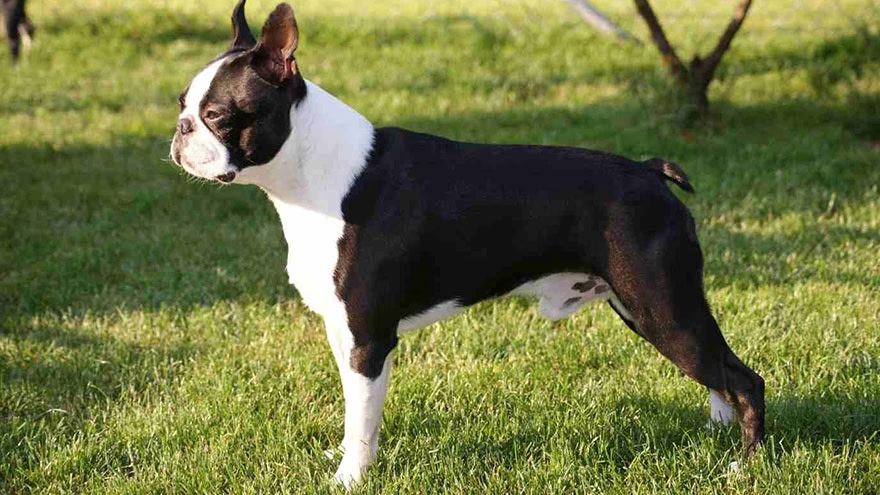
A Boston Terrier training guide should fit the dog: bright, social, funny, compact, and sometimes a little too sure that every person came to admire him. Boston Terriers often learn quickly because they like interaction, but their short face, big emotions, and comic timing mean training should be short, kind, and consistent. The goal is not a tiny soldier. The goal is a polite companion who can settle, walk, greet, come when called, tolerate handling, and stay safe when excitement runs higher than judgment.
What makes Boston Terrier training different?
The AKC describes the Boston Terrier as a lively little companion known as "The American Gentleman." Its Boston Terrier breed page gives a good baseline for temperament, size, and care. Training should use that social nature instead of fighting it.
Boston Terriers usually enjoy people, food, toys, and praise. That gives the trainer several reward options. It also means the dog may bounce, jump, mouth, or demand attention when overstimulated. Train calm behavior before the dog is already spinning.
Short-faced dogs also need heat-aware training. Do not drill outdoors in hot weather. Watch breathing, take breaks, use shade, and avoid pushing a dog that is panting hard after a few repetitions.
The best training plan is built into the day. A Boston can practice waiting while the leash clips on, touching a nose to your hand before greeting, settling during coffee, and coming in from the yard for one excellent reward. Tiny repetitions beat one long lecture.
How should you start puppy socialization?
Socialization is not random exposure. The American Veterinary Society of Animal Behavior says the primary and most important time for puppy socialization is the first three months, with safe exposure to people, animals, stimuli, and environments without overwhelming the puppy. That guidance is summarized on the AVSAB position statements page.
For a Boston puppy, pair new experiences with food, play, distance, and choice. Let the puppy see hats, umbrellas, strollers, elevators, grooming tools, car rides, and calm dogs. Stop before fear takes over. A puppy that learns the world is predictable becomes easier to train later.
Safe exposure also respects vaccines and local disease risk. Ask your veterinarian where the puppy can go before the vaccine series is complete. Carrying the puppy through a store that allows dogs may be safer than putting paws on a busy dog park ground.
Socialization should include recovery, not only novelty. Let the puppy notice a sound, eat a treat, and return to calm. If every outing becomes a parade of hands reaching for the dog, the puppy may learn excitement instead of confidence.
Which basic cues matter first?
Start with name response, come, sit, down, stay for one breath, leave it, drop it, go to mat, and polite leash walking. Keep sessions to two or three minutes at first. End while the dog is still succeeding.
Use rewards the dog actually values. AKC's article on positive reinforcement dog training explains that the method rewards the behaviors a dog does right, with food, toys, games, or whatever motivates that dog. That is especially helpful for Bostons because enthusiasm can be redirected instead of suppressed.
A marker word like "yes" can help. Say it the instant the dog does the wanted behavior, then reward. The word becomes a clean snapshot of the right choice.
Reward timing matters. If the dog sits, jumps, and then gets the treat, you may have rewarded the jump. Mark the calm sit quickly, deliver low, and reset before the dog erupts.
How do you handle jumping, mouthing, and barking?
Jumping usually means the dog wants access to faces and attention. Teach four paws on the floor before greetings. Step away when jumping starts, reward when paws land, and ask visitors to follow the same rule. Inconsistency trains the dog to gamble.
Mouthing often appears during excitement. Redirect to a toy, pause play if teeth touch skin, and reward softer choices. Do not wrestle with hands if you do not want hand-biting as an adult habit.
Barking needs context. A Boston may bark because of door noise, frustration, boredom, or attention. Teach a quiet cue, but also change the setup: curtains, white noise, chew time, exercise, and a mat routine can all lower rehearsal.
For door greetings, rehearse when nobody is arriving. Ring a recording of the bell, reward the dog for going to a mat, open the door a crack, and close it again. Training the easy version first makes the real guest version less chaotic.
Leash work should start indoors. Reward the dog for turning toward you, walking two steps beside you, and checking in before the leash ever meets squirrels, dogs, or neighbors. Outside success is built from boring indoor wins.
How do house training and crate training work?
House training needs routine more than drama. Take the puppy out after sleep, play, meals, and excitement. Reward outside immediately. Supervise indoors or use a crate, pen, or leash tether so accidents do not become the easiest option.
Crate training should feel like rest, not punishment. Feed meals near or inside the crate, use soft bedding if safe for that puppy, and build duration slowly. A crate can protect house training, travel, vet recovery, and household calm.
Accidents should be treated as information. Clean with an enzymatic cleaner, tighten supervision, and take the dog out sooner next time. Scolding after the fact usually teaches the puppy to hide, not to understand the bathroom rule.
Small companion breeds vary. A Boston may learn quickly, while a scent-driven breed in Basset Hound common questions may need a different kind of patience. Match the plan to the dog, not your friend's timeline.
What should training avoid?
Avoid harsh corrections, long drills, heat stress, and confusing rules. AVSAB's humane training statement supports reward-based methods for canine training and emphasizes welfare. Its PDF is available through the same AVSAB position-statement resource page.
Pressure backfires with many Bostons because they are social and sensitive. A dog that shuts down is not being respectful; it is learning that training feels unsafe. Keep the work clear and light.
Use breed comparisons only to set expectations. A Boston is not a German Shorthaired Pointer with endless field stamina, and not a Miniature Schnauzer with a terrier's patrol drive. The training plan should fit the compact companion in front of you.
Handling practice is training too. Pair treats with ear checks, paw touches, mouth looks, and gentle restraint. A Boston that accepts handling calmly will have easier vet visits, grooming, travel, and medication days when the household is already busy.
How do you keep training going after puppyhood?
Practice in daily life. Ask for a sit before clipping the leash, a wait before doors, a mat settle during dinner, and a recall before a treat scatter. Training stays strong when it is woven into ordinary moments.
Add enrichment: food puzzles, scent games, gentle trick training, and calm walks. Keep an eye on breathing and temperature. A Boston can enjoy activity, but the short face deserves respect.
If training stalls, simplify. Lower distraction, raise reward value, shorten the session, and check whether the dog is tired, hot, hungry, or confused. Most failures are information.
Adult refreshers keep manners from fading. Practice recall, leash attention, handling, and mat work after adolescence, after moves, and after schedule changes. Boston Terriers notice new routines quickly, for better or worse.
On hot days, train indoors with air moving and water nearby. A short-faced dog can enjoy learning without being asked to push through heat for proof or pride outside too today.
Frequently Asked Questions
Are Boston Terriers easy to train?
Many are quick learners because they like people and rewards. They still need consistency, short sessions, socialization, and calm rules.
When should Boston Terrier training start?
Start the day the puppy comes home with name response, house routine, gentle handling, and safe socialization. Keep lessons short and positive.
Do Boston Terriers bark a lot?
Some bark at doors, people, or frustration. Manage triggers, reward quiet, teach a mat routine, and give enough exercise and mental work.
Can Boston Terriers do dog sports?
Many enjoy agility-style games, tricks, obedience, and rally. Keep heat, breathing, and fitness in mind, and ask your vet before intense activity.
Boston Terrier training works best when it feels like clear conversation. Reward the behavior you want, protect the dog's breathing, and make calm choices easy to repeat.

Chiara Bradshaw
Covers education, culture and creative topics with an emphasis on readable explanations and verifiable references.


Leave a reply
Replying to