
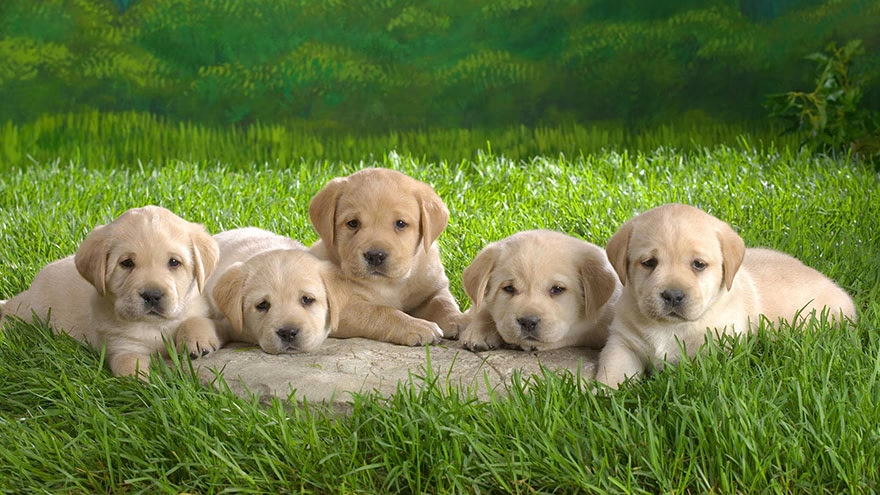
Labrador Puppy Development Happens Fast
Labrador puppy development can feel like several different dogs living in the same body. One week the puppy is soft, sleepy, and glued to your feet. A few weeks later, the same puppy is stealing socks, chewing chair legs, and learning how fast those paws can move. That is normal, but it needs structure.
The American Kennel Club's Labrador puppy milestone timeline says eight weeks is a common age for Labrador puppies to leave the mother and litter and join a new family. That is the moment many owners begin the real work: safety, routines, social learning, and early training.
A Labrador is usually eager, social, food-motivated, and physical. Those traits are wonderful when guided and exhausting when left loose. Start with habits, not tricks.
Eight to Twelve Weeks
At eight to twelve weeks, a Labrador puppy needs sleep, short play, bathroom trips, gentle handling, and safe exposure to the household. The puppy is not ready for long walks or rough play, even if the energy comes in wild bursts.
Puppy-proof the home before the puppy explores. Move cords, shoes, medicine, cleaning products, small toys, and tempting food. Labs investigate with their mouths, so assume anything low enough can be chewed.
House training starts with timing. Go outside after waking, after eating, after play, and before confinement. Reward quickly when the puppy goes in the right place. Do not expect bladder control to look adult yet.
For another active breed comparison, Livecub's German Shorthaired Pointer questions article is useful because high-energy puppies often need routines before freedom.
Sleep and Quiet Time
Labrador puppies need a lot of sleep, even when they act as if they can keep playing forever. Overtired puppies often bite harder, run in wild loops, bark, or forget every cue they know.
Create predictable rest places. A crate, pen, or gated room can help the puppy learn that quiet time is part of the day. Keep the space safe, comfortable, and boring enough for sleep.
Rest is training too. A puppy who learns to settle early is easier to live with during adolescence.
Socialization Without Flooding the Puppy
Socialization does not mean dragging a puppy into every busy place. It means creating safe, positive experiences with people, sounds, surfaces, handling, car rides, vet-style touch, and calm dogs.
The AVMA's puppy socialization coverage discusses early socialization classes and vaccination precautions. Work with your veterinarian on where your puppy can safely go before the vaccine series is finished.
Keep sessions short. A puppy that is hiding, yawning, lip licking, barking nonstop, or trying to flee may need more distance and less stimulation. Socialization should build confidence, not force bravery.
Good exposure is boringly calm. A puppy who notices something and recovers is learning.
Three to Four Months
At three to four months, many Labrador puppies become bolder. They may jump, bite hands, chase clothing, and test whether rules are real. This stage is not bad character; it is a puppy learning how bodies, teeth, and people work.
Use simple cues: sit, come, trade, leave it, wait, and go to mat. Reward the behavior you want before the puppy invents another game. Keep sessions brief, upbeat, and frequent.
Teething may start to affect chewing. Offer legal chew items, rotate them, and remove objects that invite trouble. If the puppy bites hands during play, pause the game and redirect to a toy.
Livecub's Brittany Spaniel breeder recommendations article gives another angle on selecting active puppies from homes that understand temperament and early care.
Alone-Time Practice
A friendly Labrador puppy still needs to learn that people can leave and come back. Practice tiny absences while the puppy is calm. Step away for a moment, return quietly, and avoid turning every reunion into a party.
Use food toys, chew items, and resting periods to make alone time easier. Do not wait until a full workday to teach this skill. Build it in small pieces while the puppy is still young.
If the puppy panics, reduce the duration and make the setup easier. The goal is confidence, not endurance through fear.
Four to Six Months
Four to six months often brings longer legs, stronger jaws, more stamina, and less baby softness. The puppy may look more grown than the brain actually is. Keep expectations fair.
The AKC's puppy growth timeline describes puppyhood as a period of physical, cognitive, and social transitions. That is exactly why consistency matters during this stretch.
Exercise should still be age-appropriate. Let the puppy move, sniff, play, and explore, but avoid forced jogging, repetitive jumping, and long hard miles. Growing joints need time.
Training can become more practical now: walking politely, settling while meals are prepared, coming away from distractions, and resting in a crate or pen without drama.
Safe Play and Early Exercise
Labs often love chasing, tugging, carrying toys, and splashing in water. Keep play short enough that the puppy finishes happy, not frantic. Rotate fetch with sniffing, chewing, and calm training so the puppy does not learn that every game is high speed.
Choose soft surfaces when possible and avoid repeated jumping from furniture or vehicles. Stairs, slick floors, and rough wrestling can be hard on a growing body.
Use walks for exploration rather than distance. Let the puppy sniff, watch the world, and practice short leash manners. Mileage can come later.
Six to Twelve Months
Adolescence can surprise Labrador owners. A puppy who knew every cue may suddenly act as if the world is new. Smells, dogs, people, and movement can become more exciting than your voice.
Do not throw out training. Return to easier setups, better rewards, and shorter distances from distractions. Practice recall on a long line in safe places before expecting off-leash reliability.
Food motivation can help, but it can also create counter-surfing and trash interest. Teach impulse control around bowls, doors, dropped food, and visitors.
Livecub's Rottweiler questions article is a reminder that bigger young dogs need clear manners before size becomes a management problem.
Feeding, Growth, and Body Condition
Labrador puppies can love food with real intensity. That does not mean they need unlimited meals. Feed measured puppy food that fits your veterinarian's guidance and the puppy's growth pattern.
Watch body condition, not only bowl enthusiasm. You should be able to feel ribs under a light covering, and the puppy should not look heavy through the waist. Too much weight can make movement harder.
Use meals for training when practical. A portion of breakfast can pay for sits, name response, crate entry, and calm leash moments. This turns food drive into learning.
Growth is not a race. Slow, steady development is better than pushing size, speed, or endurance too early.
Vet Visits and Development Clues
Use routine veterinary visits to ask about growth, teeth, ears, weight, vaccines, parasite prevention, and safe activity. Bring notes instead of trying to remember every question in the exam room.
Watch trends at home. Appetite, stool quality, sleep, movement, confidence, and recovery after play all tell you how the puppy is doing. One odd day may be normal; a pattern deserves attention.
Keep records for food changes, medications, vaccines, and training milestones. Simple notes make it easier to spot what changed when behavior or digestion shifts. Patterns matter.
Grooming and Handling Habits
Labradors are easier to groom than many long-coated breeds, but handling still matters. Touch paws, ears, mouth, tail, collar area, and belly gently while pairing the experience with food and calm praise.
Start nail trims early, even if you clip only one nail at a time. Brush the coat, check ears, and introduce tooth brushing gradually. A puppy who learns handling early is easier to care for as an adult.
For a breed where coat care is a bigger daily task, Livecub's longhair Dachshund grooming guide gives a useful contrast.
Frequently Asked Questions
When can a Labrador puppy come home?
Many Labrador puppies go to new homes around eight weeks, depending on breeder practices, health, and local rules.
When does a Labrador puppy calm down?
Many Labs stay energetic through adolescence. Calm behavior comes from age, training, exercise, sleep, and routine.
How much exercise does a Labrador puppy need?
Use short, age-appropriate activity and avoid forced running or repetitive jumping while the puppy is growing.
Why does my Labrador puppy bite everything?
Puppies explore with their mouths and may be teething. Provide legal chew items, supervise closely, and redirect early.

Timothy Davidson
Edits step-by-step general-interest guides for clarity, realistic limits and source verification.
Leave a reply
Replying to