
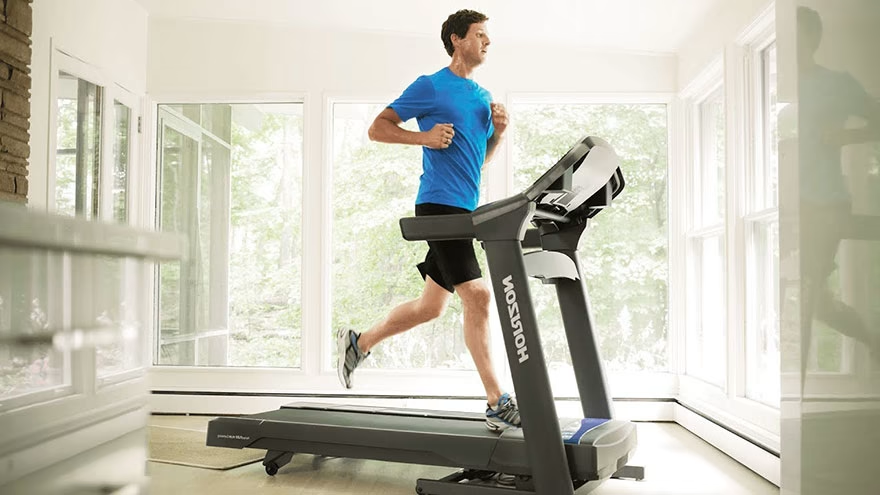
How to Get Psyched Up for a Treadmill Workout You Really Don't Want to Do starts with making the workout smaller than the resistance in your head. A treadmill session does not need to begin with hype, a perfect playlist, or a promise to love running. It can begin with shoes on, water nearby, a five-minute minimum, and a plan that gives your brain fewer chances to argue. Motivation often shows up after movement starts, not before.
Lower the first step until it is easy
The hardest part of a treadmill workout is often the transition from sitting to starting. Make the first step almost too small: change clothes, fill the bottle, step on the belt, walk for five minutes. Once you are moving, you can decide whether to continue.
This is not a trick. It is a way to stop treating every workout as a vote on your identity. A five-minute start protects the habit on low-energy days and often turns into more once the body warms up.
The first goal is contact. Get on the treadmill before trying to win the treadmill.
Use a workout menu, not one perfect plan
A treadmill feels worse when the only option is the workout you least want to do. Build a menu: easy walk, incline walk, jog-walk intervals, short HIIT, long steady session, recovery walk, or music-based progression. Pick the session that fits the day.
CDC's adult physical activity guidance supports weekly aerobic activity and strength work. A treadmill can help meet the aerobic piece in many formats, not only running.
Choice reduces friction. A menu keeps one bad mood from canceling the whole habit.
Make the treadmill less boring on purpose
Boredom is not a character flaw. It is a design problem. Use a playlist, podcast, audiobook, show, interval timer, virtual route, or pace game. Match the entertainment to the workout: steady content for easy walks, stronger music for intervals, and quiet focus for form practice.
If dance or rhythm helps you move, a lighter option like chair dancing can keep you active on a day when the treadmill feels impossible. The point is to keep the movement thread alive.
Do not save all fun for after exercise. Put some of it inside the session.
Use intervals to make time feel shorter
Intervals break a treadmill workout into pieces. Instead of facing thirty blank minutes, you face one minute brisk, two minutes easy, repeated several times. The clock moves differently when attention has a job.
Intervals do not need to be brutal. A beginner can alternate easy walking and slightly faster walking. A runner can alternate jogging and recovery. The hard part should be controlled enough that you finish with form still intact.
Structure creates momentum. The next beep gives you something to do besides negotiate with yourself.
Put the treadmill near a reward cue
Pair the workout with something you already want: a show you only watch on the treadmill, a favorite playlist, good coffee after the session, or a ten-minute stretch. The reward should support the habit rather than turn into a bribe that feels childish.
Keep the cue consistent. If the same podcast always means treadmill time, the brain spends less energy deciding. That makes the habit feel more automatic after enough repetitions.
Repeat the cue until it carries you. Motivation is less useful than a setup you do without debate.
Use heart rate without making it a judge
A sports watch can help, but it can also make a low-energy day feel like failure. Use heart rate to choose effort, not to shame yourself. The American Heart Association's target heart rates page can frame intensity, but perceived effort matters too.
If you rely on a strap, make sure the device works before trusting the numbers. A guide to replacing a Polar T31 HRM battery is a practical reminder that bad data can make a normal workout feel confusing.
Feedback should help decisions. It should not become another reason to quit.
Make the workout fit your mood
Low mood may need a gentle start. Angry energy may need intervals. Anxious energy may need a steady walk with slow breathing. Tired legs may need incline reduced and time shortened. The treadmill is adjustable, so adjust it.
If the goal is movement, a light session counts. If the goal is performance, schedule harder workouts on days that can support them. Mixing those goals in the same moment creates unnecessary pressure.
Match the session to the day. The best workout is often the one that keeps tomorrow available too.
Keep a proof list for hard days
Write down a few workouts you completed when you did not feel like starting. Keep the list in your phone or training log. On the next low-motivation day, read it before deciding that the workout is impossible.
Proof beats pep talk. A record of past starts reminds you that reluctance does not predict the whole session. It only describes the first few minutes.
Borrow confidence from evidence. You have started before; the list makes that harder to forget.
Use incline when running feels like too much
Incline walking can make a treadmill workout feel purposeful without requiring a run. Raise the incline slightly, keep the pace controlled, and let the legs work while impact stays lower. This is useful when motivation is low but you still want a real training effect.
For people who like leg-heavy conditioning, running bleachers shows the same gravity principle at a harder level. The treadmill version is easier to scale.
Make the room easier to enter
Leave shoes, headphones, towel, and water where the workout starts. A treadmill hidden behind laundry becomes another chore before exercise even begins. Clear the belt and the floor around it so starting takes less thought.
Environment design sounds boring because it is. That is why it works. The fewer objects between you and the start button, the fewer excuses the day can offer.
End with one repeatable ritual
Finish the same way each time: slow walk, wipe the machine, write one line in a log, and put shoes back in place. A closing ritual tells the brain the workout is complete and prepares the next session.
That small reset also gives you proof. On the next hard day, the clean machine and ready shoes lower the starting cost again.
Use a no-zero rule
A no-zero rule means doing something, even if the planned workout shrinks. Five minutes walking, one incline block, or one easy mile keeps the habit alive. It also reduces the drama around missed sessions.
The rule works because it separates identity from performance. You are not deciding if you are a treadmill person today. You are only deciding the smallest honest version of the session.
Use bad-weather days as a reason
The treadmill earns its space on days when weather would otherwise cancel movement. Rain, heat, icy sidewalks, darkness, and poor air quality are easier to handle indoors. Treat those days as the treadmill's purpose, not as a fallback you resent.
Prepare a few weather-day sessions in advance: twenty-minute walk, incline blocks, easy jog, or short intervals. Picking from a list feels easier than inventing a workout while already annoyed.
Pair the session with a clear ending. Stop at the planned time, stretch briefly, and let the completed workout count without adding extra punishment.
Make refusal smaller than the workout
On low-motivation days, the first goal can be only to dress for the session, fill a bottle, and stand on the belt. That sounds small because it is small, and that is why it works. Starting the routine lowers the emotional weight of the decision.
Once you are moving, keep permission to stop after a short warm-up. Many people continue because the hardest part was the transition, not the workout itself.
Frequently Asked Questions
What should I do if I dread the treadmill?
Start with five minutes, lower the intensity, and use a menu of workout options so dread does not have only one target.
Is walking on the treadmill enough?
Yes, walking can contribute to aerobic activity, especially when repeated consistently and matched with your fitness level.
How do I make treadmill time pass faster?
Use intervals, music, podcasts, virtual routes, or a show reserved for treadmill sessions.
Should I force a hard workout when I lack motivation?
Not always. Sometimes the win is an easy session that protects the habit and leaves you ready for the next workout.
A treadmill workout starts faster when the first promise is small. Put on shoes, start the belt, give yourself five minutes, and let motion do some of the persuasion.

Linda Fehrman
Edits general wellness and relationship explainers. Health material is educational, avoids diagnosis and links to health-authority guidance.

Leave a reply
Replying to