
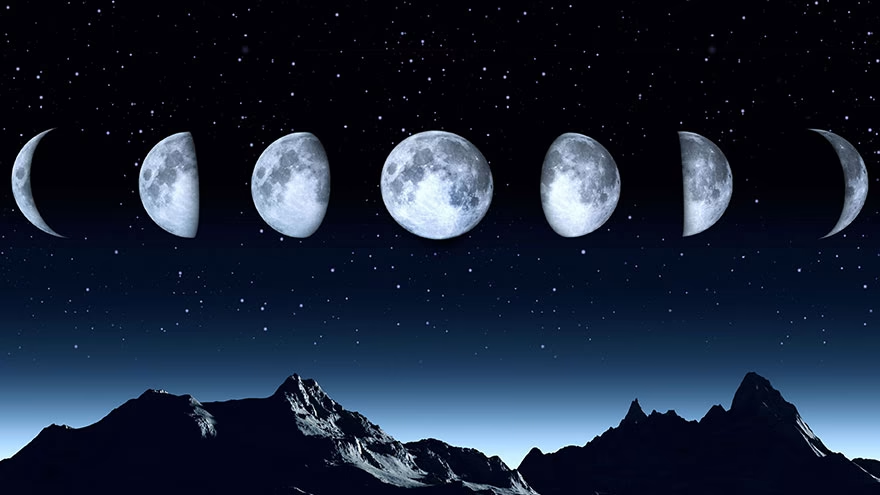
Moon phase journaling works better when the astronomy stays honest. The phase is real; the personal meaning is yours to assign.
That separation lets the practice feel reflective without pretending that the moon is making every decision for you.
Start With The Actual Phase
The U.S. Naval Observatory provides primary moon phase dates and definitions: USNO moon phase data. Use a real phase source before adding personal meaning.
Write the date, phase, visible shape, weather, and whether you saw the moon yourself or checked a calendar.
Use The Cycle As A Prompt Set
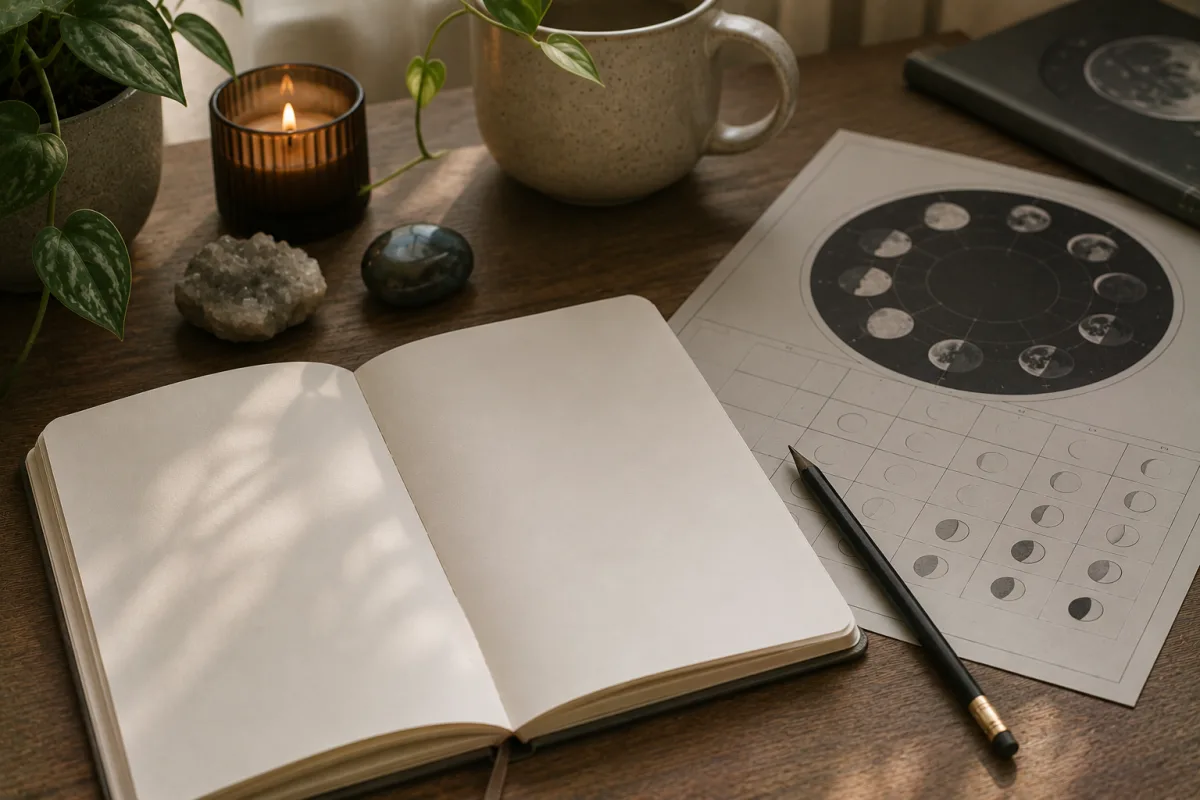
NOAA explains that the moon's phases come from its orbit around Earth and the changing sunlit portion we see: NOAA moon phases. That cycle can become a gentle writing structure.
Livecub's guide to writing a journal can help keep the entries simple instead of turning the practice into a complicated ritual.
Match Prompts To Four Main Points
For new moon, write about rest or beginnings. For first quarter, write about effort. For full moon, write about visibility. For last quarter, write about release and repair.
If public visibility brings nerves, Livecub's guide to stage fright can help connect the full-moon prompt to real-life courage.
Keep Observation Grounded
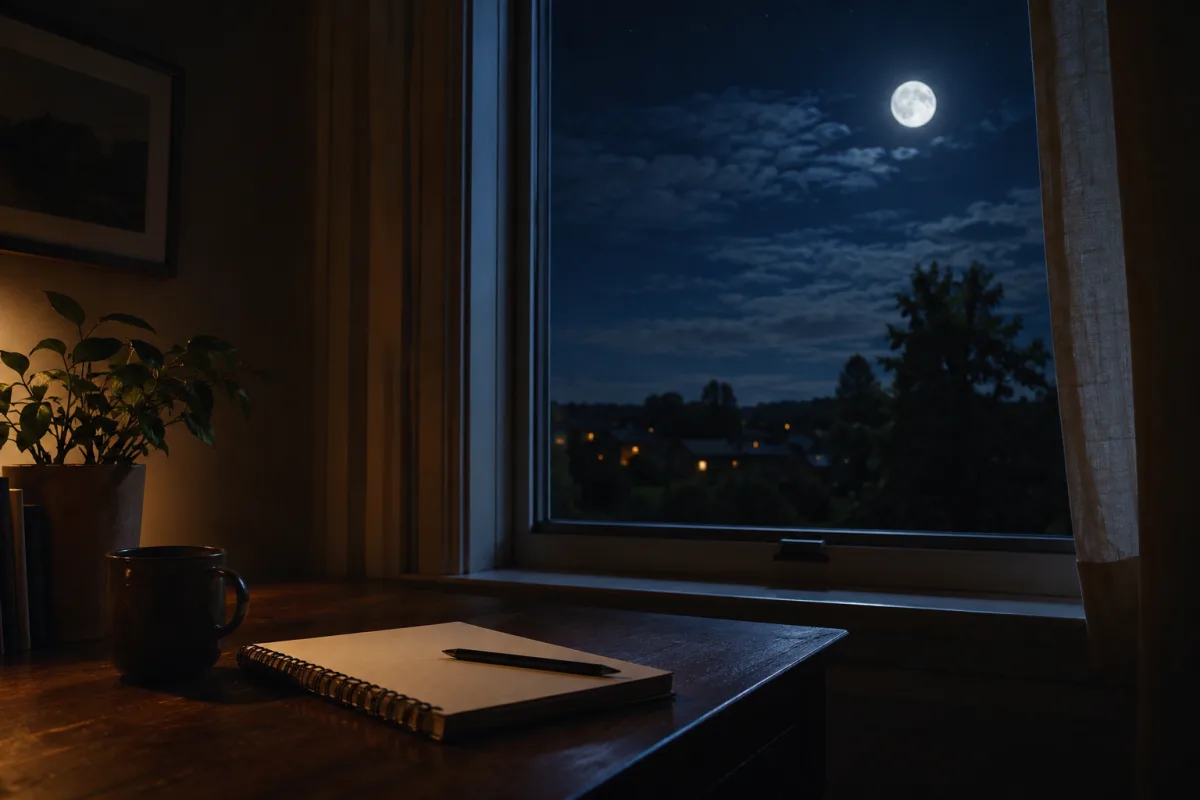
The Lunar and Planetary Institute explains the growing and shrinking visible light through the lunar cycle: LPI moon phase explanation. Observation keeps the journal from becoming vague.
Note what you can see: cloud cover, brightness, direction, time, and how the sky looks from your actual window or street.
Use The Prompts For Real Choices

A moon phase prompt can still lead to practical choices: prepare for a tryout, rehearse a talk, clean a room, or repair a relationship. Livecub's guide to sports tryout nerves fits that action-based angle.
If words disappear around hard topics, Livecub's guide to selective mutism may help with the communication side.
Use The Moon As A Date Marker
A lunar journal works well when the phase is treated as a date marker. The phase gives structure, but the real material is what happened in your life.
Write the phase, date, weather, sleep, mood, and one ordinary detail. Over time, the entries become a calendar with texture.
Keep Science And Symbol Separate
The moon's phase is an astronomy fact. Personal meaning is optional. Keeping those two layers separate makes the practice more honest and more useful.
You can enjoy ritual language without pretending it proves causation. The journal can hold meaning and accuracy at the same time.
Repeat The Same Prompt Each Cycle
One repeated prompt makes patterns easier to see. Try: what am I starting, what is growing, what needs release, and what needs rest.
The answer may be practical: budget, sleep, friendship, school, work, grief, patience, or cleaning a drawer.
Add A Small Outdoor Check
If it is safe, step outside and look at the sky. Note cloud cover, light, direction, and whether the moon is visible from where you live.
This keeps the journal connected to observation instead of only mood. Missed nights are fine; the cycle keeps moving.
Review After Two Months
After two cycles of Journal Ideas for Moon Phases, look for what the practice taught you about attention, sleep, planning, stress, or creativity.
Keep what helps and drop what feels theatrical. A journal should serve the person using it.
Keep The Advice Tied To A Real Situation
Advice about journal ideas for moon phases is easier to use when it is tied to one real setting. Choose the room, person, time of day, task, or decision where the issue shows up most often.
That detail prevents the plan from becoming vague self-improvement. A kitchen table problem, a school hallway problem, and a late-night phone problem may need different steps.
Make A One-Week Test
Choose one change and test it for a week. Keep the test small enough that you can still do it on a tired day, a busy day, or a day that does not go as planned.
At the end of the week, ask what changed in mood, behavior, sleep, avoidance, connection, or follow-through. If nothing changed, make the step clearer or smaller.
Use The Body As Data
The body often notices stress before the mind has language for it. Track jaw tension, stomach changes, shallow breathing, headaches, restlessness, fatigue, or the urge to disappear.
Body signals are not proof that danger is present, but they can show when a pause, meal, walk, call, or clinical support is needed.
Protect Sleep Before Judging Yourself
Low sleep can make fear louder, patience thinner, and ordinary tasks feel personal. Before deciding you failed, ask what sleep, food, pain, caffeine, and screen time looked like.
This does not excuse harmful behavior. It gives the plan a better starting point than pure self-criticism.
Bring In One Steady Person
A steady person can help you reality-check the plan without taking it over. Choose someone who listens, asks clear questions, and can respect privacy.
Tell them the role you need: a reminder, a ride, a quiet check-in, help finding a clinician, or someone to sit nearby while you start.
Remove One Friction Point
Often the barrier is not motivation but friction. Put the notebook where you sit, save the phone number, prepare the shoes, mute the feed, or write the first sentence ahead of time.
Small environmental changes work because they reduce the number of decisions needed before the useful action begins.
Know The Red Flags
Self-harm thoughts, severe withdrawal, threats, abuse, substance misuse, inability to function, or sudden major changes in sleep, eating, or behavior need more than a solo plan.
Use urgent or professional help when safety is involved. A practical article can support care, but it cannot replace real-time support in a crisis.
Do Not Turn Progress Into A Performance
Progress may look boring from the outside: one call made, one page written, one boundary held, one walk taken, one night of better sleep.
If the change has to impress other people, it becomes another pressure source. Let the first wins be private if that makes them easier to repeat.
Keep The Plan Editable
The first plan for Journal Ideas for Moon Phases may be partly wrong. That is normal. Plans improve after they meet real schedules, real fear, real fatigue, and real relationships.
Edit the plan instead of quitting the whole effort. Change the time, size, support, wording, or environment and try again.
Leave A Record For Future You
Write down what helped, what made things worse, and what you want to try next. Future you will not remember the details as clearly as present you thinks.
A short record protects useful lessons from being lost after a bad day. It also makes the next reset faster.
Use A Clear Stop Rule
Set a point where you stop reading, planning, scrolling, or rehearsing and do the next small action. Too much preparation can become avoidance in better clothes.
A stop rule can be a timer, a page limit, a bedtime, or a promise to call someone after one more step.
Make The Plan Visible
Put the next step somewhere you will see it: a calendar, sticky note, phone reminder, or notebook page opened to the right place.
Visible plans reduce the need to remember everything while stressed. They also make it easier for one trusted person to help without guessing.
Respect What Is Not Yours To Carry
Some problems involve other people's choices, medical conditions, school rules, weather, money, or timing. Name those limits so the plan stays honest.
You can still choose a response, but you do not have to claim control over every part of the situation.
Return To Ordinary Care
After a hard effort, return to ordinary care: food, water, rest, shower, fresh air, medication as prescribed, or a message to someone safe.
Ordinary care can look unimpressive, but it keeps the next attempt possible.
Frequently Asked Questions
What should I write on a new moon?
Write about rest, beginnings, one intention, or what needs quiet before action.
What should I write on a full moon?
Write about visibility, completion, attention, gratitude, or what is hard to ignore.
Do moon phases cause my mood?
The phase can be a useful prompt, but do not treat it as proof that it caused a mood.
Where can I check moon phases?
Use astronomy sources such as USNO, NOAA, or educational lunar phase pages.
How often should I journal?
Try the four main phase points first, then add crescent or gibbous entries if you enjoy the rhythm.
This article is for general information only and isn't a substitute for medical advice. Talk to a clinician who knows your full history before making changes.

Chiara Bradshaw
Covers education, culture and creative topics with an emphasis on readable explanations and verifiable references.




Leave a reply
Replying to