
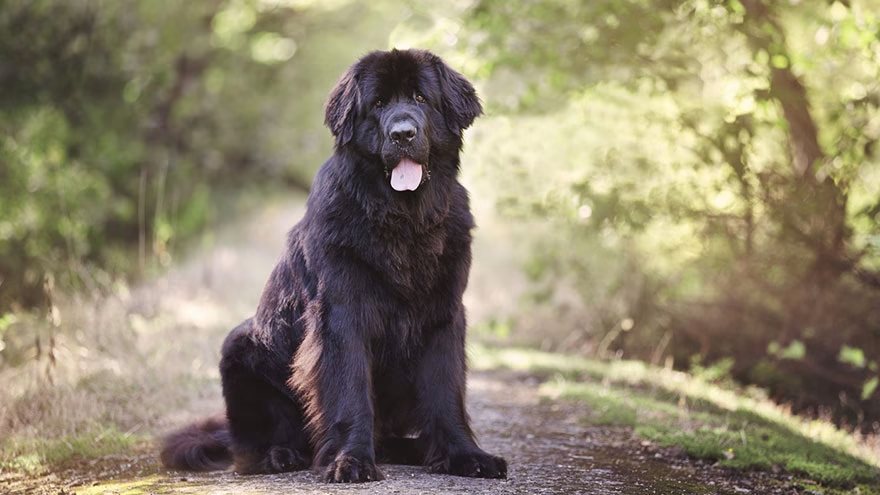
A Newfoundland training guide has to begin with size and softness at the same time. Newfoundlands are huge, sweet-natured working dogs with a reputation for patience, water ability, and devotion. Their size means manners cannot wait. Their sensitivity means heavy-handed training can backfire.
A young Newfoundland puppy may look like a sleepy bear rug with paws, but that puppy will grow into a dog that can move furniture by leaning. Train early, reward generously, and build habits that still work when the dog is wet, excited, muddy, and much stronger than the person holding the leash.
What Makes Newfoundland Training Different?
The American Kennel Club describes the Newfoundland as a large working dog known for a sweet temperament. That sweetness is real, but it does not remove the need for structure. A friendly giant still needs leash manners, recall, doorway control, grooming cooperation, and polite greetings.
Newfoundlands often respond poorly to harsh voices. Many do better with calm repetition, food rewards, praise, and patient handling. If you are comparing giant breeds, Livecub's biggest dog breeds article is a useful reminder that size changes ordinary training decisions.
When Should Training Start?
Start the first day home. Teach name response, come, sit, down, wait, drop it, leave it, leash pressure, crate or pen comfort, and calm handling. Keep sessions short. A puppy that is mentally fresh learns faster than one drilled until it wanders off.
The Newfoundland Club of America points owners toward education and training resources for living with the breed. That breed support matters because Newfoundlands are not just large companion dogs. They are working dogs with coat, drool, water, strength, and maturity patterns to plan around.
How Do You Socialize A Newfoundland?
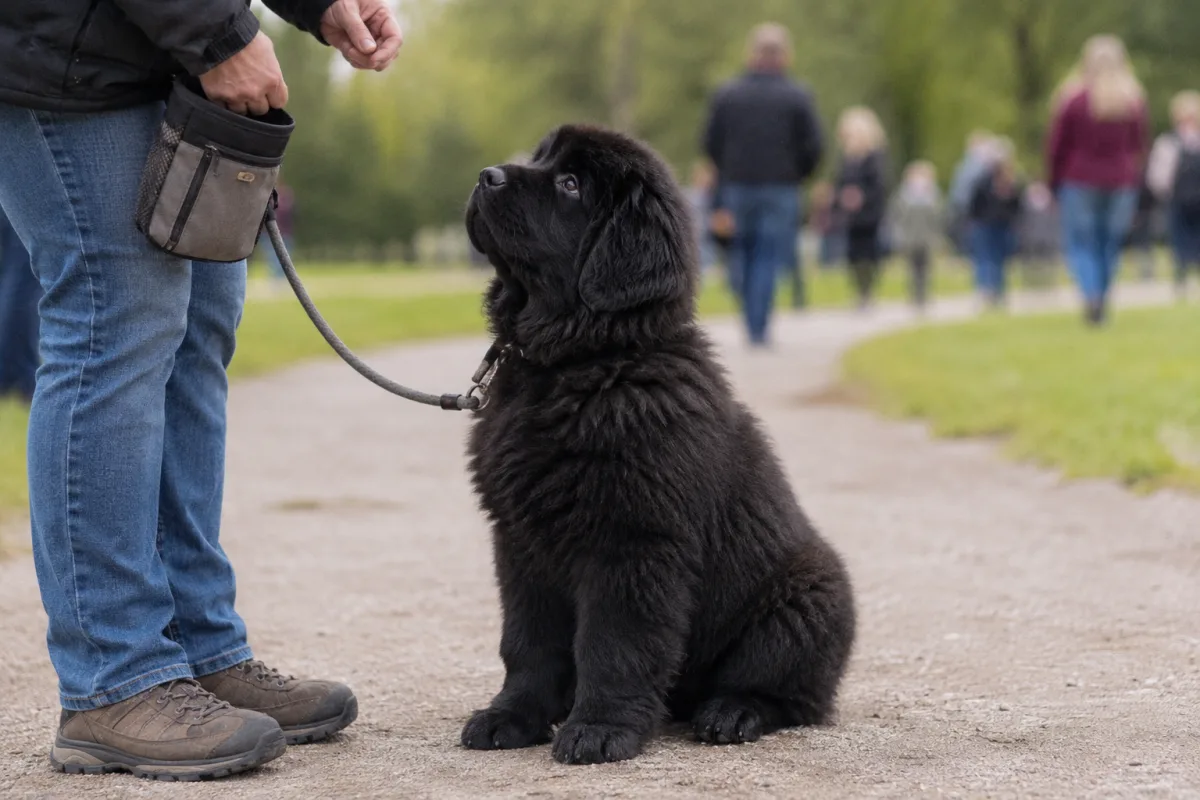
Socialization should teach calm confidence. Let the puppy experience people, children, wheelchairs, stairs, slick floors, grooming tables, vet handling, traffic sounds, and other dogs at safe distances. Reward calm observation and relaxed recovery.
Do not let every stranger rush the puppy. A giant dog that expects to greet everyone with full body contact can become hard to manage. Teach the dog that seeing people does not always mean pulling toward them.
How Do You Teach Leash Manners?
Begin while the puppy is small enough to redirect easily. Reward the dog beside you, stop when the leash tightens, and turn before pulling becomes a habit. Practice in quiet places before busy sidewalks, school pickups, outdoor cafes, or pet stores.
Use sturdy equipment that fits well, but do not rely on equipment to replace training. The dog should learn that a loose leash makes walks continue. If a Newfoundland learns early that leaning pulls people where it wants to go, that lesson will be expensive later.
How Do You Manage Jumping And Greetings?
Newfoundland puppies can be social and slow-moving until they are suddenly not. Teach four feet on the floor from the start. Ask visitors to ignore jumping, reward sitting or standing calmly, and use a leash or gate when excitement is too high.
Do not reward the puppy for placing paws on people just because it is cute. That same behavior can knock over a child, older adult, or guest carrying hot coffee. Large-dog manners are kindness to everyone in the house.
How Much Exercise Does A Newfoundland Need?
Newfoundlands need daily movement, but puppies should not be pushed into long forced runs or repeated hard jumping. Walks, sniffing, gentle play, short training, and controlled swimming when safe can all help. Growth and joints deserve care.
VCA describes the Newfoundland as a breed with working heritage and notes the need for attention to care and training. For daily owners, that means enough activity to prevent boredom, not a reckless fitness plan.
What About Water Training?
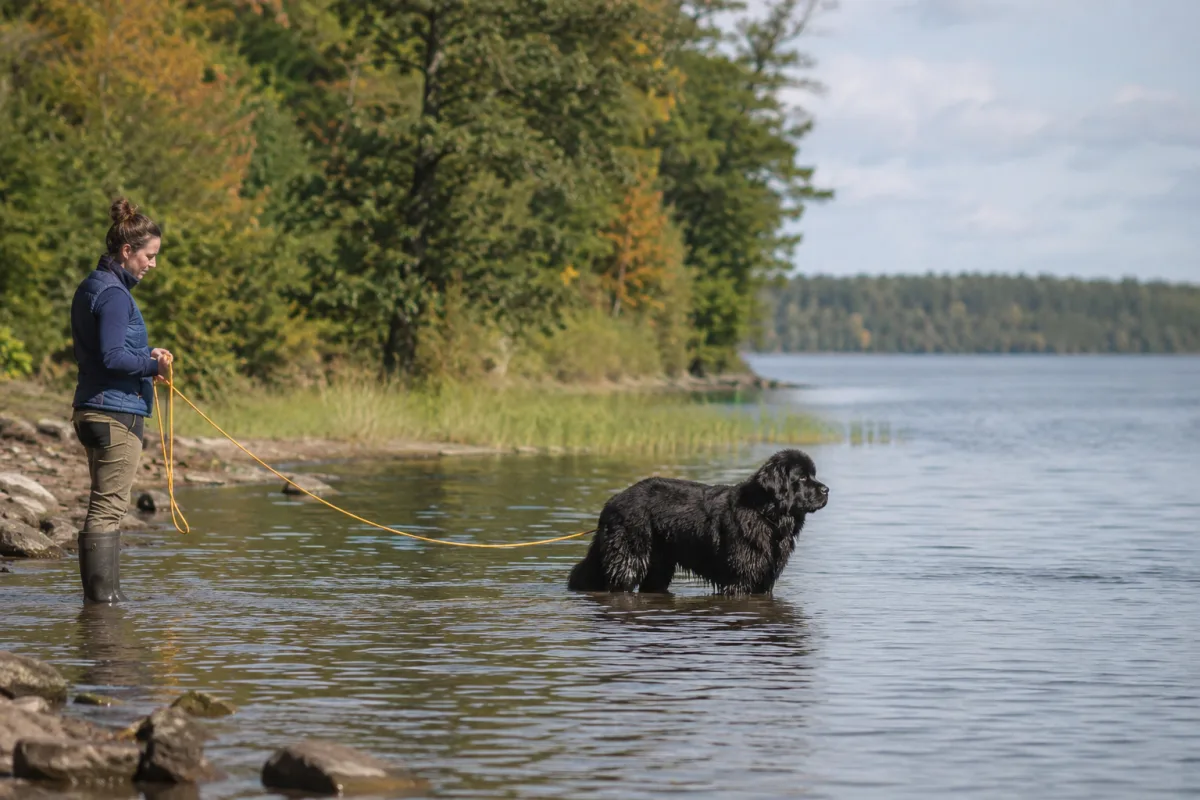
Many Newfoundlands love water, but do not assume every puppy is ready for deep water or strong currents. Start with shallow, safe places. Use a long line when needed, avoid cold shock, and teach an exit cue so the dog does not stay in until exhausted.
Water manners also matter around people. A wet Newfoundland can knock into swimmers, climb over children, or shake water across a picnic. Train recall, wait, and controlled entries before making water play a free-for-all.
How Do You Train Grooming Cooperation?
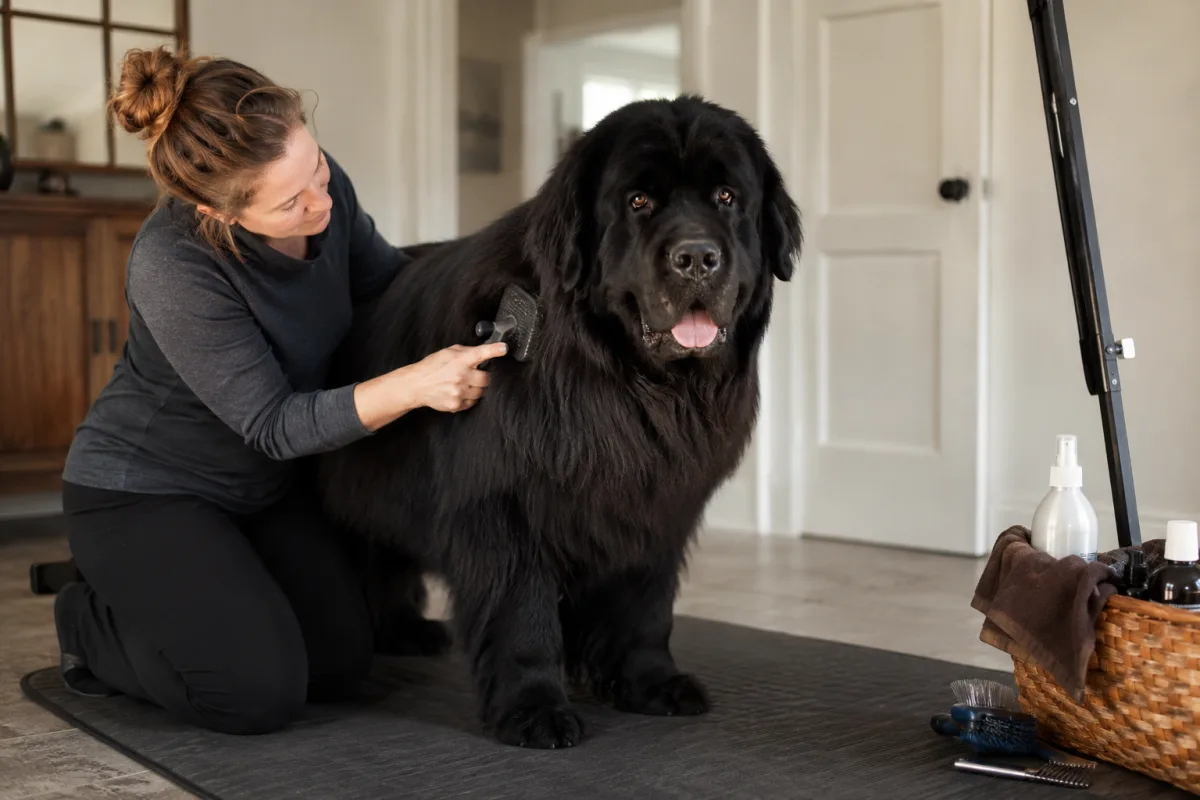
Newfoundlands need brushing, ear checks, nail care, bathing, drying, and mat prevention. Teach the dog to stand, turn, offer paws, accept a dryer, and let you check under the collar and behind the ears. Start before the coat becomes a project.
Livecub's longhair Dachshund grooming guide covers a different coat, but the same training idea applies: make handling normal while the dog is relaxed. Grooming a giant dog should not depend on wrestling.
What Mistakes Should Owners Avoid?
Do not delay training because the puppy is gentle. Do not let pulling, leaning, mouthing, jumping, or counter surfing become habits. Do not yell as the main strategy. Do not skip grooming practice until mats appear. Do not assume a sweet breed needs no boundaries.
Choose a breeder carefully, ask about temperament and health testing, and plan for the adult dog. Livecub's breeder recommendation guide is for another breed, but the questions about responsible breeding still apply.
How Do You Train Around Children?
Newfoundlands are famous for patience, but patience should not be used as a substitute for supervision. Teach children not to climb on the dog, pull ears, ride the dog, bother meals, or wake the dog from deep sleep. Teach the puppy to move away, settle on a bed, and accept gentle handling.
Use gates and leashes during busy moments. A happy Newfoundland can knock over a child simply by turning around. Reward calm behavior near children and end interactions before the puppy gets too excited or too tired.
What Changes During Adolescence?
Adolescence can bring selective hearing, stronger pulling, more interest in smells, and a body that no longer matches the puppy brain. Go back to basics instead of assuming the dog is being difficult on purpose. Practice in easier places, reward faster, and shorten sessions.
This is also when size becomes real. Door manners, car manners, greeting rules, and leash habits need to be reinforced before the dog learns it can use weight to make choices. Calm repetition is more useful than frustration.
How Do You Teach House And Car Manners?
Teach the dog to wait at doors, step into the car only on cue, ride calmly, and exit slowly. Use a ramp if needed and practice before the dog is too heavy to lift safely. A giant dog that bolts from a car or doorway can create danger before anyone has time to react.
Inside the house, reward settling away from counters, trash cans, and narrow walkways. Newfoundlands like to be near people, but they also need to learn that lying across the kitchen path is not always helpful. Give the dog a clear resting spot and reward it often.
How Should A Daily Routine Look?
A good routine includes a short morning walk, a few minutes of training, breakfast, rest, grooming touch practice, another calm outing, and a small evening session. Rotate skills so the dog learns manners in real life, not only in the kitchen.
Newfoundlands often enjoy being near their people, so separation practice matters too. Teach short calm absences, crate or pen comfort, and resting away from your feet. A dog this large should be able to relax without blocking every doorway.
Frequently Asked Questions
Are Newfoundlands easy to train?
They are usually willing and gentle, but their size, sensitivity, coat care, and slow maturity require steady training.
Can a Newfoundland be off leash?
Only in safe areas after reliable recall practice. Size and distraction can create risk even with a friendly dog.
How do I stop a Newfoundland from pulling?
Reward a loose leash, stop when pulling starts, practice turns, and begin before the dog is physically hard to manage.
Do Newfoundlands need puppy class?
A well-run puppy class can help socialization and owner coaching, especially for first-time giant-breed owners.
How often should grooming be trained?
Several short sessions each week are better than waiting for one long grooming battle.
What Is The Best Training Mindset?
Train the adult giant while it is still a puppy. Be calm, consistent, and early. A Newfoundland does not need harshness. It needs clear manners, gentle repetition, safe socialization, and an owner who plans for the full-size dog from the beginning.

Chiara Bradshaw
Covers education, culture and creative topics with an emphasis on readable explanations and verifiable references.

Leave a reply
Replying to