
Military Dogs Are Chosen for Jobs, Not Popularity
What dogs are used in the military? The short answer is that military working dog programs choose dogs for ability, nerve, health, drive, trainability, and job fit. Breed matters, but the individual dog matters just as much.
A good military working dog needs a strong nose, stable temperament, confidence in strange places, willingness to work around noise, and a close working relationship with a handler.
These are not ordinary pet-selection standards. A sweet family dog may be a poor military candidate, and a high-drive working dog may be too intense for many homes.
Breeds You Will See Most Often
Modern military working dogs often come from herding and sporting lines because those dogs can combine athleticism, trainability, scent ability, and resilience. Exact breed use varies by country, unit, supplier, and task.
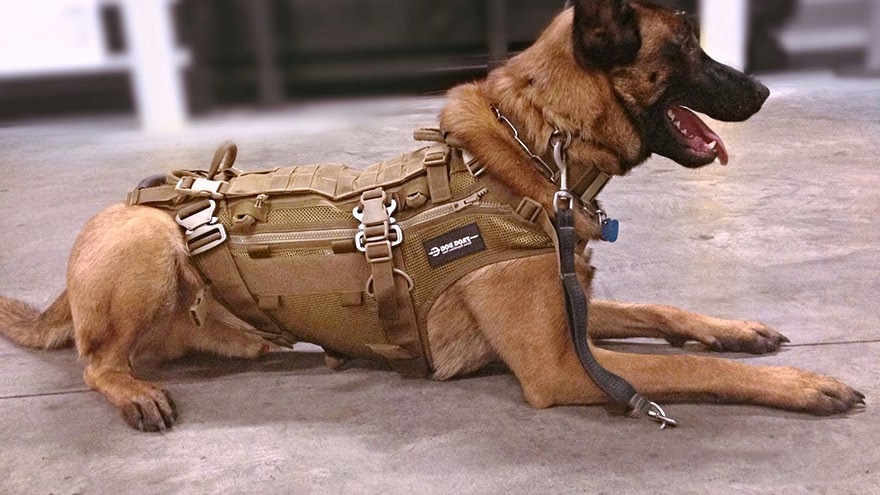
Belgian Malinois
The Belgian Malinois is one of the most visible modern military working dog breeds. It is usually lighter and faster than a German Shepherd, with intense drive, agility, and willingness to work in tight spaces or tactical settings.
German Shepherd
The German Shepherd has a long military and police history. Good working-line German Shepherds can bring size, power, tracking ability, obedience, and a serious working temperament.
Dutch Shepherd
Dutch Shepherds are less familiar to casual dog owners, but they can appear in patrol and detection work. They are often valued for athleticism, drive, and trainability when bred and selected for work.
Labrador Retriever
Labradors are often associated with detection and search roles because of their noses, food motivation, sociability, and ability to work in public settings without looking as intimidating as a patrol dog.
Other Working Breeds
Other breeds and mixes may appear depending on the job. The dog must pass selection, training, medical screening, and handler fit, so breed name alone does not guarantee service ability.
What Military Working Dogs Do
Military working dogs can perform detection, patrol, tracking, search, building checks, route security, and handler-protection tasks. Some dogs are single-purpose, while others are dual-purpose and trained for both detection and patrol.
The U.S. Army article Dogs on Duty describes military working dogs as K9s trained to support warfighters in many settings. That support can include alerting handlers to threats humans might miss.
The nose is often the main tool. A dog can search air, ground, vehicles, buildings, baggage, and routes in ways that change the pace of a mission.
Detection Dogs Need More Than a Good Nose
Explosives, narcotics, weapons, and other detection work require more than scent talent. The dog must search methodically, ignore distractions, communicate clearly, and work in heat, noise, crowds, vehicles, and unfamiliar surfaces.
A high-drive dog that cannot settle or follow direction may be hard to deploy. A calm dog with a weaker search drive may not be enough either. The best candidate has both desire and control.
For readers comparing general breed traits, Livecub's German Shorthaired Pointer: 10 Most Common Questions shows how working ability depends on more than a breed label.
Patrol Dogs Need Nerve and Control
Patrol work may include suspect apprehension, area searches, perimeter work, or handler protection. The dog needs confidence, physical ability, and clear control under pressure.
This is where Belgian Malinois, German Shepherds, and Dutch Shepherds are often discussed. The dog must be bold enough to work through stress but trained enough to stop when the handler gives direction.
Control is as valuable as courage. An uncontrolled dog is unsafe, no matter how athletic it is.
For another strong, serious breed profile, Livecub's Rottweiler: 10 Most Common Questions is useful because it separates power from suitability.
Research Shows the Population Is Specialized
A recent open-access study on United States military working dogs from 2019 to 2021 grouped breeds into Belgian Malinois, German Shepherd, and less common categories. That kind of research shows how specialized the population is compared with ordinary pet ownership.
Military programs also care about medical readiness. Heat tolerance, orthopedic soundness, dental health, paw health, and behavior all affect whether a dog can work safely.
If size is your main curiosity, Livecub's What Are the Top 10 Biggest Dog Breeds? is a reminder that size alone is not the same as working suitability.
Training and Handler Bond Matter
A military working dog is part of a team. The handler reads the dog's body language, rewards correct work, manages stress, and keeps the dog safe. The dog learns to trust the handler through thousands of small repetitions.
Training does not end at graduation. Detection odors, obedience, patrol skills, fitness, environmental exposure, and veterinary care all need maintenance.
The team is the working unit. The breed opens the door, but training and handling decide what the dog can actually do.
Not Every Working Breed Belongs in This Work
Many breeds are athletic, smart, and loyal, yet still not ideal for military work. Some lack the nerve for loud settings. Some are too independent. Some have coat, heat, size, or health traits that do not match the job.
Livecub's Staffordshire Bull Terrier Health Problems shows why health and structure matter when judging any dog for demanding activity.
Even within common military breeds, many individual dogs wash out or move to different work because they are not the right fit.
Military Dogs Are Not Just Breeds on a List
The American Kennel Club's military dogs article gives broad historical and breed context, but the practical answer is still job-based. A Belgian Malinois, German Shepherd, Dutch Shepherd, or Labrador becomes useful only through selection, training, care, and handler skill.
For grooming and care contrast, Livecub's How to Groom a Longhair Dachshund shows the ordinary pet-care side of dog ownership, which is very different from a military working dog program.
Selection Starts Before Formal Training
Many dogs never reach advanced work because selection is strict. Evaluators look at search desire, toy or food reward interest, environmental confidence, startle recovery, physical soundness, and how the dog handles pressure.
A dog that looks impressive in a yard may struggle with slippery floors, loud vehicles, crowds, heat, stairs, kennels, or long periods of waiting. Military work asks for both drive and steadiness.
Drive without recovery is not enough. A working dog has to switch between action, rest, transport, and obedience.
Care Keeps the Dog Deployable
Military working dogs need veterinary care, dental care, conditioning, paw checks, heat management, rest, nutrition, and behavior monitoring. A small injury or stress problem can affect the whole team.
Handlers often notice subtle changes first: slower searches, less enthusiasm for reward, stiffness, heat stress, or hesitation in a setting the dog normally handles. Early care protects the dog and the mission.
The job is demanding because the dog is valuable. Good care is not a luxury; it is part of readiness.
Retirement and Adoption Are Separate Topics
Military working dogs can retire, but retirement depends on health, behavior, age, and program rules. Some dogs go to handlers, some to approved homes, and some need more specialized care than a casual adopter expects.
A retired working dog may be affectionate and loyal, yet still carry habits from years of training. Noise sensitivity, medical needs, drive, and handler attachment can shape the transition.
Respect the work history. These dogs deserve homes that understand structure, veterinary care, and decompression.
Why Breed Lists Can Mislead
Breed lists are useful for orientation, but they can make the topic sound simpler than it is. A German Shepherd from pet lines, a Belgian Malinois from sport lines, and a Labrador from field lines may have very different abilities and needs.
The military does not need a breed stereotype. It needs a dog that can do the job, stay healthy, and work safely with a handler.
Military dogs are working partners. The breed name matters, but the work is built on the individual dog, the handler, the mission, and the care that keeps the team ready.
Frequently Asked Questions
What breed is most used in the military?
Belgian Malinois and German Shepherds are among the most common modern military working dog breeds, especially for patrol and detection roles.
Are Labradors used by the military?
Yes. Labradors are often used in detection and search roles because of scent ability, trainability, and public-friendly temperament.
Can any dog become a military working dog?
No. Dogs must meet demanding standards for health, drive, nerves, trainability, and job fit.
Are military dogs pets?
They are working dogs with handlers and specialized duties. Many may later retire into homes, but their training and daily life differ from ordinary pets.

Timothy Davidson
Edits step-by-step general-interest guides for clarity, realistic limits and source verification.
Leave a reply
Replying to