
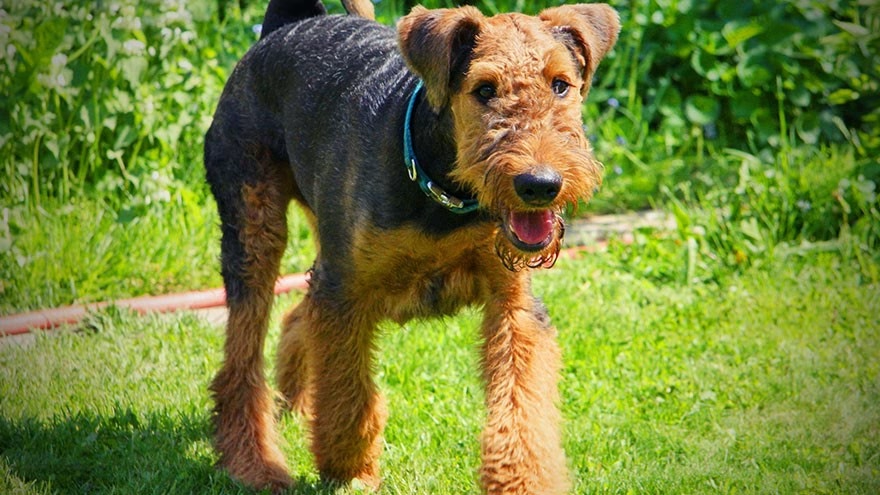
Airedale Terrier Training Guide advice has to respect the dog in front of you. The Airedale is not a soft little lap dog in a terrier costume. This breed is clever, athletic, nosy, funny, stubborn at times, and quick to spot gaps in your rules.
Good training does not mean crushing that personality. It means giving the dog enough structure, work, play, and clear feedback that the big terrier brain has a better job than inventing trouble. A bored Airedale is rarely quiet about it.
What Makes Airedales Different To Train?
The American Kennel Club describes the Airedale Terrier as the largest terrier, with an alert and confident nature. That size matters. A small terrier habit can become a full-body wrestling match when the dog is bigger, stronger, and faster than expected.
Airedales often learn fast, but they do not always repeat a cue just because you asked. They want the task to make sense. They also notice inconsistency. If jumping works on Tuesday, stealing socks works on Thursday, and barking earns attention on Friday, they will test all three again.
How Should Training Start?

Start with house rules before trick work. Decide where the dog sleeps, how greetings happen, what happens around doors, what counts as polite leash behavior, and how the dog earns access to food, toys, visitors, and outdoor time.
Then teach a few cues cleanly: name response, sit, down, come, wait, leave it, drop it, settle, and hand target. Keep early sessions short. Five minutes of clean attention beats half an hour of arguing with a dog that has already checked out.
What Rewards Work Best?
Food helps, but many Airedales also work for movement, chasing a toy, tug, sniffing permission, access to a person, or getting to investigate something. Use what the dog actually wants in that moment, not what a training chart says should work.
Reward fast when the behavior is right. If you wait too long, the dog may think the reward was for barking, spinning, grabbing the leash, or staring at a squirrel. Timing is the difference between teaching and accidentally sponsoring nonsense.
How Do You Handle Terrier Independence?
Do not take independence personally. Airedales were not designed to ask for permission every four seconds. Build cooperation by making cues predictable and rewarding, then hold the line calmly when the dog tries a different plan.
The Airedale Terrier Club of America's breed information emphasizes the breed's intelligence and active nature. That is the owner assignment: train the dog you have, not the obedient statue you imagined.
How Do You Teach Recall?
Recall should be protected like money. Do not call the dog for baths, nail trims, punishment, or the end of every fun thing. Call, reward heavily, release back to play often, and use a long line before trusting open space.
Practice in layers: hallway, yard, quiet park, longer line, mild distractions, stronger distractions. If the dog ignores you around squirrels or other dogs, the step was too hard. Go back and rebuild rather than yelling a cue that no longer means anything.
What About Leash Pulling?

Airedales can pull like they have somewhere urgent to be. Start with equipment that gives control without pain, then reward the dog for checking in and walking near you. Change direction before the dog hits the end of the leash at full power.
Do not let every pull succeed. If pulling always reaches the smell, the door, or the other dog, pulling has been trained. Stop, turn, ask for a simple cue, and move again when the leash softens. This takes patience, but terriers understand patterns.
How Much Exercise Supports Training?
Training goes better when the dog has enough movement. Airedales usually need walks, sniffing, play, problem solving, and room to stretch. Exercise does not mean frantic running every day. It means physical and mental work that leaves the dog satisfied.
If you are comparing active breeds, Livecub's German Shorthaired Pointer questions show how different working dogs can be in energy and focus. Airedales need a terrier-shaped plan: movement, choice, rules, and something to do.
How Do You Teach Calm Behavior?
Calm is a trained skill. Reward the dog for lying on a mat, watching activity without charging in, and choosing a chew instead of pestering people. Do this before the house is loud. Waiting until guests arrive makes the lesson harder.
Use a leash, gate, or pen when the dog is too excited to make good choices. Management is not failure. It gives the Airedale a smaller problem to solve while the habit is still being built.
How Do You Stop Jumping And Mouthing?
Jumping and mouthing often come from excitement, not malice. Teach a greeting routine before guests arrive. Leash the dog if needed, reward four feet on the floor, and release to greet only when the body is under control.
For mouthing, remove attention briefly, offer a toy, and reward calmer contact. Do not turn it into a wrestling match unless you are trying to create a stronger wrestler. Tug is fine when rules are clear: take it, drop it, pause, restart.
How Should Socialization Be Done?
Socialization is not letting every dog and stranger crowd your puppy. It is calm exposure to surfaces, sounds, people, handling, traffic, grooming tools, vet-style touch, and polite dogs. The puppy should learn that the world is normal, not a circus.
Many Airedales are confident, but confidence without manners becomes pushy. Teach the dog to pass people, ignore dogs, settle near activity, and recover after surprises. A dog that can disengage is easier to live with than one that has to inspect everything.
Why Does Grooming Training Matter?
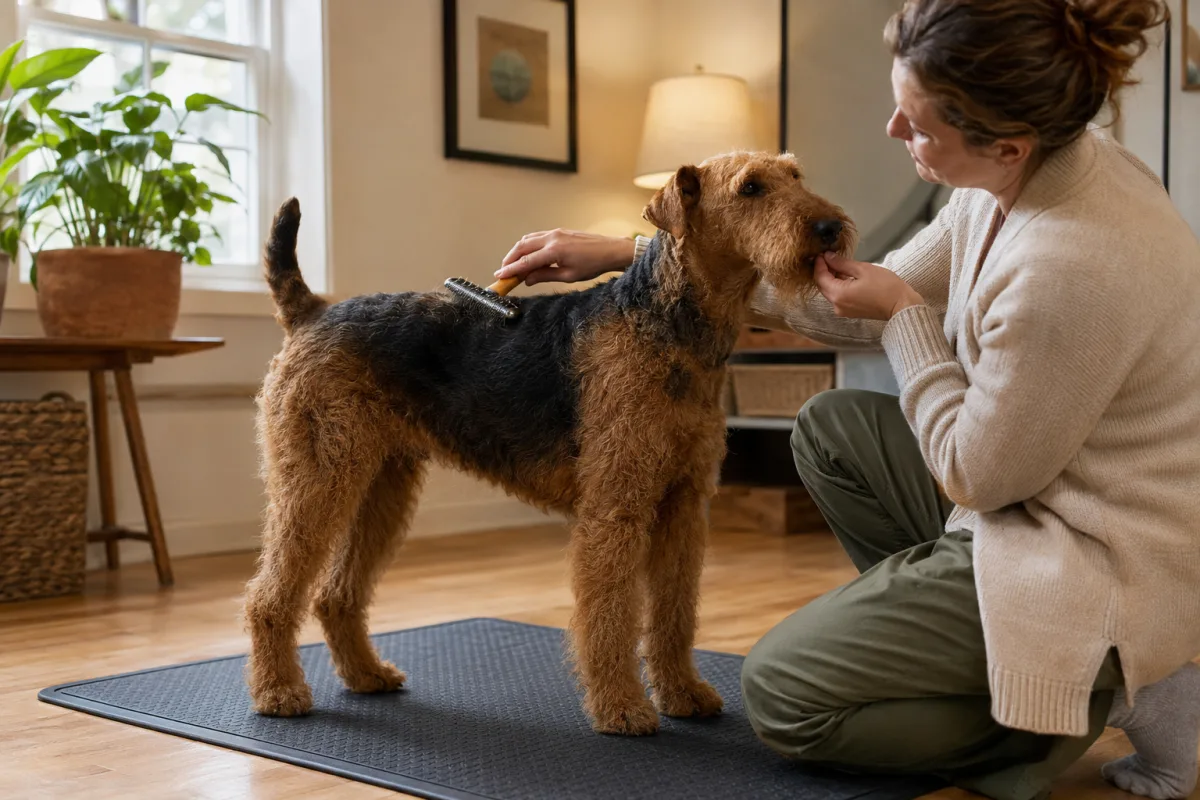
The Airedale coat needs regular care, and the dog has to learn how to stand, accept brushing, tolerate feet being handled, and allow ear, teeth, and body checks. Grooming manners are training, not a separate chore.
Livecub's longhair Dachshund grooming guide covers a different coat, but the handling lesson applies. Start small, reward cooperation, and avoid waiting until the dog is matted or sore before teaching stillness.
What Training Mistakes Cause Trouble?
The common mistakes are vague rules, too little exercise, repeating cues ten times, punishing after the dog has already forgotten the act, and laughing at puppy behavior that will be miserable at full size. Airedales remember what works.
Another mistake is trying to win every disagreement by force. You may suppress one behavior and create another. Clear setup, rewards, management, and calm follow-through usually work better. For strong dogs in general, Livecub's Rottweiler questions also show why structure matters before size becomes the issue.
How Do Breeders Affect Training?
A good breeder starts the work before you arrive. Ask about handling, early socialization, parent temperament, grooming exposure, crate introduction, and how puppies are matched to homes. A nervous, underhandled puppy may need a slower training plan.
Livecub's Brittany breeder recommendations can help shape buyer questions. The breed is different, but the idea is the same: temperament, support, and early care matter long after the purchase.
What Should A Daily Routine Look Like?
A workable day might include a morning walk with sniffing, two short training sessions, a chew or food puzzle, polite leash practice, a grooming touch routine, and calm time near the family. The exact schedule can change, but the dog should know how good choices happen.
Keep the routine realistic. If you can only train five minutes before work, train five clean minutes. Airedales do well with repeated habits. They do less well with one dramatic weekend session followed by six days of chaos.
Frequently Asked Questions
Are Airedale Terriers easy to train?
They learn quickly, but they can be independent. Clear rules, good rewards, and short sessions help.
Do Airedales need professional training?
Many owners benefit from classes, especially for leash work, recall, manners, and early socialization.
Are Airedales good off leash?
Only after careful recall training and in safe areas. Terrier chase drive can overpower weak training.
How do I stop an Airedale from digging?
Give more exercise, supervise the yard, block favorite spots, and consider a legal digging area.
Do Airedales bark a lot?
Some do. Teach quiet, reward calm watching, and reduce boredom rather than only correcting noise.
What Is The Best Training Mindset?
Train the Airedale like a smart partner with strong opinions. Be fair, consistent, active, and prepared. The dog does not need endless domination. It needs a life where good choices are clear and bad habits stop paying.

Cashie Evans
Covers parenting and practical household topics with clear steps, safety notes and links to current guidance.



Leave a reply
Replying to