
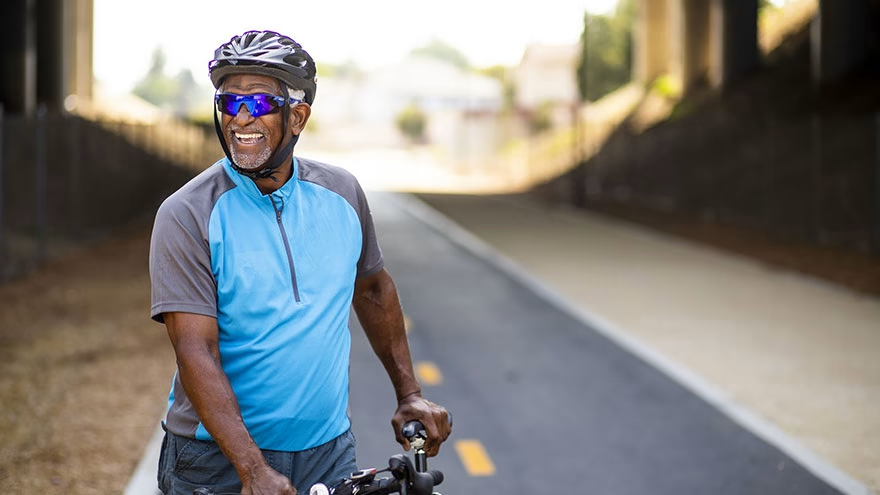
Compare effort before calories
CDC's adult activity page at cdc.gov frames exercise by intensity and weekly minutes. Cycling and running only compare fairly when effort and time are similar.
A workout like Tae Bo for weight loss has the same issue: the result depends on effort, frequency, and consistency.
Running often burns more per minute
Running usually costs more energy per minute because the body bears more weight. That does not mean it is better for every person.
If running causes pain or dread, the higher burn rate may not matter because the routine will not last.
Cycling can win through duration
Cycling may be easier on joints and can be sustained longer by many beginners. Longer sessions can close the calorie gap.
Leg stamina from bleacher running is useful, but cycling can build work capacity with less impact.
Use heart rate or talk test
The American Heart Association explains target heart rates for moderate and vigorous exercise. A heart-rate range can make cycling and running easier to compare.
The talk test also helps: moderate work allows broken conversation, while hard work makes talking brief.
Do not ignore recovery appetite
Hard workouts can increase hunger and fatigue. Weight change depends on what happens after the workout too.
Sleep, protein, fiber, and planned meals keep the workout from turning into random eating later.
Pick the one you will repeat
Mayo Clinic's exercise intensity guide explains using perceived effort and heart rate. Use those cues to choose the mode you can repeat without pain.
Gear fit matters too; the same fit logic behind ski length applies to bikes and shoes.
Fit the advice to the real day
The better choice depends on joint tolerance, fitness level, available time, terrain, bike fit, weather, appetite, and repeatability. Good advice has to survive the day it is used. That means the plan should respect time, money, attention, safety, and the people who will actually carry it out.
Start with the limit that will not move. Once that limit is clear, the rest of the plan can become smaller, calmer, and easier to test.
Choose one measurement that keeps you honest
The measurement to watch is minutes completed, heart-rate range, perceived effort, joint pain, and weekly consistency. A visible measurement keeps the plan from drifting into guesswork, especially when the topic involves travel, exercise, children, food, gear, or household scheduling.
Write the number, cue, label, route, time, or setting down before you begin. Memory gets less reliable when people are tired, hungry, rushed, or trying to keep a child regulated.
Plan for the interruption
Fatigue, soreness, poor setup, skipped warmups, crowded rooms, and unrealistic goals can change a workout fast. A plan that assumes perfect focus usually breaks at the first interruption. Build the break into the plan before it happens.
The easier backup wins under pressure. Keep it simple enough that another adult, an older child, a partner, or a tired version of you can follow it.
Keep cost and effort visible
The cost can be time, discomfort, injury risk, gear that does not fit, and quitting because the plan was too aggressive. The cheapest plan is not always the least expensive once waste, missed sleep, stress, returns, parking, childcare, or injury risk are counted.
Before spending, ask what the purchase or plan removes. If it does not reduce a real problem, it can probably wait.
Use outside advice carefully
Trusted sources help, but they still need to be applied to your situation. A public health chart, airline rule, safety page, or fitness guideline gives a starting point, not a private diagnosis or promise.
Keep the claim narrow. Use the source for the point it actually supports, then adjust the rest with your schedule, health history, budget, travel route, family needs, or equipment.
Watch the common failure point
The common failure point is declaring one exercise better without matching intensity, duration, recovery, and the chance of repeating it. It tends to appear when the plan is made while energy is high and then tested when energy is low.
Remove one fragile step. Pack earlier, lower the workout intensity, write the list, test the seat height, set the spending cap, or make the first conversation shorter.
Know when to pause
Pause when there is chest pain, faintness, sharp joint pain, or a medical condition that needs exercise guidance. A pause can protect health, money, safety, or trust before a small problem turns into a larger one.
Pausing also gives room to ask a qualified person, check a rule, change equipment, simplify the route, or choose rest instead of forcing the original plan.
Make the next attempt easier
After the session, note the setting, effort, pain signals, recovery, and what you would repeat next time. Save that detail while it is fresh. The next attempt should begin with what you learned, not with the same blank page.
Progress should feel usable. It may be one calmer airport line, one better ride, one cheaper party, one safer exercise session, or one family routine that causes less friction.
Strip the plan down to the next action
A useful plan should end in a specific action someone can take today. Buy the cleats, measure the inseam, set the calendar block, pack the diaper kit, choose the free stop, or lower the first workout intensity.
That action should be small enough to finish without creating another problem. Big plans often fail because the first step is too vague.
Make room for the person with the least margin
Most family, travel, and fitness plans are tested by the person with the least sleep, confidence, time, money, or physical comfort. Build the plan around that person first.
If the plan works for the least resourced person, everyone else usually has enough room to adapt. If it only works for the most energetic person, it will break under normal pressure.
Use a simple checklist before starting
A short checklist prevents the same mistake from repeating. It might include documents, snacks, shoes, seat height, water, route, spending cap, medicine, warmup, or the one phone number you may need.
The checklist should be short enough to use. Five useful items beat twenty items that nobody checks.
Decide what can be ignored
Not every detail deserves attention. Matching outfits, perfect metrics, a flawless itinerary, a trendy exercise claim, or a full party table may add pressure without improving the outcome.
Choose the few details that protect safety, comfort, money, or repeatability. Let the rest stay ordinary.
Check the result the next day
The next day tells the truth. Look for soreness, sleep, stress, money left, unused supplies, child behavior, travel fatigue, gear discomfort, or whether the routine was easy enough to repeat.
Use that information while it is still fresh. The next version should be less dramatic and more accurate.
Keep the plan explainable
Someone else should be able to understand the plan without a long speech. Write down the time, place, budget, setting, equipment, route, intensity, or rule in one plain line.
This matters when a partner takes over, a class substitute leads the room, a child needs help, or a travel day changes quickly.
Leave one clean fallback
A fallback is not a second full plan. It is the simpler choice you use if the first choice fails: a shorter route, lower resistance, earlier meal, cheaper activity, quieter room, or later start.
Having that option ready keeps frustration from making the decision for you.
Keep it visible before the day begins. A fallback that nobody remembers is only another idea, not a working part of the plan.
If the fallback is used often, treat that as useful evidence and redesign the main plan.
The point is not to avoid every problem; it is to avoid being surprised by the predictable one.
That small adjustment is often what makes the plan usable on an ordinary day.
Protect recovery after the effort
The plan does not end when the event, trip, task, or workout ends. Recovery decides whether the effort was worth repeating.
Drink water, put gear away, write the useful note, give the child a reset, check soreness, save the receipt, or clean the equipment before the next demand starts.
Small closing habits prevent the next session from beginning in clutter or confusion.
Frequently Asked Questions
How hard should the workout feel?
Use a level that lets you keep form and recover.
Intensity can rise after the habit is stable.
Do I need special equipment?
Only if the workout requires it and it fits your body.
Good shoes, setup, and pacing matter first.
What if I feel pain?
Stop for sharp, unusual, or worsening pain.
Ask a qualified professional when symptoms persist.
How often should I train?
Follow general activity guidance and increase gradually.
Recovery days still count as part of training.

Chiara Bradshaw
Covers education, culture and creative topics with an emphasis on readable explanations and verifiable references.
Leave a reply
Replying to