
How to Change the Subconscious Mind is a popular phrase, but the useful work is less mysterious: notice automatic thoughts, change cues, repeat small behaviors, and get help when patterns are tied to trauma or mental illness.
Think of the subconscious mind as shorthand for habits, assumptions, body reactions, and learned responses that run quickly. You change them by giving the brain repeated evidence, not by bullying yourself.
Translate The Goal
Instead of saying I need to change my subconscious, name the pattern. I freeze when criticized. I snack when lonely. I assume people are judging me.
A named pattern can be practiced with. A vague hidden mind cannot.
Use CBT Language
Cognitive behavioral therapy focuses on the link between thoughts, feelings, and behaviors, and helps people notice patterns that create problems.
APA describes CBT as a psychological treatment shown to help with a range of problems: APA cognitive behavioral therapy.
Find The Cue
Automatic patterns usually have a cue: a time, place, person, body feeling, phrase, smell, screen, or memory.
For one week, write the cue without judging it. The goal is to see the switch that starts the old response.
Write The Loop
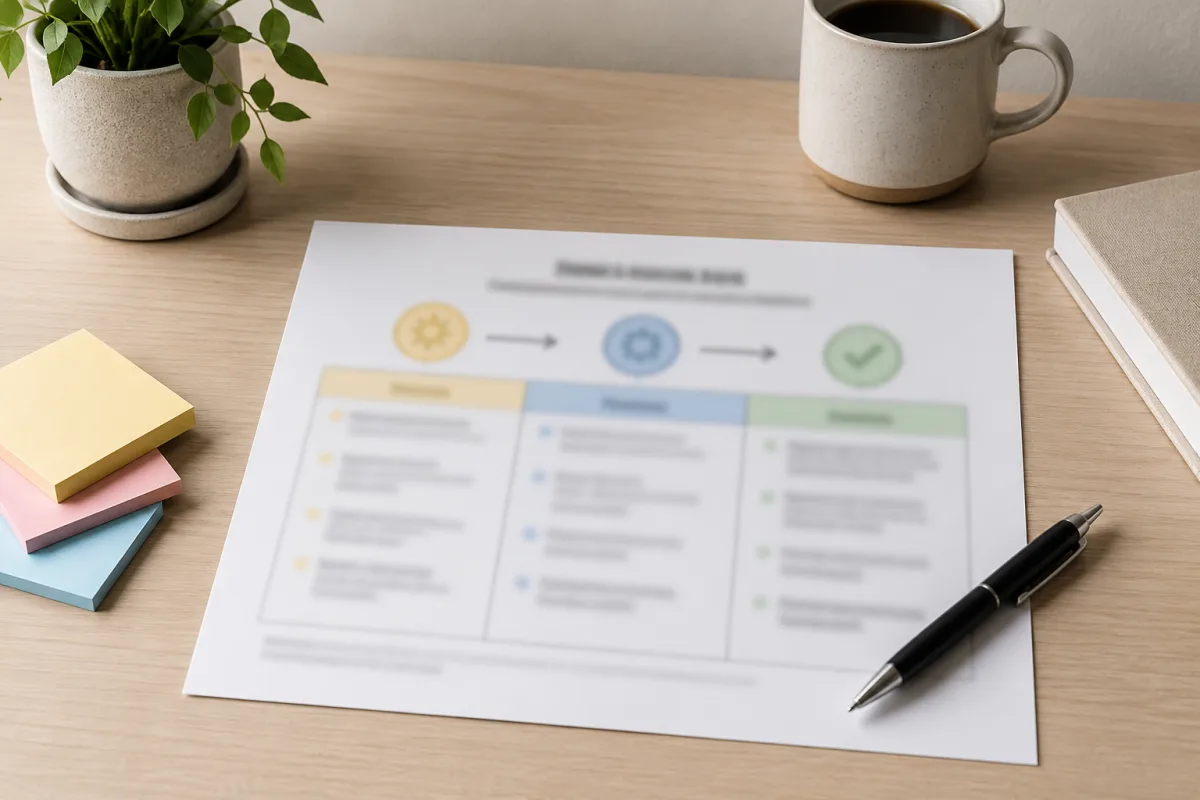
Use three words: cue, response, result. Example: email from boss, panic checking, short relief then more fear.
A habit formation review in health psychology describes habits as learned processes paired with stable contexts: habit formation review.
Change One Response
Do not try to change a whole personality. Choose one response that happens after one cue.
For the boss email, the new response might be one slow breath, reading once, writing the task, then waiting five minutes before replying.
Use Thought Records

A thought record asks what happened, what thought showed up, what feeling followed, what evidence supports the thought, and what evidence softens it.
NCBI's CBT overview notes that CBT mainly deals with identifying and changing current distressing thoughts and behavioral patterns: NCBI CBT overview.
Give The Brain Proof
The brain changes faster when it sees repeated proof. If the old belief is I cannot speak up, one tiny respectful sentence becomes evidence.
Repeat the small proof often. Grand declarations fade if daily behavior keeps teaching the old lesson.
Use Environment Design
Move the cue, remove friction, add friction, or change the first step. Put the journal on the pillow. Keep the phone out of the bedroom. Set shoes by the door.
Environment design works because automatic behavior often follows the easiest path.
Pair Words With Action
Affirmations can help if they point to behavior. I pause before reacting is better than I am a totally different person by tomorrow.
The sentence should be believable enough that your body does not reject it instantly.
Use A Food Journal Example
If the pattern is stress eating, write what happened before eating, what feeling was present, and what the food did for you.
Livecub's food journal guide can make the tracking practical instead of shame-based.
Practice In Low Stakes
The mind learns safer responses best before the hardest moment. Practice speaking up with a friend before a workplace confrontation.
Livecub's sports tryout nerves guide is a good example of practicing before pressure peaks.
Work With Performance Fear
Stage fear often feels subconscious because the body reacts before the mind has a speech ready.
Livecub's stage fright guide can pair breathing, rehearsal, and attention shifts with the thought work.
Respect Silence And Anxiety
Some patterns, especially around speaking, are not stubbornness. They may involve anxiety that needs patient, skilled support.
Livecub's selective mutism guide shows why pressure can backfire when fear controls speech.
Help Someone Else Change
You cannot rewrite another person's mind by lecturing. You can change cues, offer choice, reduce shame, and make the next step easier.
Livecub's motivating elderly loved ones guide is useful when support needs to respect autonomy.
Sleep And Repetition
Sleep, repetition, and lower stress make practice easier. A tired brain falls back to old routes more quickly.
If you are changing a pattern, protect the boring basics: sleep time, meals, movement, and fewer late-night spirals.
Use If Then Plans
If-then plans are simple: if the cue happens, then I do the new response. If I open the pantry while upset, then I drink water and write one sentence first.
This gives the brain a script at the exact moment it usually goes automatic.
Do Not Dig For Drama
Not every habit needs a dramatic origin story. Sometimes the pattern is learned because it worked once, got repeated, and became easy.
If trauma is part of it, get qualified help. If not, you can still change the pattern with practice.
Track Evidence

Keep a small proof log: cue, new response, what happened. The win may be tiny, like I waited before sending the text.
Tiny proof matters because it contradicts the old belief in real life.
Know Therapy Is Not Failure
If panic, compulsions, trauma memories, eating disorder behaviors, addiction, or self-harm thoughts are involved, self-help is not enough.
A therapist can help you work with the pattern safely instead of forcing exposure or digging into memories alone.
Expect The Old Pattern To Return
Old patterns often return under stress. That does not erase progress. It tells you the cue is strong and the new response needs more support.
Return to the smallest repeatable step. The repair is part of the training.
Notice Body Signals
Automatic patterns often begin in the body: tight chest, clenched jaw, fast scrolling, shallow breath, or a rush to explain yourself.
Treat those signals as early alerts. The earlier you notice the body cue, the easier it is to choose a new response before the old one takes over.
Change Identity Language
Be careful with labels like I am lazy, I am broken, or I always ruin things. Labels can become instructions.
Use narrower language: I avoid this task when I feel judged. That sentence points to a cue and a response you can practice.
Reward The New Response
The brain repeats what gets rewarded. After the new response, add a small reward: a check mark, a stretch, a text to a friend, or a minute outside.
The reward does not need to be dramatic. It only needs to tell the brain that the new route was worth noticing.
Make Progress Visible
Use a visible tracker for the practice, not the whole life goal. Mark each time you noticed the cue or delayed the old response.
This keeps progress from depending on mood. Some of the best wins happen on days that still feel messy.
Practice After Slips
After a slip, write the cue and the moment you noticed it. Then choose the smallest repair.
The repair might be an apology, a reset meal, a cleaner boundary, or a five-minute task. Slips become data when you use them.
Use Mindfulness Lightly
Mindfulness does not have to mean long meditation. It can be ten breaths while naming what you see, hear, and feel.
The purpose is not to empty the mind. It is to make enough space between cue and response for a choice.
Measure A Different Win
Do not measure change only by whether the old thought appears. Measure how quickly you notice it and what you do next.
A thought can still show up while the behavior changes. That is real progress.
Choose One Month
Pick one pattern for one month. Daily practice beats a weekend of intensity followed by nothing.
At the end, ask what cue changed, what response changed, and what still needs a better plan.
Frequently Asked Questions
Can you really change the subconscious mind?
You can change automatic thoughts, habits, and learned responses through awareness, repeated practice, environment changes, and sometimes therapy.
How long does it take?
It varies. Small patterns may shift in weeks, while trauma, anxiety, compulsions, or long-standing habits may need longer support.
Do affirmations work?
They can help when they are believable and tied to action. Unrealistic statements often create resistance instead of change.
What is the best first step?
Name one specific pattern, identify its cue, and choose one replacement response to practice repeatedly.
When should I see a therapist?
Seek therapy when patterns involve trauma, panic, compulsions, addiction, eating disorder behaviors, self-harm thoughts, or major daily impairment.
Changing the subconscious mind is really changing what the brain practices automatically. Start with one cue, one new response, and enough repetition to make it familiar. Start small today.

Chiara Bradshaw
Covers education, culture and creative topics with an emphasis on readable explanations and verifiable references.




Leave a reply
Replying to