
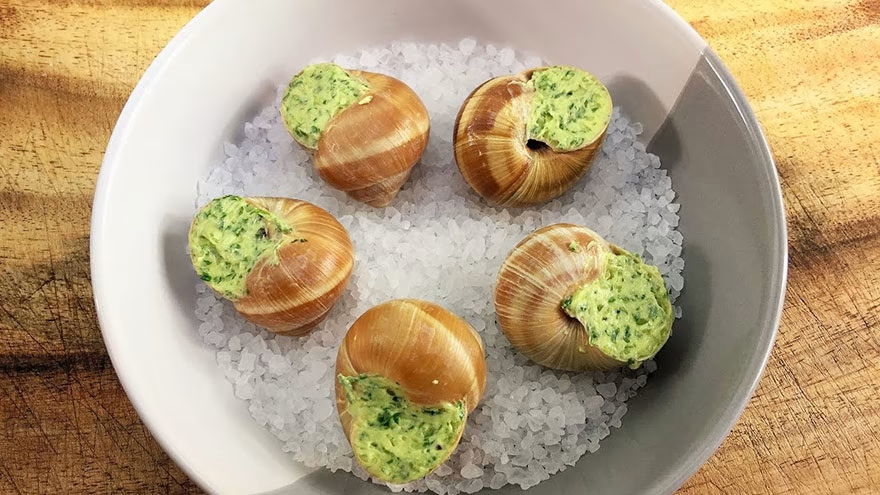
How to cook snails depends less on chef mystique than on two plain decisions: buy safe snails and heat them properly. Most home cooks in the United States should start with canned or professionally farmed escargot, not garden snails from the yard. The flavor comes from butter, garlic, herbs, wine, and bread. The safety comes from sourcing, rinsing, refrigeration, and enough heat.
That distinction matters because snails are not just a novelty ingredient. They are mollusks, and wild land snails can carry parasites, pesticide residue, or environmental contaminants. A good escargot plate should taste clean, garlicky, and tender, not risky. Treat the ingredient with the same seriousness you would give shellfish or frog legs.
What Kind Of Snails Should You Buy?
For home cooking, buy canned escargot or farmed edible snails from a reputable food seller. Canned escargot is common because the snails are already processed and shelf stable before you season and reheat them. Read the label, check the date, and avoid dented, leaking, swollen, or rusty cans.
The USDA National Agricultural Library notes that the FDA regulates the canning of low-acid foods such as snails, and commercial processors of shelf-stable canned foods must register and file scheduled processes. That is the practical reason canned snails make sense for a beginner: the hard food-safety step was handled before the can reached your kitchen.
Do not collect random wild snails for dinner. Even if a local species is edible in theory, you still need correct identification, purging knowledge, legal awareness, and parasite risk control. If you want a similar careful approach to unusual proteins, read buying and cooking frog legs; the same rule applies here: source first, recipe second.
How Do You Prepare Canned Escargot?
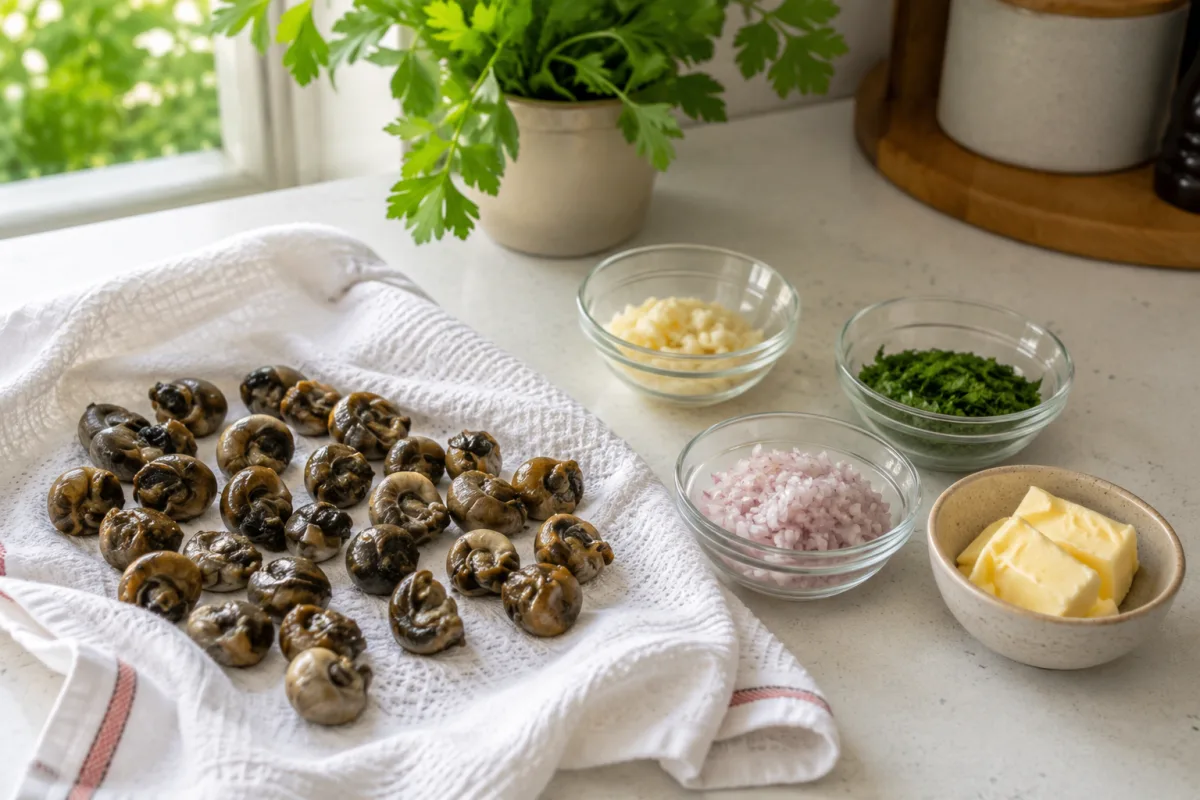
Open the can, drain the liquid, and rinse the snails gently under cool running water. Pat them dry with paper towels. Rinsing removes the tinny liquid from the can and gives the garlic butter a cleaner base. Drying matters because water thins the butter and makes the dish taste flat.
Smell the snails before seasoning. They should smell mild and briny, not sour, rotten, or sharply fishy. If the can looks damaged or the contents smell wrong, throw it away. Garlic and butter can cover many flavors; they should never cover spoilage.
If you have shells or an escargot plate, place one snail in each cavity. If you do not, use a small gratin dish or ramekins. A shallow dish works better than a deep bowl because the butter bubbles evenly and the bread can reach the sauce.
Make Garlic Parsley Butter
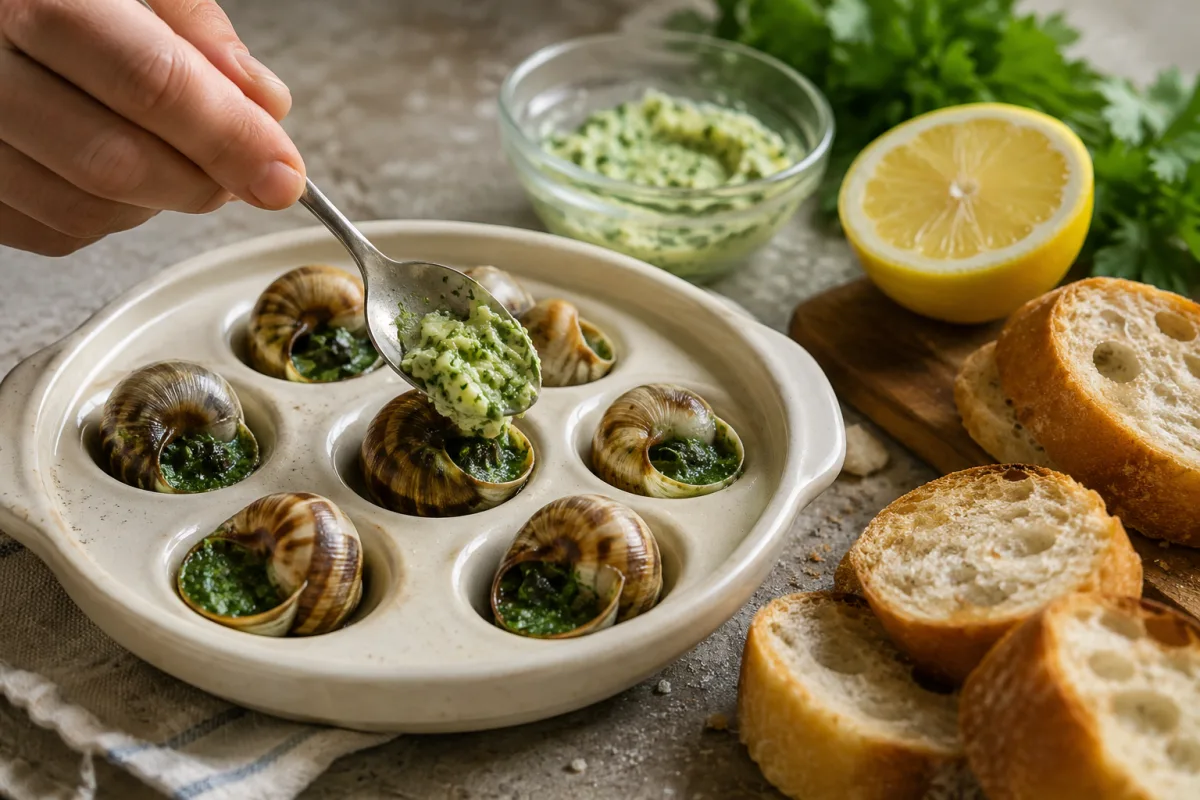
Classic escargot butter is simple: softened unsalted butter, minced garlic, chopped parsley, a little shallot, salt, black pepper, and a splash of white wine or lemon juice. For 24 canned snails, start with 6 tablespoons softened butter, 2 garlic cloves, 1 tablespoon minced shallot, 2 tablespoons parsley, 1 teaspoon lemon juice, and a pinch of salt.
Mix the butter until the garlic and herbs are evenly distributed. Taste a dot on bread. It should be garlicky but not raw-hot. If the garlic is harsh, use less or briefly warm it in a spoonful of butter before mixing. Garlic gets louder in a small dish.
For a richer appetizer table, escargot sits near other old-school special occasion foods such as foie gras. The trick is restraint. Snails are small; too much butter, salt, or cheese can bury the ingredient.
How Long Should Snails Cook?
Canned escargot is usually reheated rather than cooked from raw, but you still want the dish hot all the way through. Spoon garlic butter over and around the snails, then bake at 375 F to 400 F until the butter bubbles and the snails are hot, usually about 10 to 12 minutes in a small dish. Serve immediately.
FoodSafety.gov tells cooks to use a thermometer for foods that need a safe minimum internal temperature and lists 145 F for fish and shellfish. Snails are not always listed on home charts, so the safer home habit is to buy commercially processed snails, keep them cold after opening, and heat the finished dish until it is steaming hot.
The FDA seafood safety page gives the same practical kitchen logic: buy from safe sources, keep cold foods cold, and avoid products that look or smell questionable. That advice fits escargot even when the package is shelf-stable before opening. Once opened, treat the snails like a perishable ingredient.
USDA's snail farming resource also points readers toward FDA low-acid canned food rules for snails. That reinforces the same kitchen decision: use a regulated food product rather than improvising with unknown snails.
What Should You Serve With Snails?
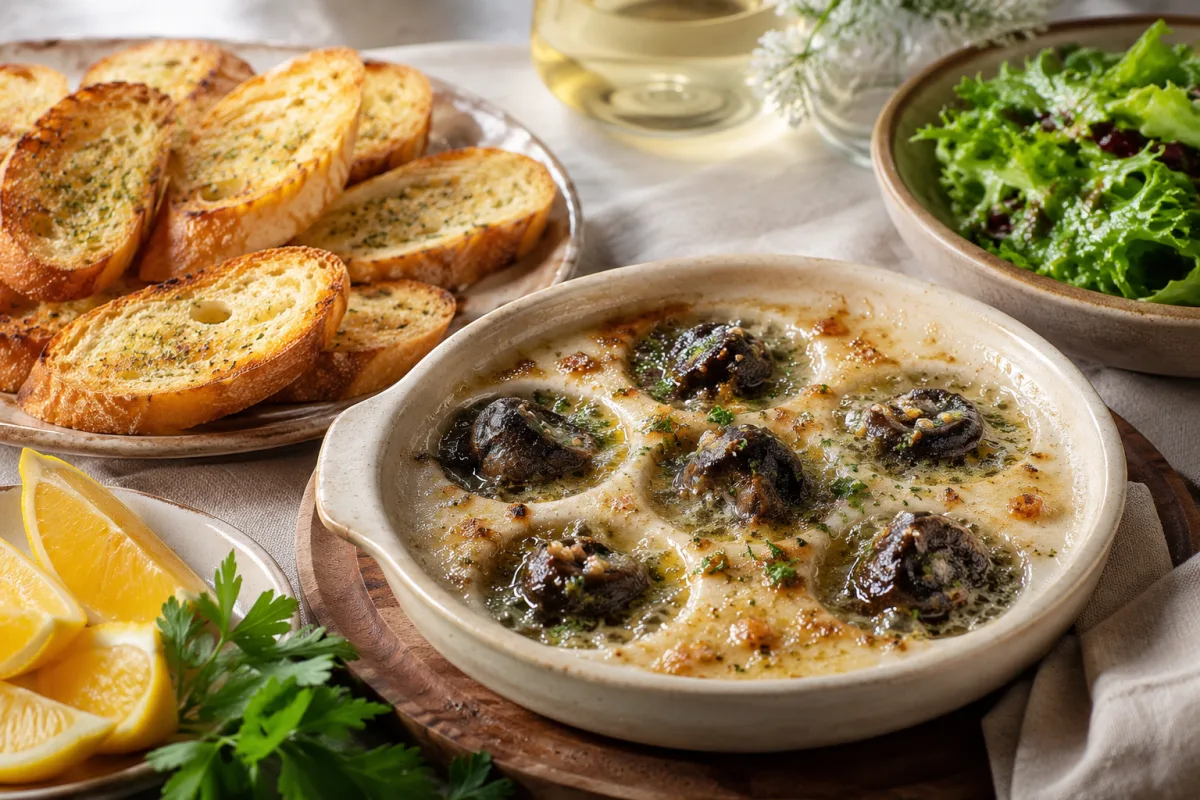
Serve snails with toasted baguette, a small fork, lemon wedges, and a crisp salad. The bread is not decoration; it is how most people catch the garlic parsley butter. A dry white wine, sparkling water, or bitter greens help cut the richness.
If the rest of the meal is heavy, keep the escargot portion small. Six snails per person is plenty as an appetizer. Follow with roast poultry, a green salad, or vegetables rather than another butter-loaded course. A guide to how to cook goose can help if you are planning a larger old-fashioned dinner, but the menu needs acidity and greens to stay balanced.
Snails also work chopped into a garlic-herb mushroom filling, folded through pasta, or spooned onto toast. Those versions are less formal than shells but easier for people who have never eaten escargot.
Use small plates and hot dishes. Escargot cools quickly, and a wide cold plate steals heat from the butter before the first piece of bread reaches it.
Common Mistakes With Escargot
The first mistake is using wild snails without knowing what you are doing. The second is overcooking until the snails turn rubbery. The third is treating garlic butter as the whole dish. Salt, acid, herbs, and bread have to work together.
Another mistake is serving escargot lukewarm. Butter congeals fast, and lukewarm snails feel heavier than hot ones. Warm the plates or ramekins if you can. Put the bread on the table before the snails leave the oven.
Season in small steps. Canned snails can already carry salt from processing, and butter concentrates flavor as it bubbles. Add enough lemon to sharpen the garlic butter, then stop. If every bite tastes only like salt and garlic, the snail has disappeared.
For a lighter plate beside the butter, something from cooking greens makes sense. Bitter or lemony greens clean up the richness better than another starch.
Can You Make Snails Ahead?
You can mix the garlic butter a day ahead and refrigerate it. You can also drain and rinse canned snails shortly before cooking, then keep them covered in the refrigerator. Do not leave opened snails at room temperature while you prepare the rest of dinner.
Assemble the dish close to baking time. Butter can be portioned into shells or an escargot dish ahead, but the final bake should happen right before serving. Leftovers are possible, but they are never as good as the first hot round.
If you are planning a French-style dinner, end with something familiar such as tiramisu rather than adding another unfamiliar dish. Guests are more relaxed when one course feels adventurous and the rest of the meal gives them footing.
Frequently Asked Questions
Can I cook garden snails from my yard?
Do not use random yard snails. Species identification, parasite risk, pesticides, and local rules make wild snails a poor beginner project. Buy canned or farmed edible snails.
Are canned snails already cooked?
Many canned escargot products are processed before sale, but you should still drain, rinse, refrigerate after opening, and heat the finished dish until very hot.
What do snails taste like?
Snails are mild and slightly earthy. Most of the familiar escargot flavor comes from garlic, parsley, butter, shallot, lemon, and bread.
Do I need shells to serve escargot?
No. Shells look classic, but a small gratin dish, ramekins, or an escargot plate works. The snails need hot butter and a dish that holds it.
Why are my snails rubbery?
They were likely heated too long or served after sitting. Bake just until the butter bubbles and the snails are hot, then serve at once.
Snails are easiest when you stop treating them as a stunt. Buy safe escargot, rinse it, season it well, heat it until hot, and put enough bread on the table for the butter.

Timothy Davidson
Edits step-by-step general-interest guides for clarity, realistic limits and source verification.




Leave a reply
Replying to