

Maltese history — one of the world's oldest toy breeds
Aristotle described it as "perfectly proportioned, notwithstanding a diminutive stature." That was in the fourth century B.C. The Maltese breed had already been sitting in civilized laps for centuries before Greek scholars found words for its geometry. Few dogs alive today can claim a pedigree traceable to ancient ceramics, Roman court poetry, and the sleeves of medieval noblewomen — the Maltese can claim all three.
The island of Malta, 60 miles south of Sicily, sits at the center of the ancient Mediterranean world. As far back as 3500 B.C. it was a thriving crossroads of Phoenician, Greek, Carthaginian, and Roman traders. It was the Phoenicians who most likely introduced the small white lapdog to the island, though historians have proposed origins ranging from Egypt to the Swiss Alps. What is not disputed is that by the height of Greek culture, the dog already had a name — the Melitaie dog (Melita being the ancient name for Malta) — and was depicted on Golden Age ceramics alongside written tributes from writers including Aristotle and, later, the Roman historian Strabo.
Rome took to the breed with particular enthusiasm. Roman noblewomen tucked Maltese into their sleeves or bosoms; the breed earned the nickname "Roman Ladies' Dog." The AKC's breed historians describe the Maltese as arguably the world's first "fad dog." Even the Emperor Claudius, not typically associated with lapdog affectation, reportedly succumbed to the breed's appeal. The dog appeared so frequently in Roman myths, poems, and fables as a symbol of loyalty that one early scholar half-seriously suggested the very first dog named Fido — the Latin word for trust — was probably a Maltese.
The collapse of Rome in the fifth century scattered many breeds to extinction. The Maltese survived partly because Asian breeders, particularly in China, had been keeping the line since Phoenician traders first brought it east. By the time Europe emerged from the Dark Ages, a refined version of the breed was ready to reclaim its place in Western courts. Mary Queen of Scots reportedly concealed a Maltese beneath her petticoats at her beheading in 1587. The American Kennel Club recognized the breed in 1888 — first registering it as the Maltese Lion Dog — and it has since climbed steadily into the top 20 most popular breeds in the United States.
What does a Maltese look like? Size and coat
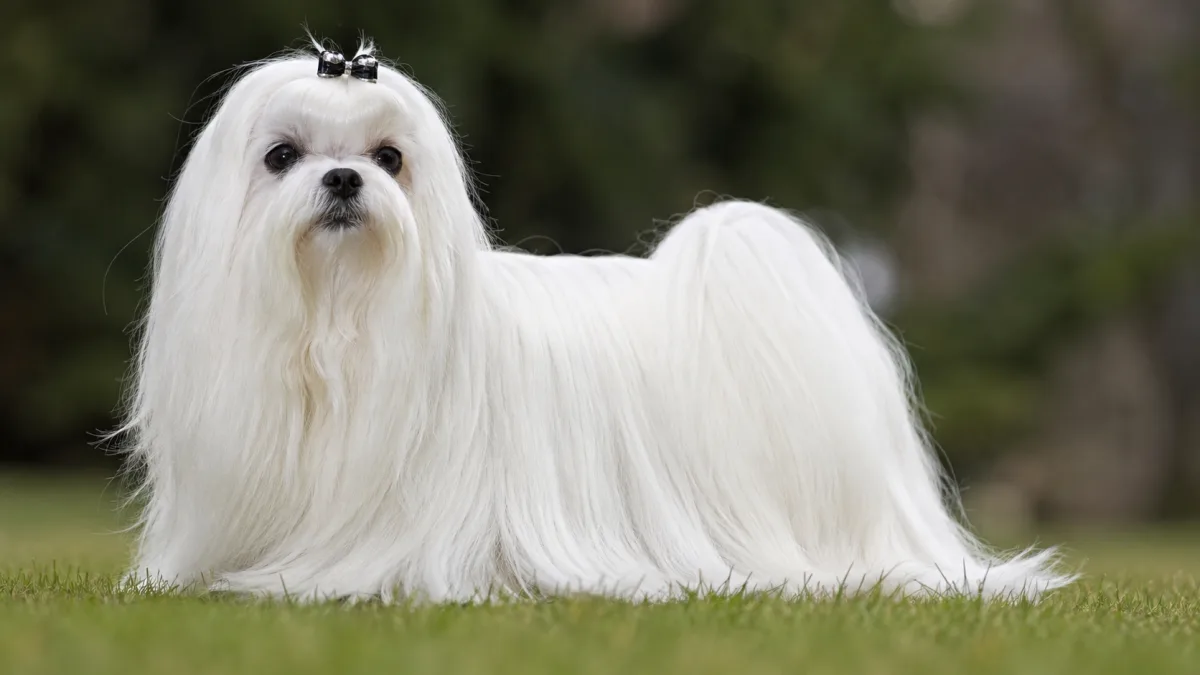
The AKC breed standard calls for a weight under 7 pounds, with 4 to 6 pounds preferred. Height runs between 8 and 10 inches at the shoulder. Despite this small frame, the breed carries itself with an aristocratic posture — level back, high-set tail curved gently over the back, and a rounded skull with dark, expressive eyes that catch light like polished jet.
The coat is the breed's most immediately striking feature. White only, flat, and silky, it flows from a central part along the back and — in show condition — reaches the floor. What makes it unusual among dog breeds is its structure: the Maltese has hair, not fur. There is no undercoat. The single layer of fine, silky strands grows continuously, completing longer growth cycles than double-coated breeds before shedding. Because shed hairs tend to remain caught in the surrounding coat rather than releasing onto furniture and floors, the Maltese ranks among the lowest-shedding dogs. This single-coat structure also produces fewer airborne allergens than breeds with dense undercoats — the factual basis for the common "hypoallergenic" claim. That label is imprecise, since no dog is truly allergen-free, but owners with mild sensitivities often find the Maltese more manageable than most.
The coat's continuous growth is both its glory and its daily demand. Left unclipped, it becomes a floor-length show coat that requires dedicated maintenance. Most companion owners opt for shorter styles — the "puppy cut" or "teddy bear cut," trimmed to one to two inches all over — that reduce daily brushing time dramatically while preserving the breed's soft, rounded appearance.
Maltese temperament and personality
The Maltese is fundamentally a companion dog, and its temperament has been shaped by centuries of exactly that role. It bonds deeply and quickly to its household, preferring to be physically close to its people for much of the day. This attachment produces genuine warmth and responsiveness — the Maltese is an attentive, curious dog that picks up on household routines, emotional cues, and training signals with notable speed.
The flip side of that deep attachment is a real vulnerability to separation anxiety. Left alone for long stretches, a Maltese may vocalize continuously, become destructive, or develop repetitive behaviors. The breed's alertness — which makes it an effective watchdog far out of proportion to its size — can translate into persistent barking when it is bored or lonely. AKC breeders note that the dog genuinely does not appear to know it is small. It will challenge larger dogs, hold its ground with strangers, and demand participation in household activities that other toy breeds would observe from a distance.
Training responds well to positive reinforcement, particularly food-based rewards. The breed is intelligent and eager to engage. The common pitfall is what trainers call "small dog syndrome" — not a clinical condition but a behavioral pattern that develops when owners excuse behaviors in small dogs that they would never tolerate in large ones. A Maltese allowed to ignore basic commands or bark without correction will lean into that arrangement. Consistent boundaries, applied gently and early, produce a sociable, confident dog that channels its natural boldness productively rather than anxiously.
The Maltese is generally good with children, though supervision matters given the dog's small size and the enthusiasm young children bring to greetings. It typically does well with other dogs and household pets, though it may pick arguments with animals several times its size.
For related breed questions, see our guide to Maltese — 10 most common questions.
Maltese coat care and grooming

Honesty first: the Maltese is one of the most coat-intensive breeds in the Toy Group. Prospective owners who picture a low-maintenance small dog should reckon with this early.
The full show coat — silky, floor-length, parted from nose to tail — requires daily brushing with a pin brush and wide-toothed comb to prevent the mats that form quickly in fine single-layer hair. Most owners also condition the coat lightly before brushing to reduce breakage. Professional grooming every four to six weeks is standard for dogs kept in longer styles. The topknot, traditionally held with a bow or barrette to keep hair out of the eyes, must be re-set regularly.
The shorter "puppy cut" — keeping hair at one to two inches — cuts the daily brushing commitment considerably and eliminates the floor-dragging mat risk, while still requiring combing two to three times per week. Bathing every one to two weeks keeps the white coat bright and the skin healthy. Dry shampoo products exist for between-bath maintenance, though they are no substitute for regular washing.
Beyond coat work, the area beneath the eyes needs daily attention (more on that below), and the hair around the anus must be checked daily for hygiene. Small breed dogs also accumulate dental tartar faster than larger breeds; daily tooth brushing is recommended for the Maltese, which is prone to periodontal disease. Nails grow quickly on a dog that spends most of its time indoors and should be trimmed every two to three weeks.
For more on long-coat grooming technique, see our article on grooming longhaired breeds. The Lhasa Apso, another long-coated toy-type breed, shares many of the same grooming considerations — you can read about that breed's care in our Lhasa Apso guide.
Tear staining in Maltese — causes and care
The reddish-brown streaks that form beneath a Maltese's eyes are among the most common cosmetic concerns in the breed. Understanding why they happen makes managing them more effective.
The staining comes from porphyrins — iron-containing molecules produced as a byproduct of red blood cell breakdown. Most dogs excrete some porphyrins in tears, saliva, and urine, but white-coated dogs make the deposits visible in a way that darker-coated breeds do not. The Maltese compounds this with anatomy: selective breeding for a short-nosed, large-eyed appearance has produced narrow, often slightly crooked tear ducts that drain inefficiently. The result is chronic overflow tearing, which deposits more porphyrins onto the facial fur.
Daily cleaning with a damp cloth, saline solution, or a commercial tear-stain remover helps prevent buildup. Keeping the hair beneath the eye trimmed short reduces the surface area for staining and the risk of hair irritating the eye itself. Some owners see improvement by switching from tap water to filtered or bottled water, since high mineral content can intensify the problem. Diet may play a role as well — red meat is high in iron and can increase porphyrin levels in some dogs.
Veterinary evaluation is worthwhile if tearing appears excessive, as blocked tear ducts, eye infections, or corneal irritation from in-turning lashes (a condition called distichiasis, seen occasionally in the breed) can all drive abnormal tearing beyond typical porphyrin staining.
Health issues in the Maltese

The Maltese is a generally long-lived breed — 12 to 15 years is a reasonable expectation with attentive care. That said, several conditions appear with enough frequency in the breed that owners benefit from knowing them in advance.
Hypoglycemia. Low blood sugar is particularly dangerous in toy breed puppies under four months old. Their small liver glycogen reserves deplete rapidly between meals, and a puppy that goes too long without eating can crash — presenting as weakness, confusion, an unsteady gait, or seizure-like episodes. The management is straightforward: very young Maltese puppies should eat every three to four hours. A dab of Karo syrup rubbed on the gums can stabilize a hypoglycemic puppy while veterinary care is arranged. Once adult size is reached, the condition is far less common.
Patellar luxation. The kneecap of a hind leg slips out of its groove — a condition graded on a scale of 1 to 4 by severity. Grades 1 and 2 often require only monitoring; grades 3 and 4 typically call for surgical correction. Many affected Maltese carry mild luxation for years with minimal apparent discomfort, but owners should watch for an occasional skipping gait or intermittent hind-leg lifting.
Portosystemic shunt. An abnormal blood vessel allows blood to bypass the liver, arriving in the systemic circulation without being filtered. Signs — poor growth, neurological symptoms, excessive thirst, gastrointestinal upset — typically appear before two years of age. Surgical correction is possible in many cases, and the earlier it is identified, the better the outcome.
Mitral valve disease. The most common cardiac issue in small dog breeds involves progressive thickening and leaking of the heart's mitral valve. Most Maltese develop some degree of mitral valve changes as they age; annual heart auscultation after age five helps track progression. Early stages are managed medically, and veterinary cardiology has made significant strides in extending quality of life for affected dogs.
White Shaker Syndrome. Also called idiopathic cerebellitis, this condition produces full-body tremors in young dogs, typically first appearing between five months and three years of age. The cerebellum — the brain region that coordinates balance and smooth movement — becomes inflamed, disrupting motor control. Tremors may be mild or severe enough to interfere with walking, and they tend to worsen with stress or excitement and ease during rest and sleep. The cause is not fully understood, though the syndrome appears predominantly in small white-coated breeds — Maltese, Bichon Frises, West Highland White Terriers, white Poodles — which has led to theories involving melanin-pathway immune reactions. Corticosteroids reduce cerebellum inflammation effectively and can produce marked improvement within days. Many dogs require long-term low-dose maintenance therapy. Diagnosis is made by ruling out other causes of tremor, since no single definitive test exists.
Dental disease. Small jaws concentrate a full set of adult teeth into compressed space, increasing the risk of crowding, tartar accumulation, and periodontal infection. Daily brushing is the single most effective preventive measure.
For a broader look at how small breed health patterns compare across toy-type dogs, see our Miniature Schnauzer health guide.
Feeding and nutrition for Maltese
Adult Maltese eat considerably less than their outsized personalities might suggest. A dog in the 4 to 6 pound range typically needs roughly 100 to 150 calories per day, depending on activity level and metabolism — a fraction of what even a medium-sized breed requires. High-quality small-breed kibble is a solid baseline; the smaller kibble size suits a small jaw, and the formulation generally provides higher caloric density per cup to accommodate the small meal volumes toy breeds eat.
Puppies present a distinct challenge. The hypoglycemia risk described above means that Maltese puppies under four months old should eat three to four small meals spread across the day. As the puppy grows, meals can be consolidated, and most adult Maltese do well on twice-daily feeding. Free-choice feeding — leaving food out at all times — can lead to caloric excess in a dog that has almost no margin for excess weight. Even a pound of overweight on a five-pound dog is a 20 percent increase above ideal body condition, which is meaningful for joint health and cardiac function over a long life.
Treats should be counted as part of the daily caloric allowance rather than added on top of meals. Some owners find that certain food dyes or high-iron proteins appear to intensify tear staining; switching to a limited-ingredient food occasionally improves this, though the evidence remains largely anecdotal.
Is the Maltese right for you?
The Maltese suits a particular kind of household well. It thrives in a home where it will have consistent human company, whether that means a retired owner, a household where someone works from home, or a multi-person family where someone is reliably present. It adapts readily to apartment living — its exercise needs are moderate, and a daily walk plus indoor play covers most of what a healthy adult requires. Cold weather is a genuine consideration: the lack of undercoat means the Maltese chills quickly and benefits from a well-fitted coat in winter months.
The grooming commitment is the largest practical barrier for many potential owners. In show coat, the Maltese is a daily maintenance commitment. In a puppy cut, the burden is manageable — but "manageable" still means regular brushing, professional grooming appointments, daily eye care, and weekly dental attention. This is not a breed that stays tidy on its own.
Owners who take on that commitment consistently describe the return as considerable. The breed's intelligence, expressive personality, and genuine attachment to its people produce a companion that participates actively in household life. It is a bold, curious, affectionate dog that happens to come in a very small package — and that has been true, by Aristotle's account, for at least 23 centuries.
Frequently Asked Questions
How much does a Maltese weigh?
The AKC breed standard sets the maximum at 7 pounds, with 4 to 6 pounds preferred. Dogs at the smaller end of this range are more susceptible to hypoglycemia as puppies and may require more careful feeding management. Adult Maltese typically stand 8 to 10 inches at the shoulder.
Do Maltese shed a lot?
The Maltese sheds very little. The breed has a single coat — hair rather than fur, with no undercoat — and shed strands tend to stay trapped in the surrounding coat rather than falling onto floors and furniture. Regular brushing removes this trapped hair before it mats. The low-shedding coat is the basis for the breed's reputation as a lower-allergen dog, though no dog is completely allergen-free.
Are Maltese good dogs for first-time owners?
Yes, with realistic expectations. The Maltese is intelligent, responds well to positive training, and is small enough to manage physically. The challenges are behavioral — the breed needs consistent training from the start to avoid developing nuisance barking or anxiety-driven habits — and grooming-related. Owners willing to commit to daily coat care and regular grooming appointments will find the breed rewarding.
How long do Maltese dogs live?
The typical Maltese lifespan runs from 12 to 15 years. VCA Animal Hospitals notes a range of 12 to 14 years as a practical expectation. Individual dogs vary depending on genetics, diet, veterinary care, and the management of breed-specific conditions such as mitral valve disease and dental disease as the dog ages.
What is White Shaker Syndrome in Maltese?
White Shaker Syndrome, formally called idiopathic cerebellitis, is a neurological condition that causes rhythmic, repetitive tremors across the body. It occurs primarily in small white-coated breeds and typically first appears in dogs between five months and three years old. The cerebellum becomes inflamed, disrupting coordination and balance. Tremors worsen with excitement or stress and ease during sleep. Treatment with corticosteroids is generally effective, producing noticeable improvement within days, though most affected dogs require long-term low-dose management. Any Maltese showing unexplained tremors should be evaluated by a veterinarian promptly.

Chiara Bradshaw
Covers education, culture and creative topics with an emphasis on readable explanations and verifiable references.


1 Comment
Join the discussion. Comments are moderated before appearing.